Water onion
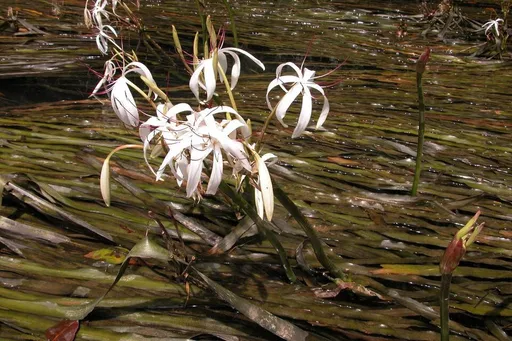
Crinum thaianum
Also known as Thai onion plant, Onion plant, Giant onion plant, Water lily onion
FreshwaterBulb / tuberBulb offsets
Care at a glance
- Light
- Low light
- CO2
- No CO₂ needed
- Temperature
- 72–82°F
- 22–28°C
- Max height
- 39.4 in
- 100 cm
- Growth rate
- Medium
- Placement
- Background
- Type
- Bulb / tuber
- pH
- 6.0–8.0
- Hardness
- 4–18 dGH
- Spread
- 11.8 in (30 cm)
- Nutrient uptake
- Root feeder
- Growth region
- Submersed or emersed
- Difficulty
- Easy
- Family
- Amaryllidaceae
- Origin
- Southern Thailand (endemic)
Overview
Water onion is a big, forgiving bulb plant for large tanks and a rugged background or specimen plant. It is rated easy.
Did you know
Wild water onion is now protected in Thailand after river dredging wiped out most of its natural range. It is listed as Endangered on the IUCN Red List, one of the few common aquarium plants that is endangered in the wild.
Caring for water onion
Plant water onion with only the lower third of its bulb buried, so the bulb does not rot. Give it a rich substrate and plenty of room in a large tank.
It is a root feeder, so a rich substrate or root tabs keep it strong. It needs no CO2 and gets by in low light, and it tolerates a wide range of light and temperature swings. Keep it at 72 to 82°F (22 to 28°C).
It grows steadily rather than fast and can reach about 39 in (100 cm). Mature plants can reach the surface and grow emersed. The bulb forms offsets you can separate and plant on their own. Herbivorous fish and cichlids usually leave its fibrous leaves alone.
Good to know
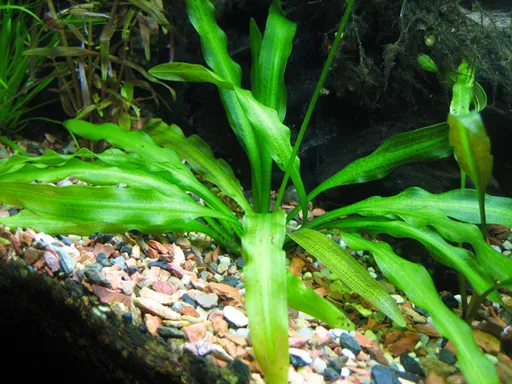
Water onion is a bulbous species in the amaryllis family, Amaryllidaceae, so it is a true bulb rather than a stem or rosette plant. Its tough, ribbon-like leaves can reach 1.5 meters or more in the wild while staying only a couple of centimeters wide. Mature bulbs can flower, carrying fragrant, lily-like white blooms to the water surface.
In the wild
Water onion is endemic to a handful of coastal-plain rivers and streams in southern peninsular Thailand. It grows as an emergent bulb rooted in the bed, with long ribbon leaves streaming in the flow. Habitat loss and over-collection have also hit the wild population, though it remains widely cultivated for the hobby.
Common questions
Does water onion need to be planted in the substrate?
Yes, but only partly. Push the roots into the substrate and leave at least the top half of the bulb uncovered so it doesn't rot.
How much light does water onion need?
Water onion is a low-light plant, and the light that comes with a standard tank kit is enough for it.
Does water onion need root tabs?
Yes. Water onion draws much of its food through its roots. Push root tabs in near it, or grow it in a nutrient-rich soil.
How do you propagate water onion?
Water onion propagates by bulb offsets. The bulb forms offsets, which can be separated and planted on their own.
How tall does water onion grow?
Water onion grows to about 39.4 in (100 cm) tall. It grows at a moderate pace.
Related plants
 Low lightBackground39.4 in (100 cm)
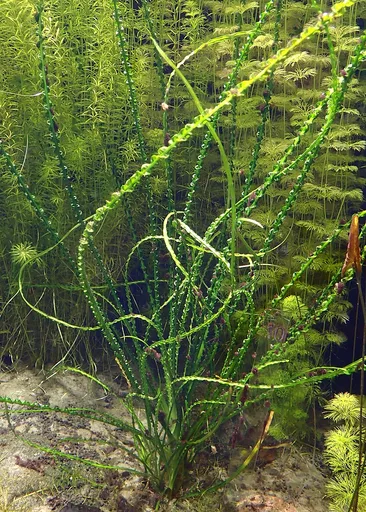
Crinum calamistratum
Low light · Background
 Medium lightBackground39.4 in (100 cm)
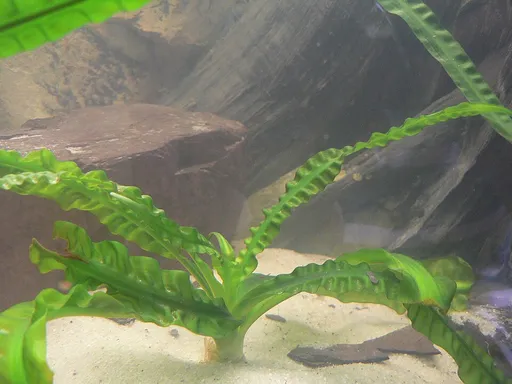
Onion plant natans
Crinum natans
Medium light · Background
- Medium lightBackground31.5 in (80 cm)
Aponogeton boivinianus
Medium light · Background
 Medium lightBackground23.6 in (60 cm)
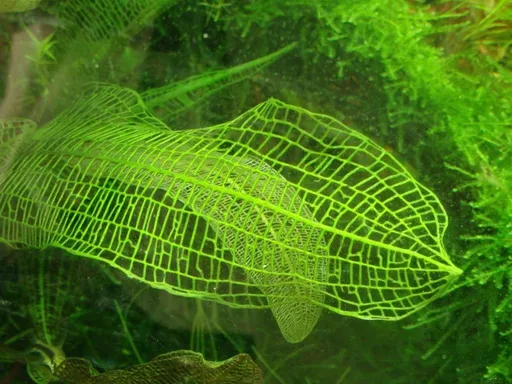
Madagascar lace
Aponogeton madagascariensis
Medium light · Background
- Medium lightBackground23.6 in (60 cm)
Aponogeton longiplumulosus
Medium light · Background
 Medium lightBackground21.7 in (55 cm)
Aponogeton undulatus
Medium light · Background