Madagascar lace
Aponogeton madagascariensis
Also known as Madagascar lace plant, lace plant, laceleaf, Aponogeton fenestralis
FreshwaterBulb / tuberBulb offsetsRhizome division
Care at a glance
- Light
- Medium light
- CO2
- CO₂ beneficial
- Temperature
- 64–75°F
- 18–24°C
- Max height
- 23.6 in
- 60 cm
- Growth rate
- Medium
- Placement
- Background
- Type
- Bulb / tuber
- pH
- 5.5–7.0
- Hardness
- 2–8 dGH
- Spread
- 15.7 in (40 cm)
- Nutrient uptake
- Root + water column
- Growth region
- Submersed
- Difficulty
- Difficult
- Family
- Aponogetonaceae
- Origin
- Madagascar (endemic)
Overview
Plant the bulb at an angle with only the lower half or two thirds in the substrate so the crown does not rot. This is a demanding, cool-water species: keep it on the cooler side (roughly 18 to 24 C), as warm tropical temperatures speed its metabolism past what it can sustain and the bulb melts. Provide soft acidic water, steady flow, good filtration, and regular root and water-column feeding; CO2 is not required but helps. It may rest and shed leaves periodically, so keep conditions stable rather than forcing a dry dormancy.
In the wild
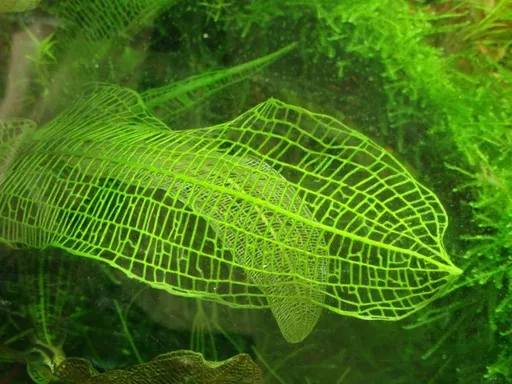
Endemic to Madagascar, where it grows submerged in slow-moving rivers and clear, soft, flowing streams. It grows from a tuberous bulb and is best known for its leaves, which form a rigid skeletal lattice with the tissue between the veins entirely absent.
Good to know
It is a member of the Aponogetonaceae and the most famous of the so-called lace plants. The fenestrated leaf structure, where leaf tissue dies back between the veins to leave open windows, is a genuine developmental feature rather than damage, produced by programmed cell death during leaf formation. The plant typically reproduces by seed after flowering and goes through a natural dormant phase in the wild.
Did you know
Did you know its leaves are naturally full of holes, a lacy fenestrated skeleton created when the plant deliberately dissolves the tissue between the leaf veins as the leaf grows.
Related plants
 Medium lightBackground23.6 in (60 cm)
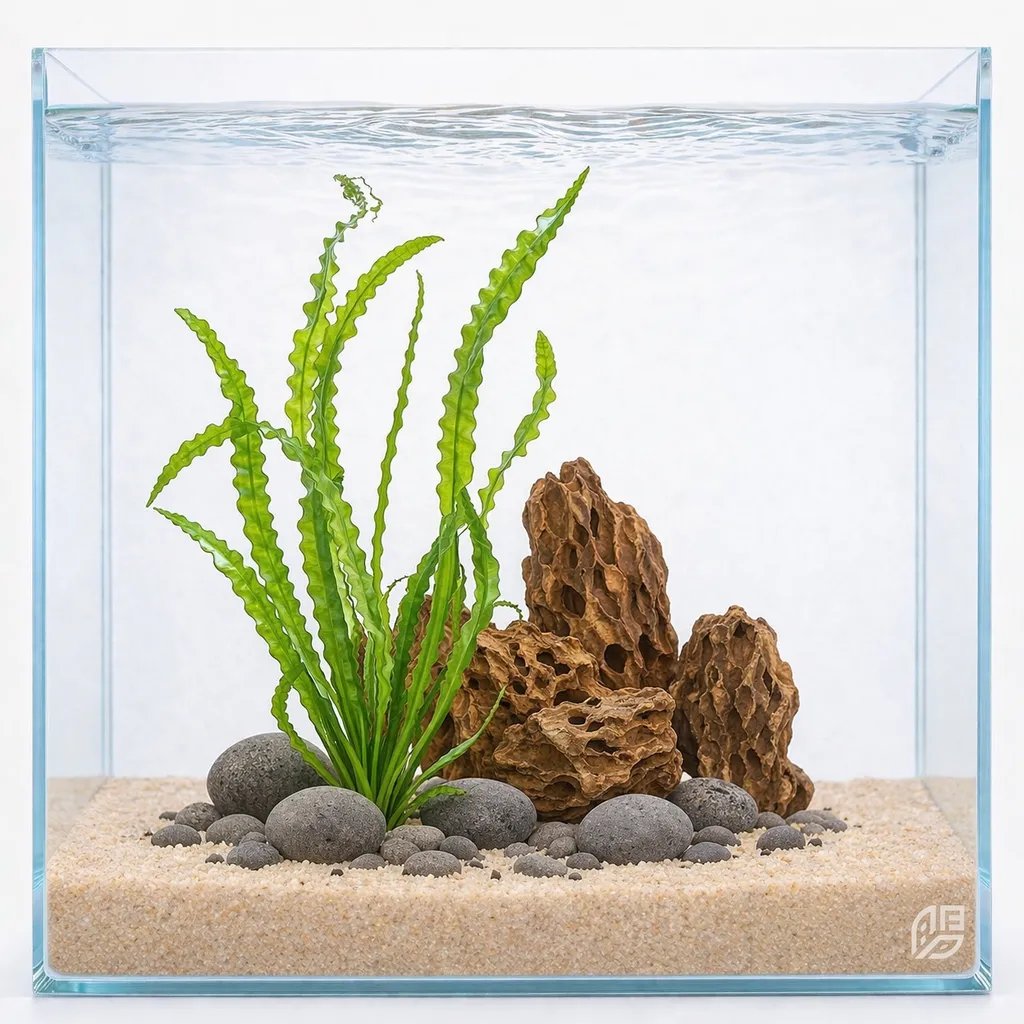
Aponogeton longiplumulosus
Medium light · Background
 Medium lightBackground23.6 in (60 cm)
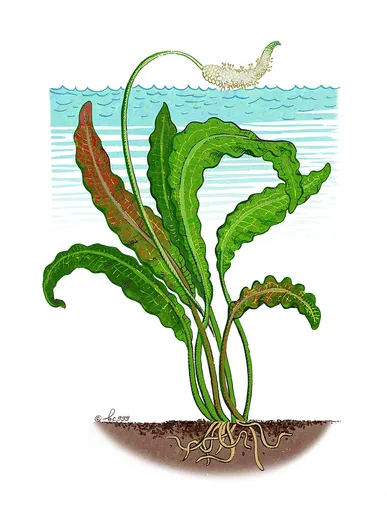
Aponogeton rigidifolius
Medium light · Background
 Medium lightBackground21.7 in (55 cm)
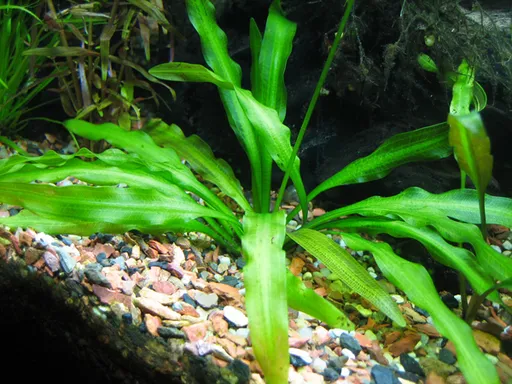
Aponogeton undulatus
Medium light · Background
 Medium lightBackground19.7 in (50 cm)
Aponogeton boivinianus
Medium light · Background
 Medium lightBackground19.7 in (50 cm)
Aponogeton crispus
Medium light · Background
 Medium lightBackground19.7 in (50 cm)
Aponogeton ulvaceus
Medium light · Background