Henkel's lace plant
Aponogeton madagascariensis var. henkelianus
Also known as Aponogeton henkelianus, Madagascar lace plant, Lace leaf, Aponogeton fenestralis
FreshwaterBulb / tuberBulb offsets

Care at a glance
- Light
- Medium light
- CO2
- CO₂ beneficial
- Temperature
- 64–73°F
- 18–23°C
- Max height
- 19.7 in
- 50 cm
- Growth rate
- Medium
- Placement
- Midground
- Type
- Bulb / tuber
- pH
- 5.5–7.0
- Hardness
- 2–8 dGH
- Spread
- 15.7 in (40 cm)
- Nutrient uptake
- Root + water column
- Growth region
- Submersed
- Difficulty
- Difficult
- Family
- Aponogetonaceae
- Origin
- Madagascar
Overview
This is a plant for patient, cooler tanks: keep it in the high 60s to low 70s Fahrenheit, as anything from the high 70s up causes rapid leaf melt and can kill the bulb. Give it soft, acidic, clean water with good flow and only moderate light, since strong light lets algae colonise the open leaf lattice and rot the leaf. Do not bury the bulb, and feed it well through both roots and water column. It is genuinely demanding and not a beginner plant.
In the wild
Endemic to Madagascar, where it grows submersed in cool, shaded, fast-flowing streams and rivers. The henkelianus variety is prized for its more irregular, heavily latticed leaves with strong transversal veins. Because it comes from cool running water, it does not tolerate warm tropical tank temperatures for long.
Good to know
This is a recognised variety of Aponogeton madagascariensis in the family Aponogetonaceae; Aponogeton henkelianus is treated as a synonym. Its famous fenestrated (window-like) leaves have no leaf tissue between the veins, forming an open lace skeleton, an unusual growth pattern shared by only a handful of plants. Unlike most Aponogeton, this species does not need a hard dormancy, and its storage organ behaves more like a rhizome than a true resting bulb.
Did you know
Did you know its leaves are basically a living net? There is no leaf tissue between the veins at all, just an open lace framework, which is why it is one of the very few plants people grow purely for its skeleton.
Related plants
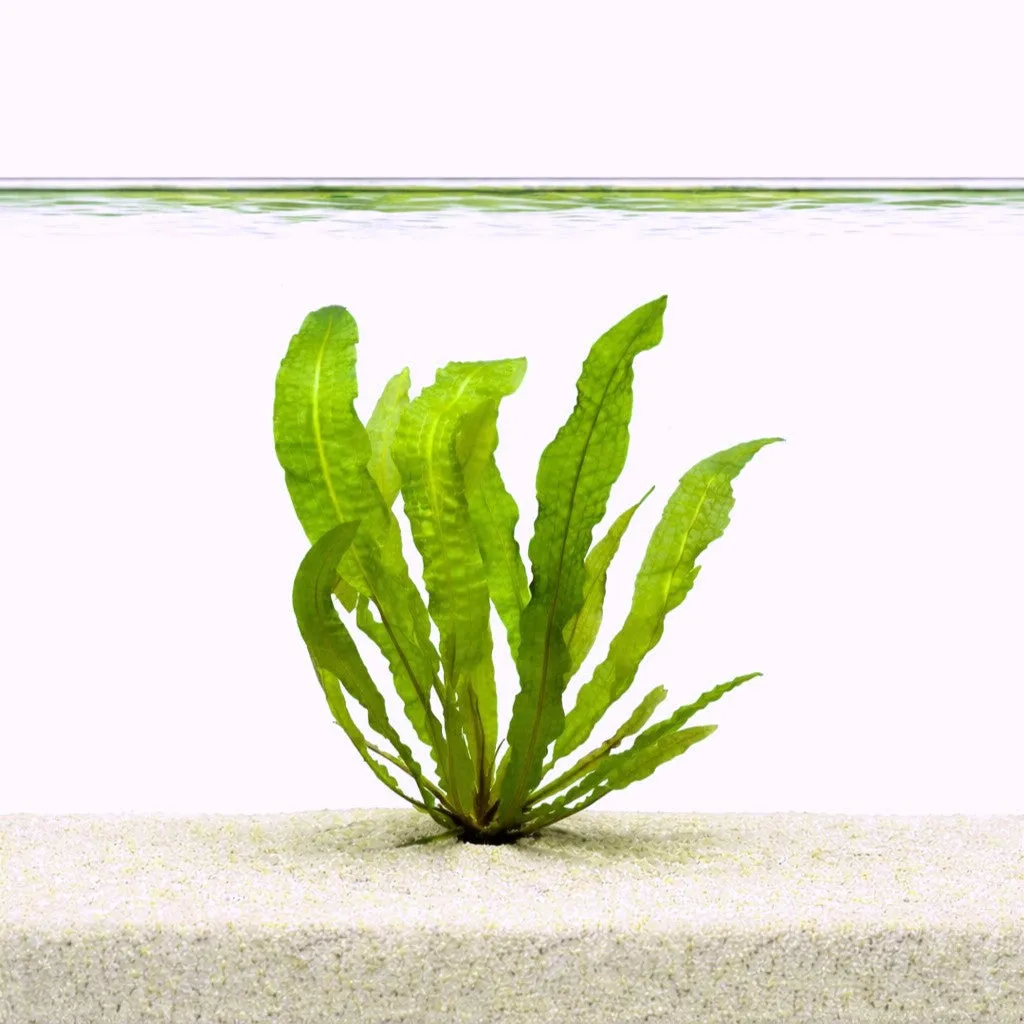 Medium lightBackground19.7 in (50 cm)
Aponogeton boivinianus
Medium light · Background
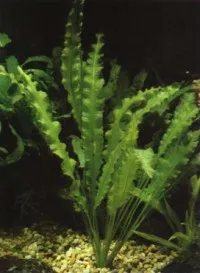 Medium lightBackground19.7 in (50 cm)
Aponogeton crispus
Medium light · Background
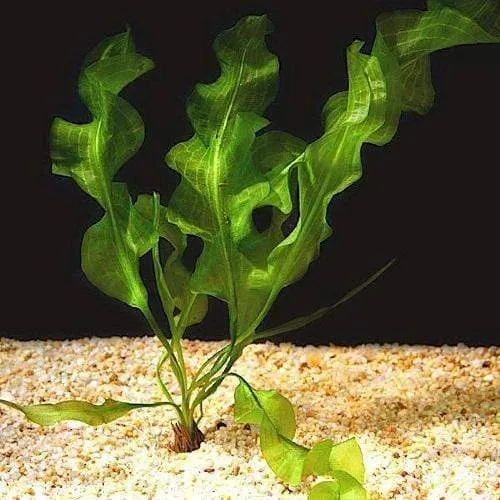 Medium lightBackground19.7 in (50 cm)
Aponogeton ulvaceus
Medium light · Background
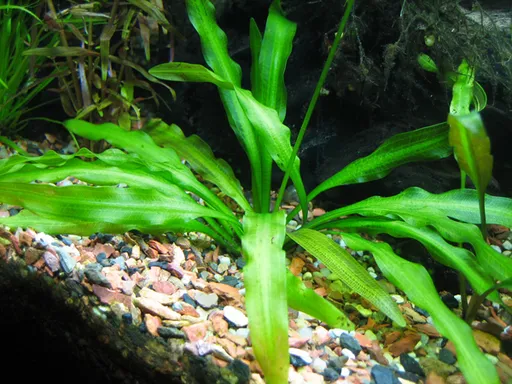 Medium lightBackground21.7 in (55 cm)
Aponogeton undulatus
Medium light · Background
 Medium lightBackground23.6 in (60 cm)
Aponogeton longiplumulosus
Medium light · Background
 Medium lightBackground23.6 in (60 cm)
Aponogeton rigidifolius
Medium light · Background