Anubias gigantea
Also known as Giant Anubias
FreshwaterRhizomeRhizome division
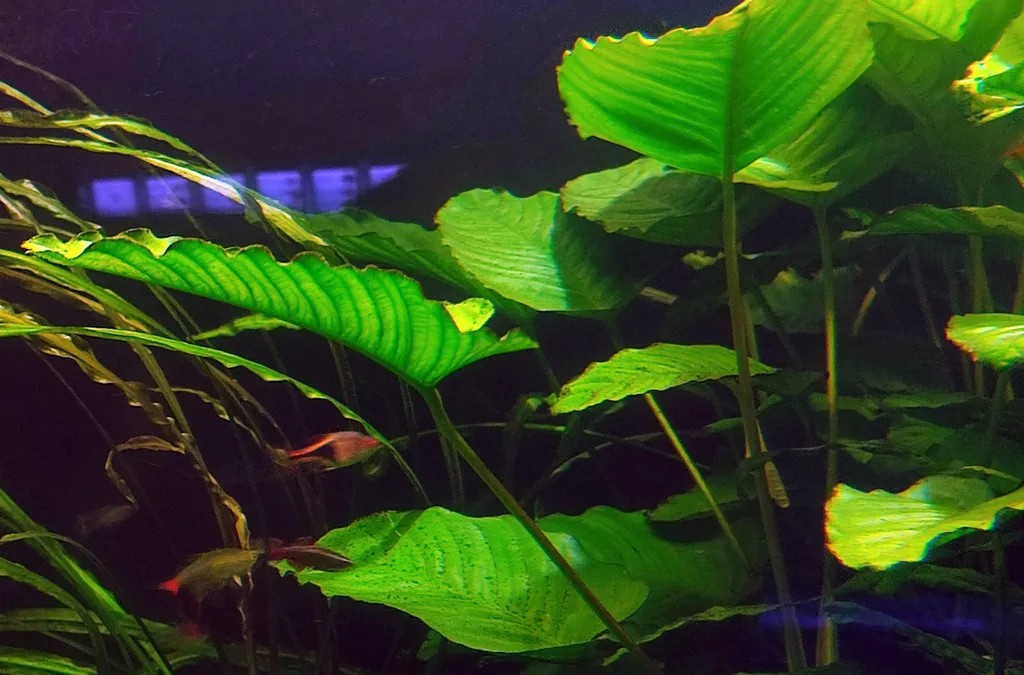
Care at a glance
- Light
- Low light
- CO2
- No CO₂ needed
- Temperature
- 72–82°F
- 22–28°C
- Max height
- 19.7 in
- 50 cm
- Growth rate
- Slow
- Placement
- Background
- Type
- Rhizome
- pH
- 6.0–7.5
- Hardness
- 2–15 dGH
- Spread
- 13.8 in (35 cm)
- Nutrient uptake
- Root + water column
- Growth region
- Submersed or emersed
- Difficulty
- Easy
- Family
- Araceae
- Origin
- West Africa (Guinea, Sierra Leone, Liberia, Ivory Coast, Togo)
Overview
Anubias gigantea is a true background plant for large tanks. It is an easy anubias, if a slow one.
Did you know
Anubias gigantea is grown commercially mostly above water. Submerged, it tends to produce simple arrow leaves, while emersed culture coaxes out the dramatic triple-lobed blades.
Caring for Anubias gigantea
Attach the thick rhizome to substantial wood or rock and leave it exposed. Burying it causes rot.
Anubias gigantea tolerates low light and needs no CO2. It feeds through its roots and from the water, so a liquid fertilizer covers it. Give it space and stable water.
Growth is slow, with months between major new leaves. Submerged plants often stay smaller and plainer than emersed ones, so be patient with it. To propagate, cut the rhizome into pieces with several leaves each.
Good to know
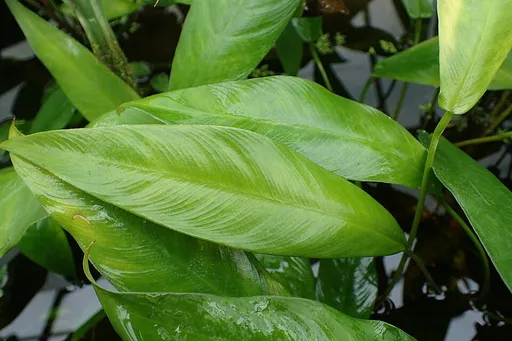
Anubias gigantea is an aroid in the family Araceae. Auguste Chevalier first noted it in 1920 from Guinean material, and John Hutchinson formally described it in 1939. It is one of the two largest species in the genus, alongside Anubias heterophylla. Its arrow-shaped blades reach about 30 cm long and 14 cm wide, with lateral lobes that make the leaf look three-pointed. The petioles can be up to 2.5 times longer than the blade, and the creeping rhizome is 1 to 3 cm thick.
In the wild
Anubias gigantea grows along rocky riverbanks and in riverbeds across West Africa, including Guinea, Sierra Leone, Liberia, Ivory Coast and Togo. It is a semi-aquatic rheophyte that grips rock with its creeping rhizome. It does most of its growing emersed or only partly submersed in flowing water.
Common questions
Does Anubias gigantea need to be planted in the substrate?
No. Anubias gigantea grows attached to rock or wood, so tie or glue the rhizome in place. If you plant its roots, keep the rhizome above the substrate, since a buried rhizome rots.
Does Anubias gigantea need CO2?
No. Anubias gigantea grows well without added CO2 and suits a low-tech tank.
How much light does Anubias gigantea need?
Anubias gigantea is a low-light plant, and the light that comes with a standard tank kit is enough for it.
Does Anubias gigantea need root tabs?
No. Anubias gigantea feeds from the water, so a liquid fertilizer suits it better. Root tabs only help if its roots reach into the substrate.
How do you propagate Anubias gigantea?
Anubias gigantea propagates by rhizome division. Cut the rhizome into pieces with several leaves each, then tie or plant each piece.
How tall does Anubias gigantea grow?
Anubias gigantea grows to about 19.7 in (50 cm) tall. It grows slowly and rarely needs trimming.
Related plants
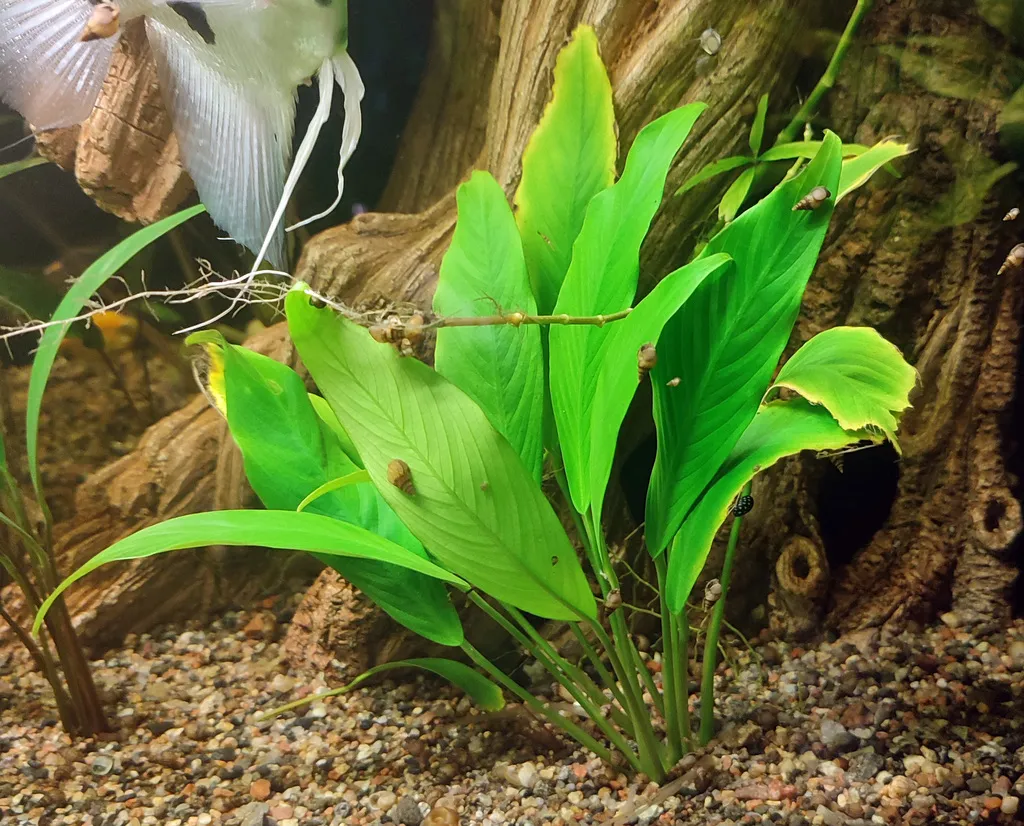 Medium lightBackground15.7 in (40 cm)
Anubias afzelii
Medium light · Background
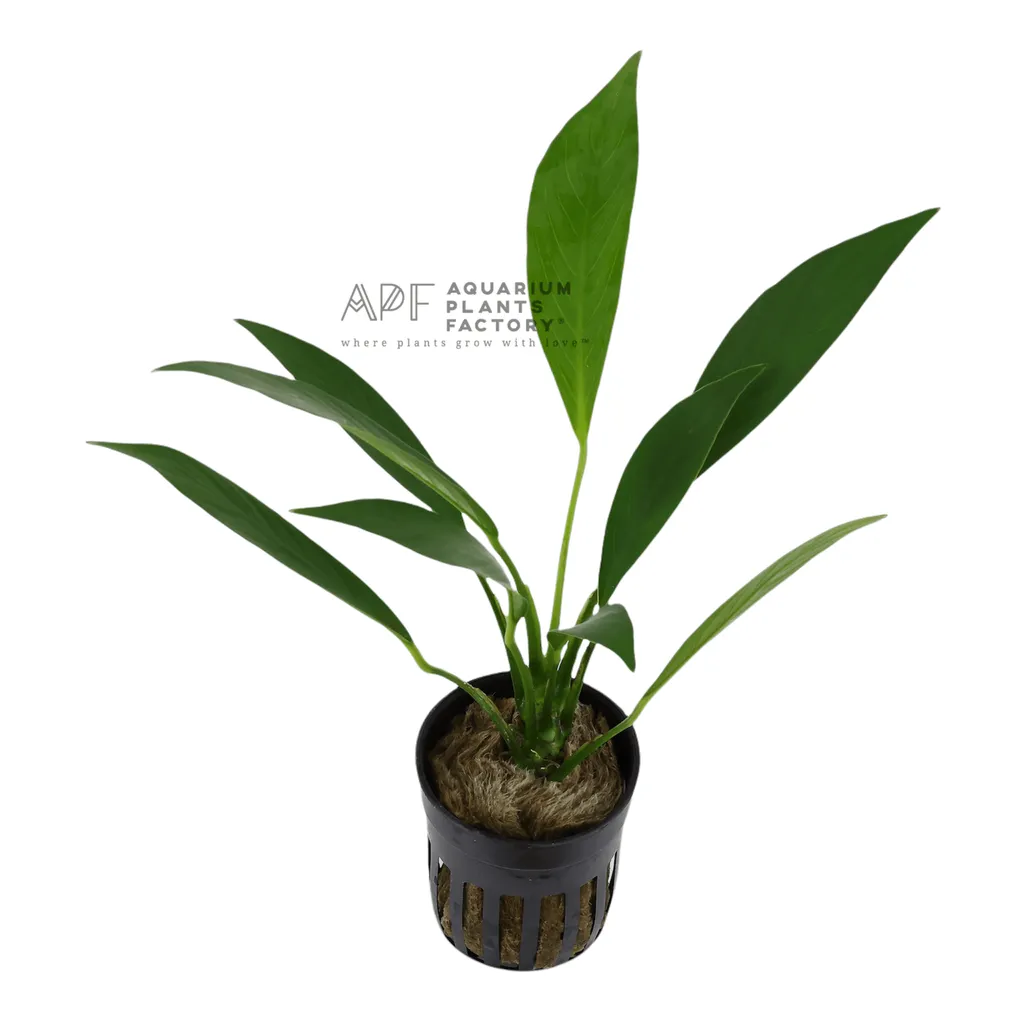 Low lightBackground15.7 in (40 cm)
Anubias congensis
Anubias heterophylla
Low light · Background
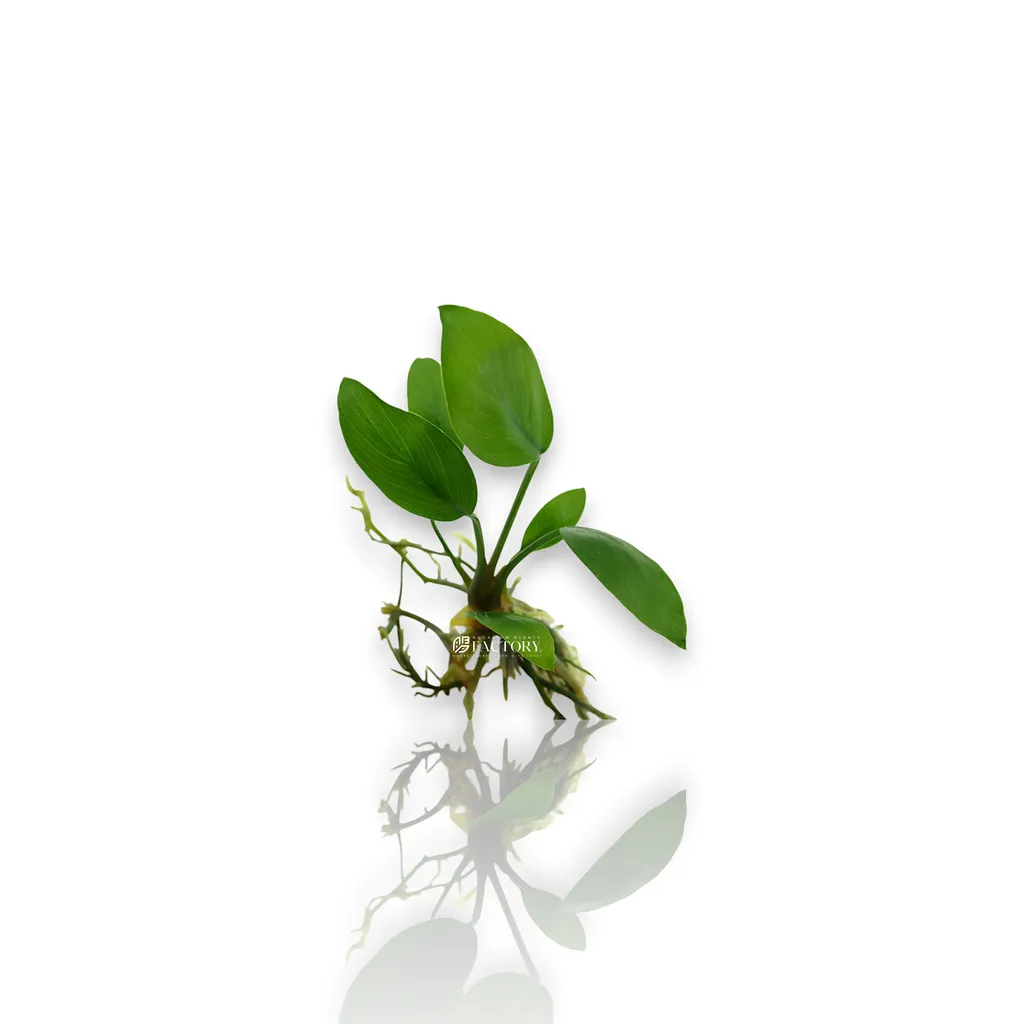 Low lightBackground15.7 in (40 cm)
Anubias hastifolia
Low light · Background
 Low lightEpiphyte15.7 in (40 cm)
Anubias gracilis
Low light · Epiphyte
 Low lightEpiphyte13.8 in (35 cm)
Anubias barteri
Low light · Epiphyte
 Low lightEpiphyte11.8 in (30 cm)
Anubias Broad Leaf
Anubias barteri var. barteri 'Broad Leaf'
Low light · Epiphyte