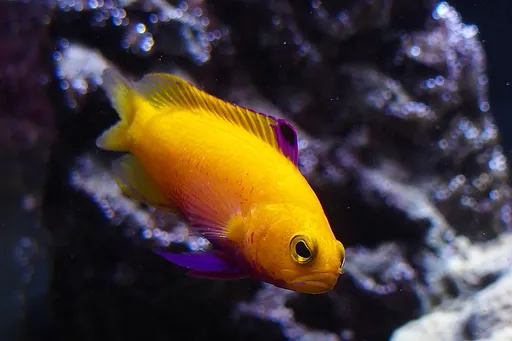
Golden basslet
Gramma dejongi
Also known as Cuban Basslet, Golden Cuban Basslet, Dejong's Basslet
SaltwaterFish
Care at a glance
- Temperature
- 75–81°F
- 24–27°C
- pH
- 8.1–8.4
- Adult size
- 2.8 in
- 7 cm
- Minimum tank
- 29 gal
- 110 L
- Temperament
- Mostly peaceful
- Social behavior
- Solitary
- Swim level
- Middle
- Diet
- Carnivore
- Difficulty
- Easy
- Breeding
- Cave spawner · Medium
- Rarity
- Very rare
- Reef safe
- Reef safe
- Family
- Grammatidae
- Origin
- Southern Cuba, Caribbean
Overview
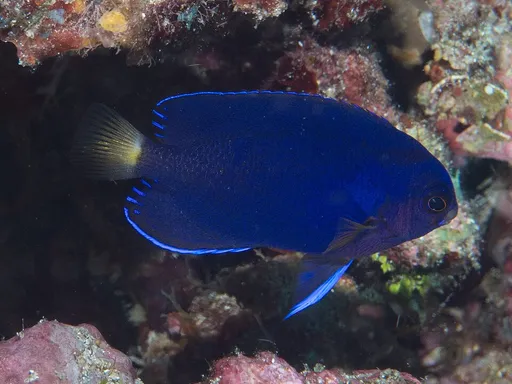
The golden basslet is a small, hardy fish for a reef tank, where it keeps close to a cave in the rock. It is easy to keep, and its care is essentially the same as a royal gramma's.
Did you know
The golden basslet was described only in 2010 from Cuban reefs. Genetic studies since then place it extremely close to the royal gramma. Some researchers treat it as a golden offshoot of that species.
Caring for the golden basslet
Give a golden basslet live rock with dark nooks, and it will pick a home cave quickly. The tank should hold at least 29 gal (110 L). Keep the water at 75 to 81°F (24 to 27°C), with a pH of 8.1 to 8.4.
The golden basslet is a carnivore. It takes mysis, enriched brine shrimp and other quality frozen foods without fuss.
It is peaceful toward unrelated tank mates but defends its chosen crevice against similar-looking fish, so keep one per tank. It is fully reef safe and ignores corals and ornamental invertebrates.
Like the royal gramma, it spawns in rock crevices, and the male tends the nest. Breeding it takes some experience.
Good to know
Gramma dejongi is a small basslet in the family Grammatidae. The trade embargo keeps wild Cuban fish out of most markets. Nearly every golden basslet for sale is captive bred, so prices stay high.
In the wild
The golden basslet is found only on reefs off southern Cuba. It lives in caves and under ledges on steep walls, often below common diving depths. Like its relatives, it hugs the rock and orients its belly to the nearest surface rather than to gravity.
Weekly picks
Tank mates
The golden basslet is a mostly peaceful, solitary species that keeps to the middle. These picks share a community profile with it, are safe together in both directions, and overlap on water type, temperature and pH.
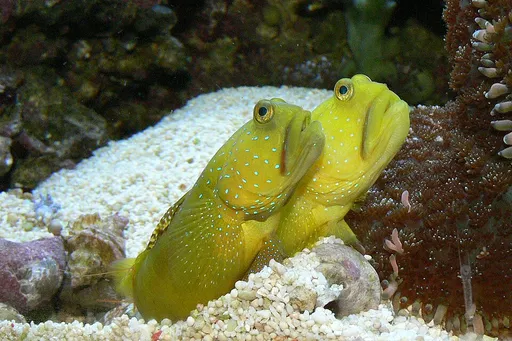
Yellow watchman goby
Cryptocentrus cinctus
Saltwater3.5 in (9 cm) · 20 gal (75 L)72–81°F (22–27°C)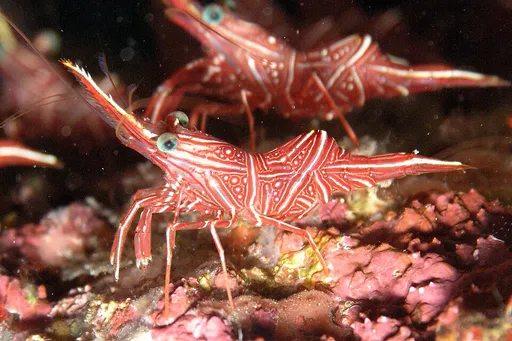
Camel / dancing shrimp
Rhynchocinetes durbanensis
Saltwater2 in (5 cm) · 16 gal (60 L)75–81°F (24–27°C)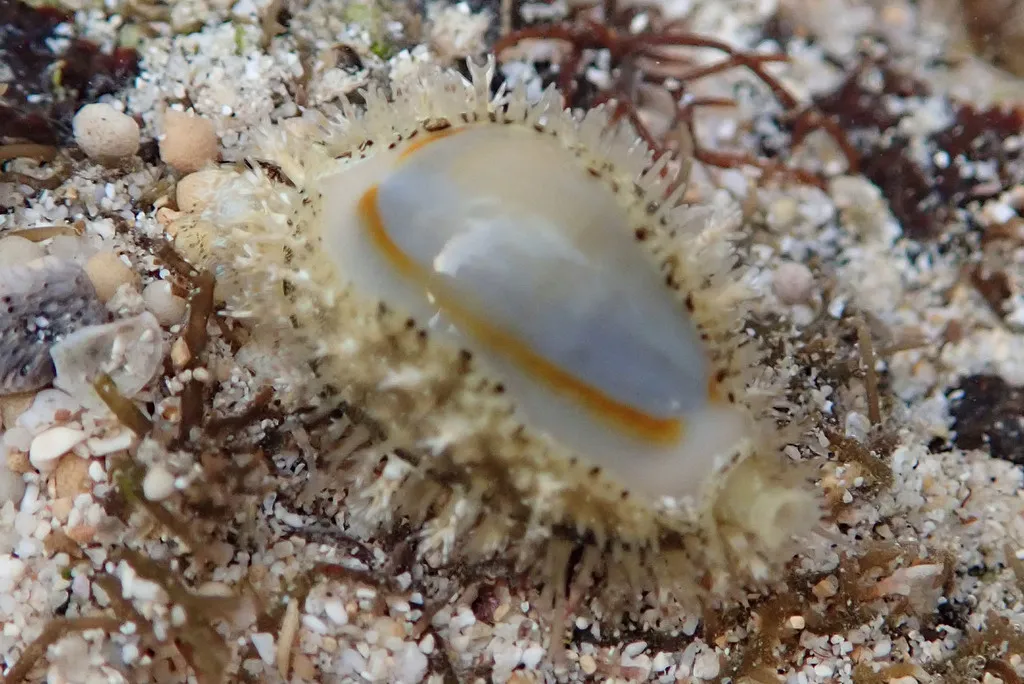
Ring cowrie
Monetaria annulus
Saltwater1.2 in (3 cm) · 20 gal (75 L)75–81°F (24–27°C)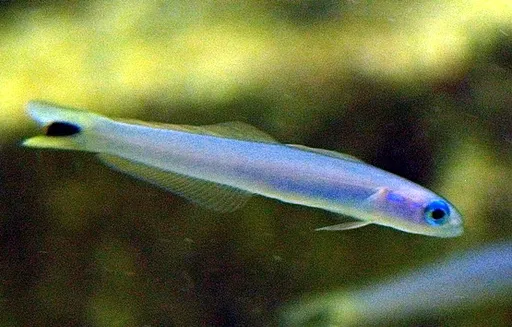
Blue gudgeon dartfish
Ptereleotris heteroptera
Saltwater5.1 in (13 cm) · 29 gal (110 L)72–79°F (22–26°C)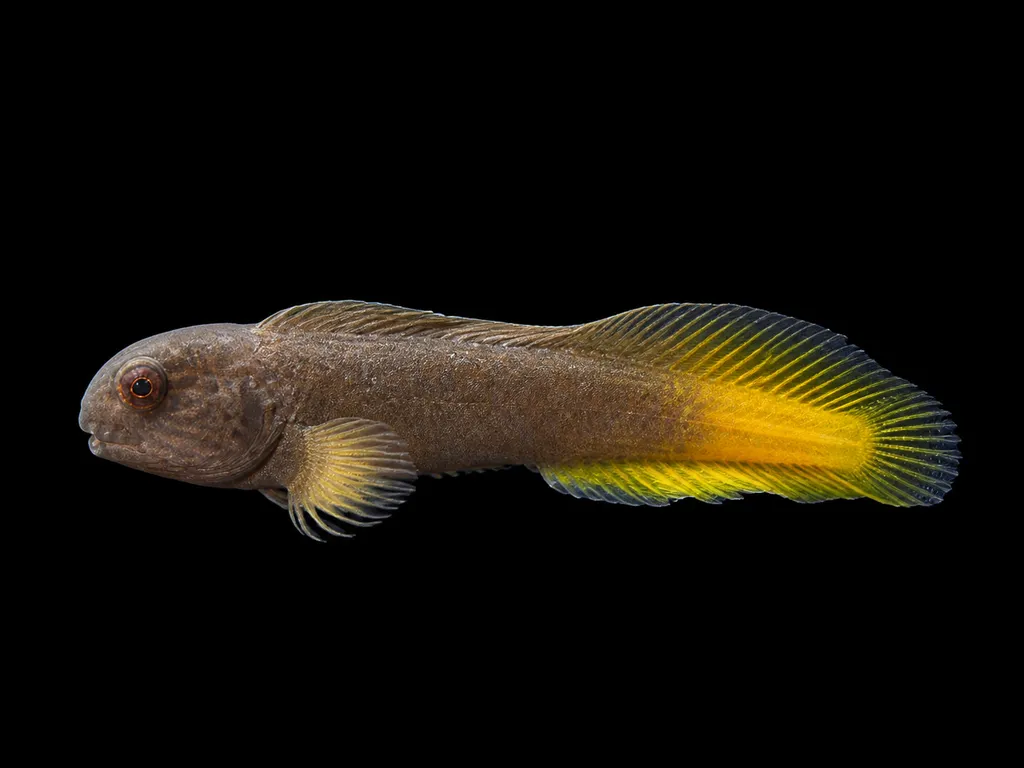
Flametail blenny
Enchelyurus flavipes
Saltwater3 in (7.5 cm) · 29 gal (110 L)72–79°F (22–26°C)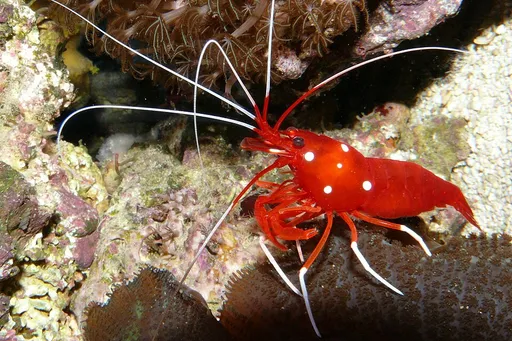
Fire shrimp
Lysmata debelius
Saltwater2.4 in (6 cm) · 20 gal (75 L)72–79°F (22–26°C)
Common questions
What size tank does a golden basslet need?
A golden basslet needs at least 29 gal (110 L). It spends most of its time in the middle.
What temperature and pH does a golden basslet need?
A golden basslet is comfortable at 75–81°F (24–27°C) with a pH of 8.1–8.4.
What does a golden basslet eat?
A golden basslet is a carnivore. It eats mysis, enriched brine shrimp and other quality frozen foods without fuss.
How big does a golden basslet get?
An adult golden basslet reaches about 2.8 in (7 cm).
How does a golden basslet breed?
Golden basslets spawn in rock crevices, much like the royal gramma, and the male tends the nest. Breeding them takes some experience.
Related species
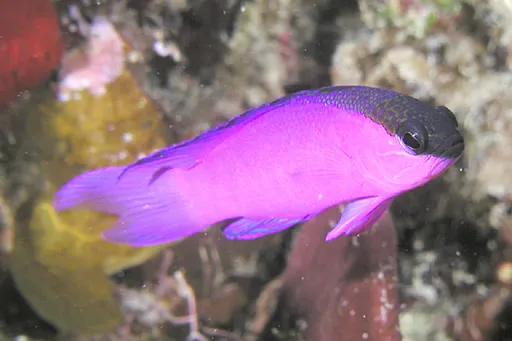
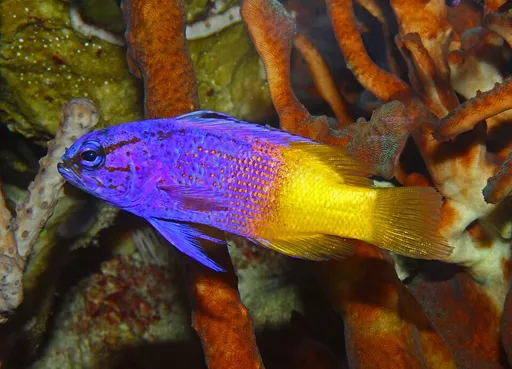 3.1 in (8 cm)29 gal (110 L)72–81°F (22–27°C)
Royal gramma
Gramma loreto
3.1 in (8 cm) · 29 gal (110 L)
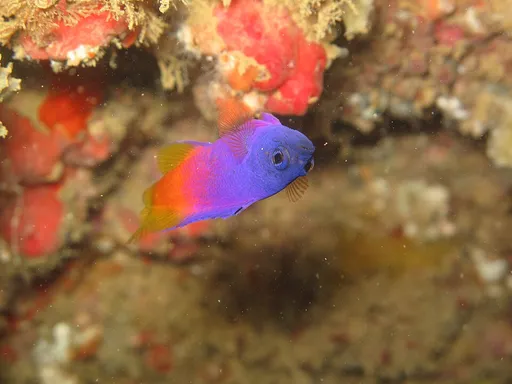
 3.9 in (10 cm)29 gal (110 L)72–81°F (22–27°C)
Blackcap basslet
Gramma melacara
3.9 in (10 cm) · 29 gal (110 L)
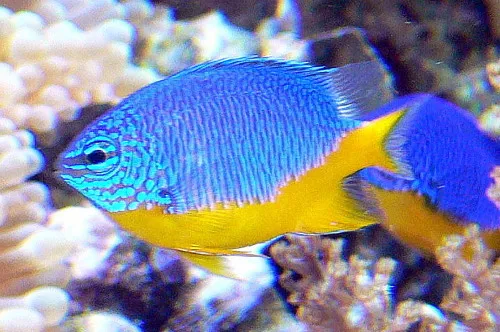
 3.5 in (9 cm)40 gal (150 L)73–81°F (23–27°C)
Brazilian gramma
Gramma brasiliensis
3.5 in (9 cm) · 40 gal (150 L)
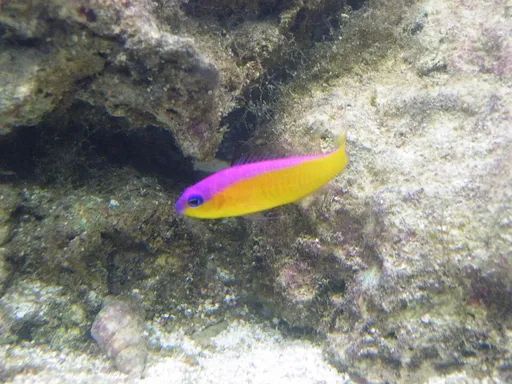
 2.8 in (7 cm)29 gal (110 L)75–81°F (24–27°C)
Azure damsel
Chrysiptera hemicyanea
2.8 in (7 cm) · 29 gal (110 L)
 2.8 in (7 cm)20 gal (75 L)73–81°F (23–27°C)
Diadem dottyback
Pseudochromis diadema
2.8 in (7 cm) · 20 gal (75 L)
 2.8 in (7 cm)53 gal (200 L)75–81°F (24–27°C)
Fisher's angelfish
Centropyge fisheri
2.8 in (7 cm) · 53 gal (200 L)