Banggai cardinalfish
Pterapogon kauderni
Also known as Kaudern's Cardinalfish, Kaudern's Cardinal, Longfin Cardinalfish
SaltwaterFish
Care at a glance
- Temperature
- 73–82°F
- 23–28°C
- pH
- 8.1–8.4
- Adult size
- 3.1 in
- 8 cm
- Minimum tank
- 29 gal
- 110 L
- Temperament
- Mostly peaceful
- Social behavior
- Social
- Swim level
- Middle
- Difficulty
- Easy
- Breeding
- Easy
- Rarity
- Common
- Reef safe
- Reef safe
- Family
- Apogonidae
- Origin
- Banggai Islands, Indonesia (western central Pacific)
Overview
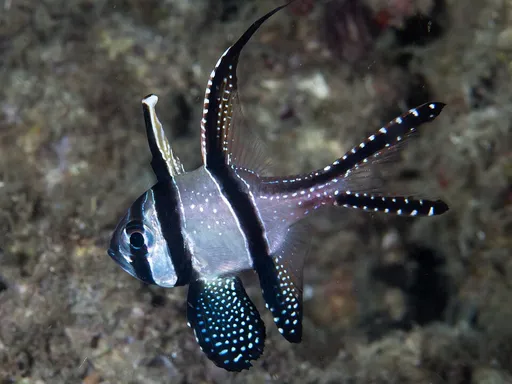
Banggai cardinalfish are reef safe and will not touch corals or sessile invertebrates, though a large adult may snap up very small ornamental shrimp. They can be kept singly, as a bonded pair, or in a small group in a larger tank, but be aware that a settled pair will often turn territorial and harass other Banggai that stray too close. Pair them with other calm, slow tankmates so they are not outcompeted at feeding time. They are carnivores that want small meaty foods like mysis and enriched brine.
In the wild
Banggai cardinalfish come from a tiny cluster of islands in Indonesia, where they shelter in seagrass beds, among branching corals, and famously in the spines of long-spined sea urchins as juveniles. They are slow, deliberate swimmers that hang in the water column near cover rather than roaming the tank. Give them a well-established system of at least 110 liters with plenty of live rock and open swimming lanes, and keep the water in the low to mid 20s Celsius.
Good to know
The species has an extremely small natural range, which is why it is listed as Endangered on the IUCN Red List and was proposed for CITES protection. It is a paternal mouthbrooder with direct development, meaning the male holds the eggs and then the fully formed young in his mouth for around three to four weeks, releasing miniature fish rather than free-swimming larvae. This large egg and direct development is unusual among marine fish and is one reason it breeds readily in captivity.
Did you know
Because the young develop directly in the father's mouth with no drifting larval stage, wild Banggai never spread far from their home islands, which is exactly why a fish so common in the aquarium trade is genuinely endangered in the sea. Buying captive bred stock takes pressure off those wild populations.
Symbiotic relationships
Banggai cardinalfish and the long-spine urchin
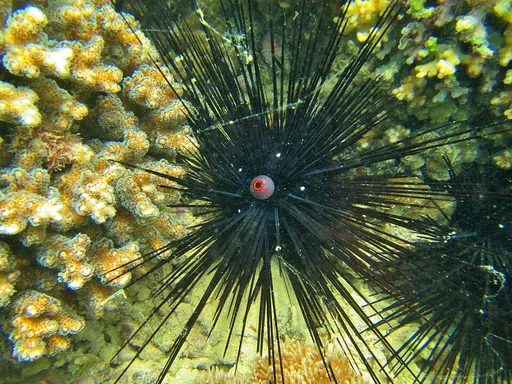
Banggai cardinalfish hover in small groups among the spines of long-spine urchins, and the young go deeper into the spines than the adults. The spines are long, brittle and venomous enough that predators leave the urchin alone, which makes the space between them a nursery. The fish are so tied to their shelter that a group rarely strays more than a few yards from it. The urchin gets nothing obvious in return.
Add a long-spine urchin to a mature tank with plenty of rock and algae for it to graze, at the tank size its own profile lists, and a group of Banggai will settle over it within days, drifting through the spines exactly as they do on the reef. The spines break off in skin, so keep hands and nets clear. Banggai cardinalfish are endangered in the wild: they have a tiny range, never disperse from their home reefs, and were collected heavily for the trade. Buy captive-bred fish, which are widely available.
Weekly picks
Tank mates
Banggai cardinalfish is a mostly peaceful, social species that keeps to the middle. These picks share a community profile with it, are safe together in both directions, and overlap on water type, temperature and pH.
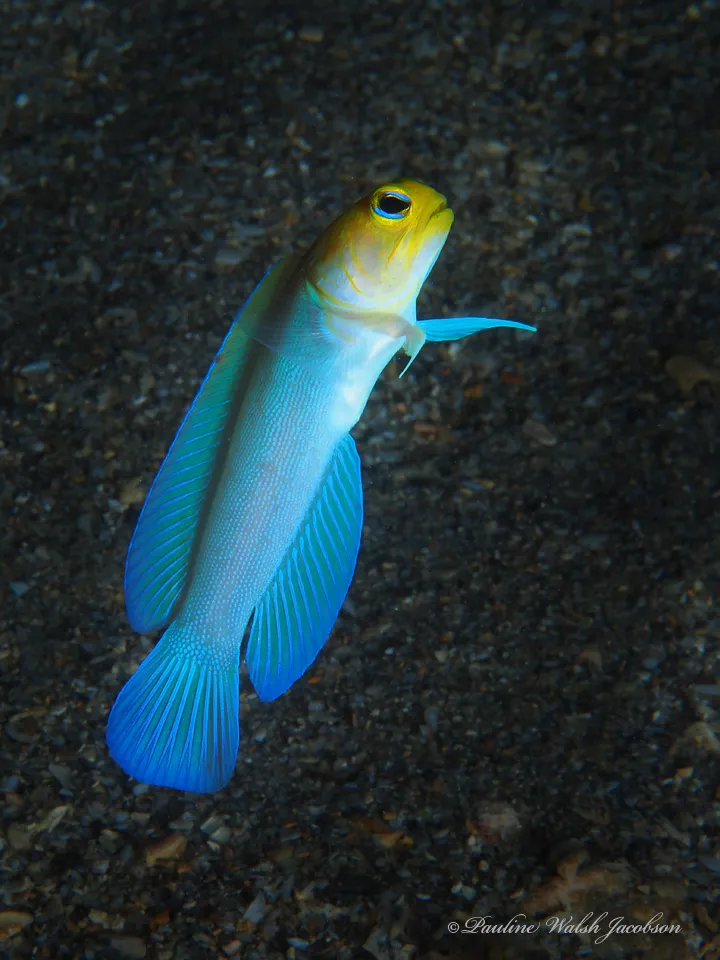
Pearly jawfish
Opistognathus aurifrons
Saltwater3.9 in (10 cm) · 29 gal (110 L)73–81°F (23–27°C)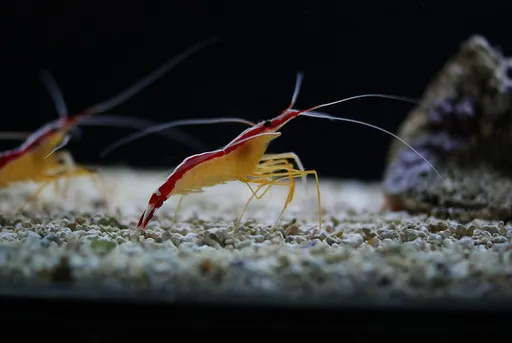
Skunk cleaner shrimp
Lysmata amboinensis
Saltwater2.4 in (6 cm) · 20 gal (75 L)73–81°F (23–27°C)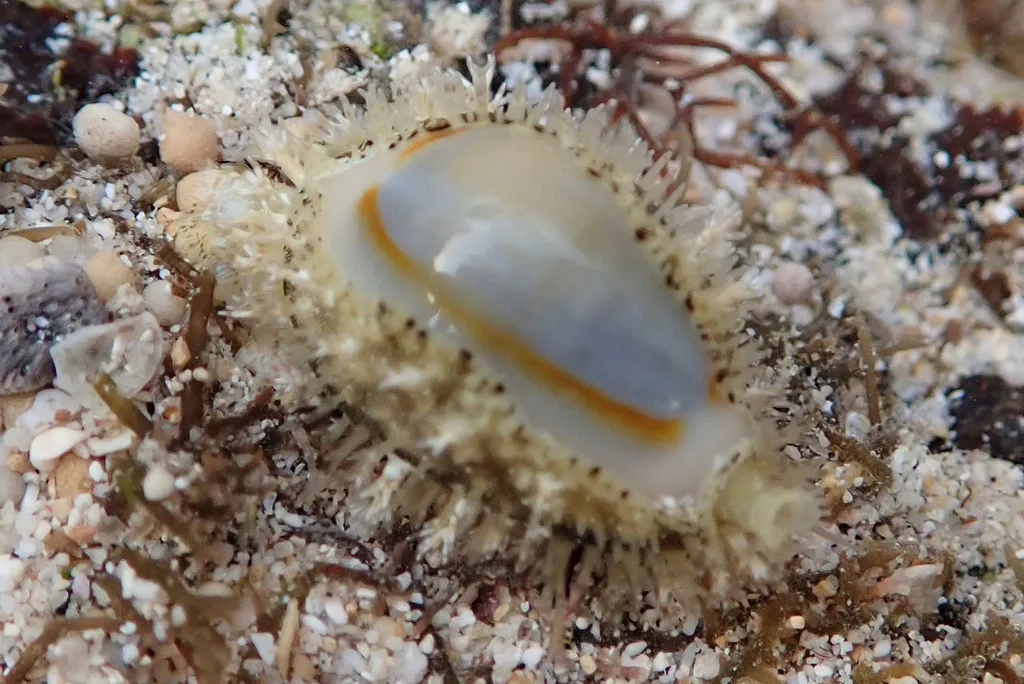
Ring cowrie
Monetaria annulus
Saltwater1.2 in (3 cm) · 20 gal (75 L)75–81°F (24–27°C)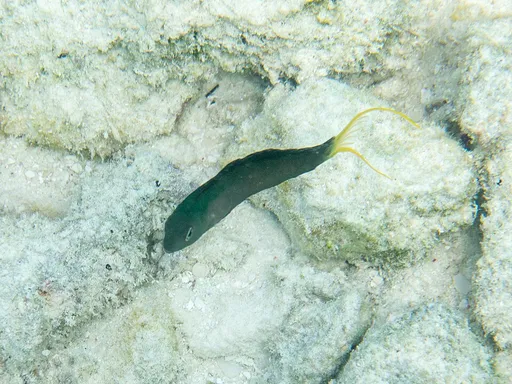
Mozambique fangblenny
Meiacanthus mossambicus
Saltwater3.5 in (9 cm) · 29 gal (110 L)72–79°F (22–26°C)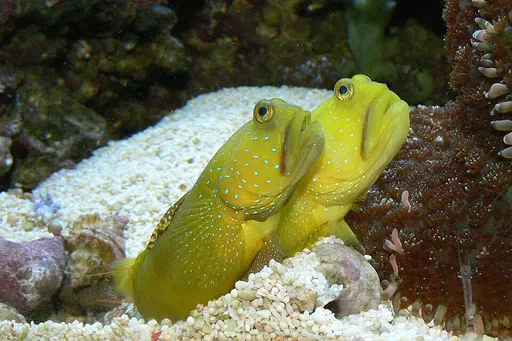
Yellow watchman goby
Cryptocentrus cinctus
Saltwater3.5 in (9 cm) · 20 gal (75 L)72–81°F (22–27°C)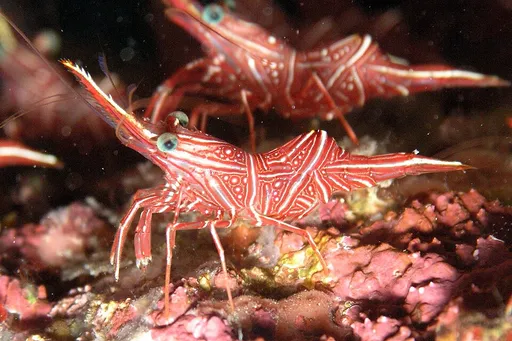
Camel / dancing shrimp
Rhynchocinetes durbanensis
Saltwater2 in (5 cm) · 16 gal (60 L)75–81°F (24–27°C)
Common questions
What size tank does a Banggai cardinalfish need?
A Banggai cardinalfish needs at least 29 gal (110 L). It spends most of its time in the middle.
What temperature and pH does a Banggai cardinalfish need?
A Banggai cardinalfish is comfortable at 73–82°F (23–28°C) with a pH of 8.1–8.4.
How big does a Banggai cardinalfish get?
An adult Banggai cardinalfish reaches about 3.1 in (8 cm).
Related species
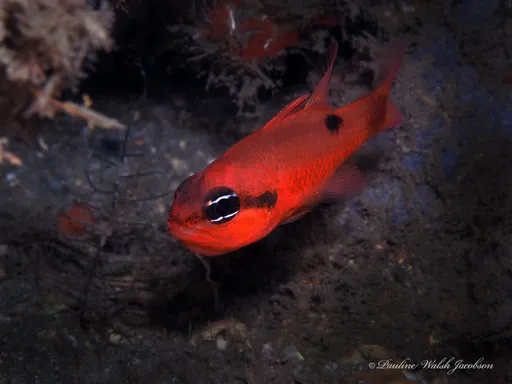 4.3 in (11 cm)30 gal (114 L)72–79°F (22–26°C)
Flame cardinalfish
Apogon maculatus
4.3 in (11 cm) · 30 gal (114 L)
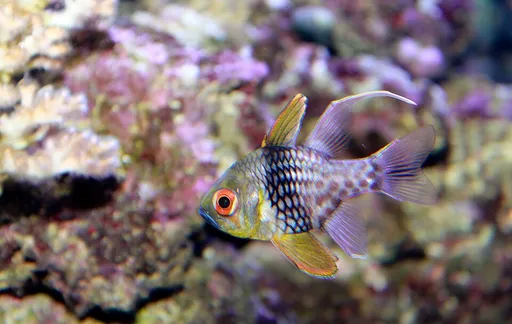 3.1 in (8 cm)29 gal (110 L)72–81°F (22–27°C)
Pajama cardinalfish
Sphaeramia nematoptera
3.1 in (8 cm) · 29 gal (110 L)
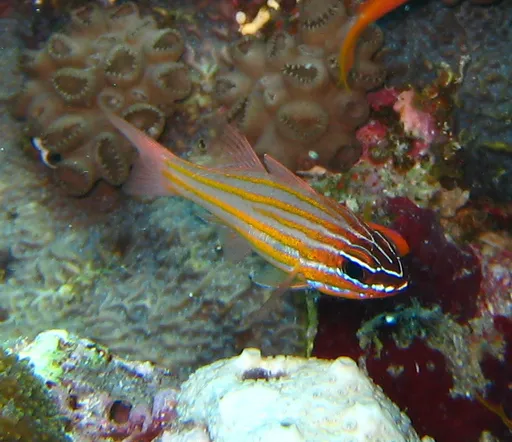 3.1 in (8 cm)30 gal (114 L)72–79°F (22–26°C)
Yellowstriped cardinalfish
Ostorhinchus cyanosoma
3.1 in (8 cm) · 30 gal (114 L)
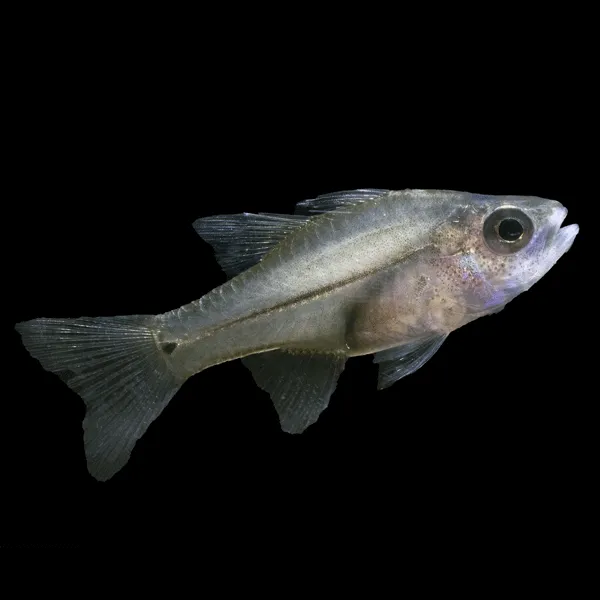 3.5 in (9 cm)50 gal (190 L)72–79°F (22–26°C)
Amboina cardinalfish
Fibramia amboinensis
3.5 in (9 cm) · 50 gal (190 L)
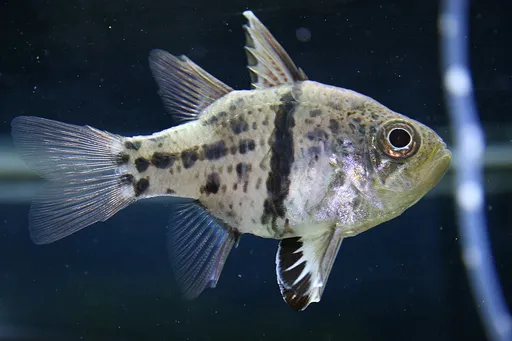 3.9 in (10 cm)30 gal (115 L)75–82°F (24–28°C)
Orbiculate cardinalfish
Sphaeramia orbicularis
3.9 in (10 cm) · 30 gal (115 L)
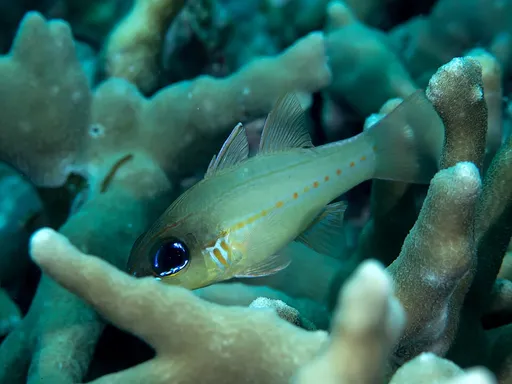 3.9 in (10 cm)29 gal (110 L)72–79°F (22–26°C)
Seale's cardinalfish
Ostorhinchus sealei
3.9 in (10 cm) · 29 gal (110 L)