Long-spine urchin
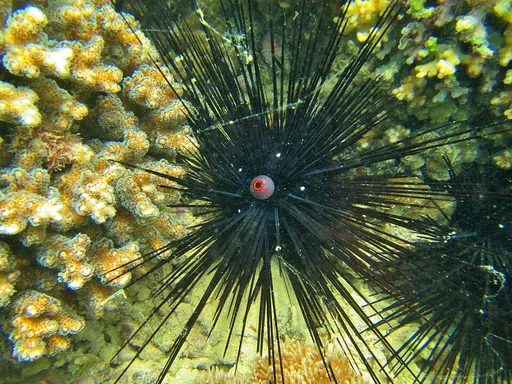
Diadema setosum
Also known as Longspine Urchin, Long-spined Sea Urchin, Black Long-spine Urchin
SaltwaterInvertebrate
Care at a glance
- Temperature
- 72–79°F
- 22–26°C
- pH
- 8.1–8.4
- Adult size
- 9.8 in
- 25 cm
- Minimum tank
- 50 gal
- 190 L
- Temperament
- Peaceful
- Social behavior
- Solitary
- Swim level
- Bottom
- Difficulty
- Easy
- Breeding
- No record
- Rarity
- Common
- Reef safe
- Reef safe with caution
- Family
- Diadematidae
- Origin
- Indo-Pacific reefs from the Red Sea and East Africa across to the western Pacific; the Diadema genus also includes the Caribbean D. antillarum
Overview
A large nocturnal grazer best kept singly in bigger reef and fish-only systems. Peaceful toward tankmates but its long venomous spines are a hazard to careless hands and to fish that blunder into them. Drip acclimate slowly, as it is intolerant of sudden salinity, pH, or oxygen swings.
In the wild
A powerhouse algae grazer of Indo-Pacific reefs, hiding in crevices by day and roaming to scrape algae at night. It needs a large, mature tank with open grazing surfaces and enough rock to shelter under. Because the whole animal including spines can span 25 cm or more, it wants real swimming and grazing room rather than a nano.
Good to know
Diadema setosum belongs to the family Diadematidae. Its extremely long, thin, hollow spines are venomous and brittle, breaking off in skin and delivering a painful sting, so it must be handled with care during acclimation and rockwork. It is an efficient herbivore that controls turf and film algae, and in the wild Diadema are keystone grazers that keep reefs from being smothered by algae.
Did you know
Its needle-like spines can pivot toward a shadow passing overhead, and many species carry a photoreceptive ring that helps the whole urchin behave like a crude compound eye.
Symbiotic relationships
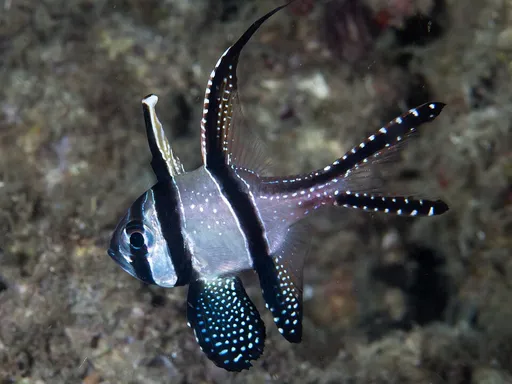
Banggai cardinalfish and the long-spine urchin
Banggai cardinalfish hover in small groups among the spines of long-spine urchins, and the young go deeper into the spines than the adults. The spines are long, brittle and venomous enough that predators leave the urchin alone, which makes the space between them a nursery. The fish are so tied to their shelter that a group rarely strays more than a few yards from it. The urchin gets nothing obvious in return.
Add a long-spine urchin to a mature tank with plenty of rock and algae for it to graze, at the tank size its own profile lists, and a group of Banggai will settle over it within days, drifting through the spines exactly as they do on the reef. The spines break off in skin, so keep hands and nets clear. Banggai cardinalfish are endangered in the wild: they have a tiny range, never disperse from their home reefs, and were collected heavily for the trade. Buy captive-bred fish, which are widely available.
Common questions
What size tank does a Long-spine urchin need?
A Long-spine urchin needs at least 50 gal (190 L). It spends most of its time in the bottom.
What temperature and pH does a Long-spine urchin need?
A Long-spine urchin is comfortable at 72–79°F (22–26°C) with a pH of 8.1–8.4.
How big does a Long-spine urchin get?
An adult Long-spine urchin reaches about 9.8 in (25 cm).
Related species
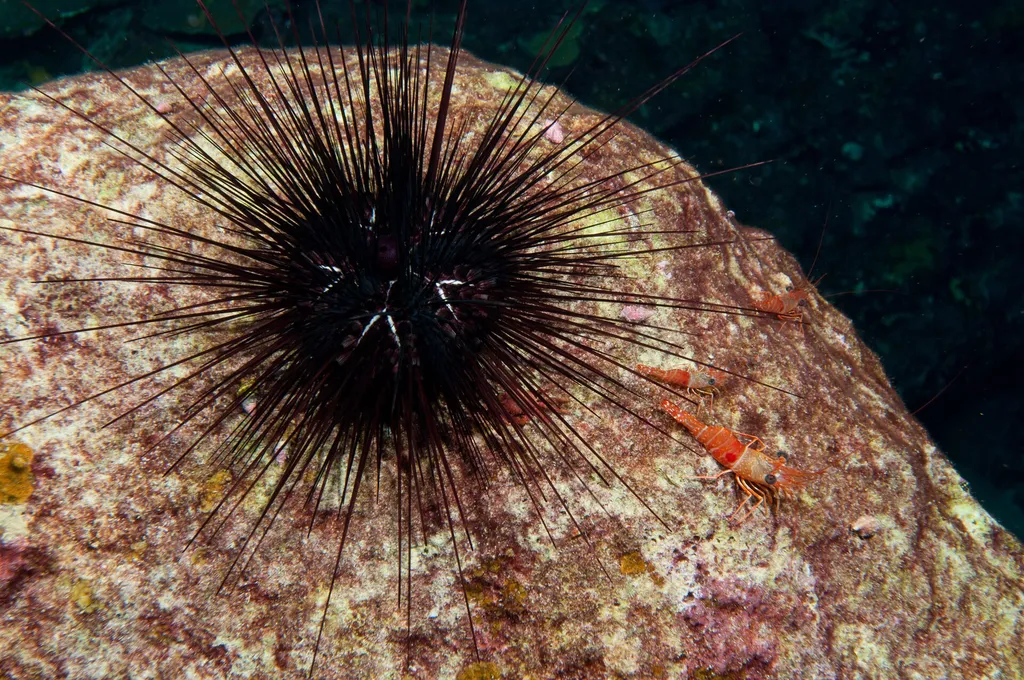 3.9 in (10 cm)79 gal (300 L)72–81°F (22–27°C)
Caribbean long-spined urchin
Diadema antillarum
3.9 in (10 cm) · 79 gal (300 L)
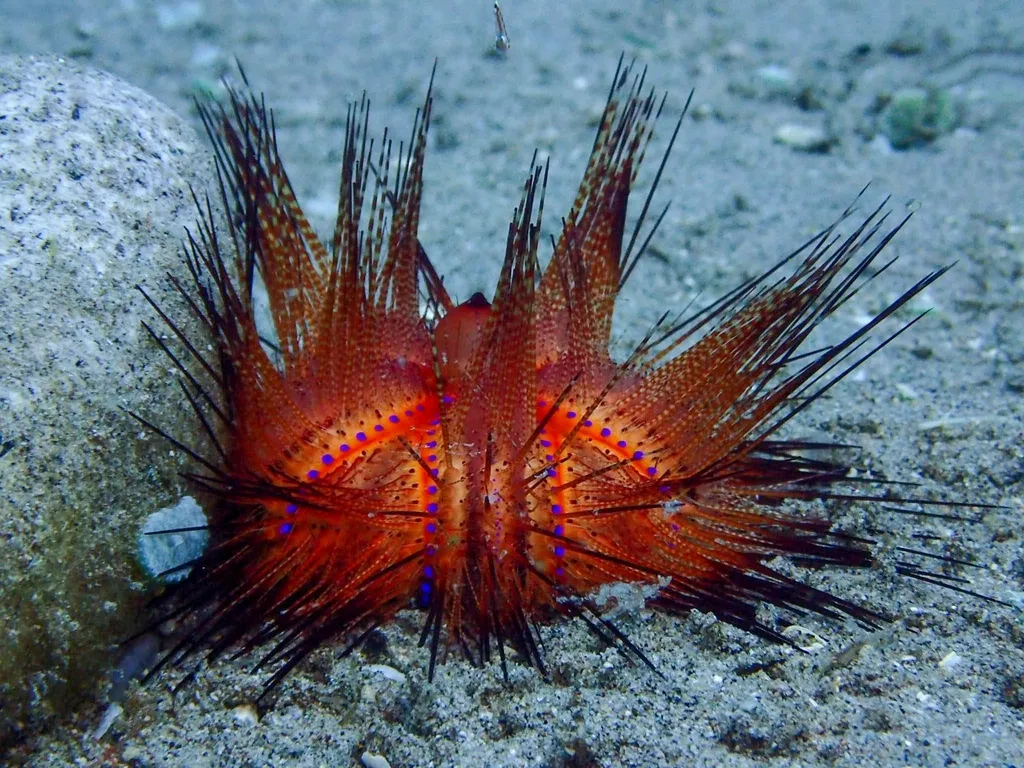 7.9 in (20 cm)100 gal (380 L)72–82°F (22–28°C)
Blue spot urchin
Astropyga radiata
7.9 in (20 cm) · 100 gal (380 L)
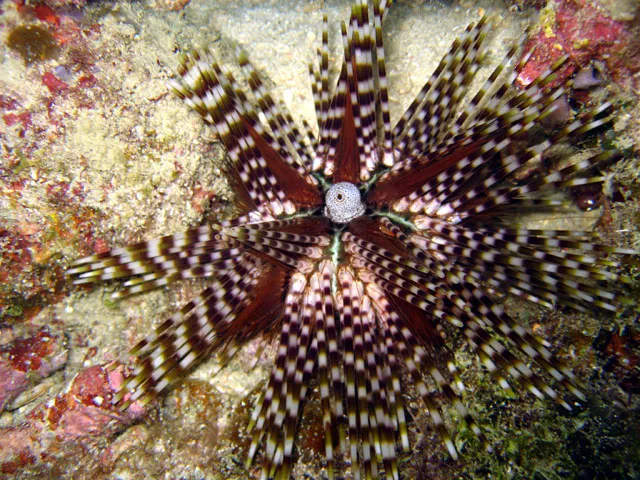 3.1 in (8 cm)50 gal (190 L)72–79°F (22–26°C)
Banded urchin
Echinothrix calamaris
3.1 in (8 cm) · 50 gal (190 L)
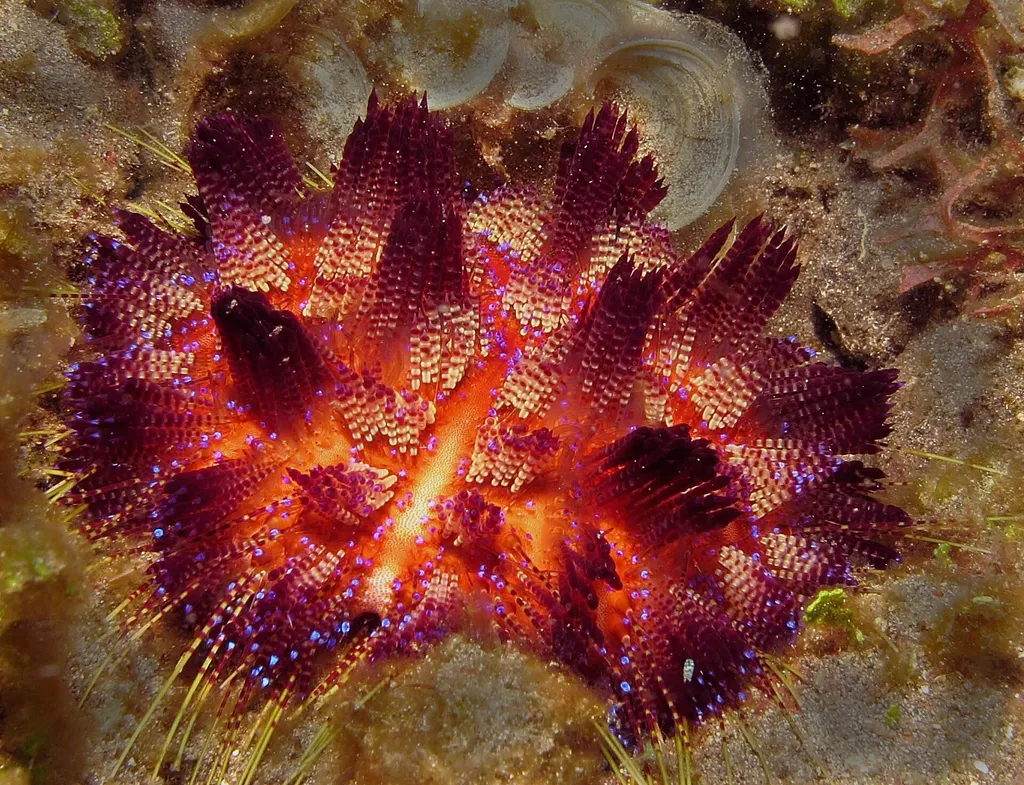 9.8 in (25 cm)201 gal (760 L)72–81°F (22–27°C)
Fire urchin
Asthenosoma varium
9.8 in (25 cm) · 201 gal (760 L)
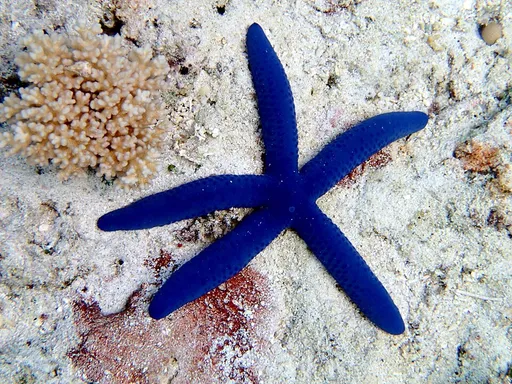 11.8 in (30 cm)53 gal (200 L)75–81°F (24–27°C)
Blue linckia star
Linckia laevigata
11.8 in (30 cm) · 53 gal (200 L)
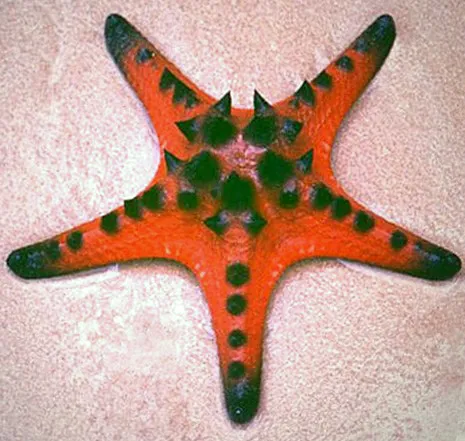 11.8 in (30 cm)53 gal (200 L)75–81°F (24–27°C)
Chocolate chip star
Protoreaster nodosus
11.8 in (30 cm) · 53 gal (200 L)