Blue spot urchin
Astropyga radiata
Also known as Blue spot star urchin, Blue spot longspine urchin, Radiant sea urchin, Red urchin, Red radiating hatpin urchin, Blue-spotted urchin
SaltwaterInvertebrate
Care at a glance
- Temperature
- 72–82°F
- 22–28°C
- pH
- 8.1–8.4
- Adult size
- 7.9 in
- 20 cm
- Minimum tank
- 100 gal
- 380 L
- Temperament
- Peaceful
- Social behavior
- Solitary
- Tankmates
- With caution
- Swim level
- Bottom
- Difficulty
- Medium
- Breeding
- No record
- Rarity
- Rare
- Reef safe
- Reef safe with caution
- Family
- Diadematidae
- Origin
- Indo-Pacific lagoons and sandy bays, East Africa to Hawaii
Overview
Peaceful toward fish but a caution for a reef: it grazes algae mainly, yet it also eats sponges, bivalves, small snails, and dead animals, and its bulk topples frags. It is fish safe, but triggers, puffers, and large wrasses will eat it. Keep one per tank at 22 to 28 C, pH 8.1 to 8.4, in a mature system with plenty of film algae, and feed dried seaweed or algae pellets several times a week. Drip acclimate slowly, keep nitrate low, and never use copper. Move it with tongs or a container, never bare hands.
In the wild
The blue spot urchin lives on sand, shingle, and coral rubble in lagoons and sheltered bays across the Indo-Pacific, from East Africa to Hawaii and Australia, usually at 10 to 30 m. It hides in the day and wanders open bottom at night, and in some places it gathers in dense herds. In the tank it needs a wide sand floor with rock it can shelter under, in 380 liters or more, because an adult is the size of a dinner plate. Rockwork must be locked together, since it will shove loose pieces aside.
Good to know
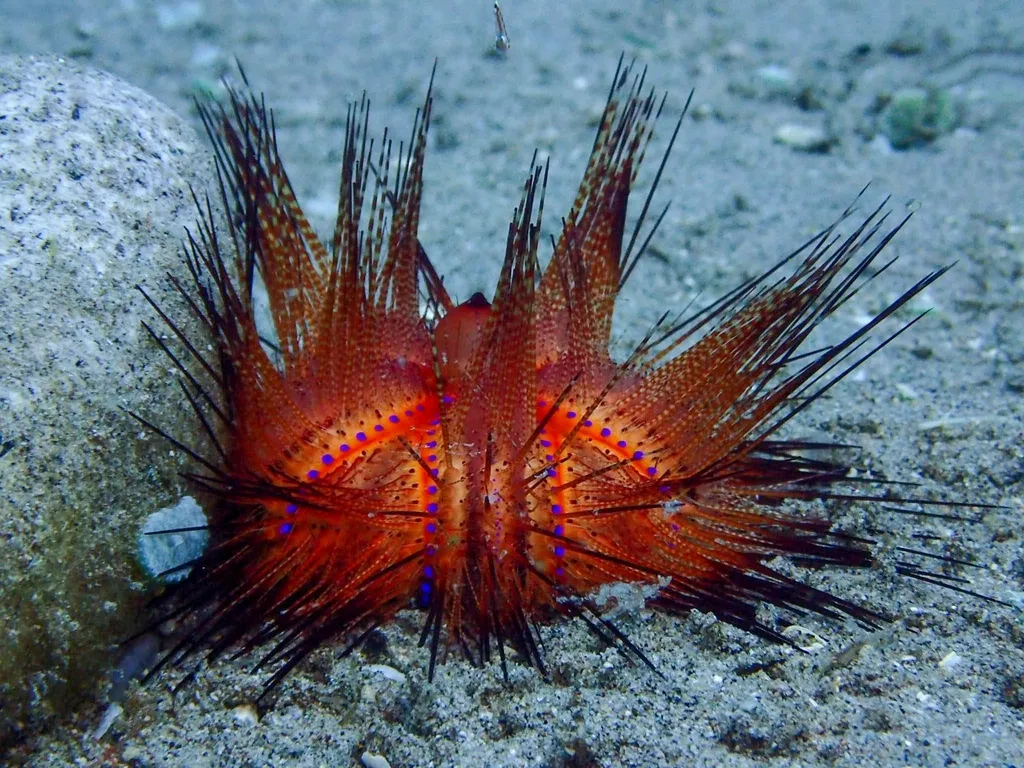
Astropyga radiata is a diadematid urchin, the same family as the long-spine urchins. The test is broad and flattened and reaches about 20 cm across, with spines only about 4 cm long arranged in five V-shaped bands, and the bare zones between them carry rows of iridescent blue dots. It is light sensitive and points its spines at anything that casts a shadow. The spines are venomous and give a painful sting, though not a dangerous one. Wild animals host commensal shrimp such as Periclimenes hirsutus, zebra crabs, and juvenile cardinalfish among the spines.
Did you know
In the Indo-Pacific the urchin crab Dorippe frascone picks up a live blue spot urchin and carries it on its back like a shield, walking around under a venomous umbrella that predators leave alone. The urchin gets carried to fresh feeding grounds, so both animals get something out of the deal.
Common questions
What size tank does a Blue spot urchin need?
A Blue spot urchin needs at least 100 gal (380 L). It spends most of its time in the bottom.
What temperature and pH does a Blue spot urchin need?
A Blue spot urchin is comfortable at 72–82°F (22–28°C) with a pH of 8.1–8.4.
How big does a Blue spot urchin get?
An adult Blue spot urchin reaches about 7.9 in (20 cm).
Related species
 9.8 in (25 cm)50 gal (190 L)72–79°F (22–26°C)
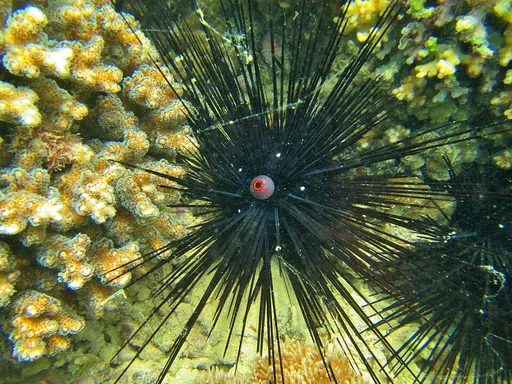
Long-spine urchin
Diadema setosum
9.8 in (25 cm) · 50 gal (190 L)
 3.9 in (10 cm)79 gal (300 L)72–81°F (22–27°C)
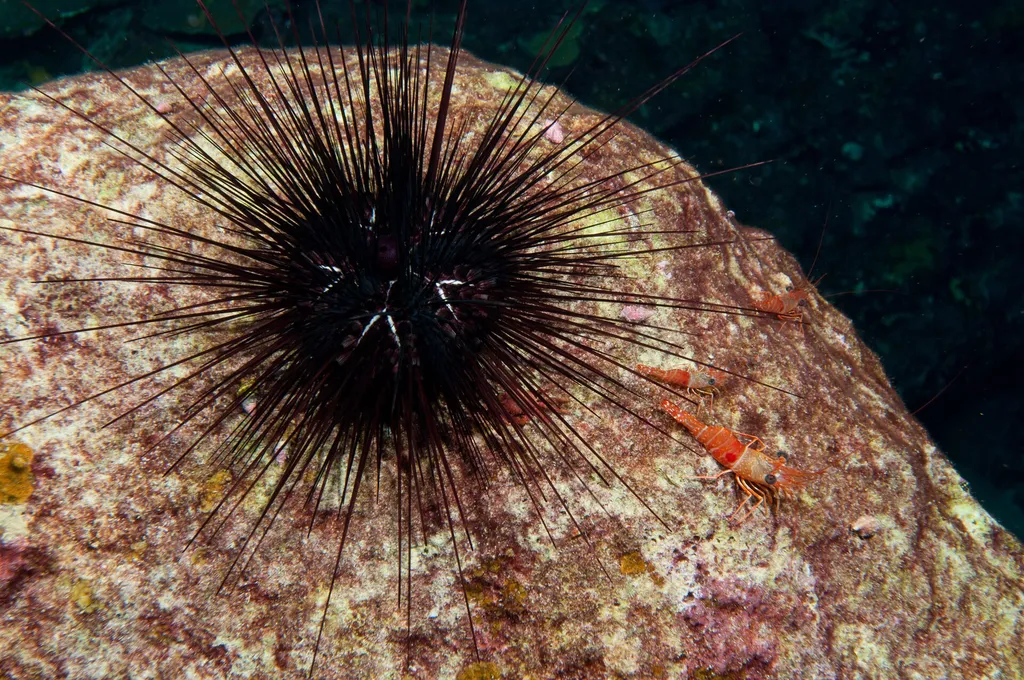
Caribbean long-spined urchin
Diadema antillarum
3.9 in (10 cm) · 79 gal (300 L)
 3.1 in (8 cm)50 gal (190 L)72–79°F (22–26°C)
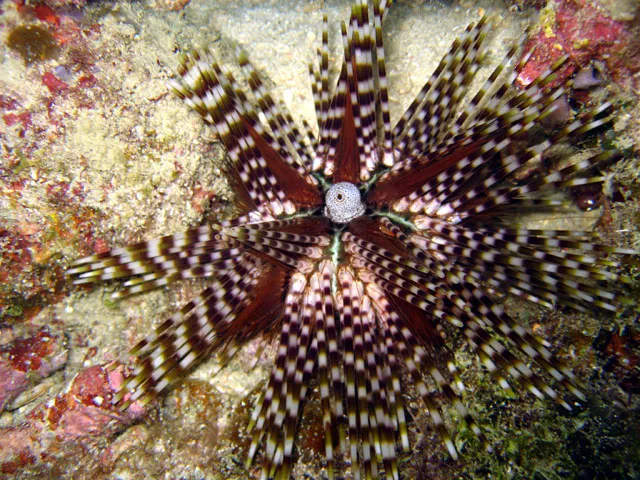
Banded urchin
Echinothrix calamaris
3.1 in (8 cm) · 50 gal (190 L)
- 7.9 in (20 cm)53 gal (200 L)72–81°F (22–27°C)
Sea biscuit
Clypeaster subdepressus
7.9 in (20 cm) · 53 gal (200 L)
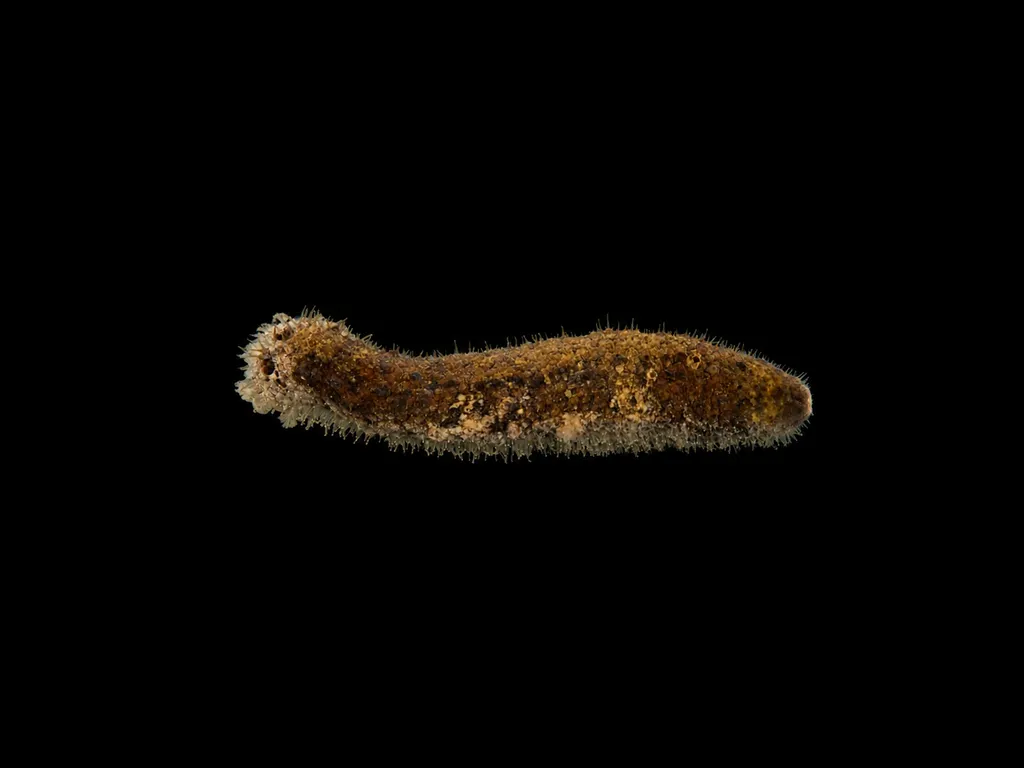 7.1 in (18 cm)20 gal (75 L)75–81°F (24–27°C)
Sand-sifting sea cucumber
Holothuria floridana
7.1 in (18 cm) · 20 gal (75 L)
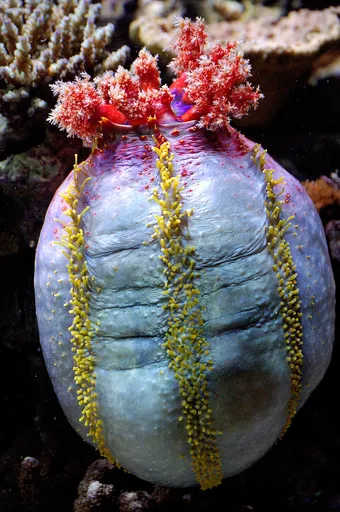 7.1 in (18 cm)20 gal (75 L)75–81°F (24–27°C)
Sea apple
Pseudocolochirus violaceus
7.1 in (18 cm) · 20 gal (75 L)