Sea apple
Pseudocolochirus violaceus
Also known as Violet Sea Apple, Australian Sea Apple, Sea Apple Cucumber
SaltwaterInvertebrate
Care at a glance
- Temperature
- 75–81°F
- 24–27°C
- pH
- 8.1–8.4
- Adult size
- 7.1 in
- 18 cm
- Minimum tank
- 20 gal
- 75 L
- Temperament
- Peaceful
- Social behavior
- Solitary
- Swim level
- Bottom
- Difficulty
- Difficult
- Breeding
- No record
- Rarity
- Common
- Reef safe
- Reef safe with caution
- Family
- Cucumariidae
- Origin
- Indo-Pacific, including the Red Sea, Sri Lanka, Vietnam and northern Australia
Overview
A strikingly colorful, peaceful filter feeder that spends its time perched in the flow with its tentacles spread. It is rated reef safe with caution because of one specific, serious risk rather than any coral-eating habit: like other sea cucumbers it carries a toxin called holothurin, and a sea apple that is badly stressed, injured, or killed can release enough of it to wipe out every fish and invertebrate in a closed system. Never keep it with butterflyfish, large angelfish, or other fish that pick at inverts, since a nipped sea apple is a dying sea apple. It needs daily feedings of phytoplankton and other fine suspended foods dosed upstream of it, not squirted directly onto its tentacles, and it depends on a mature tank with real plankton in the water column to round out what you feed. Drip acclimate it slowly and handle it as little as possible; if one does die, do a series of water changes and run fresh carbon immediately.
In the wild
Sea apples are found across the Indo-Pacific, including the Red Sea, Sri Lanka, Vietnam, and northern Australia, anchoring to rock and rubble in current-swept areas where they can extend their tentacles into passing water. In the aquarium it needs an established reef with moderate to strong, steady flow, plenty of live rock to perch on, and open room to relocate itself until it finds a spot it likes. Every pump and overflow intake needs a fine screen, since the animal will crawl into anything that pulls water, and being drawn in is usually fatal to it and dangerous to the rest of the tank.
Good to know
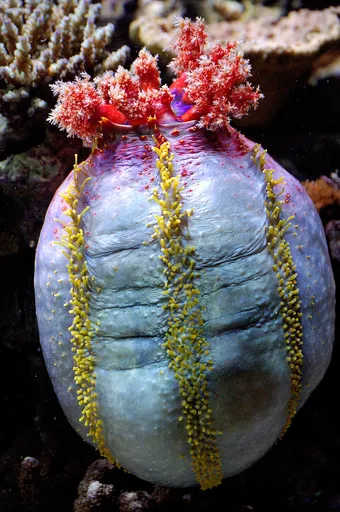
Pseudocolochirus violaceus is a filter-feeding sea cucumber in the family Cucumariidae, instantly recognizable for its plump violet to blue body studded with orange to red tube feet and a crown of ten branched, sticky tentacles it uses to catch food from the water column. It reaches about 18 cm long. Unlike deposit-feeding cucumbers that eat sand, it captures suspended plankton and organic particles directly, wiping each tentacle across its mouth in turn to swallow whatever has stuck to it.
Did you know
Its beauty is exactly what makes it dangerous: a dying sea apple releases holothurin into the water fast enough that experienced reefers treat any sea apple in obvious distress as a tank emergency, pulling it immediately rather than waiting to see if it recovers.
Common questions
What size tank does a Sea apple need?
A Sea apple needs at least 20 gal (75 L). It spends most of its time in the bottom.
What temperature and pH does a Sea apple need?
A Sea apple is comfortable at 75–81°F (24–27°C) with a pH of 8.1–8.4.
How big does a Sea apple get?
An adult Sea apple reaches about 7.1 in (18 cm).
Related species
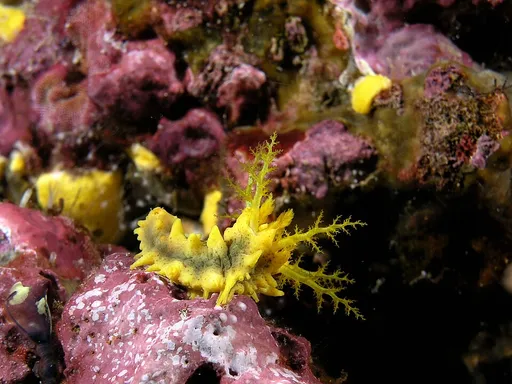 3.9 in (10 cm)11 gal (40 L)75–81°F (24–27°C)
Yellow sea cucumber
Colochirus robustus
3.9 in (10 cm) · 11 gal (40 L)
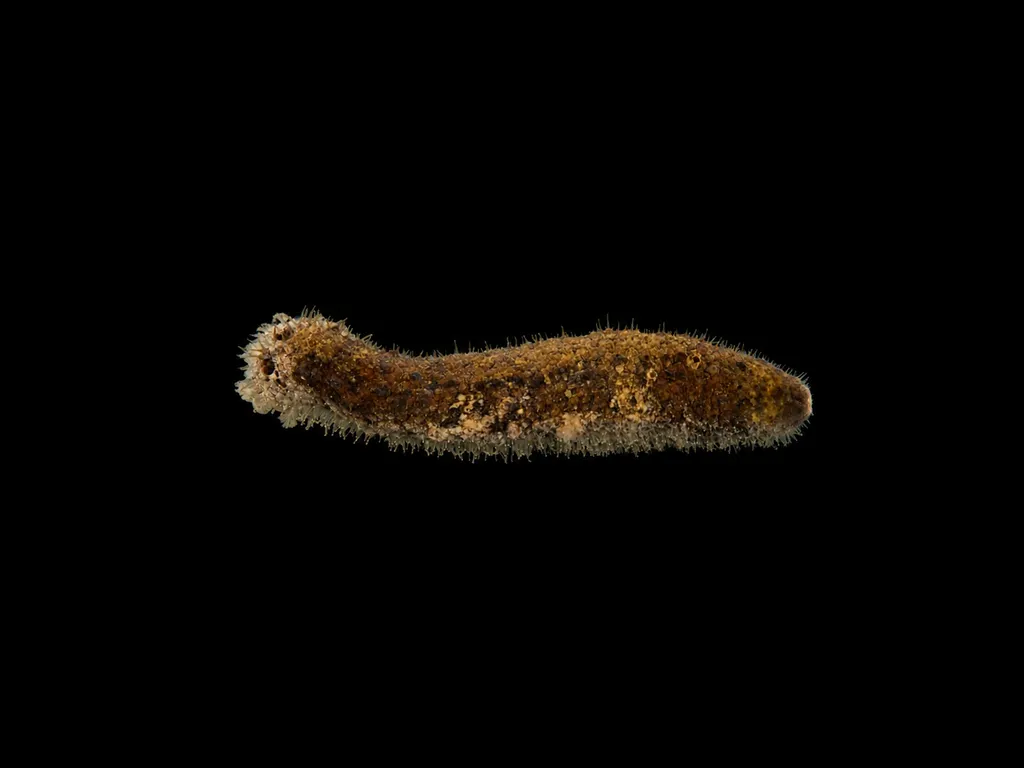 7.1 in (18 cm)20 gal (75 L)75–81°F (24–27°C)
Sand-sifting sea cucumber
Holothuria floridana
7.1 in (18 cm) · 20 gal (75 L)
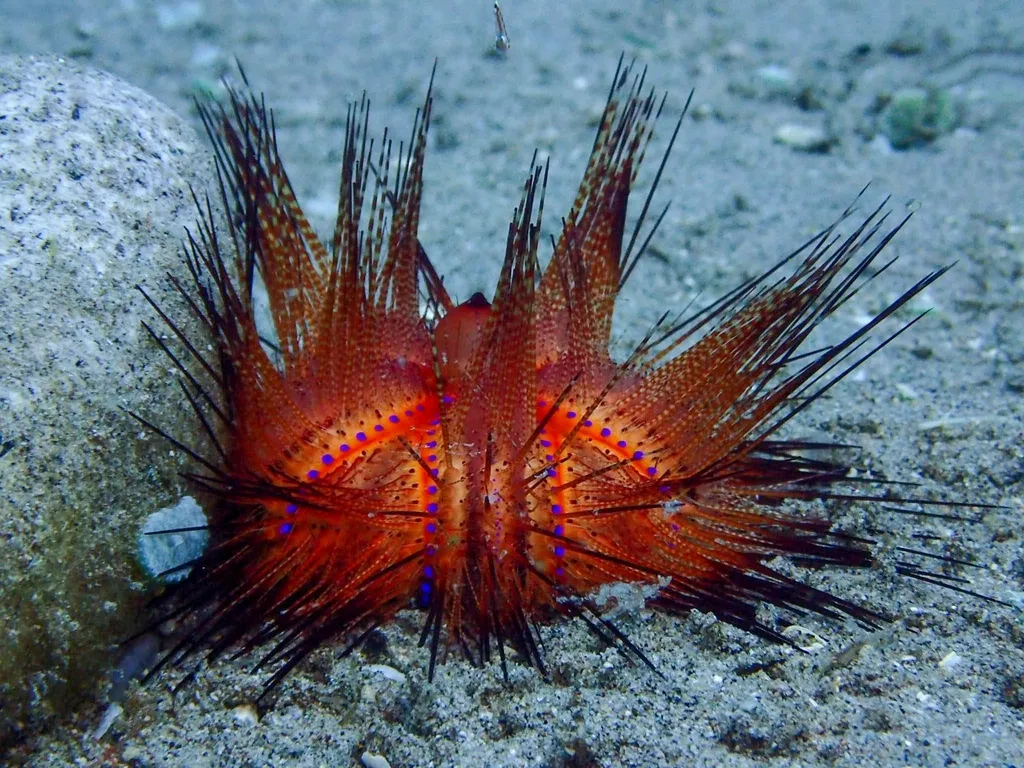 7.9 in (20 cm)100 gal (380 L)72–82°F (22–28°C)
Blue spot urchin
Astropyga radiata
7.9 in (20 cm) · 100 gal (380 L)
- 7.9 in (20 cm)53 gal (200 L)72–81°F (22–27°C)
Sea biscuit
Clypeaster subdepressus
7.9 in (20 cm) · 53 gal (200 L)
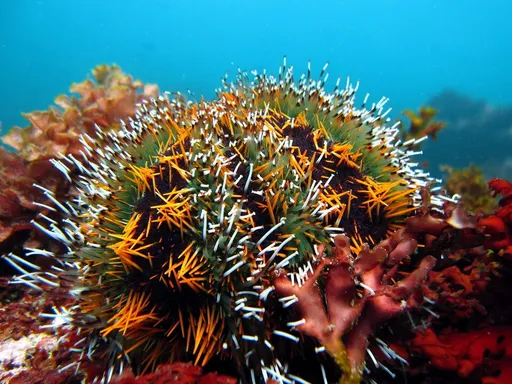 5.9 in (15 cm)20 gal (75 L)75–81°F (24–27°C)
Collector urchin
Tripneustes gratilla
5.9 in (15 cm) · 20 gal (75 L)
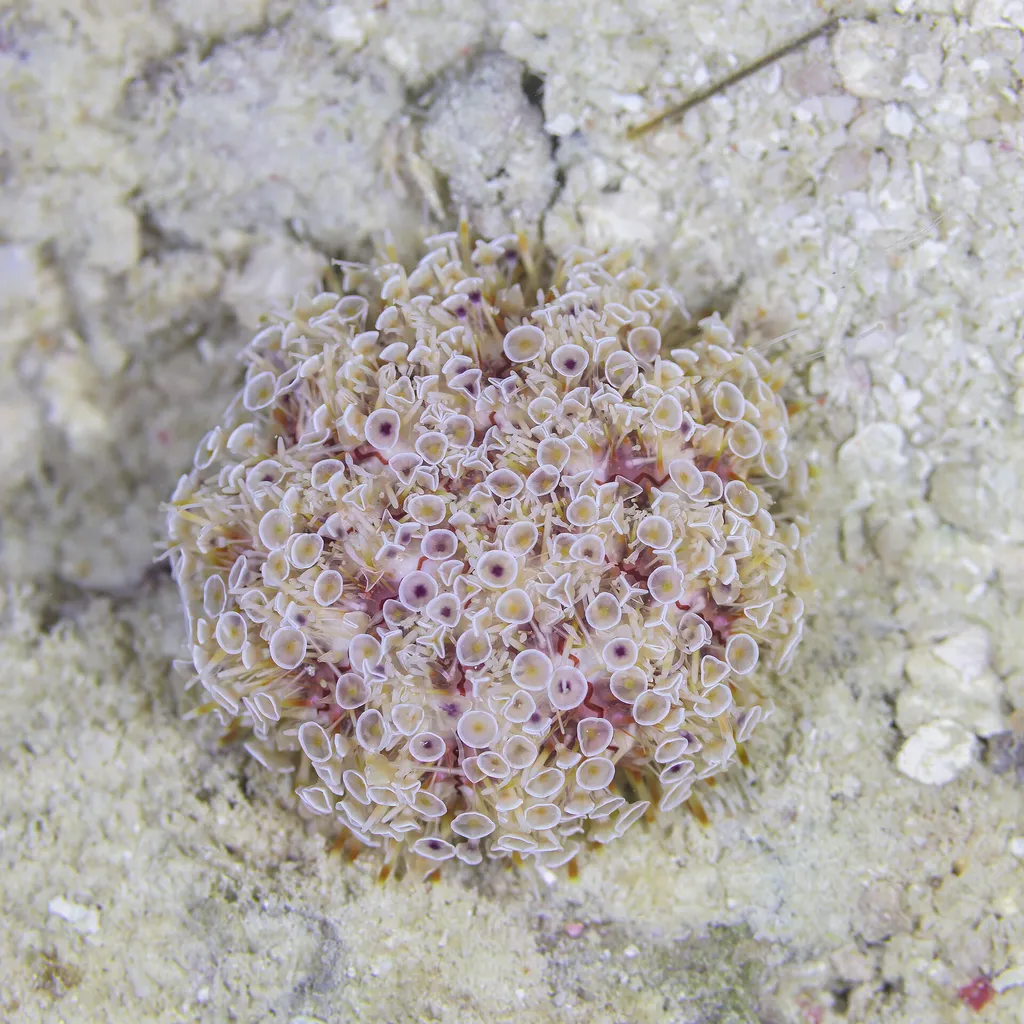 5.9 in (15 cm)100 gal (380 L)72–82°F (22–28°C)
Flower urchin
Toxopneustes pileolus
5.9 in (15 cm) · 100 gal (380 L)