Yellow sea cucumber
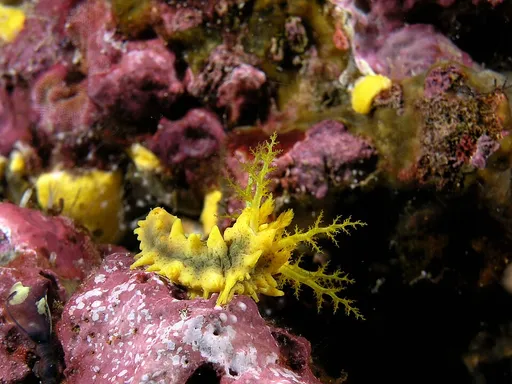
Colochirus robustus
Also known as Yellow Cucumber, Robust Sea Cucumber
SaltwaterInvertebrate
Care at a glance
- Temperature
- 75–81°F
- 24–27°C
- pH
- 8.1–8.4
- Adult size
- 3.9 in
- 10 cm
- Minimum tank
- 11 gal
- 40 L
- Temperament
- Peaceful
- Social behavior
- Solitary
- Swim level
- Bottom
- Diet
- Filter feeder
- Difficulty
- Medium
- Breeding
- No record
- Rarity
- Rare
- Reef safe
- Reef safe
- Family
- Cucumariidae
- Origin
- Western Pacific, around Indonesia and the Philippines
Overview
The yellow sea cucumber is a small, peaceful filter feeder for an established reef tank. It is not a first invertebrate, and it suits a keeper with some reef experience.
Did you know
The yellow sea cucumber is a close relative of the much showier sea apple, yet fish rarely pick at it. Its duller color and smaller size likely draw far less attention.
Caring for the yellow sea cucumber
Keep the yellow sea cucumber in an established reef of at least 11 gal (40 L), not a newly cycled tank. It needs real planktonic life in the water column. It settles onto live rock in low to moderate flow. Once it finds a spot it likes, it tends to stay put, occasionally moving a short distance.
Hold the water at 75 to 81°F (24 to 27°C) with a pH of 8.1 to 8.4, and keep its quality stable. Like other cucumbers, it does not tolerate a fast change in salinity, so drip acclimate it over an hour or more.
It is a filter feeder that depends entirely on supplemental feeding. Give it one or two feedings a day of phytoplankton or other fine particulate food. Release the food into the current well upstream of it, since dosing it directly just makes it clamp shut.
It is reef safe, since it does not eat coral or bother tank mates. Avoid housing it with triggerfish, puffers or other bold fish that might peck at it. It shares its family's holothurin toxin risk if it is crushed, sucked into a pump or dies of neglect. Screen every intake in the tank.
Good to know
Colochirus robustus is a small filter-feeding sea cucumber in the family Cucumariidae. It has a stout yellow to orange body covered in short conical papillae, and a crown of ten branched tentacles for catching food. It feeds by sweeping suspended particles out of the water with its sticky tentacles. It wipes each one across its mouth in sequence, the same feeding method used across the filter-feeding cucumbers.
In the wild
Yellow sea cucumbers come from the western Pacific around Indonesia and the Philippines. They anchor to rock and rubble in areas with steady water movement and extend their tentacles to catch passing food.
Common questions
What size tank does a yellow sea cucumber need?
A yellow sea cucumber needs at least 11 gal (40 L). It spends most of its time in the bottom.
What temperature and pH does a yellow sea cucumber need?
A yellow sea cucumber is comfortable at 75–81°F (24–27°C) with a pH of 8.1–8.4.
What does a yellow sea cucumber eat?
A yellow sea cucumber is a filter feeder that depends entirely on supplemental feeding. Give it phytoplankton or other fine particulate food once or twice a day, released into the current well upstream of it.
How big does a yellow sea cucumber get?
An adult yellow sea cucumber reaches about 3.9 in (10 cm).
Related species
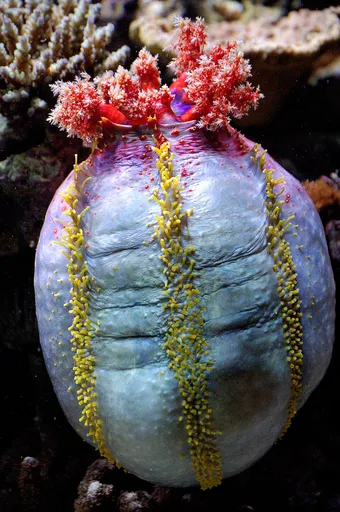 7.1 in (18 cm)20 gal (75 L)75–81°F (24–27°C)
Sea apple
Pseudocolochirus violaceus
7.1 in (18 cm) · 20 gal (75 L)
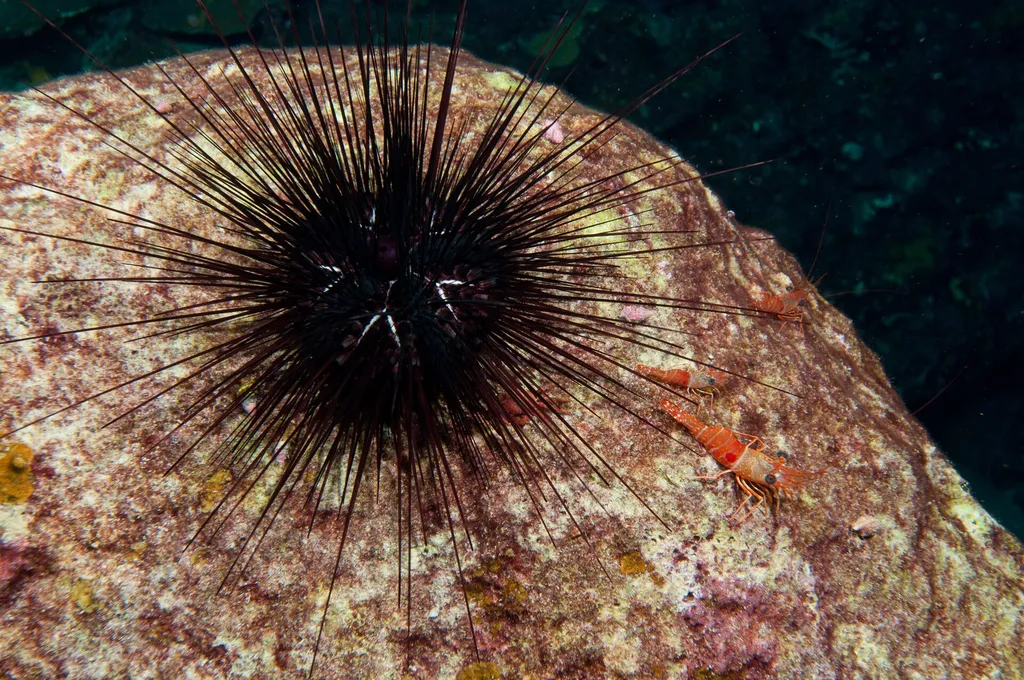 3.9 in (10 cm)79 gal (300 L)72–81°F (22–27°C)
Caribbean long-spined urchin
Diadema antillarum
3.9 in (10 cm) · 79 gal (300 L)
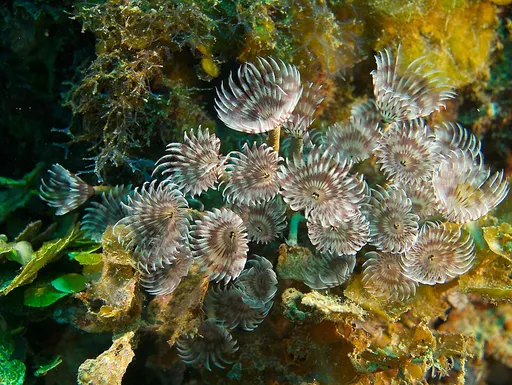 3.9 in (10 cm)11 gal (40 L)75–81°F (24–27°C)
Social feather duster
Bispira brunnea
3.9 in (10 cm) · 11 gal (40 L)
 3.9 in (10 cm)20 gal (75 L)72–81°F (22–27°C)
White urchin
Lytechinus variegatus
3.9 in (10 cm) · 20 gal (75 L)
- 3.9 in (10 cm)53 gal (200 L)73–82°F (23–28°C)
Shingle urchin
Colobocentrotus atratus
3.9 in (10 cm) · 53 gal (200 L)
- 3.9 in (10 cm)79 gal (300 L)72–81°F (22–27°C)
Sputnik urchin
Phyllacanthus imperialis
3.9 in (10 cm) · 79 gal (300 L)