Social feather duster
Bispira brunnea
Also known as Cluster Duster, Feather Duster Worm
SaltwaterInvertebrate
Care at a glance
- Temperature
- 75–81°F
- 24–27°C
- pH
- 8.1–8.4
- Adult size
- 3.9 in
- 10 cm
- Minimum tank
- 11 gal
- 40 L
- Temperament
- Peaceful
- Social behavior
- Solitary
- Swim level
- Bottom
- Difficulty
- Medium
- Breeding
- No record
- Rarity
- Very common
- Reef safe
- Reef safe
- Family
- Sabellidae
- Origin
- Caribbean and the Bahamas, extending along the southeastern coast of North America
Overview
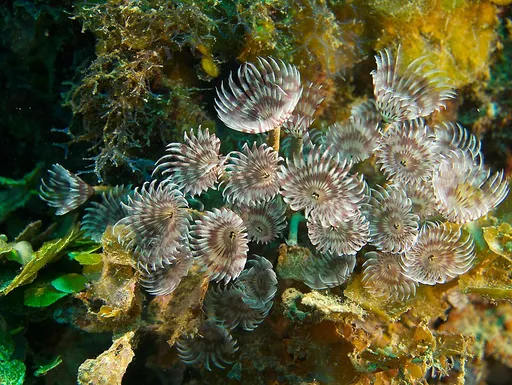
A peaceful, small-bodied filter feeder that is reef safe and, once established, one of the easier feather dusters to keep, since a mature reef tank with a healthy microfauna population can support a cluster with little extra feeding. Newly added worms still do best with regular dosing of phytoplankton or other very fine food, since like all feather dusters they are filter feeders rather than photosynthetic animals and get nothing from the tank's lights. Give the cluster moderate to strong flow but avoid blasting it directly, which can damage the delicate crowns. Keep butterflyfish, large angelfish, triggerfish, and decorator crabs or peppermint shrimp away from it, since all of them are known to pick worms out of their tubes.
In the wild
Social feather dusters are native to the Caribbean and the Bahamas, extending north along the southeastern coast of North America, where they grow in dense clusters on rock, dead coral, and sandy rubble in areas with good water movement. Each worm builds its own soft, sand-flecked tube, and new individuals bud off the base of existing ones, so a healthy cluster slowly grows into a colony of dozens of worms of different sizes. In the aquarium it does well tucked among live rock in moderate to strong flow, where a cluster can be left to spread on its own over time.
Good to know
Bispira brunnea is a colonial tube worm in the family Sabellidae, small compared to the giant feather duster, with a crown of 18 to 28 banded radioles arranged in two spiraling half circles. Field studies of this species found that most individuals in a cluster reproduce sexually, while roughly half also reproduce asexually by budding or splitting, which is how a single worm can turn into a dense aggregation of 20 or more without any new worms being added from outside. Colonies retract in near-perfect unison when disturbed, a response to water vibration rather than sight.
Did you know
A single social feather duster can turn into a whole cluster on its own: it buds new worms from its base as it grows, so what starts as one animal on a piece of rock can become a colony of dozens without ever adding another worm to the tank.
Common questions
What size tank does a Social feather duster need?
A Social feather duster needs at least 11 gal (40 L). It spends most of its time in the bottom.
What temperature and pH does a Social feather duster need?
A Social feather duster is comfortable at 75–81°F (24–27°C) with a pH of 8.1–8.4.
How big does a Social feather duster get?
An adult Social feather duster reaches about 3.9 in (10 cm).
Related species
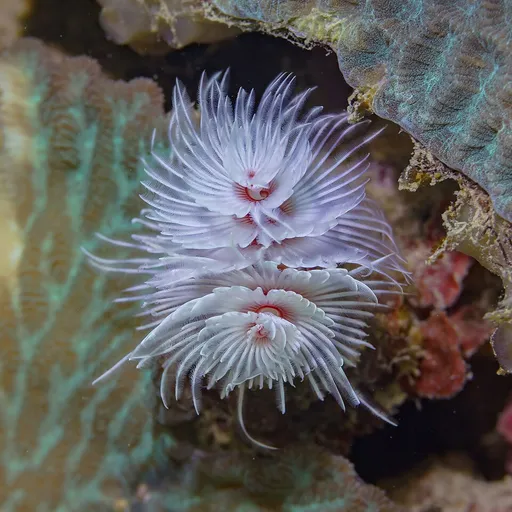 5.9 in (15 cm)20 gal (75 L)75–81°F (24–27°C)
Giant feather duster
Sabellastarte spectabilis
5.9 in (15 cm) · 20 gal (75 L)
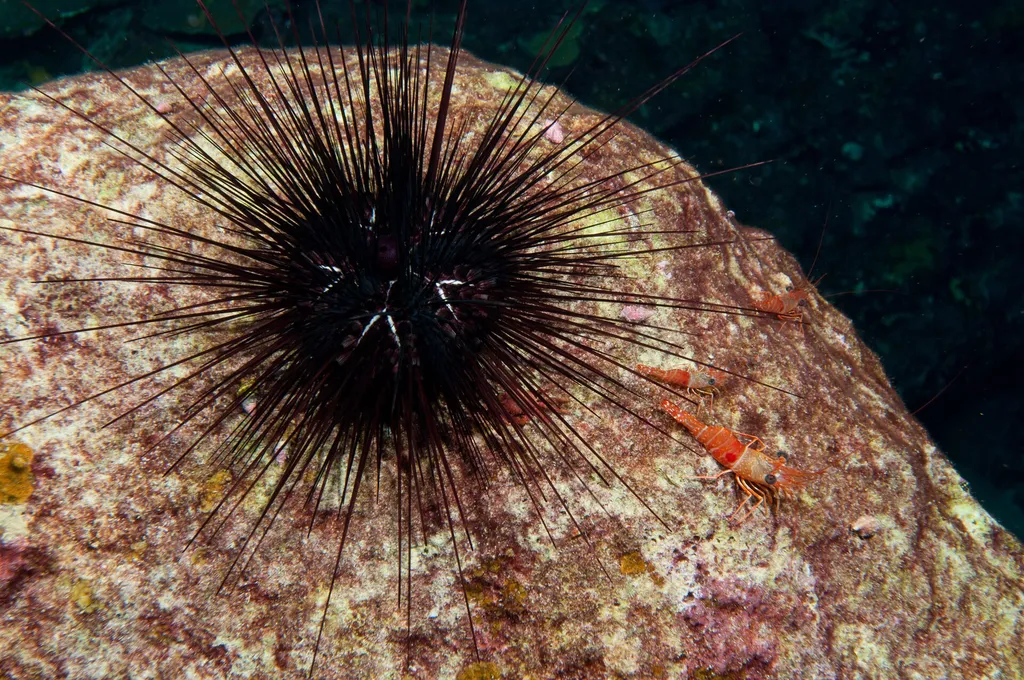 3.9 in (10 cm)79 gal (300 L)72–81°F (22–27°C)
Caribbean long-spined urchin
Diadema antillarum
3.9 in (10 cm) · 79 gal (300 L)
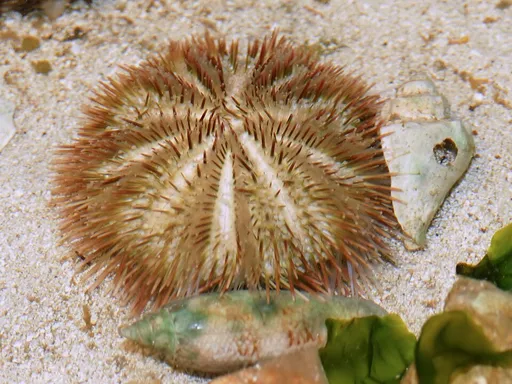 3.9 in (10 cm)20 gal (75 L)72–81°F (22–27°C)
White urchin
Lytechinus variegatus
3.9 in (10 cm) · 20 gal (75 L)
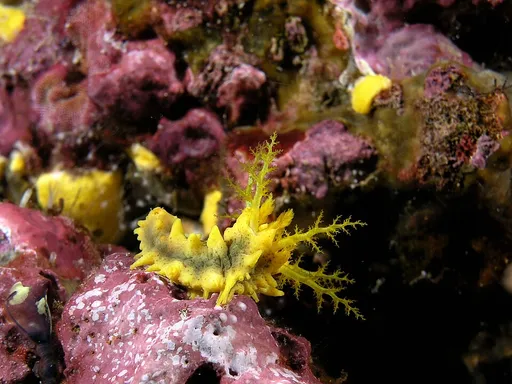 3.9 in (10 cm)11 gal (40 L)75–81°F (24–27°C)
Yellow sea cucumber
Colochirus robustus
3.9 in (10 cm) · 11 gal (40 L)
- 3.9 in (10 cm)53 gal (200 L)73–82°F (23–28°C)
Shingle urchin
Colobocentrotus atratus
3.9 in (10 cm) · 53 gal (200 L)
- 3.9 in (10 cm)79 gal (300 L)72–81°F (22–27°C)
Sputnik urchin
Phyllacanthus imperialis
3.9 in (10 cm) · 79 gal (300 L)