Decorator crab
Camposcia retusa
Also known as Spider decorator crab, Decorator spider crab, Camposcia decorator crab, Velcro crab
SaltwaterCrab
Care at a glance
- Temperature
- 72–81°F
- 22–27°C
- pH
- 8.1–8.4
- Adult size
- 1.2 in
- 3 cm
- Minimum tank
- 26 gal
- 100 L
- Temperament
- Mostly peaceful
- Social behavior
- Solitary
- Tankmates
- With caution
- Swim level
- Bottom
- Difficulty
- Medium
- Breeding
- No record
- Rarity
- Common
- Reef safe
- Reef safe with caution
- Family
- Inachidae
- Origin
- Indo-West Pacific, from the Red Sea and East Africa to Japan and Australia
Overview
A slow, mostly peaceful nocturnal scavenger that is safe with fish but hard on the smallest inverts. It gets a reef safe with caution verdict because it decorates with living things: it clips zoanthids, sponge, and soft coral and sometimes eats what it clipped, and it may take a small snail or hermit crab. In a big tank with cheap soft corals that is a curiosity, in a frag tank it is a menace. Feed it directly after lights out with mysis, chopped clam, fish, and krill a few times a week so it does not go looking. Most keepers house one per tank, at 22 to 27 C and pH 8.1 to 8.4.
In the wild
Camposcia retusa lives on coral reefs and rubble across the Indo-West Pacific, from the Red Sea and East Africa to Japan and Australia, from the shallows down to more than 200 m. It spends the day motionless against rock and moves at night. Give it a mature tank of at least 100 liters with live rock, rubble, and macroalgae or sponge it can harvest for camouflage, and dim or moonlit periods when you can watch it feed. Keep the water at 22 to 27 C, pH 8.1 to 8.4, and specific gravity 1.023 to 1.025. Acclimate it slowly, since some imports fail in the first weeks.
Good to know
This is the only species in the genus Camposcia, a spider crab in the family Inachidae described by Latreille in 1829. The carapace is only about 3 cm across, but the long thin legs give a span of up to 10 cm, and retailers quote 4 inches for that reason. Its body and legs are covered in hooked setae that work like velcro, and it snips off pieces of sponge, algae, hydroid, and soft coral and presses them on until it looks like a lump of reef. After a molt it has to dress again, and given material it covers itself within a day. It lives about three to five years and has not been bred in aquariums.
Did you know
A study published in 2017 by Brooker and colleagues gave this crab craft pompoms to decorate with and found it dresses much faster when it has nowhere to hide, and mostly covers its carapace and back legs, the parts a predator sees first. The camouflage is a substitute for shelter, not a fashion choice.
Common questions
What size tank does a Decorator crab need?
A Decorator crab needs at least 26 gal (100 L). It spends most of its time in the bottom.
What temperature and pH does a Decorator crab need?
A Decorator crab is comfortable at 72–81°F (22–27°C) with a pH of 8.1–8.4.
How big does a Decorator crab get?
An adult Decorator crab reaches about 1.2 in (3 cm).
Related species
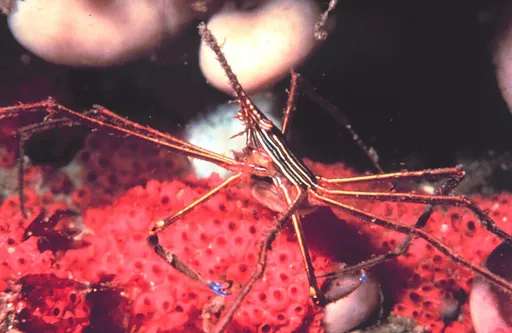 3.9 in (10 cm)30 gal (115 L)72–79°F (22–26°C)
Arrow crab
Stenorhynchus seticornis
3.9 in (10 cm) · 30 gal (115 L)
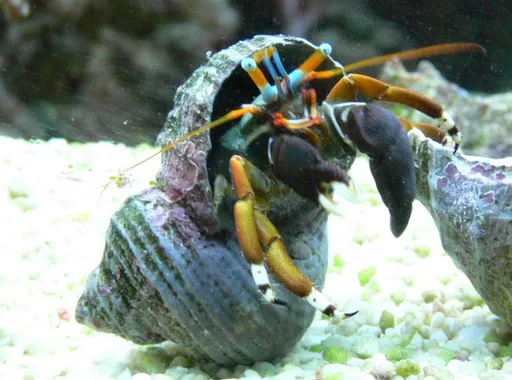 1.2 in (3 cm)20 gal (75 L)72–79°F (22–26°C)
Scarlet zebra hermit crab
Calcinus laevimanus
1.2 in (3 cm) · 20 gal (75 L)
- 1.2 in (3 cm)20 gal (75 L)72–81°F (22–27°C)
Strawberry crab
Neoliomera pubescens
1.2 in (3 cm) · 20 gal (75 L)
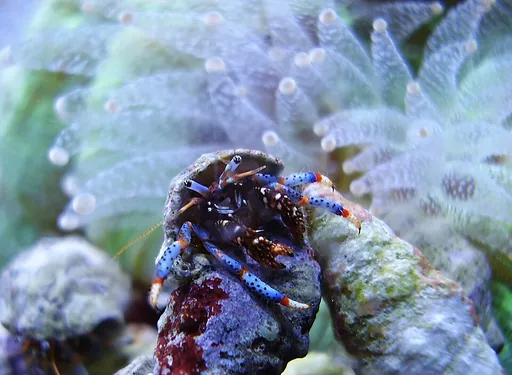 1 in (2.5 cm)11 gal (40 L)72–79°F (22–26°C)
Blue-leg hermit crab
Clibanarius tricolor
1 in (2.5 cm) · 11 gal (40 L)
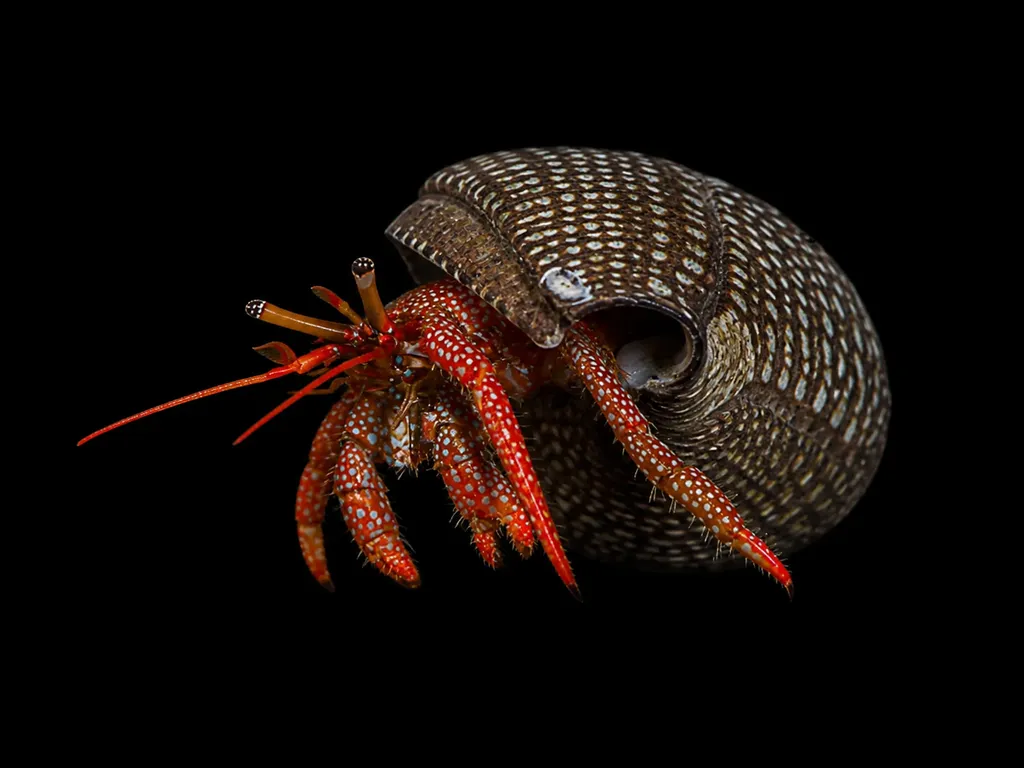 1 in (2.5 cm)11 gal (40 L)72–81°F (22–27°C)
Mexican red-leg hermit crab
Clibanarius digueti
1 in (2.5 cm) · 11 gal (40 L)
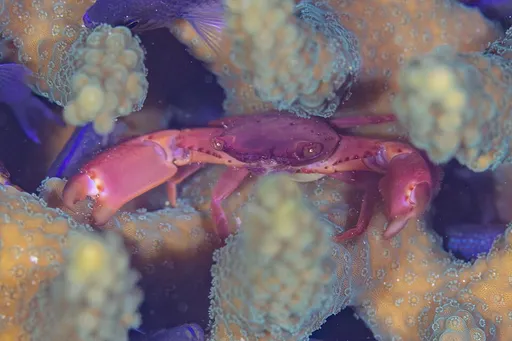 0.8 in (2 cm)11 gal (40 L)75–81°F (24–27°C)
Coral guard crab
Trapezia cymodoce
0.8 in (2 cm) · 11 gal (40 L)