Arrow crab
Stenorhynchus seticornis
Also known as Yellowline Arrow Crab, Arrowhead Crab, Spider Crab
SaltwaterCrab
Care at a glance
- Temperature
- 72–79°F
- 22–26°C
- pH
- 8.1–8.4
- Adult size
- 3.9 in
- 10 cm
- Minimum tank
- 30 gal
- 115 L
- Temperament
- Mostly peaceful
- Social behavior
- Solitary
- Own kind
- One per tank
- Tankmates
- With caution
- Swim level
- Bottom
- Difficulty
- Easy
- Breeding
- No record
- Rarity
- Common
- Reef safe
- Reef safe with caution
- Family
- Inachidae
- Origin
- Western Atlantic, from North Carolina and Bermuda south to Brazil, including the Caribbean Sea
Overview
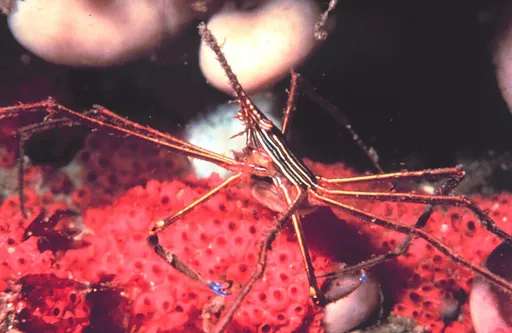
A useful predator of bristleworms, using its long legs to reach into crevices and pull worms out before stripping off the bristles and eating them. It will not fully clear a bristleworm population, since plenty stay out of reach in the rock and sand, but it puts a real dent in the numbers. It stays fairly mild-mannered while small, but as it grows it becomes a more capable hunter and will catch and eat small, slow fish, ornamental shrimp, snails, and feather duster worms if it can reach them, which is why it earns a caution rating in a reef with delicate tankmates. Keep one per tank, since it can be territorial toward its own kind and other crabs.
In the wild
Found throughout the western Atlantic from North Carolina and Bermuda south to Brazil, including the Caribbean Sea, on coral reefs and rubble from the shallows down to around 10 metres. It is nocturnal and shelters by day in small caves and crevices, coming out at night to hunt across the rockwork on its long, spindly legs. In the aquarium it wants plenty of three-dimensional rockwork with tunnels, ledges, and holes to retreat into during the day.
Good to know
Stenorhynchus seticornis is a spider crab in the family Inachidae, named for its long, pointed, forward-tapering snout. The triangular carapace reaches about 6 cm, and the long, thin walking legs give it a leg span of roughly 10 cm. Its body is pale tan to yellow with fine red-brown stripes running down the legs, and like several spider crabs it will decorate itself with bits of algae or debris for camouflage.
Did you know
It actively avoids light and relocates to a shadier spot when disturbed, so an arrow crab often seems to migrate to a new cave every few days as it hunts for cover away from the aquarium lights.
Common questions
What size tank does an Arrow crab need?
An Arrow crab needs at least 30 gal (115 L). It spends most of its time in the bottom.
What temperature and pH does an Arrow crab need?
An Arrow crab is comfortable at 72–79°F (22–26°C) with a pH of 8.1–8.4.
How big does an Arrow crab get?
An adult Arrow crab reaches about 3.9 in (10 cm).
Related species
- 1.2 in (3 cm)26 gal (100 L)72–81°F (22–27°C)
Decorator crab
Camposcia retusa
1.2 in (3 cm) · 26 gal (100 L)
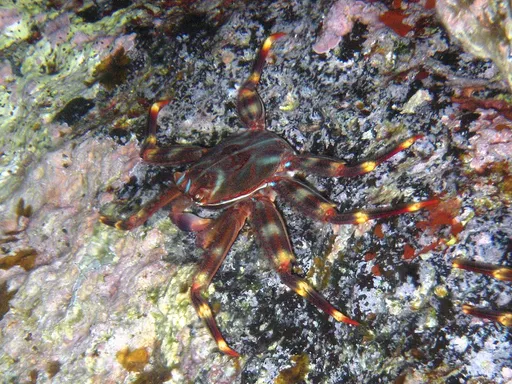 3.1 in (8 cm)30 gal (115 L)72–79°F (22–26°C)
Sally Lightfoot crab
Percnon gibbesi
3.1 in (8 cm) · 30 gal (115 L)
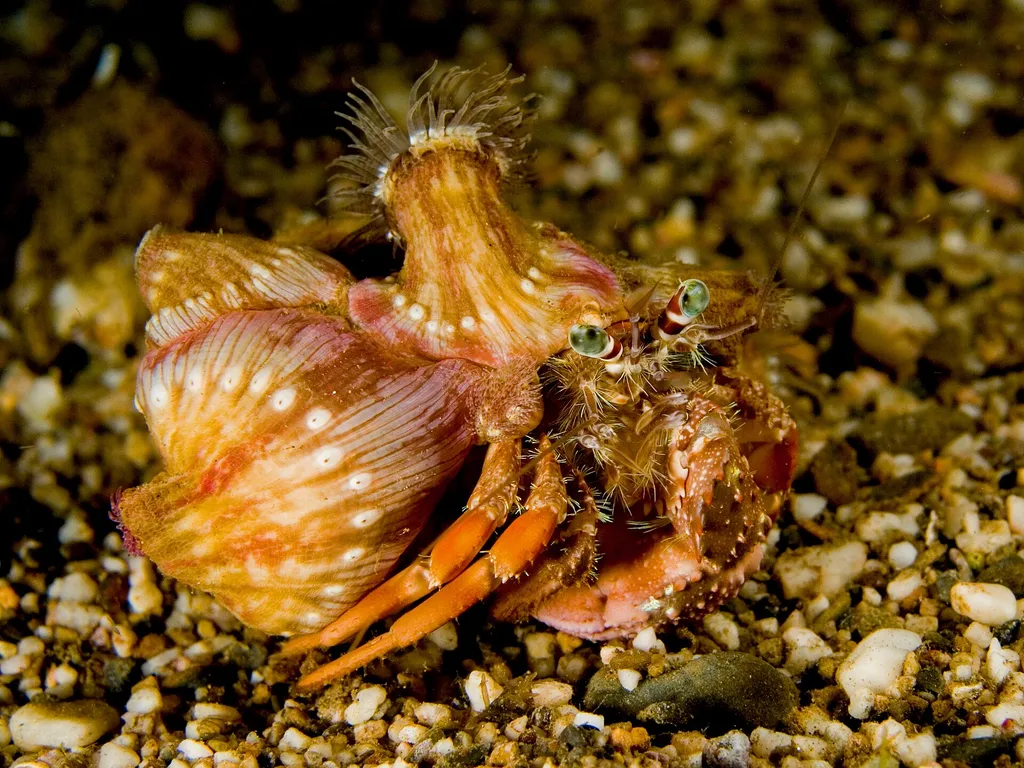 3.9 in (10 cm)40 gal (150 L)72–81°F (22–27°C)
Anemone hermit crab
Dardanus pedunculatus
3.9 in (10 cm) · 40 gal (150 L)
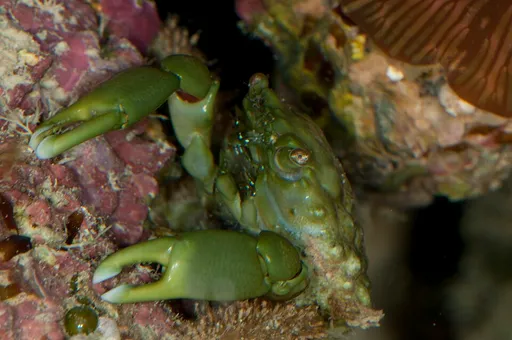 2.4 in (6 cm)11 gal (40 L)75–82°F (24–28°C)
Emerald crab
Mithraculus sculptus
2.4 in (6 cm) · 11 gal (40 L)
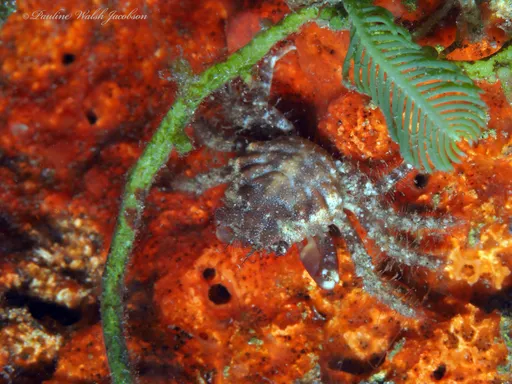 2 in (5 cm)11 gal (40 L)75–82°F (24–28°C)
Red mithrax crab
Mithraculus forceps
2 in (5 cm) · 11 gal (40 L)
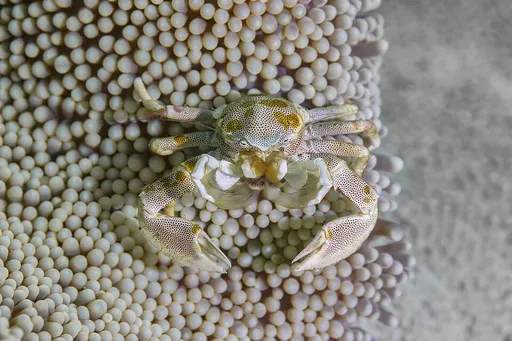 3 in (7.5 cm)11 gal (40 L)72–79°F (22–26°C)
Porcelain anemone crab
Neopetrolisthes maculatus
3 in (7.5 cm) · 11 gal (40 L)