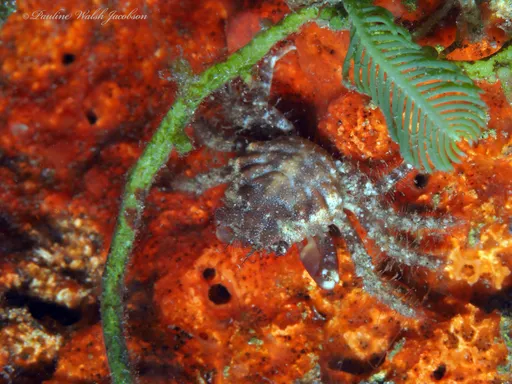
Red mithrax crab
Mithraculus forceps
Also known as Ruby Mithrax Crab, Red Clinging Crab, Ruby Clinging Crab, Red Ridged Clinging Crab
SaltwaterCrab
Care at a glance
- Temperature
- 75–82°F
- 24–28°C
- pH
- 8.0–8.4
- Adult size
- 2 in
- 5 cm
- Minimum tank
- 11 gal
- 40 L
- Temperament
- Mostly peaceful
- Social behavior
- Solitary
- Tankmates
- With caution
- Swim level
- Bottom
- Diet
- Omnivore
- Difficulty
- Easy
- Breeding
- Hard
- Rarity
- Common
- Reef safe
- Reef safe with caution
- Family
- Mithracidae
- Origin
- Western Atlantic and Caribbean, living in coral rubble and reef crevices from Florida to Brazil.
Overview
The red mithrax crab is a small Caribbean clinging crab that grazes algae in a saltwater tank. It is easy to keep.
Did you know
The red mithrax crab is one of the few crabs that will eat bubble algae, the round green Valonia that spreads across neglected rock. Reef keepers add it to nuisance algae cleanup crews for that reason.
Caring for the red mithrax crab
Give a single red mithrax crab a tank of at least 11 gal (40 L), with live rock for it to graze. Keep the water at 75 to 82°F (24 to 28°C) and a pH of 8.0 to 8.4.
It scrapes hair algae and film algae off the live rock. It also eats some bubble algae and any leftover food.
The red mithrax crab is mostly peaceful and can live with others of its own kind. A well fed crab is a useful cleaner, but a large or underfed one may pick at coral polyps or bother small snails. That makes it reef safe with caution, so keep it fed and watch the bigger crabs. It is hard to breed.
Good to know
The red mithrax crab, Mithraculus forceps, belongs to the family Mithracidae and is a close relative of the emerald crab, Mithraculus sculptus. It has a deep red to reddish brown carapace and blunt, spoon-tipped claws. Those rounded claw tips are built for scraping algae off hard surfaces rather than tearing prey. It is also sold as the ruby mithrax crab or the red clinging crab.
In the wild
The red mithrax crab ranges through the western Atlantic and the Caribbean, from Florida to Brazil. It lives on offshore reefs, in coral rubble and reef crevices, rather than the inshore rubble the green emerald crab prefers. By day it stays wedged in a crevice, and it comes out at night to graze.
Common questions
What size tank does a red mithrax crab need?
A red mithrax crab needs at least 11 gal (40 L). It spends most of its time in the bottom.
What temperature and pH does a red mithrax crab need?
A red mithrax crab is comfortable at 75–82°F (24–28°C) with a pH of 8.0–8.4.
What does a red mithrax crab eat?
A red mithrax crab scrapes hair algae and film algae off live rock. It also eats some bubble algae and any leftover food, and a large or underfed one may pick at coral polyps.
How big does a red mithrax crab get?
An adult red mithrax crab reaches about 2 in (5 cm).
Related species
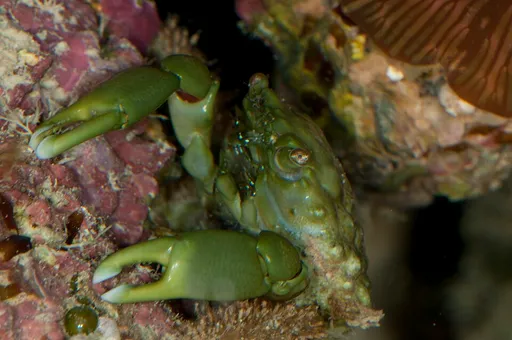 2.4 in (6 cm)11 gal (40 L)75–82°F (24–28°C)
Emerald crab
Mithraculus sculptus
2.4 in (6 cm) · 11 gal (40 L)
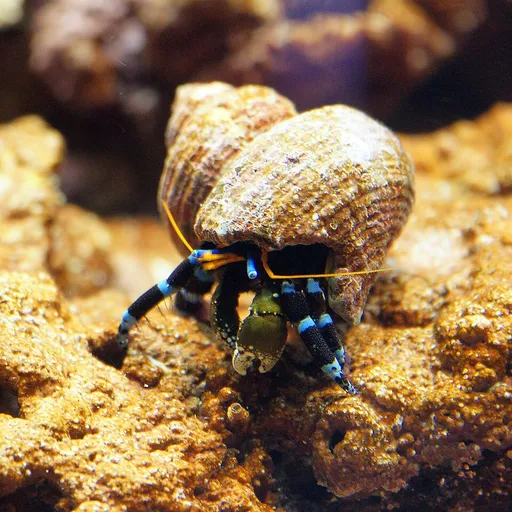 2 in (5 cm)20 gal (75 L)72–79°F (22–26°C)
Electric blue hermit crab
Calcinus elegans
2 in (5 cm) · 20 gal (75 L)
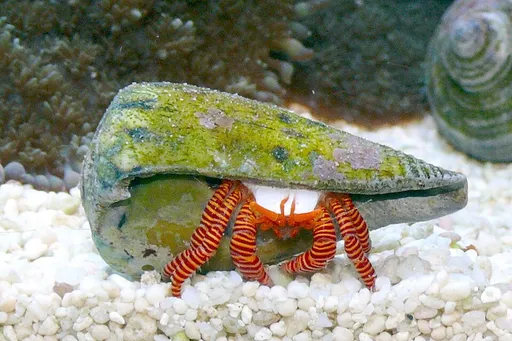 2 in (5 cm)20 gal (75 L)72–79°F (22–26°C)
Halloween hermit crab
Ciliopagurus strigatus
2 in (5 cm) · 20 gal (75 L)
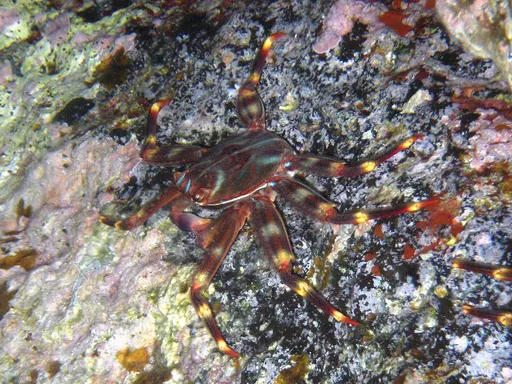 3.1 in (8 cm)30 gal (115 L)72–79°F (22–26°C)
Sally Lightfoot crab
Percnon gibbesi
3.1 in (8 cm) · 30 gal (115 L)
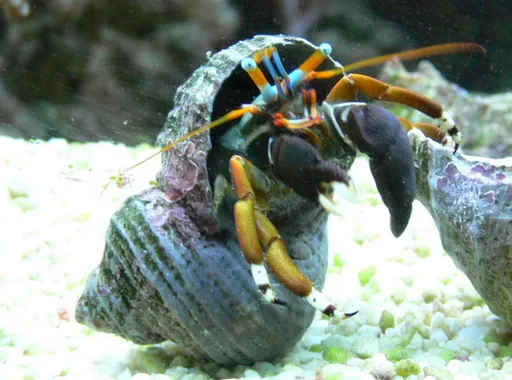 1.2 in (3 cm)20 gal (75 L)72–79°F (22–26°C)
Scarlet zebra hermit crab
Calcinus laevimanus
1.2 in (3 cm) · 20 gal (75 L)
- 1.2 in (3 cm)26 gal (100 L)72–81°F (22–27°C)
Decorator crab
Camposcia retusa
1.2 in (3 cm) · 26 gal (100 L)