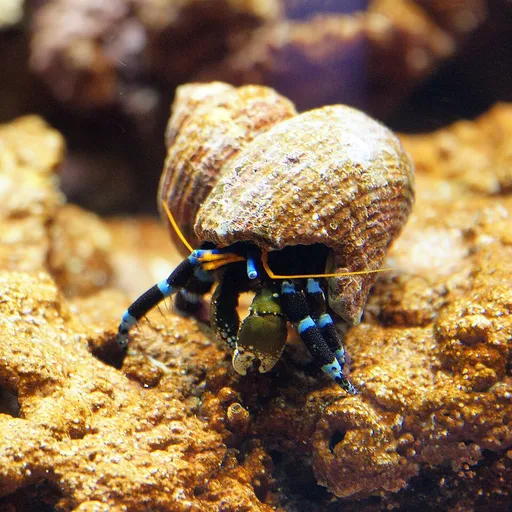
Electric blue hermit crab
Calcinus elegans
Also known as Electric Blue Leg Hermit Crab, Blue-Banded Hermit Crab, Elegant Hermit Crab, Blue knuckle hermit crab
SaltwaterCrab
Care at a glance
- Temperature
- 72–79°F
- 22–26°C
- pH
- 8.1–8.4
- Adult size
- 2 in
- 5 cm
- Minimum tank
- 20 gal
- 75 L
- Temperament
- Peaceful
- Social behavior
- Solitary
- Swim level
- Bottom
- Difficulty
- Easy
- Breeding
- No record
- Rarity
- Common
- Reef safe
- Reef safe
- Family
- Diogenidae
- Origin
- Indo-Pacific, from East Africa to Hawaii and French Polynesia, north to southern Japan and south to northern Australia
Overview
An active scavenger that grazes green hair algae and cyanobacteria and cleans up detritus and leftover food, making it a genuinely useful cleanup-crew animal. It is generally peaceful toward fish and corals, so it counts as reef-safe, but it is not snail-safe: if it outgrows its current shell and no spares are available, it will attack and kill a snail to take its shell. Keep a good supply of empty shells in a range of sizes, and expect some squabbling over shells if several are kept together in a small tank.
In the wild
Ranges across the Indo-Pacific from East Africa to Hawaii and French Polynesia, north to southern Japan and south to northern Australia, living intertidally and on shallow coral reef and rubble down to about 5 metres. It grazes rock and rubble for algae and organic debris, carrying its shell home wherever it forages. In the aquarium it wants live rock with algae growth to pick at and enough open rock and sand to move around freely.
Good to know
Calcinus elegans is a hermit crab in the family Diogenidae, unmistakable for its electric blue legs banded in black and yellow, blue eyestalks, and green claws tipped in white. Adults reach about 5 cm in body length and grow into shells up to 7.5 cm long. Like other Calcinus it is a left-handed hermit: its left claw is enlarged and works as a door that seals the shell opening when it withdraws inside.
Did you know
Its enlarged left claw works as both a weapon and a trapdoor, folding flush across the shell opening to seal the crab safely inside whenever a predator gets too close.
Common questions
What size tank does an Electric blue hermit crab need?
An Electric blue hermit crab needs at least 20 gal (75 L). It spends most of its time in the bottom.
What temperature and pH does an Electric blue hermit crab need?
An Electric blue hermit crab is comfortable at 72–79°F (22–26°C) with a pH of 8.1–8.4.
How big does an Electric blue hermit crab get?
An adult Electric blue hermit crab reaches about 2 in (5 cm).
Related species
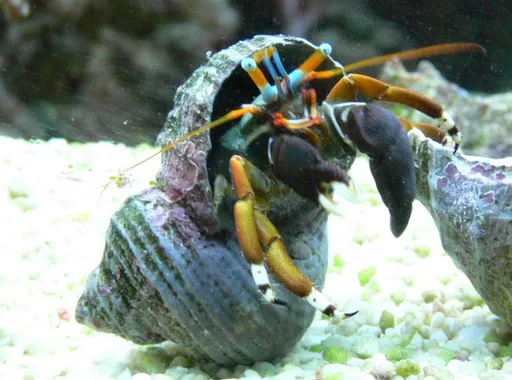 1.2 in (3 cm)20 gal (75 L)72–79°F (22–26°C)
Scarlet zebra hermit crab
Calcinus laevimanus
1.2 in (3 cm) · 20 gal (75 L)
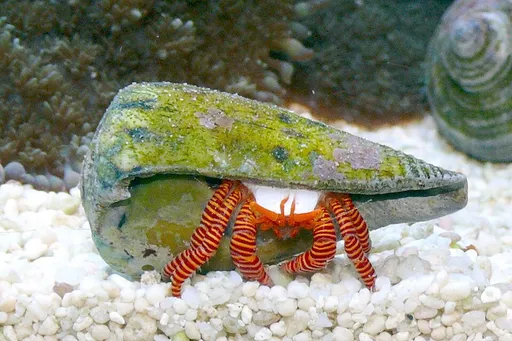 2 in (5 cm)20 gal (75 L)72–79°F (22–26°C)
Halloween hermit crab
Ciliopagurus strigatus
2 in (5 cm) · 20 gal (75 L)
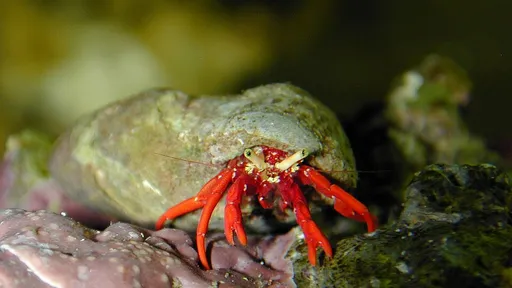 1.6 in (4 cm)11 gal (40 L)72–79°F (22–26°C)
Scarlet reef hermit crab
Paguristes cadenati
1.6 in (4 cm) · 11 gal (40 L)
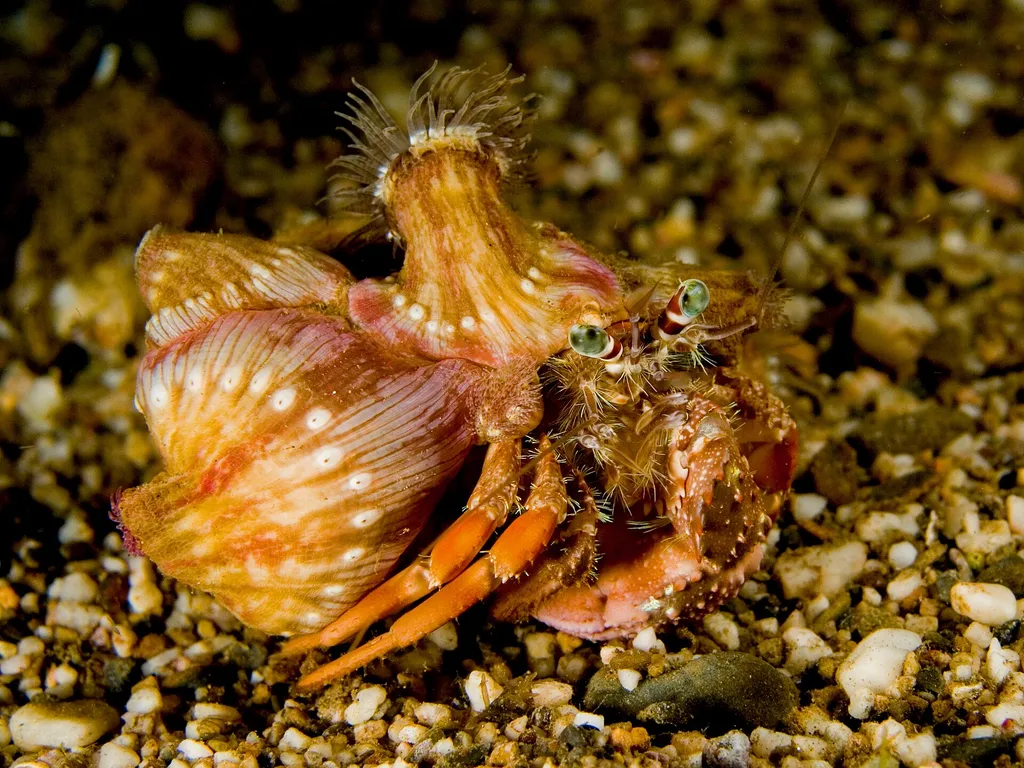 3.9 in (10 cm)40 gal (150 L)72–81°F (22–27°C)
Anemone hermit crab
Dardanus pedunculatus
3.9 in (10 cm) · 40 gal (150 L)
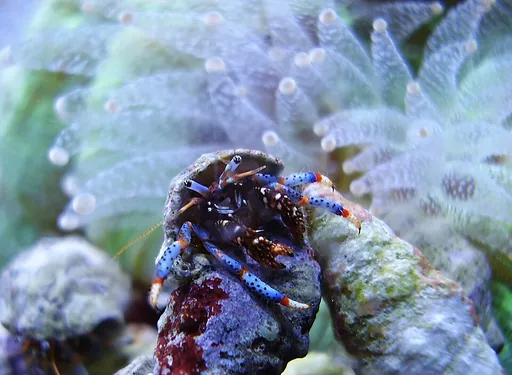 1 in (2.5 cm)11 gal (40 L)72–79°F (22–26°C)
Blue-leg hermit crab
Clibanarius tricolor
1 in (2.5 cm) · 11 gal (40 L)
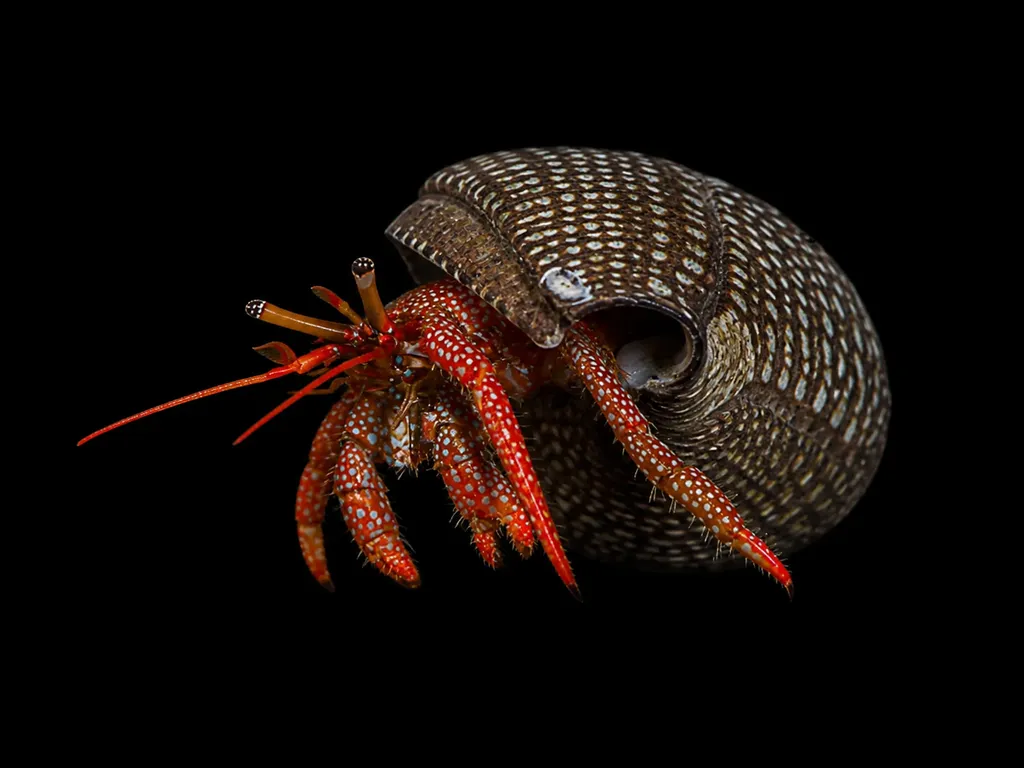 1 in (2.5 cm)11 gal (40 L)72–81°F (22–27°C)
Mexican red-leg hermit crab
Clibanarius digueti
1 in (2.5 cm) · 11 gal (40 L)