Blue-leg hermit crab
Clibanarius tricolor
Also known as Dwarf Blue Leg Hermit Crab, Blue-Legged Hermit, Equal-Handed Hermit
SaltwaterCrab
Care at a glance
- Temperature
- 72–79°F
- 22–26°C
- pH
- 8.1–8.4
- Adult size
- 1 in
- 2.5 cm
- Minimum tank
- 11 gal
- 40 L
- Temperament
- Mostly peaceful
- Social behavior
- Social
- Swim level
- Bottom
- Difficulty
- Beginner
- Breeding
- No record
- Rarity
- Very common
- Reef safe
- Reef safe
- Family
- Diogenidae
- Origin
- Caribbean and Western Atlantic
Overview
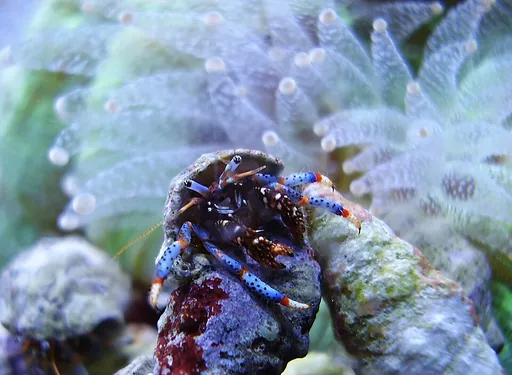
An active, mostly peaceful scavenger that is safe with corals and fish, so it counts as reef-safe. The catch is that it is not snail-safe: when it outgrows its shell it will kill snails, cerith snails especially, to steal theirs, and crowded hermits will fight each other over shells. Keep populations modest and always supply plenty of spare empty shells.
In the wild
This dwarf hermit comes from Caribbean reef and rubble zones and lives on and around the rock and sand, tucked into a borrowed snail shell. It wants an established reef with a good supply of algae and detritus to scavenge, plus a range of empty shells in different sizes so it has somewhere to move as it grows.
Good to know
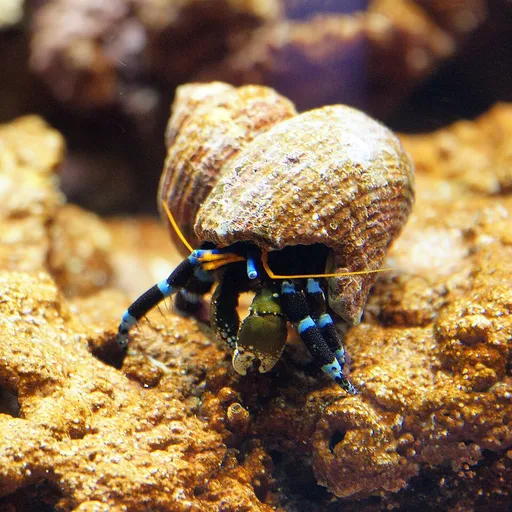
Clibanarius tricolor is a small hermit, maxing out around 2.5 cm, with blue legs banded in orange-red and two equal-sized claws (hence the equal-handed nickname). It grazes green hair algae and cyanobacteria and cleans up leftover meaty food, making it a workhorse of the clean-up crew.
Did you know
Reef-safe does not mean snail-safe here: a blue-leg hermit will pull a cerith snail out of its shell and kill it just to upgrade its own home, so keep a stash of empty shells available.
Common questions
What size tank does a Blue-leg hermit crab need?
A Blue-leg hermit crab needs at least 11 gal (40 L). It spends most of its time in the bottom.
What temperature and pH does a Blue-leg hermit crab need?
A Blue-leg hermit crab is comfortable at 72–79°F (22–26°C) with a pH of 8.1–8.4.
How big does a Blue-leg hermit crab get?
An adult Blue-leg hermit crab reaches about 1 in (2.5 cm).
Related species
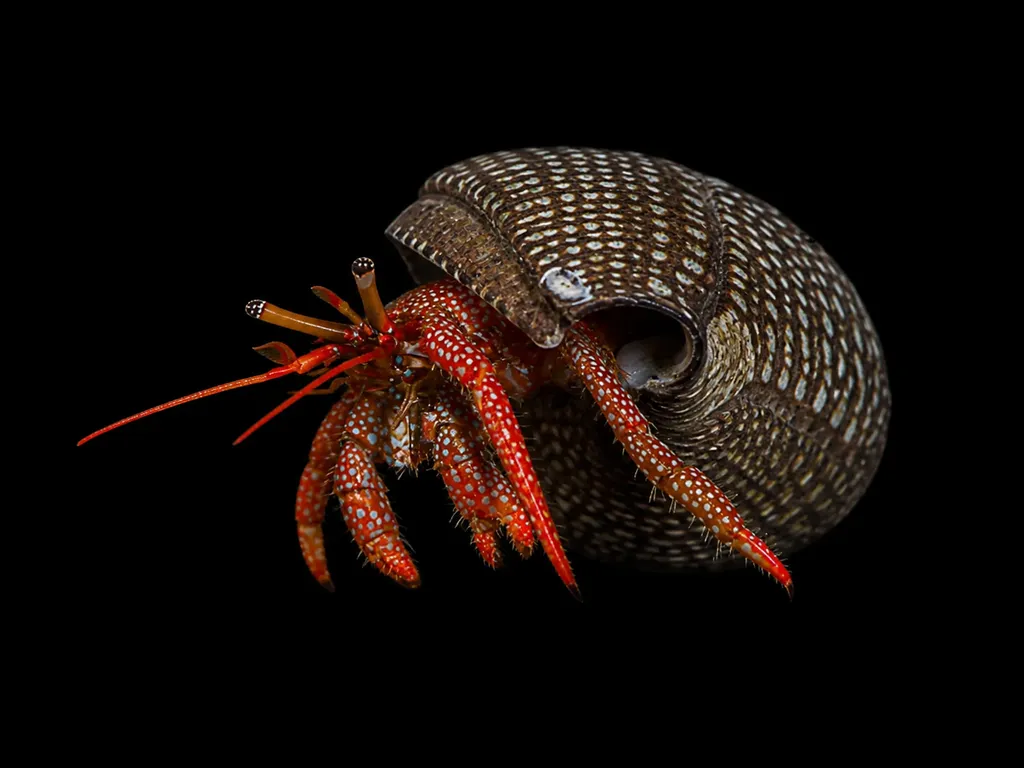 1 in (2.5 cm)11 gal (40 L)72–81°F (22–27°C)
Mexican red-leg hermit crab
Clibanarius digueti
1 in (2.5 cm) · 11 gal (40 L)
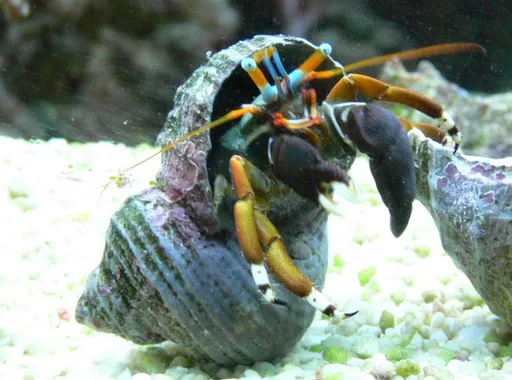 1.2 in (3 cm)20 gal (75 L)72–79°F (22–26°C)
Scarlet zebra hermit crab
Calcinus laevimanus
1.2 in (3 cm) · 20 gal (75 L)
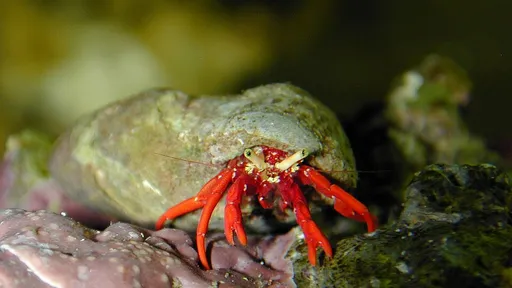 1.6 in (4 cm)11 gal (40 L)72–79°F (22–26°C)
Scarlet reef hermit crab
Paguristes cadenati
1.6 in (4 cm) · 11 gal (40 L)
 2 in (5 cm)20 gal (75 L)72–79°F (22–26°C)
Electric blue hermit crab
Calcinus elegans
2 in (5 cm) · 20 gal (75 L)
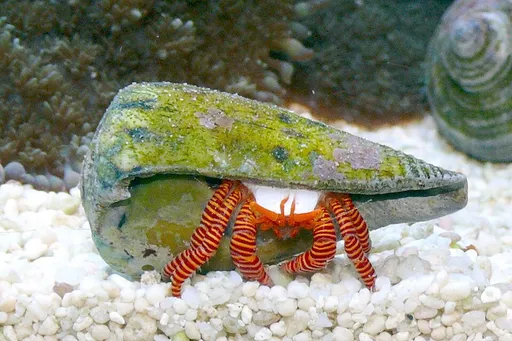 2 in (5 cm)20 gal (75 L)72–79°F (22–26°C)
Halloween hermit crab
Ciliopagurus strigatus
2 in (5 cm) · 20 gal (75 L)
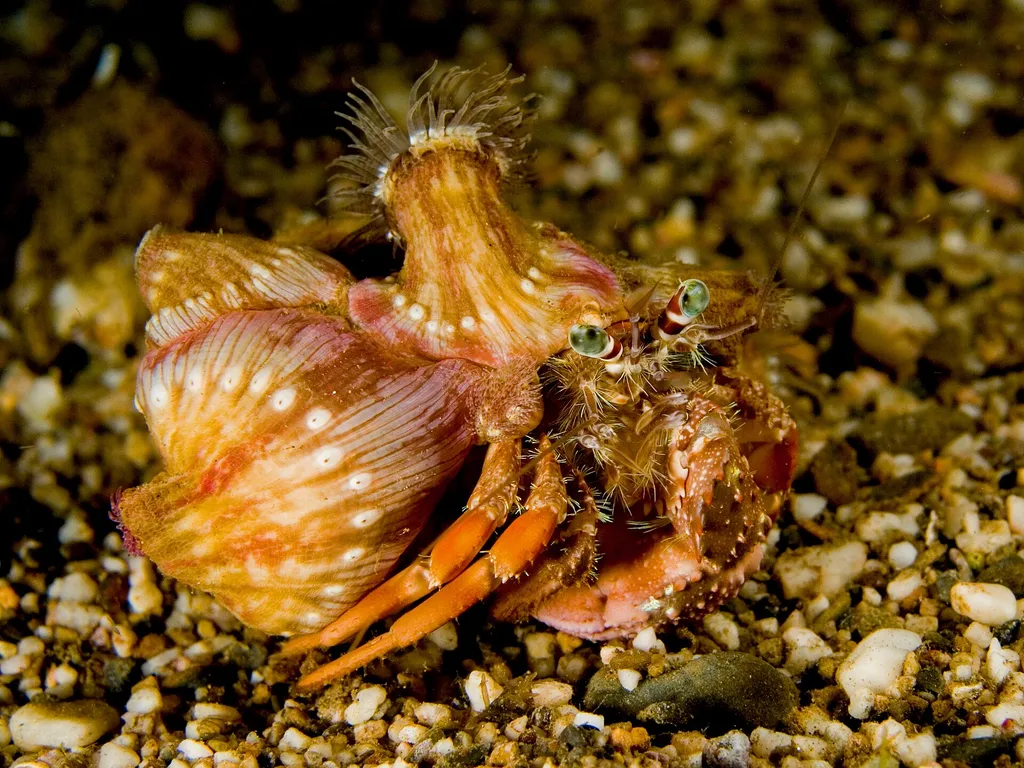 3.9 in (10 cm)40 gal (150 L)72–81°F (22–27°C)
Anemone hermit crab
Dardanus pedunculatus
3.9 in (10 cm) · 40 gal (150 L)