Halloween hermit crab
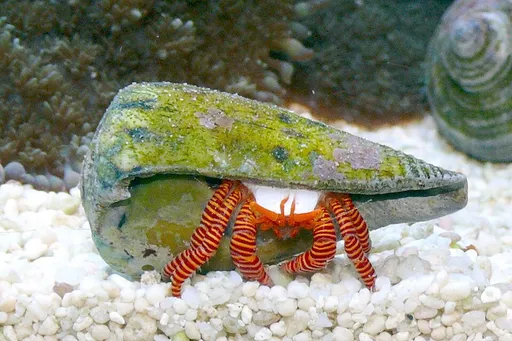
Ciliopagurus strigatus
Also known as Orange Hermit Crab, Cone Shell Hermit Crab, Orange Leg Hermit Crab
SaltwaterCrab
Care at a glance
- Temperature
- 72–79°F
- 22–26°C
- pH
- 8.1–8.4
- Adult size
- 2 in
- 5 cm
- Minimum tank
- 20 gal
- 75 L
- Temperament
- Peaceful
- Social behavior
- Solitary
- Swim level
- Bottom
- Difficulty
- Easy
- Breeding
- No record
- Rarity
- Common
- Reef safe
- Reef safe with caution
- Family
- Diogenidae
- Origin
- Indo-Pacific, including the Red Sea and the Hawaiian Islands
Overview
An efficient scavenger that grazes green hair algae and cyanobacteria and cleans up detritus and leftover meaty food, helping keep rock and substrate tidy. It is peaceful toward fish and corals, but its larger size means it can accidentally topple small frags or loose rockwork while foraging, and like every hermit crab it will attack and evict a snail for its shell if no empty ones are available. Keep it in a tank with secure rockwork and a good stock of empty shells in assorted sizes.
In the wild
Ranges across the Indo-Pacific, including the Red Sea and the Hawaiian Islands, on shallow coral reef and sandy areas down to about 15 metres. It grazes rock and sand by day and night for algae and detritus, carrying a snail shell home as it forages. In the aquarium it wants an established reef with algae growth to pick at and enough open rock and substrate to roam.
Good to know
Ciliopagurus strigatus is a hermit crab in the family Diogenidae, named for the bold orange and white banding across its legs and a deep red body, a pattern that gives it its Halloween-themed common name. It is one of the larger reef hermits kept in the hobby, reaching about 5 cm, and it typically lives in the long, narrow shells of cone snails or similar spindle-shaped shells rather than the rounder shells favored by smaller hermits.
Did you know
Its favored shells are the same tall, narrow, cone-shaped shells that venomous cone snails leave behind, so a Halloween Hermit Crab in the right shell is walking around in what was once one of the ocean's more dangerous snails.
Common questions
What size tank does a Halloween hermit crab need?
A Halloween hermit crab needs at least 20 gal (75 L). It spends most of its time in the bottom.
What temperature and pH does a Halloween hermit crab need?
A Halloween hermit crab is comfortable at 72–79°F (22–26°C) with a pH of 8.1–8.4.
How big does a Halloween hermit crab get?
An adult Halloween hermit crab reaches about 2 in (5 cm).
Related species
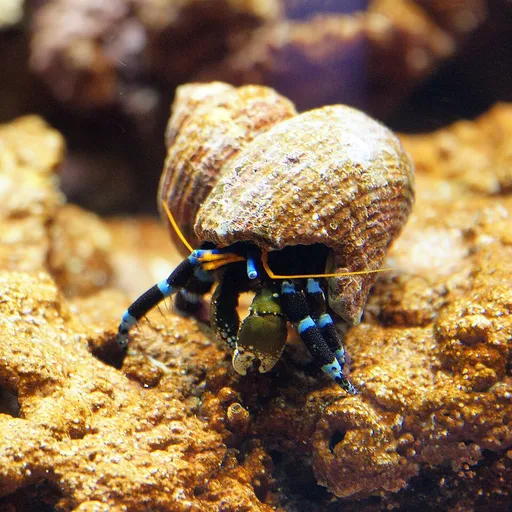 2 in (5 cm)20 gal (75 L)72–79°F (22–26°C)
Electric blue hermit crab
Calcinus elegans
2 in (5 cm) · 20 gal (75 L)
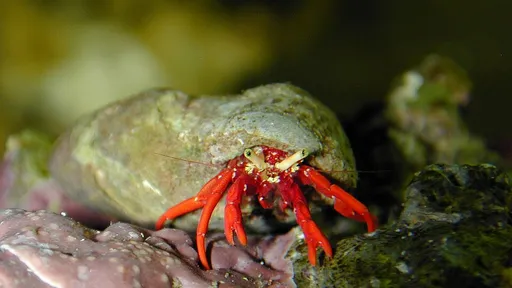 1.6 in (4 cm)11 gal (40 L)72–79°F (22–26°C)
Scarlet reef hermit crab
Paguristes cadenati
1.6 in (4 cm) · 11 gal (40 L)
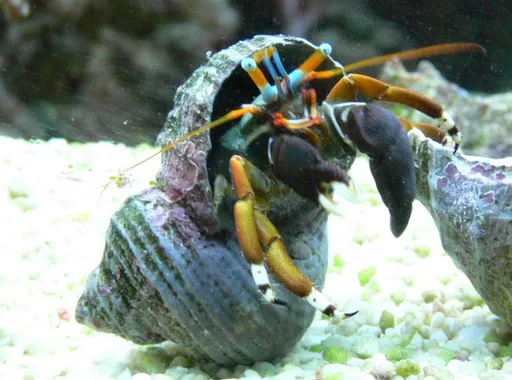 1.2 in (3 cm)20 gal (75 L)72–79°F (22–26°C)
Scarlet zebra hermit crab
Calcinus laevimanus
1.2 in (3 cm) · 20 gal (75 L)
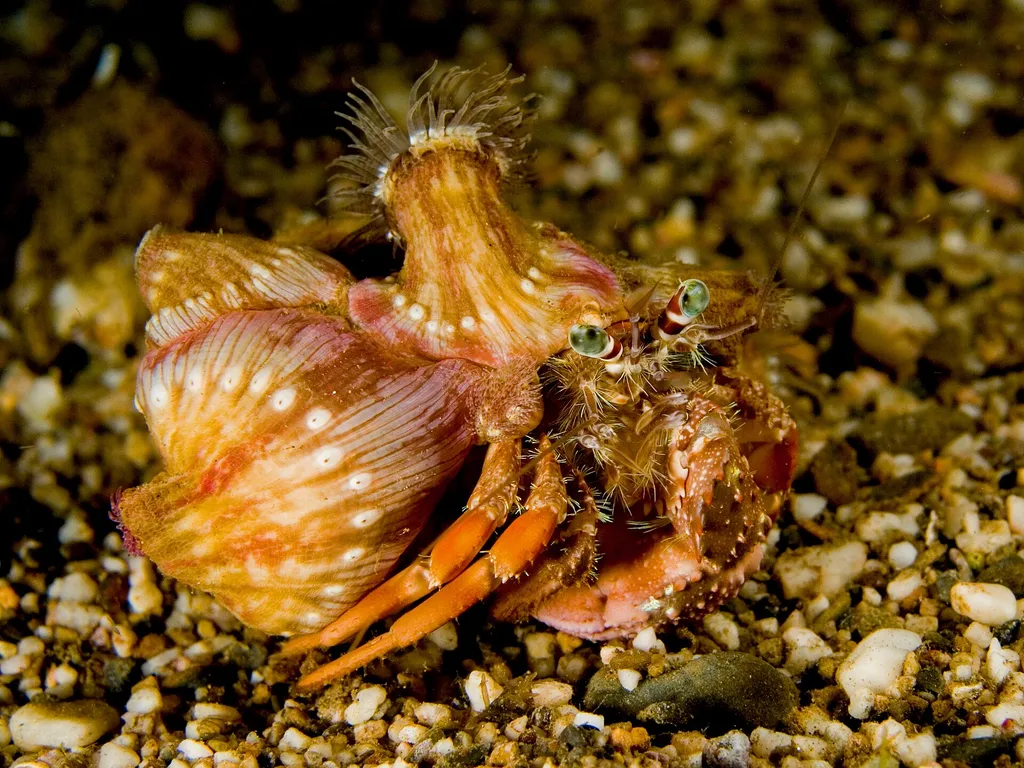 3.9 in (10 cm)40 gal (150 L)72–81°F (22–27°C)
Anemone hermit crab
Dardanus pedunculatus
3.9 in (10 cm) · 40 gal (150 L)
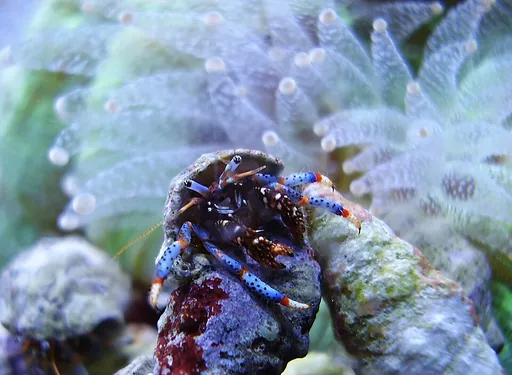 1 in (2.5 cm)11 gal (40 L)72–79°F (22–26°C)
Blue-leg hermit crab
Clibanarius tricolor
1 in (2.5 cm) · 11 gal (40 L)
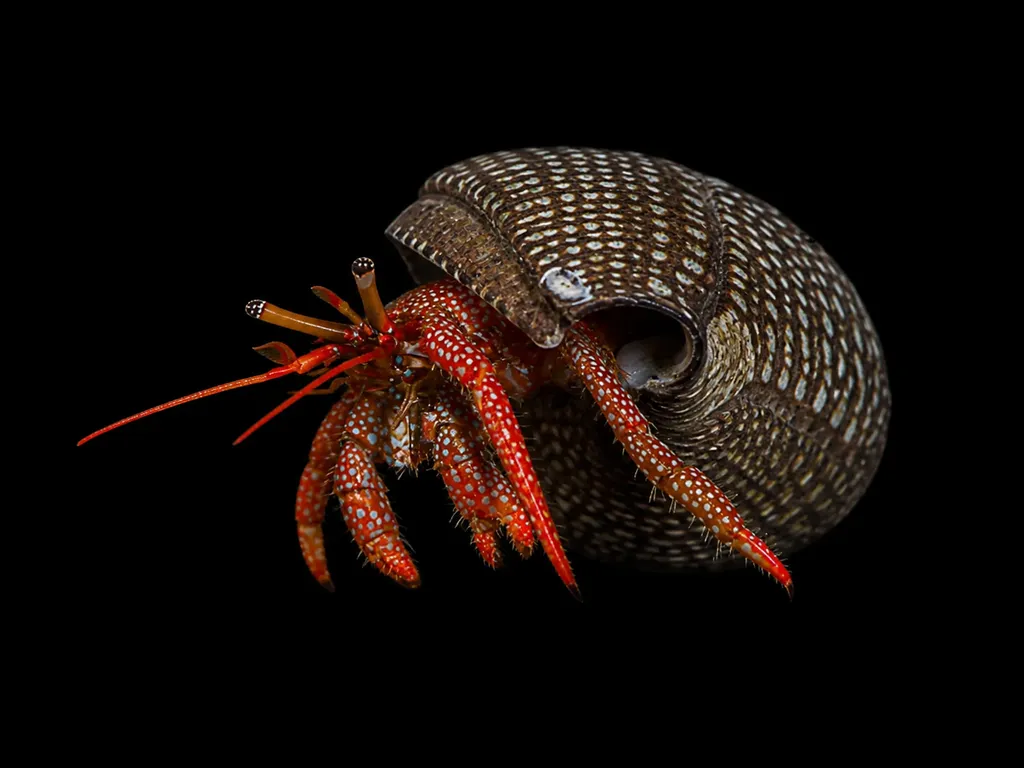 1 in (2.5 cm)11 gal (40 L)72–81°F (22–27°C)
Mexican red-leg hermit crab
Clibanarius digueti
1 in (2.5 cm) · 11 gal (40 L)