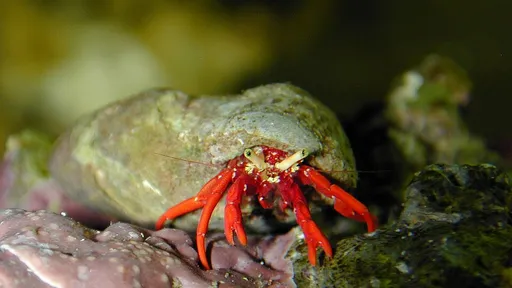
Scarlet reef hermit crab
Paguristes cadenati
Also known as Red Reef Hermit Crab, Red Legged Hermit Crab, Scarlet Leg Hermit Crab, Gold Faced Hermit Crab
SaltwaterCrab
Care at a glance
- Temperature
- 72–79°F
- 22–26°C
- pH
- 8.1–8.4
- Adult size
- 1.6 in
- 4 cm
- Minimum tank
- 11 gal
- 40 L
- Temperament
- Peaceful
- Social behavior
- Social
- Swim level
- Bottom
- Difficulty
- Beginner
- Breeding
- No record
- Rarity
- Very common
- Reef safe
- Reef safe
- Family
- Diogenidae
- Origin
- Western Atlantic, from south Florida and the Gulf of Mexico through the Bahamas and the Caribbean Sea to the Lesser Antilles
Overview
A tireless scavenger that eats algae, detritus, and leftover food, which is why it is one of the most commonly stocked cleanup-crew animals in the hobby. It is particularly fond of hair, filamentous, and slime algae along with cyanobacteria, and it will also pick at fish food and prepared invertebrate diets. It is genuinely peaceful toward fish, corals, and most tankmates, but like every hermit crab it needs empty shells on hand: without spares available it may attack and evict a living snail to get a new shell as it grows. Keep a stock of assorted empty shells in the tank at all times.
In the wild
Lives on Caribbean and western Atlantic reefs and rubble, from south Florida and the Gulf of Mexico through the Bahamas and Caribbean Sea to the Lesser Antilles, from the shallows down past 50 metres. Grazes rock and rubble for algae and detritus, tucked into a borrowed shell for protection. In the aquarium it wants an established reef with algae growth to pick at plus open rock and glass to work over, and it spends most of the day out foraging rather than hiding.
Good to know
Paguristes cadenati is a small hermit crab in the family Diogenidae, easily told apart from other reef hermits by its bright scarlet-red legs, deep red antennae, and yellow to yellow-green eyestalks. Its left claw runs slightly larger than the right. Like other hermits it has a soft, unarmored abdomen protected by a scavenged gastropod shell, most often a Cerithium or Vasum shell in the wild, and it moves up to a roomier shell each time it molts and outgrows the old one.
Did you know
Before moving in, it sizes up a new shell by spinning it in its claws and probing the inside opening, and if the fit is right it can swap homes in just a few seconds flat.
Common questions
What size tank does a Scarlet reef hermit crab need?
A Scarlet reef hermit crab needs at least 11 gal (40 L). It spends most of its time in the bottom.
What temperature and pH does a Scarlet reef hermit crab need?
A Scarlet reef hermit crab is comfortable at 72–79°F (22–26°C) with a pH of 8.1–8.4.
How big does a Scarlet reef hermit crab get?
An adult Scarlet reef hermit crab reaches about 1.6 in (4 cm).
Related species
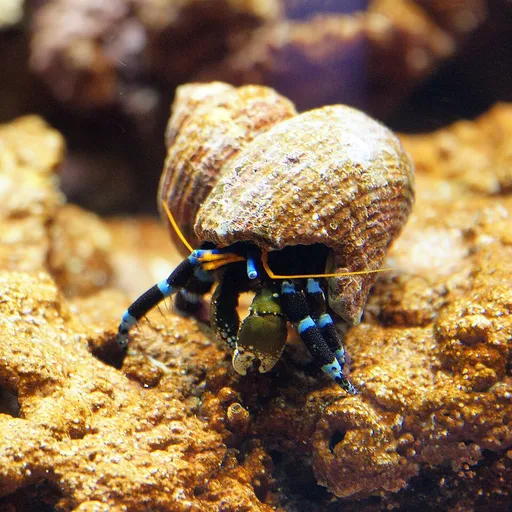 2 in (5 cm)20 gal (75 L)72–79°F (22–26°C)
Electric blue hermit crab
Calcinus elegans
2 in (5 cm) · 20 gal (75 L)
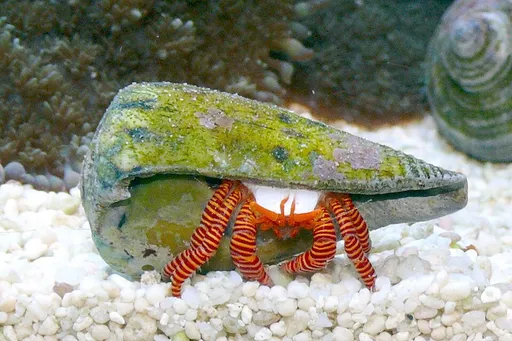 2 in (5 cm)20 gal (75 L)72–79°F (22–26°C)
Halloween hermit crab
Ciliopagurus strigatus
2 in (5 cm) · 20 gal (75 L)
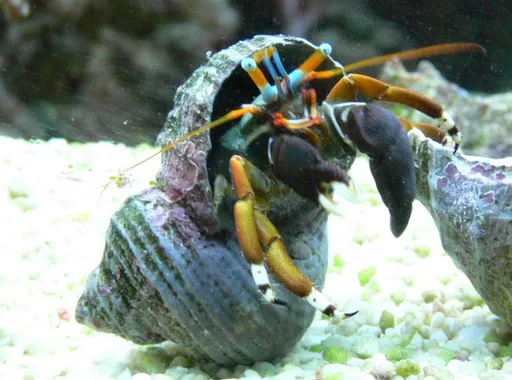 1.2 in (3 cm)20 gal (75 L)72–79°F (22–26°C)
Scarlet zebra hermit crab
Calcinus laevimanus
1.2 in (3 cm) · 20 gal (75 L)
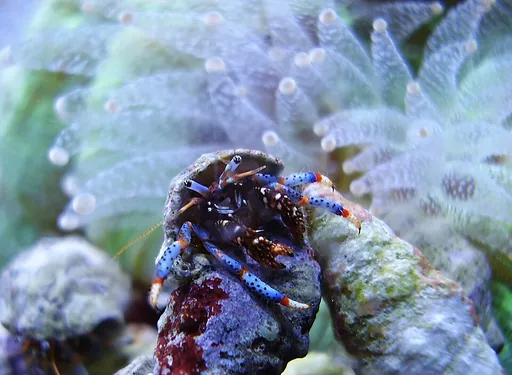 1 in (2.5 cm)11 gal (40 L)72–79°F (22–26°C)
Blue-leg hermit crab
Clibanarius tricolor
1 in (2.5 cm) · 11 gal (40 L)
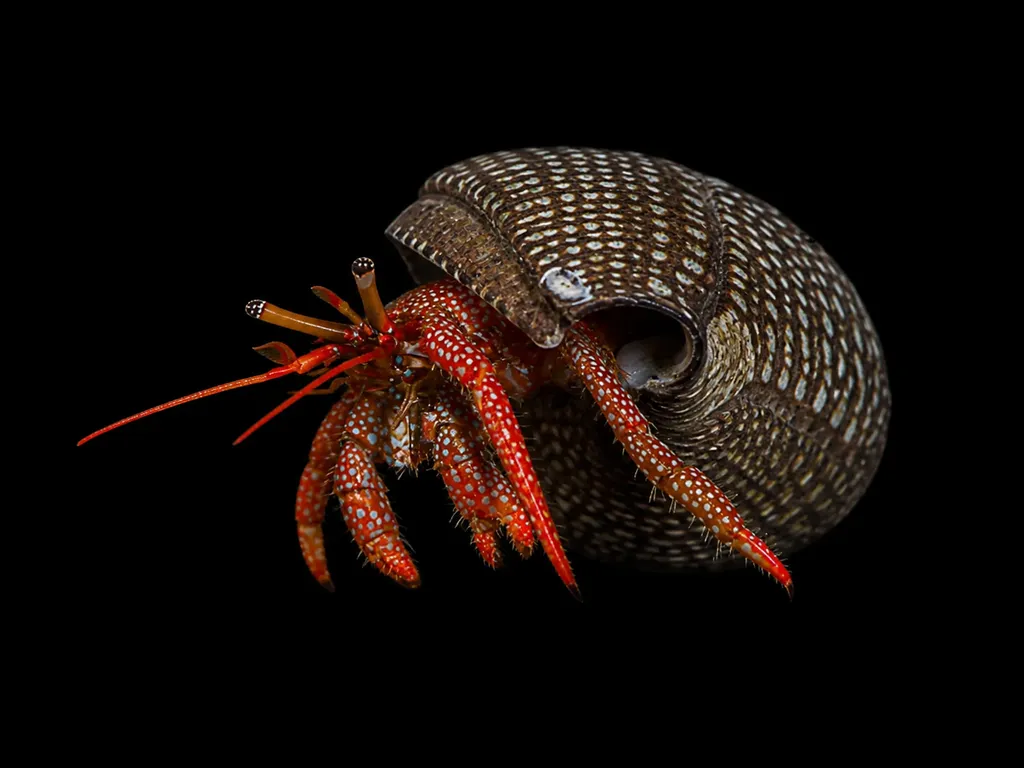 1 in (2.5 cm)11 gal (40 L)72–81°F (22–27°C)
Mexican red-leg hermit crab
Clibanarius digueti
1 in (2.5 cm) · 11 gal (40 L)
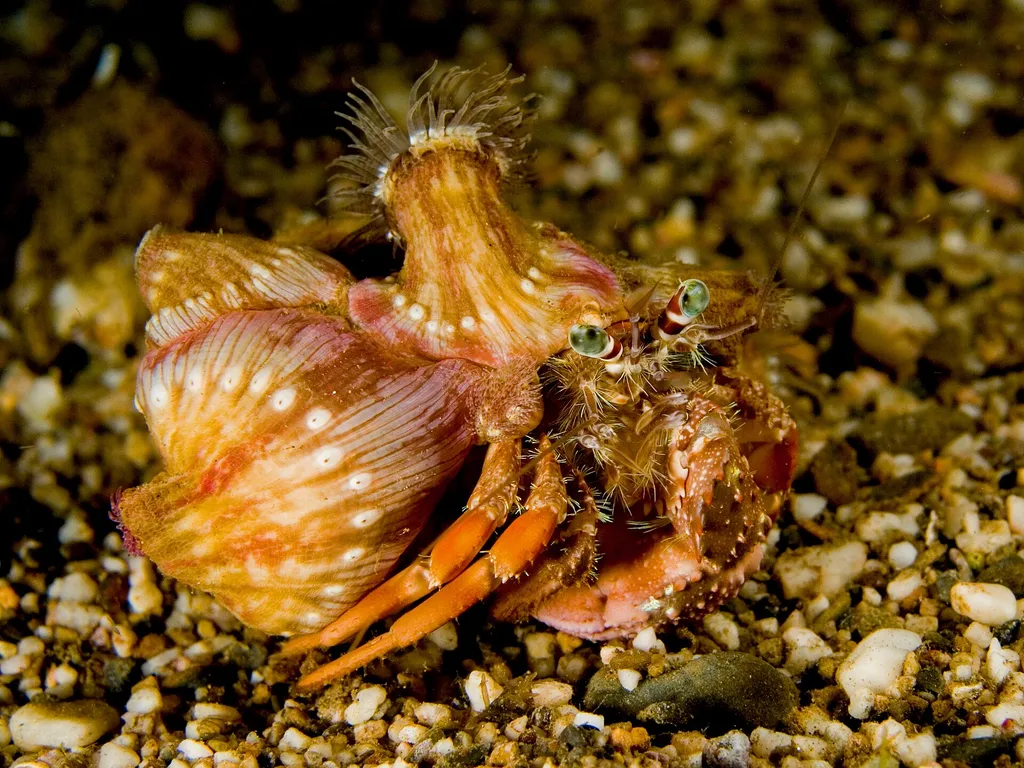 3.9 in (10 cm)40 gal (150 L)72–81°F (22–27°C)
Anemone hermit crab
Dardanus pedunculatus
3.9 in (10 cm) · 40 gal (150 L)