Coral guard crab
Trapezia cymodoce
Also known as Red-Spotted Guard Crab, Blue Coral Crab, Lilac Coral Crab, Pocillopora Crab
SaltwaterCrab
Care at a glance
- Temperature
- 75–81°F
- 24–27°C
- pH
- 8.1–8.4
- Adult size
- 0.8 in
- 2 cm
- Minimum tank
- 11 gal
- 40 L
- Temperament
- Mostly peaceful
- Social behavior
- Social
- Swim level
- Bottom
- Difficulty
- Easy
- Breeding
- No record
- Rarity
- Rare
- Reef safe
- Reef safe
- Family
- Trapeziidae
- Origin
- Indo-Pacific, living among the branches of Pocillopora and other stony corals.
Overview
It needs a branching Pocillopora or Acropora colony to live in, in a tank of 40 litres or more at 24 to 27 C and pH 8.1 to 8.4. It gets most of its food from the coral but will take small meaty scraps. Usually only one crab or a mated pair holds a single coral head, since they are territorial toward other guard crabs, and they are safe with corals and other tankmates.
In the wild
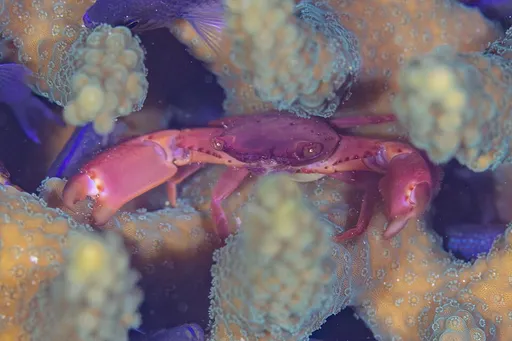
The coral guard crab is a tiny flat crab, usually under 2 cm, that lives its whole life tucked among the branches of a single Pocillopora or Acropora colony. It is often colored in lilac, red, or orange with fine spotting. It rarely leaves its home coral.
Good to know
Trapezia cymodoce is an obligate coral symbiont, meaning it cannot live long without a host coral. It feeds on the coral's mucus and fat rich tips, and in return it drives off coral predators, including the crown of thorns starfish.
Did you know
These little crabs defend their coral so fiercely that they will grab and fend off crown of thorns starfish many times their size.
Symbiotic relationships
The coral guard crab and its Pocillopora
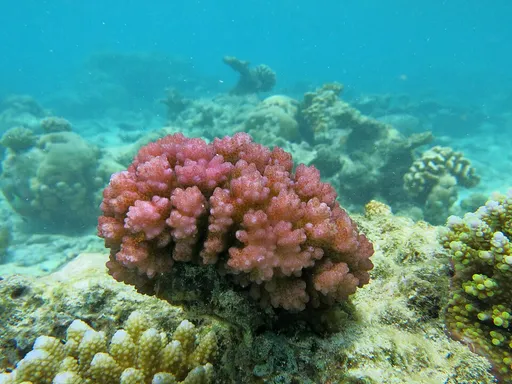
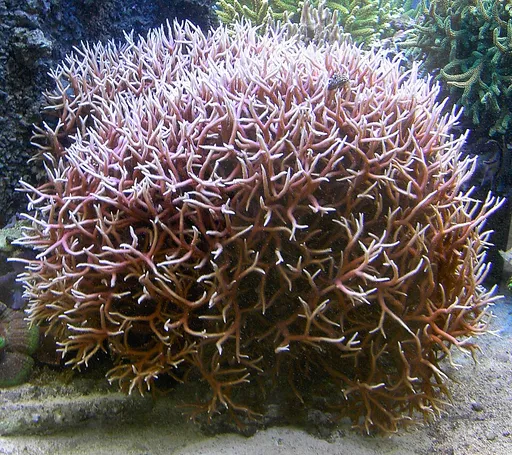
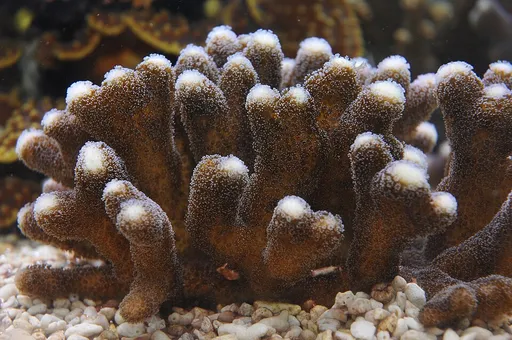
Guard crabs live deep in the branches of cauliflower, birdsnest and cat's paw corals and rarely leave. The coral feeds them: it produces fat-rich mucus and small tissue bodies the crab eats. The crab earns it. When a crown-of-thorns starfish or a coral-eating snail moves onto the colony, the crab pinches and pushes until it leaves, and when sediment settles on the branches the crab clears it, which is the difference between the coral living and smothering during a sediment pulse.
Small Pocillopora colonies often arrive with a guard crab already in residence; look for a fingernail-sized crab with a smooth, spotted or plain shell in the branches and leave it there. One crab or a mated pair per colony is the rule, they are harmless to everything else in the tank, and they need no feeding beyond the coral they live in. Without a host coral the crab has nowhere to be and does not last.
Common questions
What size tank does a Coral guard crab need?
A Coral guard crab needs at least 11 gal (40 L). It spends most of its time in the bottom.
What temperature and pH does a Coral guard crab need?
A Coral guard crab is comfortable at 75–81°F (24–27°C) with a pH of 8.1–8.4.
How big does a Coral guard crab get?
An adult Coral guard crab reaches about 0.8 in (2 cm).
Related species
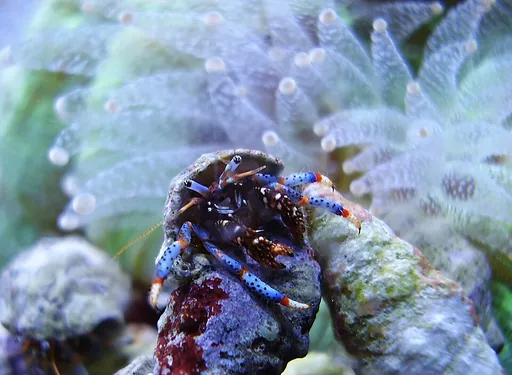 1 in (2.5 cm)11 gal (40 L)72–79°F (22–26°C)
Blue-leg hermit crab
Clibanarius tricolor
1 in (2.5 cm) · 11 gal (40 L)
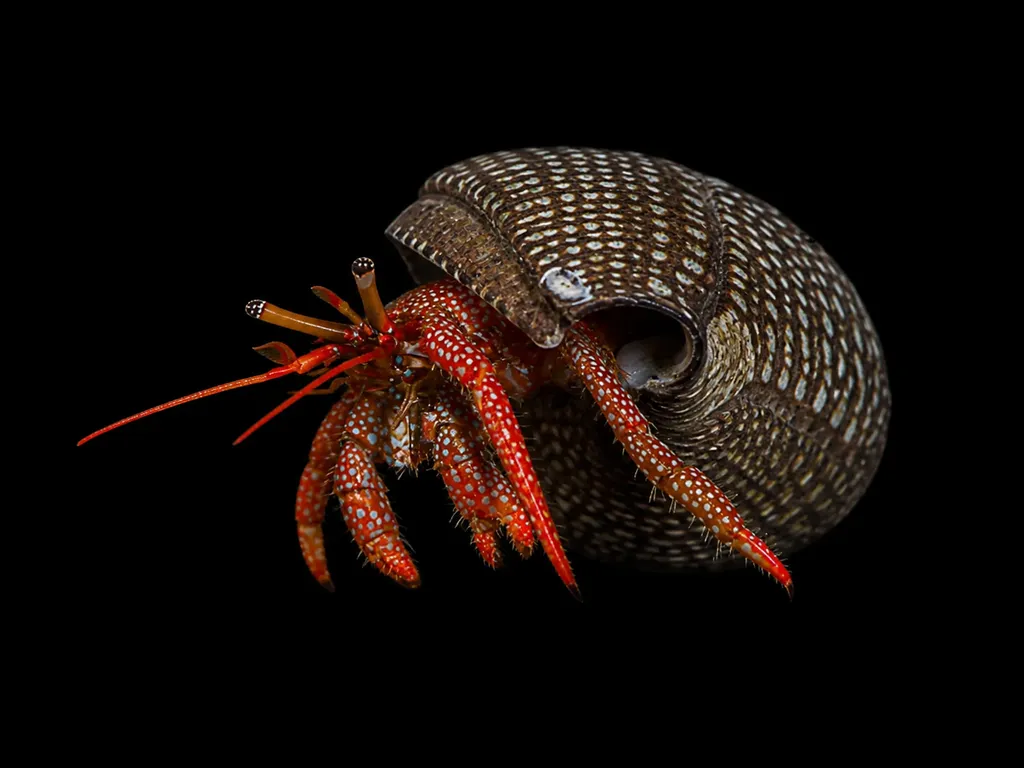 1 in (2.5 cm)11 gal (40 L)72–81°F (22–27°C)
Mexican red-leg hermit crab
Clibanarius digueti
1 in (2.5 cm) · 11 gal (40 L)
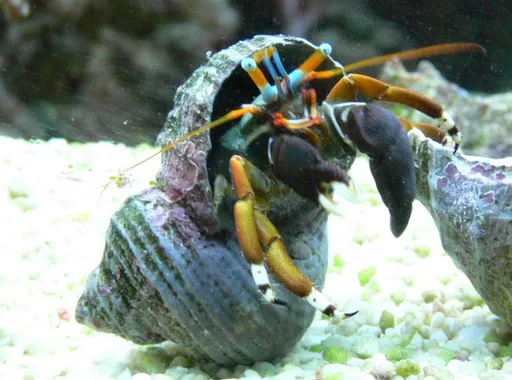 1.2 in (3 cm)20 gal (75 L)72–79°F (22–26°C)
Scarlet zebra hermit crab
Calcinus laevimanus
1.2 in (3 cm) · 20 gal (75 L)
- 1.2 in (3 cm)26 gal (100 L)72–81°F (22–27°C)
Decorator crab
Camposcia retusa
1.2 in (3 cm) · 26 gal (100 L)
- 1.2 in (3 cm)20 gal (75 L)72–81°F (22–27°C)
Strawberry crab
Neoliomera pubescens
1.2 in (3 cm) · 20 gal (75 L)
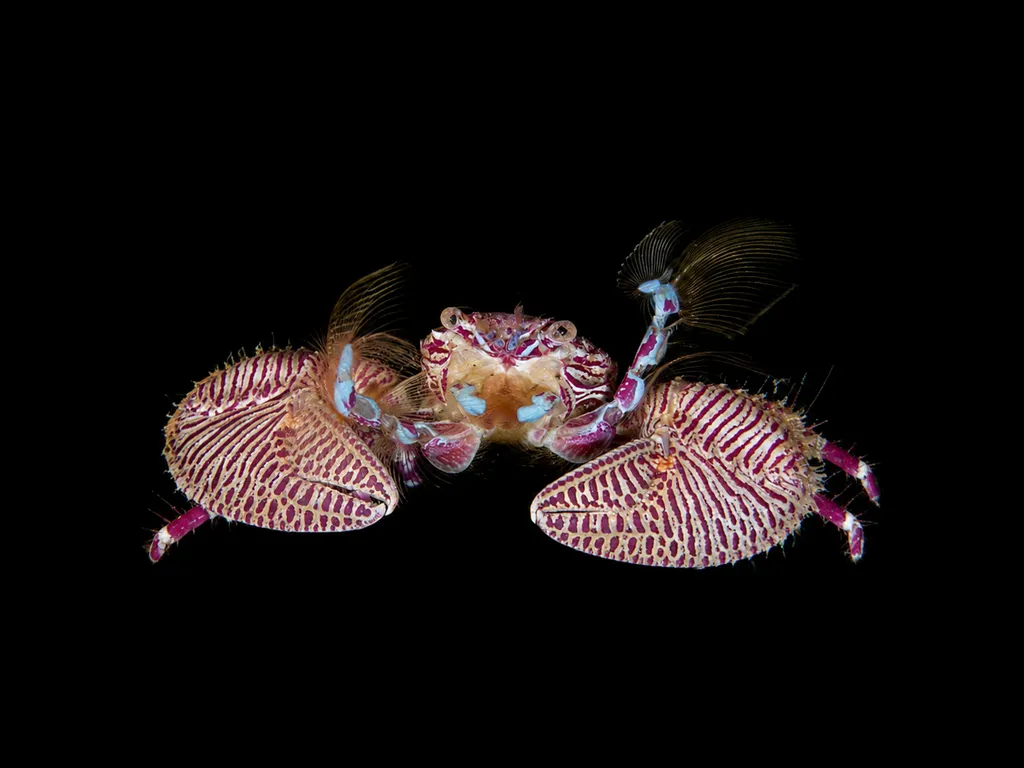 0.8 in (2 cm)11 gal (40 L)72–82°F (22–28°C)
Purple zebra porcelain crab
Petrolisthes bolivarensis
0.8 in (2 cm) · 11 gal (40 L)