Cat's paw coral
Stylophora pistillata
Also known as Club Finger Coral, Cluster Coral, Brush Coral
SaltwaterCoral
Care at a glance
- Temperature
- 75–81°F
- 24–27°C
- pH
- 8.1–8.4
- Adult size
- 5.9 in
- 15 cm
- Minimum tank
- 20 gal
- 75 L
- Temperament
- Peaceful
- Social behavior
- Solitary
- Swim level
- Bottom
- Difficulty
- Difficult
- Breeding
- Easy
- Rarity
- Common
- Reef safe
- Reef safe
- Family
- Pocilloporidae
- Origin
- Indo-Pacific and Red Sea reefs; hardy maricultured colonies common in the trade
Overview
Sessile and passive: it has no sweeper tentacles and essentially no defense against other corals, so it must be given personal space rather than relying on it to hold ground. It is more forgiving of general conditions than Acropora, which makes it a common step-up SPS, but like all stonies it wants stable alkalinity, calcium and low nutrients.
In the wild
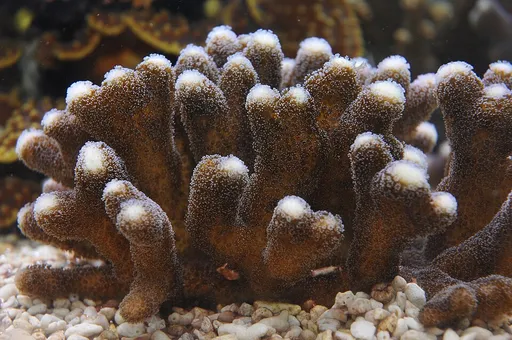
A branching SPS coral that grows thick fingers with blunt, rounded tips, the shape that earns it the cat's paw and club finger names. It likes moderate to high light, roughly 300 to 400 PAR, and moderately strong, alternating or intermittent flow. Place it in the mid to upper tank with space around it. Fuzzy polyps extend across the branches when it is settled and happy.
Good to know
Stylophora pistillata is a zooxanthellate SPS coral in the family Pocilloporidae, closely related to Seriatopora and Pocillopora. It is one of the hardier SPS genera and is a heavily studied model organism in coral biology, appearing in a great deal of research on calcification, bleaching and reproduction.
Did you know
Stylophora pistillata is one of the most researched corals in science, used worldwide as a laboratory model, so much of what reefkeepers know about how corals build skeleton and respond to warming water comes from studies on this exact species.
Symbiotic relationships
The coral guard crab and its Pocillopora
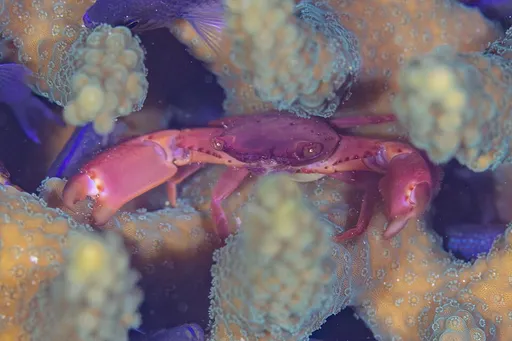
Guard crabs live deep in the branches of cauliflower, birdsnest and cat's paw corals and rarely leave. The coral feeds them: it produces fat-rich mucus and small tissue bodies the crab eats. The crab earns it. When a crown-of-thorns starfish or a coral-eating snail moves onto the colony, the crab pinches and pushes until it leaves, and when sediment settles on the branches the crab clears it, which is the difference between the coral living and smothering during a sediment pulse.
Small Pocillopora colonies often arrive with a guard crab already in residence; look for a fingernail-sized crab with a smooth, spotted or plain shell in the branches and leave it there. One crab or a mated pair per colony is the rule, they are harmless to everything else in the tank, and they need no feeding beyond the coral they live in. Without a host coral the crab has nowhere to be and does not last.
Common questions
What size tank does a Cat's paw coral need?
A Cat's paw coral needs at least 20 gal (75 L). It spends most of its time in the bottom.
What temperature and pH does a Cat's paw coral need?
A Cat's paw coral is comfortable at 75–81°F (24–27°C) with a pH of 8.1–8.4.
How big does a Cat's paw coral get?
An adult Cat's paw coral reaches about 5.9 in (15 cm).
Related species
 5.9 in (15 cm)20 gal (75 L)75–81°F (24–27°C)
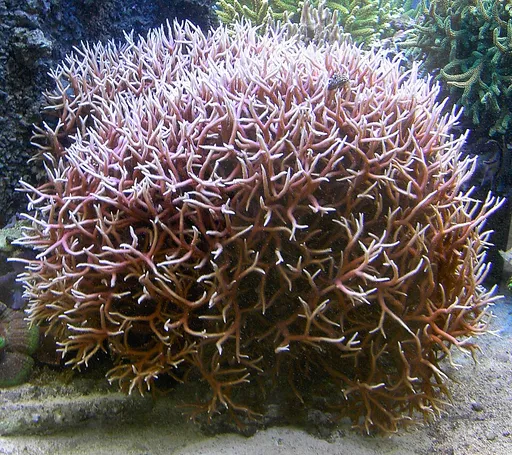
Birdsnest coral
Seriatopora hystrix
5.9 in (15 cm) · 20 gal (75 L)
 9.8 in (25 cm)20 gal (75 L)75–81°F (24–27°C)
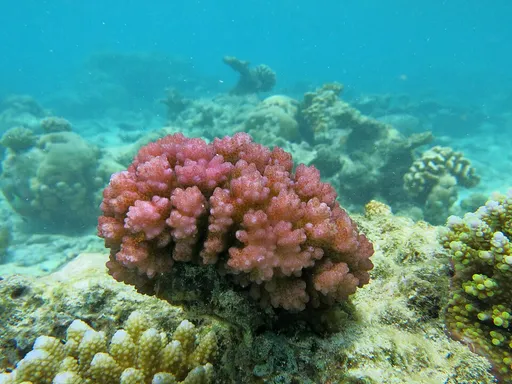
Cauliflower coral
Pocillopora damicornis
9.8 in (25 cm) · 20 gal (75 L)
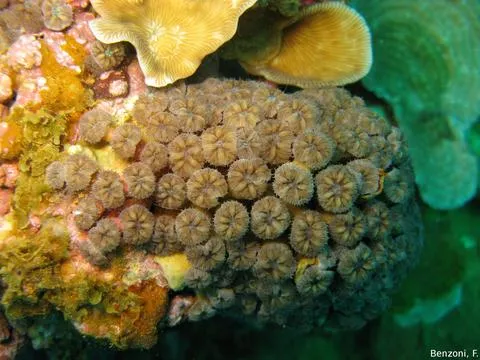 5.9 in (15 cm)11 gal (40 L)75–81°F (24–27°C)
Blastomussa
Blastomussa merletti
5.9 in (15 cm) · 11 gal (40 L)
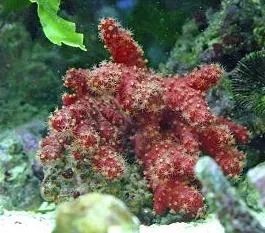 5.9 in (15 cm)20 gal (75 L)75–81°F (24–27°C)
Chili coral
Nephthyigorgia
5.9 in (15 cm) · 20 gal (75 L)
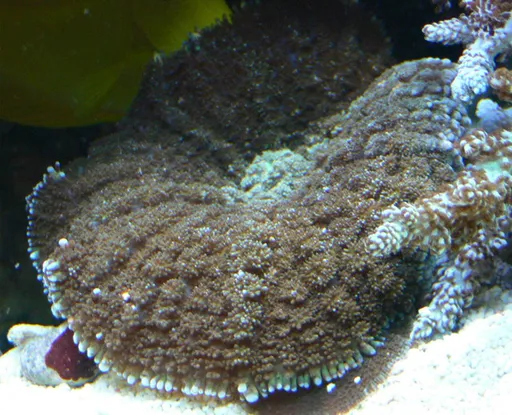 5.9 in (15 cm)11 gal (40 L)75–81°F (24–27°C)
Hairy mushroom
Rhodactis
5.9 in (15 cm) · 11 gal (40 L)
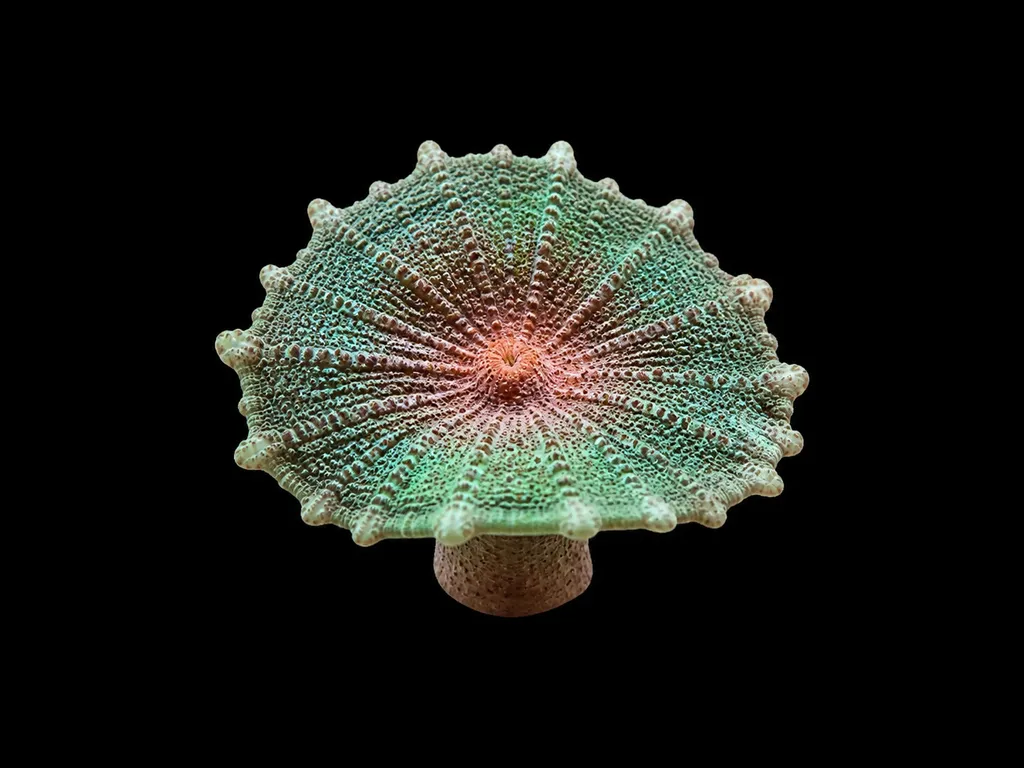 5.9 in (15 cm)11 gal (40 L)75–81°F (24–27°C)
Umbrella mushroom
Discosoma neglecta
5.9 in (15 cm) · 11 gal (40 L)