Flower tree coral
Scleronephthya
Also known as Strawberry Coral, Carnation Coral
SaltwaterCoral
Care at a glance
- Temperature
- 75–81°F
- 24–27°C
- pH
- 8.1–8.4
- Adult size
- 5.9 in
- 15 cm
- Minimum tank
- 20 gal
- 75 L
- Temperament
- Peaceful
- Social behavior
- Solitary
- Swim level
- Bottom
- Difficulty
- Difficult
- Breeding
- Hard
- Rarity
- Rare
- Reef safe
- Reef safe
- Family
- Nephtheidae
- Origin
- Indo-Pacific reefs, especially around Southeast Asia and Australia, in shaded lagoons and on current-swept ledges and overhangs
Overview
Often sold under overlapping carnation and tree coral names alongside Dendronephthya and other soft corals in this group, and generally regarded as the sturdier of the bunch, sometimes suggested as a step before the more delicate carnation corals. It still needs frequent target feeding, ideally more than once a day, of baby brine shrimp, phytoplankton and other fine foods aimed into strong flow so the polyps can catch it before it settles. It does not sting neighbors and can sit fairly close to other corals, but place it somewhere shaded and easy to reach for feeding, and only add it to a tank that can keep up with that routine.
In the wild
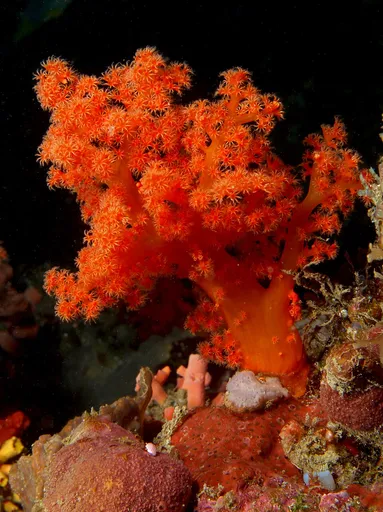
Scleronephthya grows in shaded lagoons and on current-swept ledges, walls and overhangs across the Indo-Pacific, especially around Southeast Asia and Australia, in spots that see little or no direct sun. It forms a stout, fleshy tree or cactus-like stalk topped with clusters of small polyps that flush open when food-laden water washes over it and collapse into a deflated lump when flow drops or the polyps are resting. In the aquarium it wants low light or full shade and strong, turbulent, indirect flow, plus a low or shaded position such as a cave, overhang or the underside of an outcrop where it is still easy to reach for feeding.
Good to know
Scleronephthya is a non-photosynthetic soft coral in the family Nephtheidae, the same family as Dendronephthya, and its tissue is reinforced with dense calcite sclerites that give the stalk more structural rigidity than its floppier relative. It carries no zooxanthellae and gets essentially all of its energy from capturing plankton with its polyps rather than from light.
Did you know
The polyps flush open and shut through the day largely in response to flow and feeding rather than light, so a colony can look like a shriveled red lump one hour and a spray of tiny white starburst polyps the next.
Common questions
What size tank does a Flower tree coral need?
A Flower tree coral needs at least 20 gal (75 L). It spends most of its time in the bottom.
What temperature and pH does a Flower tree coral need?
A Flower tree coral is comfortable at 75–81°F (24–27°C) with a pH of 8.1–8.4.
How big does a Flower tree coral get?
An adult Flower tree coral reaches about 5.9 in (15 cm).
Related species
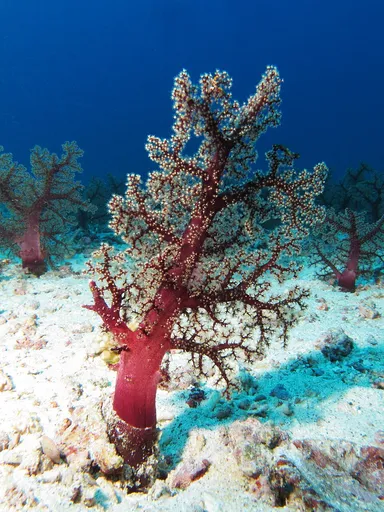 9.8 in (25 cm)20 gal (75 L)75–81°F (24–27°C)
Carnation coral
Dendronephthya
9.8 in (25 cm) · 20 gal (75 L)
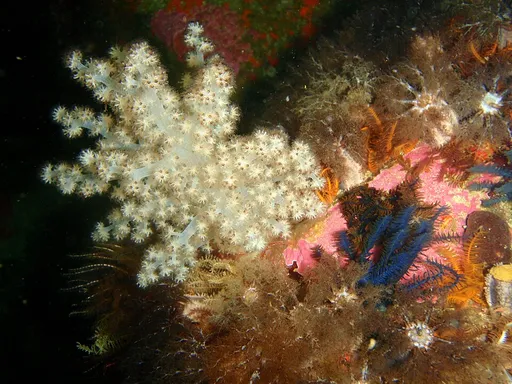 9.8 in (25 cm)11 gal (40 L)75–81°F (24–27°C)
Kenya tree coral
Capnella
9.8 in (25 cm) · 11 gal (40 L)
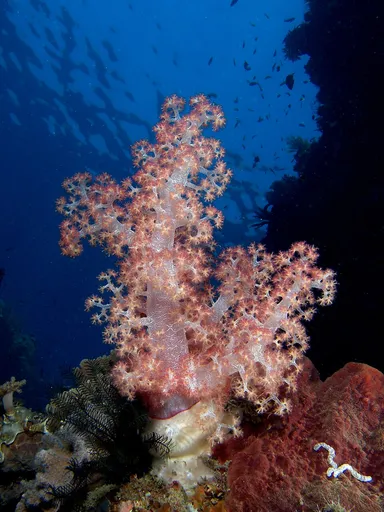 11.8 in (30 cm)11 gal (40 L)75–81°F (24–27°C)
Broccoli tree coral
Litophyton
11.8 in (30 cm) · 11 gal (40 L)
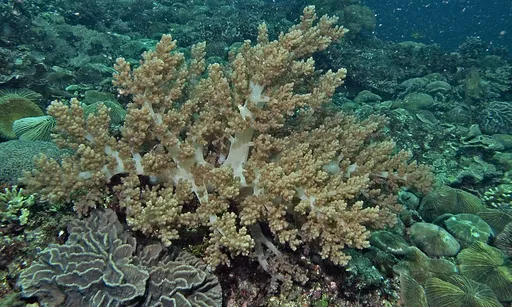 7.9 in (20 cm)11 gal (40 L)75–81°F (24–27°C)
Lemnalia tree coral
Lemnalia
7.9 in (20 cm) · 11 gal (40 L)
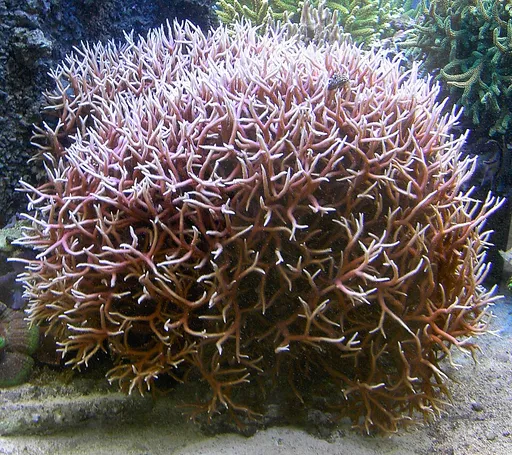 5.9 in (15 cm)20 gal (75 L)75–81°F (24–27°C)
Birdsnest coral
Seriatopora hystrix
5.9 in (15 cm) · 20 gal (75 L)
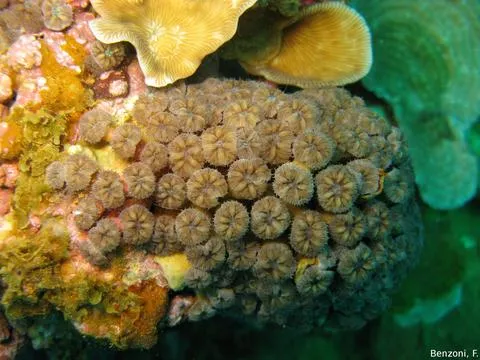 5.9 in (15 cm)11 gal (40 L)75–81°F (24–27°C)
Blastomussa
Blastomussa merletti
5.9 in (15 cm) · 11 gal (40 L)