Carnation coral
Dendronephthya
Also known as Tree Coral, Cauliflower Coral, Ledge Coral, Carnation Tree Coral
SaltwaterCoral
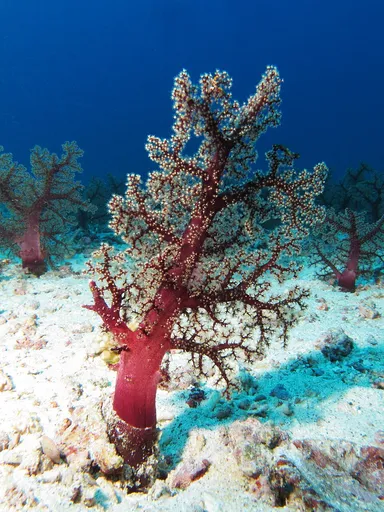
Care at a glance
- Temperature
- 75–81°F
- 24–27°C
- pH
- 8.1–8.4
- Adult size
- 9.8 in
- 25 cm
- Minimum tank
- 20 gal
- 75 L
- Temperament
- Peaceful
- Social behavior
- Solitary
- Swim level
- Bottom
- Difficulty
- Difficult
- Breeding
- Hard
- Rarity
- Rare
- Reef safe
- Reef safe
- Family
- Nephtheidae
- Origin
- Indo-Pacific reefs, on current-swept slopes, walls and overhangs, often in deeper or shaded water
Overview
This is one of the hardest corals in the hobby to keep alive long term, not because it is fragile in the usual sense but because it needs a near constant supply of very fine planktonic food, ideally several feedings a day aimed into strong flow, more than most reef systems are set up to sustain. Without that level of feeding it slowly wastes away over weeks even if it looks fine at first. It does not sting or compete with other corals and has no real light requirement, but it belongs only in a dedicated, mature NPS system run by an experienced feeder rather than a general reef tank.
In the wild
Dendronephthya lives on current-swept reef slopes, walls and overhangs across the Indo-Pacific, often in deeper or shaded water where it gets no benefit from the sun. Wild colonies form soft, brightly colored branching trees in pink, red, orange and yellow that inflate with water and open into a mass of feeding polyps whenever plankton-rich current sweeps past, then deflate into a limp lump when the water goes still. In the aquarium it does not need meaningful light and instead wants strong, turbulent, food-laden flow aimed across the branches, along with a shaded position low in the tank away from bright reef lighting.
Good to know
Dendronephthya is a non-photosynthetic soft coral in the family Nephtheidae that carries no zooxanthellae, so it makes none of its own energy from light. Its branching stalks are stiffened by colorful calcite sclerites rather than a hard skeleton, and every polyp is an obligate filter feeder that must catch phytoplankton, bacterioplankton and fine zooplankton directly from the water column to survive.
Did you know
Its vivid reds, pinks and oranges come entirely from pigment and calcite sclerites rather than symbiotic algae, and because it depends completely on planktonic food instead of light, a Dendronephthya colony often does better tucked into a dim cave than sitting under bright aquarium lighting.
Common questions
What size tank does a Carnation coral need?
A Carnation coral needs at least 20 gal (75 L). It spends most of its time in the bottom.
What temperature and pH does a Carnation coral need?
A Carnation coral is comfortable at 75–81°F (24–27°C) with a pH of 8.1–8.4.
How big does a Carnation coral get?
An adult Carnation coral reaches about 9.8 in (25 cm).
Related species
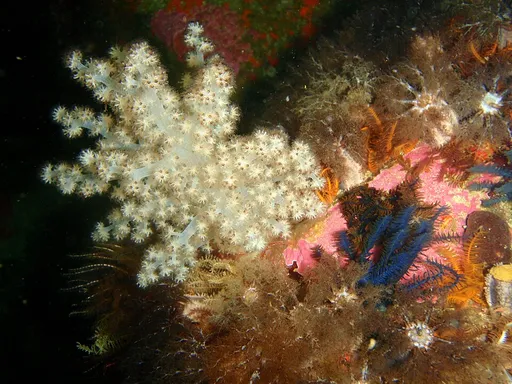 9.8 in (25 cm)11 gal (40 L)75–81°F (24–27°C)
Kenya tree coral
Capnella
9.8 in (25 cm) · 11 gal (40 L)
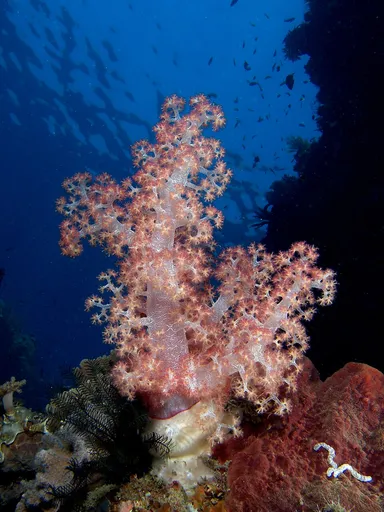 11.8 in (30 cm)11 gal (40 L)75–81°F (24–27°C)
Broccoli tree coral
Litophyton
11.8 in (30 cm) · 11 gal (40 L)
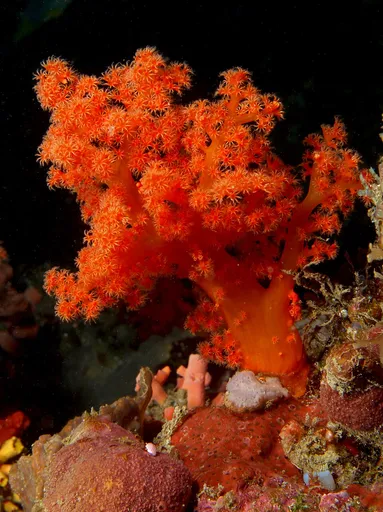 5.9 in (15 cm)20 gal (75 L)75–81°F (24–27°C)
Flower tree coral
Scleronephthya
5.9 in (15 cm) · 20 gal (75 L)
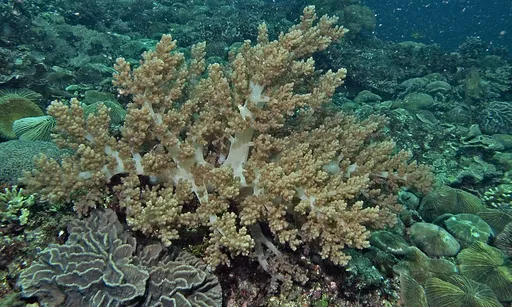 7.9 in (20 cm)11 gal (40 L)75–81°F (24–27°C)
Lemnalia tree coral
Lemnalia
7.9 in (20 cm) · 11 gal (40 L)
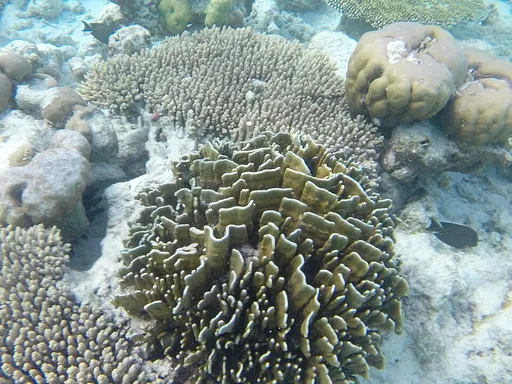 9.8 in (25 cm)11 gal (40 L)75–81°F (24–27°C)
Blue coral
Heliopora coerulea
9.8 in (25 cm) · 11 gal (40 L)
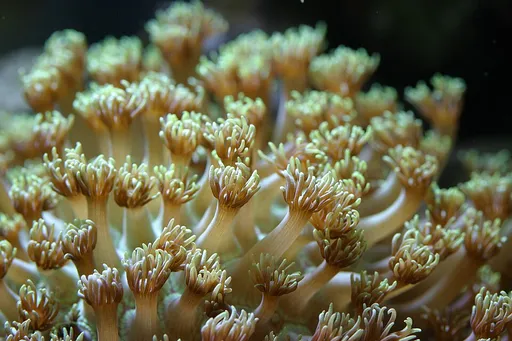 9.8 in (25 cm)11 gal (40 L)75–81°F (24–27°C)
Flowerpot coral
Goniopora
9.8 in (25 cm) · 11 gal (40 L)