Blue coral
Heliopora coerulea
Also known as Blue Ridge Coral, Ridge Coral, Heliopora
SaltwaterCoral
Care at a glance
- Temperature
- 75–81°F
- 24–27°C
- pH
- 8.1–8.4
- Adult size
- 9.8 in
- 25 cm
- Minimum tank
- 11 gal
- 40 L
- Temperament
- Peaceful
- Social behavior
- Solitary
- Swim level
- Bottom
- Difficulty
- Medium
- Breeding
- Medium
- Rarity
- Rare
- Reef safe
- Reef safe
- Family
- Helioporidae
- Origin
- Red Sea and East Africa to the central Pacific
Overview
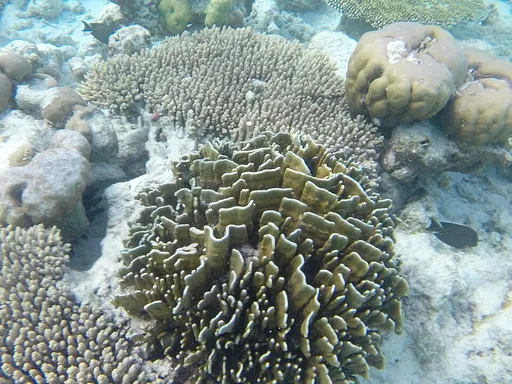
A sessile reef-building octocoral that grows slowly, adding to its solid skeleton much like a stony coral rather than spreading as a soft mat. It has no sweeper tentacles and does not chemically compete with neighbors, so it can be placed close to other peaceful corals without trouble. It is photosynthetic and benefits from occasional planktonic feeding, and because it needs the same calcium and alkalinity stability as an SPS coral, it does best in a mature, well established reef tank rather than a brand new setup.
In the wild
Blue coral grows in shallow water from the Red Sea and East Africa across to the central Pacific, forming large reef structures in the wild despite being a soft coral relative. In the aquarium it wants moderate to high light, roughly 50 to 150 PAR, and moderate flow to prevent sediment from settling on its surface and to support its calcium demand. Place it mid to upper in the tank where light and flow are both strong and steady, and treat its calcium and alkalinity needs the way you would for a small polyp stony coral.
Good to know
Heliopora coerulea is the only living species in the family Helioporidae and the only octocoral known to build a massive reef skeleton the way stony corals do. The skeleton is fibrocrystalline aragonite with a distinctive blue color, most often attributed to iron compounds bound into the structure, though the exact pigment chemistry is still debated by researchers. It is listed under CITES Appendix II, meaning international trade in wild colonies is regulated, and most of the coral available in the hobby comes from aquacultured frags.
Did you know
Blue coral looks and grows like a stony coral, building solid reef structures even though it is classified as a soft coral relative. Its skeleton is blue all the way through, and the color is so distinctive that geologists use it to pick out fossil Heliopora colonies in ancient reef rock.
Common questions
What size tank does a Blue coral need?
A Blue coral needs at least 11 gal (40 L). It spends most of its time in the bottom.
What temperature and pH does a Blue coral need?
A Blue coral is comfortable at 75–81°F (24–27°C) with a pH of 8.1–8.4.
How big does a Blue coral get?
An adult Blue coral reaches about 9.8 in (25 cm).
Related species
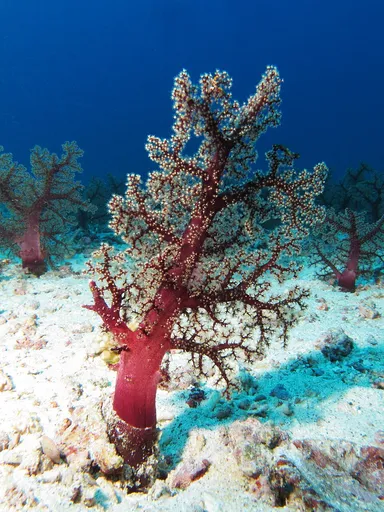 9.8 in (25 cm)20 gal (75 L)75–81°F (24–27°C)
Carnation coral
Dendronephthya
9.8 in (25 cm) · 20 gal (75 L)
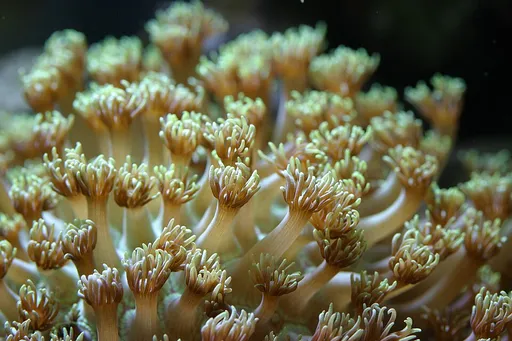 9.8 in (25 cm)11 gal (40 L)75–81°F (24–27°C)
Flowerpot coral
Goniopora
9.8 in (25 cm) · 11 gal (40 L)
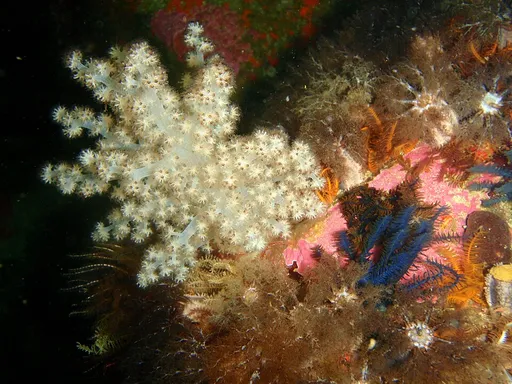 9.8 in (25 cm)11 gal (40 L)75–81°F (24–27°C)
Kenya tree coral
Capnella
9.8 in (25 cm) · 11 gal (40 L)
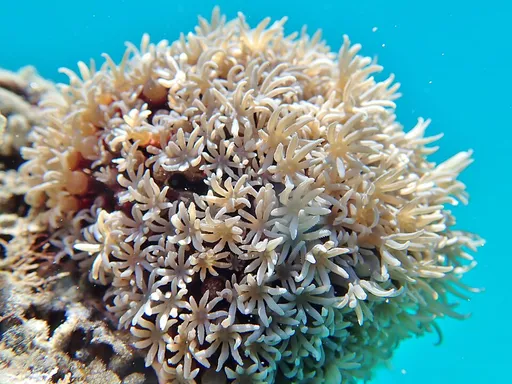 9.8 in (25 cm)11 gal (40 L)75–81°F (24–27°C)
Organ pipe coral
Tubipora musica
9.8 in (25 cm) · 11 gal (40 L)
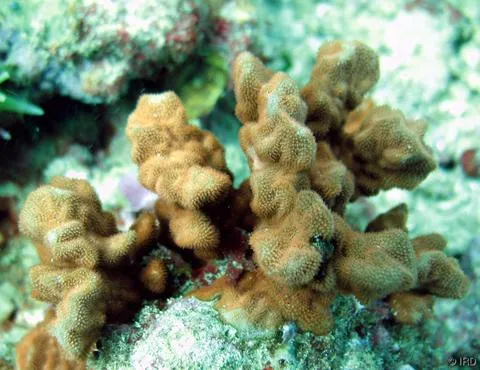 9.8 in (25 cm)29 gal (110 L)75–81°F (24–27°C)
Sandpaper coral
Psammocora contigua
9.8 in (25 cm) · 29 gal (110 L)
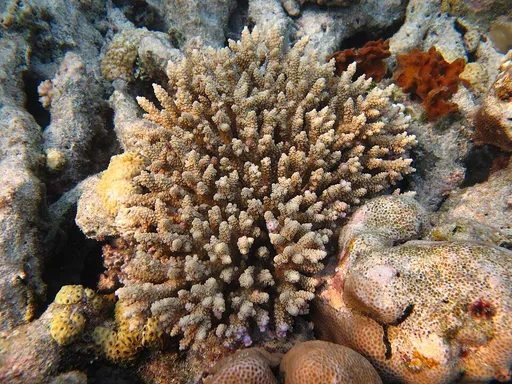 9.8 in (25 cm)40 gal (150 L)75–81°F (24–27°C)
Smooth skin acropora
Acropora tenuis
9.8 in (25 cm) · 40 gal (150 L)