Sandpaper coral
Psammocora contigua
Also known as Psammocora, Branched Sandpaper Coral, Stony Pillar Coral
SaltwaterCoral
Care at a glance
- Temperature
- 75–81°F
- 24–27°C
- pH
- 8.1–8.4
- Adult size
- 9.8 in
- 25 cm
- Minimum tank
- 29 gal
- 110 L
- Temperament
- Peaceful
- Social behavior
- Solitary
- Swim level
- Bottom
- Difficulty
- Medium
- Breeding
- Medium
- Rarity
- Rare
- Reef safe
- Reef safe
- Family
- Psammocoridae
- Origin
- Indo-Pacific reefs, including Fiji, Tonga, the Solomon Islands, and Australia's Great Barrier Reef
Overview
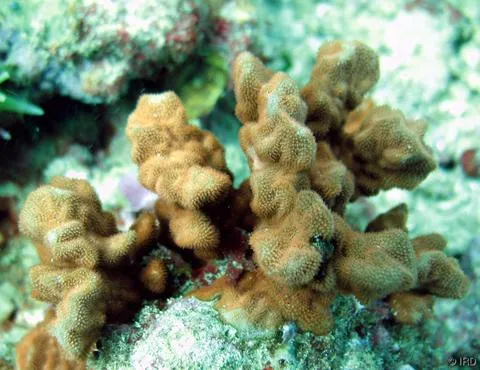
A peaceful stony coral with no sweeper tentacles of its own, so normal SPS spacing to prevent direct tissue contact is enough. Give it medium to high light, somewhere around 100 to 200 PAR works well, and moderate to strong flow, since it comes from reef zones with plenty of water movement. It is not especially picky about water quality by SPS standards. It draws most of its energy from photosynthesis but will also take small mysis or similar foods despite its small polyps, and some keepers see better growth after adding aminos to the water. It is considered one of the easier stony corals to keep and a reasonable step into SPS for someone coming from LPS.
In the wild
Psammocora contigua grows across the Indo-Pacific, from Fiji and Tonga to the Solomon Islands and the Great Barrier Reef, forming low branches or short columns on reef slopes and flats. It is not heavily collected for the trade and shows up far less often than Acropora or Montipora, making it an underrated pick for a keeper after an SPS coral with an unusual texture. In the tank it does best under medium to high light, around 100 to 200 PAR, with moderate to strong flow, set on the mid to upper rockwork.
Good to know
Psammocora sits in its own family, Psammocoridae, separate from the similarly grainy Siderastrea and Coscinaraea despite older references sometimes lumping them together. The genus gets its sandpaper nickname from how the skeleton looks and feels once the small polyps retract, a fine, grainy surface rather than smooth coral or obvious individual corallites. Psammocora contigua specifically grows in low branches or short columns rather than the flatter encrusting form some other Psammocora species take, and it tends to hold a steady color instead of shifting the way Acropora or Montipora do under different lighting.
Did you know
Psammocora earns its sandpaper nickname by touch as much as by looks: a retracted colony has a genuinely gritty surface instead of the smooth texture most people expect from coral, built from thousands of tightly packed, fused corallites.
Common questions
What size tank does a Sandpaper coral need?
A Sandpaper coral needs at least 29 gal (110 L). It spends most of its time in the bottom.
What temperature and pH does a Sandpaper coral need?
A Sandpaper coral is comfortable at 75–81°F (24–27°C) with a pH of 8.1–8.4.
How big does a Sandpaper coral get?
An adult Sandpaper coral reaches about 9.8 in (25 cm).
Related species
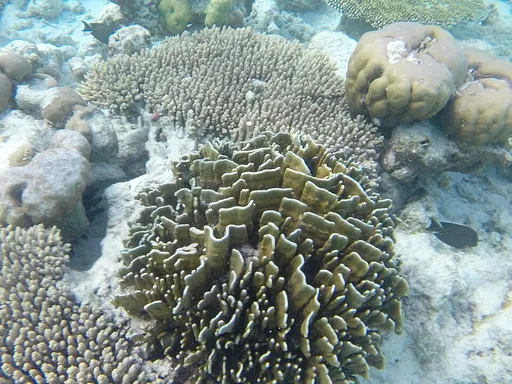 9.8 in (25 cm)11 gal (40 L)75–81°F (24–27°C)
Blue coral
Heliopora coerulea
9.8 in (25 cm) · 11 gal (40 L)
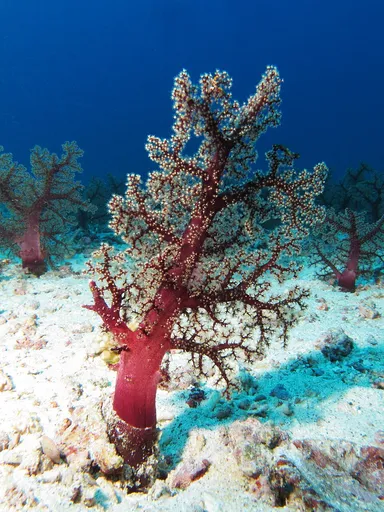 9.8 in (25 cm)20 gal (75 L)75–81°F (24–27°C)
Carnation coral
Dendronephthya
9.8 in (25 cm) · 20 gal (75 L)
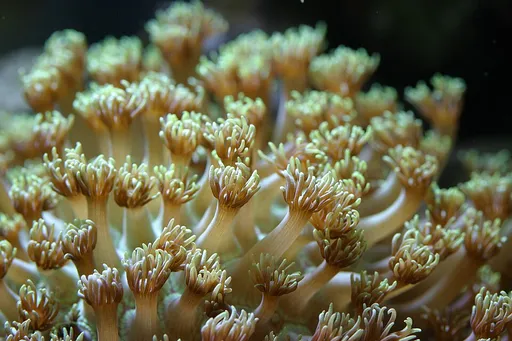 9.8 in (25 cm)11 gal (40 L)75–81°F (24–27°C)
Flowerpot coral
Goniopora
9.8 in (25 cm) · 11 gal (40 L)
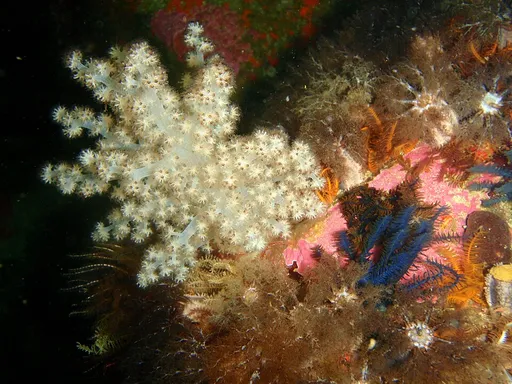 9.8 in (25 cm)11 gal (40 L)75–81°F (24–27°C)
Kenya tree coral
Capnella
9.8 in (25 cm) · 11 gal (40 L)
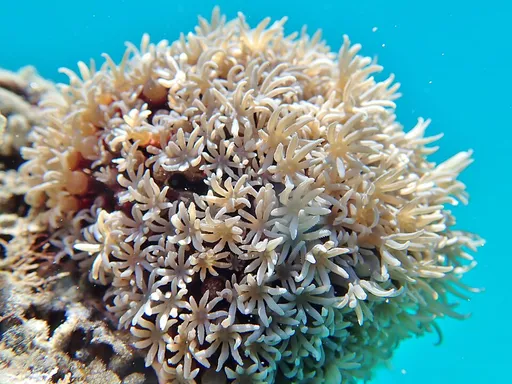 9.8 in (25 cm)11 gal (40 L)75–81°F (24–27°C)
Organ pipe coral
Tubipora musica
9.8 in (25 cm) · 11 gal (40 L)
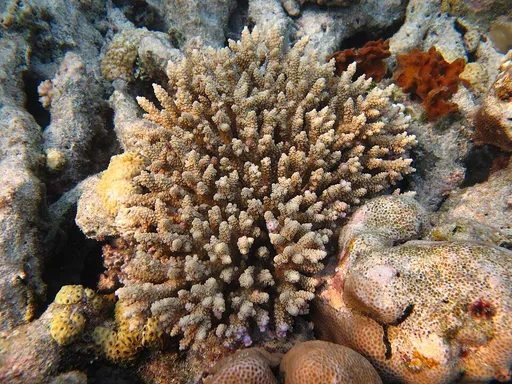 9.8 in (25 cm)40 gal (150 L)75–81°F (24–27°C)
Smooth skin acropora
Acropora tenuis
9.8 in (25 cm) · 40 gal (150 L)