Cauliflower coral
Pocillopora damicornis
Also known as Pocillopora, Brush Coral, Lace Coral, Cluster Coral
SaltwaterCoral
Care at a glance
- Temperature
- 75–81°F
- 24–27°C
- pH
- 8.1–8.4
- Adult size
- 9.8 in
- 25 cm
- Minimum tank
- 20 gal
- 75 L
- Temperament
- Peaceful
- Social behavior
- Solitary
- Swim level
- Bottom
- Difficulty
- Medium
- Breeding
- Easy
- Rarity
- Very common
- Reef safe
- Reef safe
- Family
- Pocilloporidae
- Origin
- Indo-Pacific and Red Sea reefs, one of the most widely distributed reef corals, ranging from East Africa to Hawaii and the rocky eastern Pacific coast of Mexico and Panama
Overview
A peaceful branching SPS that expands by growth rather than by stinging, though a colony still wants real room to branch outward without crowding its neighbors. It needs medium to high light and strong, turbulent flow to match the surge zones it grows in on the reef; low flow leads to thin, straggly growth and duller color. It also filters plankton from the water column, so feeding it micro-plankton or phytoplankton a couple of times a week helps growth, though it gets most of its energy from its zooxanthellae. Pocillopora can be slow to settle in after a move and does best acclimated to bright light gradually, but once established it is one of the more forgiving branching SPS corals, tougher than Acropora or Montipora while keeping the same branching look.
In the wild
Pocillopora damicornis grows in shallow, wave-swept reef flats and lagoons across the Indo-Pacific and Red Sea, where constant surge keeps the water moving and often shapes colonies into dense thickets of short, blunt branches. It is one of the most widely distributed stony corals on the planet, turning up as far as Hawaii and the rocky eastern Pacific coast of the Americas. In the aquarium it wants medium to high light and strong, turbulent flow, set in the middle to upper water column rather than a calm, low-flow corner.
Good to know
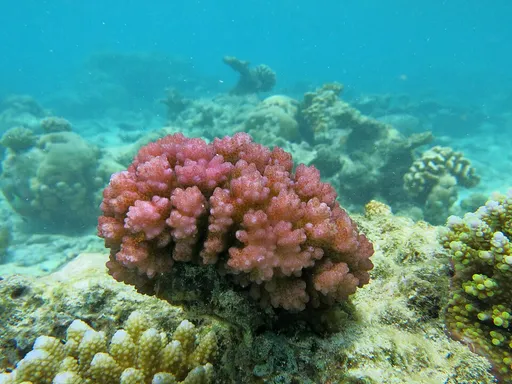
Pocillopora damicornis gets its cauliflower look from a dense mass of short, knobby branches covered in extended polyps, giving the colony a fuzzy texture rather than the sharp points of a true staghorn Acropora. Branch thickness and spacing shift with water movement, growing tighter and stubbier in strong surge and thinner and more open in calmer water. Like other stony corals it builds a calcium carbonate skeleton and hosts photosynthetic zooxanthellae, but it is also known for polyp bail-out, where individual polyps detach from a stressed colony and settle elsewhere to start new ones.
Did you know
Under stress, Pocillopora damicornis can shed individual polyps that drift off, settle elsewhere, and grow into entirely new colonies, a survival trick called polyp bail-out that most stony corals cannot pull off.
Symbiotic relationships
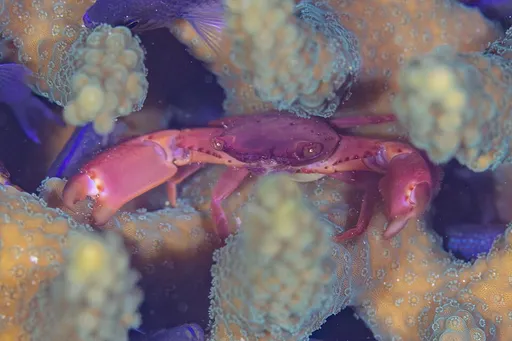
The coral guard crab and its Pocillopora
Guard crabs live deep in the branches of cauliflower, birdsnest and cat's paw corals and rarely leave. The coral feeds them: it produces fat-rich mucus and small tissue bodies the crab eats. The crab earns it. When a crown-of-thorns starfish or a coral-eating snail moves onto the colony, the crab pinches and pushes until it leaves, and when sediment settles on the branches the crab clears it, which is the difference between the coral living and smothering during a sediment pulse.
Small Pocillopora colonies often arrive with a guard crab already in residence; look for a fingernail-sized crab with a smooth, spotted or plain shell in the branches and leave it there. One crab or a mated pair per colony is the rule, they are harmless to everything else in the tank, and they need no feeding beyond the coral they live in. Without a host coral the crab has nowhere to be and does not last.
Common questions
What size tank does a Cauliflower coral need?
A Cauliflower coral needs at least 20 gal (75 L). It spends most of its time in the bottom.
What temperature and pH does a Cauliflower coral need?
A Cauliflower coral is comfortable at 75–81°F (24–27°C) with a pH of 8.1–8.4.
How big does a Cauliflower coral get?
An adult Cauliflower coral reaches about 9.8 in (25 cm).
Related species
 5.9 in (15 cm)20 gal (75 L)75–81°F (24–27°C)
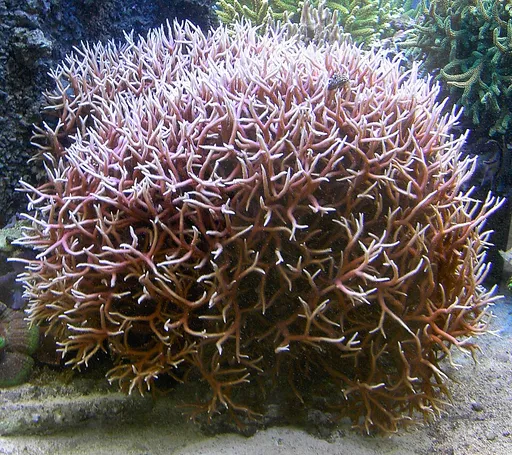
Birdsnest coral
Seriatopora hystrix
5.9 in (15 cm) · 20 gal (75 L)
 5.9 in (15 cm)20 gal (75 L)75–81°F (24–27°C)
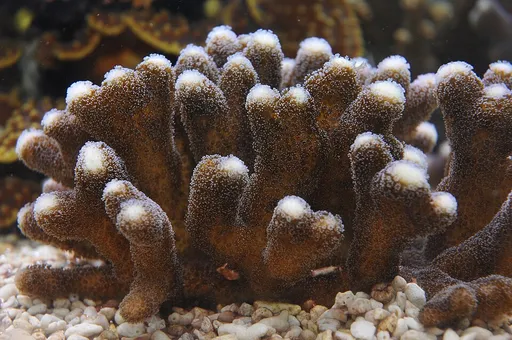
Cat's paw coral
Stylophora pistillata
5.9 in (15 cm) · 20 gal (75 L)
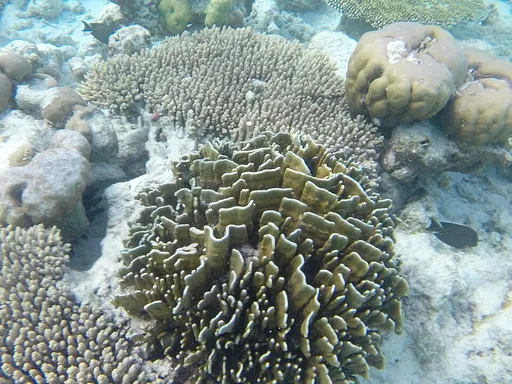 9.8 in (25 cm)11 gal (40 L)75–81°F (24–27°C)
Blue coral
Heliopora coerulea
9.8 in (25 cm) · 11 gal (40 L)
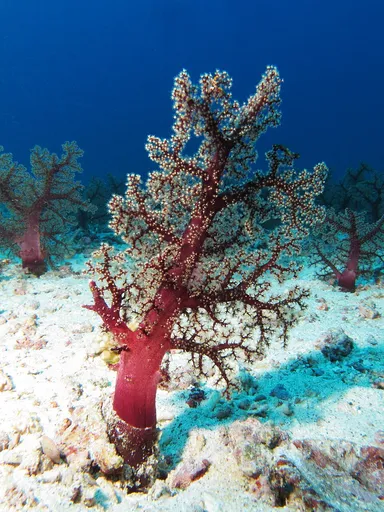 9.8 in (25 cm)20 gal (75 L)75–81°F (24–27°C)
Carnation coral
Dendronephthya
9.8 in (25 cm) · 20 gal (75 L)
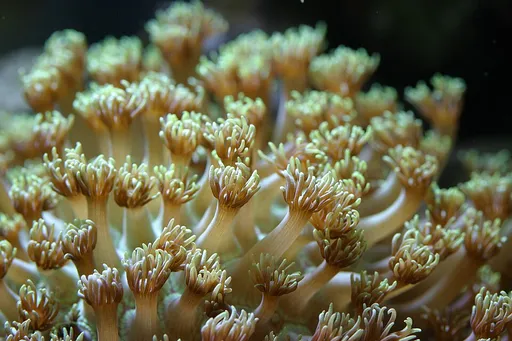 9.8 in (25 cm)11 gal (40 L)75–81°F (24–27°C)
Flowerpot coral
Goniopora
9.8 in (25 cm) · 11 gal (40 L)
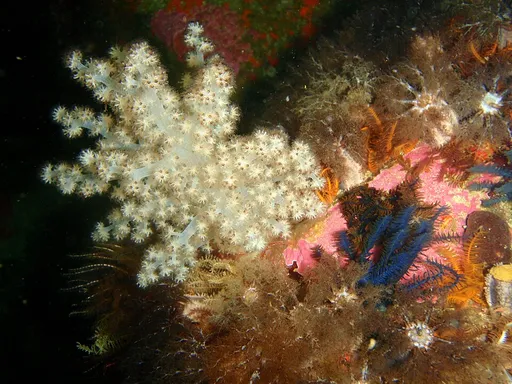 9.8 in (25 cm)11 gal (40 L)75–81°F (24–27°C)
Kenya tree coral
Capnella
9.8 in (25 cm) · 11 gal (40 L)