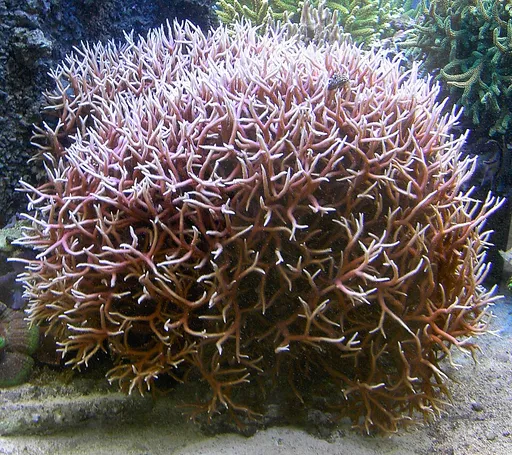
Birdsnest coral
Seriatopora hystrix
Also known as Bird's Nest Coral, Needle Coral, Pink Birdsnest
SaltwaterCoral
Care at a glance
- Temperature
- 75–81°F
- 24–27°C
- pH
- 8.1–8.4
- Adult size
- 5.9 in
- 15 cm
- Minimum tank
- 20 gal
- 75 L
- Temperament
- Peaceful
- Social behavior
- Solitary
- Swim level
- Bottom
- Difficulty
- Difficult
- Breeding
- Easy
- Rarity
- Common
- Reef safe
- Reef safe
- Family
- Pocilloporidae
- Origin
- Indo-Pacific reefs; both wild and maricultured colonies are common in the trade
Overview
Sessile and passive with no sweeper tentacles, so it will not attack neighbors, but the thin branches are easily damaged and it can be stung by aggressive corals like Euphyllia, so give it clear space. Considered one of the easier beginner SPS corals, forgiving of general conditions but intolerant of sudden parameter swings, so stability matters more than perfection.
In the wild
Forms a dense, tangled bush of very thin, needle-tipped branches that gives the coral its birdsnest name. It does well in moderate to high light, roughly 150 to 300 PAR, and wants strong, random, turbulent flow to keep detritus from settling deep inside the branch tangle. Avoid a constant direct blast, which can strip the fragile tips. Place it in the mid to upper tank with room to bush out.
Good to know
Seriatopora hystrix is a zooxanthellate SPS coral in the family Pocilloporidae. It is mostly photosynthetic but will take fine particulate food, and it is one of the fastest growing SPS corals, forming dense colonies quickly. The delicate branches are brittle and snap easily, which also makes it trivial to frag.
Did you know
The branches are so brittle that colonies can shed live fragments when bumped, and each of those broken pieces can settle and start a whole new colony, which is one way birdsnest spreads across a reef.
Symbiotic relationships
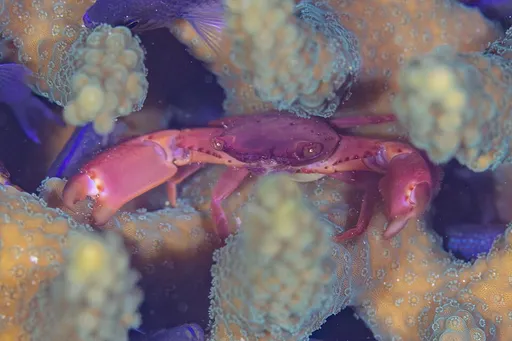
The coral guard crab and its Pocillopora
Guard crabs live deep in the branches of cauliflower, birdsnest and cat's paw corals and rarely leave. The coral feeds them: it produces fat-rich mucus and small tissue bodies the crab eats. The crab earns it. When a crown-of-thorns starfish or a coral-eating snail moves onto the colony, the crab pinches and pushes until it leaves, and when sediment settles on the branches the crab clears it, which is the difference between the coral living and smothering during a sediment pulse.
Small Pocillopora colonies often arrive with a guard crab already in residence; look for a fingernail-sized crab with a smooth, spotted or plain shell in the branches and leave it there. One crab or a mated pair per colony is the rule, they are harmless to everything else in the tank, and they need no feeding beyond the coral they live in. Without a host coral the crab has nowhere to be and does not last.
Common questions
What size tank does a Birdsnest coral need?
A Birdsnest coral needs at least 20 gal (75 L). It spends most of its time in the bottom.
What temperature and pH does a Birdsnest coral need?
A Birdsnest coral is comfortable at 75–81°F (24–27°C) with a pH of 8.1–8.4.
How big does a Birdsnest coral get?
An adult Birdsnest coral reaches about 5.9 in (15 cm).
Related species
 5.9 in (15 cm)20 gal (75 L)75–81°F (24–27°C)
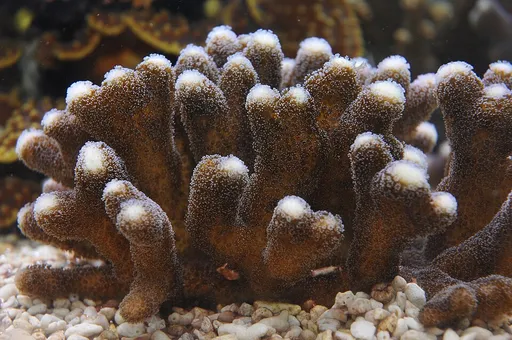
Cat's paw coral
Stylophora pistillata
5.9 in (15 cm) · 20 gal (75 L)
 9.8 in (25 cm)20 gal (75 L)75–81°F (24–27°C)
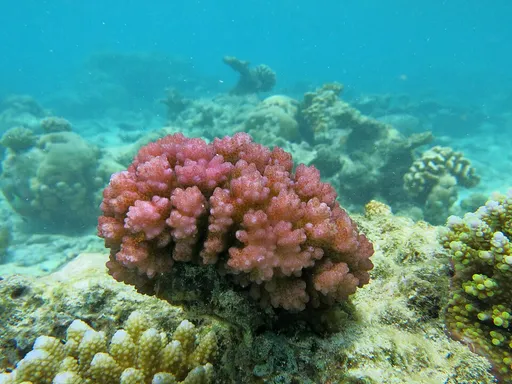
Cauliflower coral
Pocillopora damicornis
9.8 in (25 cm) · 20 gal (75 L)
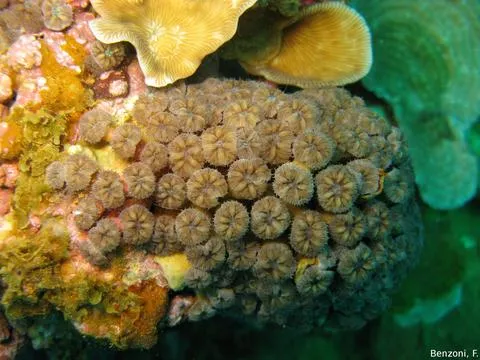 5.9 in (15 cm)11 gal (40 L)75–81°F (24–27°C)
Blastomussa
Blastomussa merletti
5.9 in (15 cm) · 11 gal (40 L)
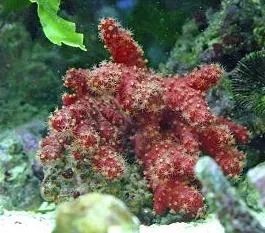 5.9 in (15 cm)20 gal (75 L)75–81°F (24–27°C)
Chili coral
Nephthyigorgia
5.9 in (15 cm) · 20 gal (75 L)
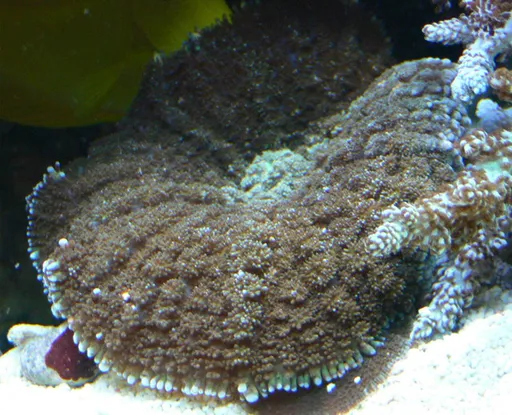 5.9 in (15 cm)11 gal (40 L)75–81°F (24–27°C)
Hairy mushroom
Rhodactis
5.9 in (15 cm) · 11 gal (40 L)
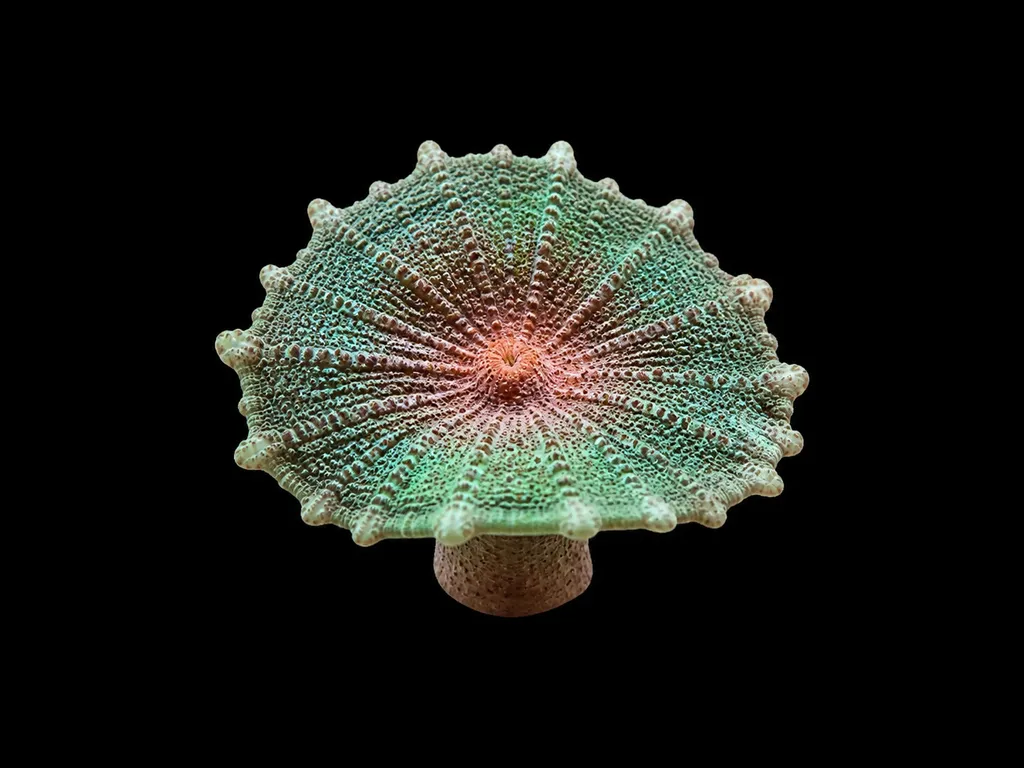 5.9 in (15 cm)11 gal (40 L)75–81°F (24–27°C)
Umbrella mushroom
Discosoma neglecta
5.9 in (15 cm) · 11 gal (40 L)