Sputnik urchin
Phyllacanthus imperialis
Also known as Imperial urchin, Imperial sea urchin, Imperial lance urchin, Knobby sputnik urchin
SaltwaterInvertebrate
Care at a glance
- Temperature
- 72–81°F
- 22–27°C
- pH
- 8.1–8.4
- Adult size
- 3.9 in
- 10 cm
- Minimum tank
- 79 gal
- 300 L
- Temperament
- Peaceful
- Social behavior
- Solitary
- Tankmates
- With caution
- Swim level
- Bottom
- Difficulty
- Medium
- Breeding
- No record
- Rarity
- Very rare
- Reef safe
- Reef safe with caution
- Family
- Cidaridae
- Origin
- Indo-West Pacific reefs, Red Sea and East Africa to the western Pacific
Overview
Peaceful toward fish and slow moving, but a reef caution: it eats sponges and encrusting animals, and its weight and stiff spines knock frags off the rock. Keep one in a fish-only or rubble tank, offer dried seaweed, sinking pellets, and bits of shellfish at night since algae alone may not carry it, and expect to see it mostly after lights out. Drip acclimate slowly, keep nitrate low, and never use copper. Triggers, puffers, and large wrasses will chew on it.
In the wild
The sputnik urchin lives on sheltered reef slopes and lagoon rock across the Indo-West Pacific, from the Red Sea and East Africa to the Philippines and northern Australia. By day it sits jammed in a hole in the reef and at night it comes out to feed. It needs a large mature tank, 300 liters or more, with heavy rock locked in place and caves wide enough for a 30 cm spine span, plus dim light, because it stays hidden under bright lamps. Water stays at 22 to 27 C with pH 8.1 to 8.4.
Good to know
Phyllacanthus imperialis is a cidaroid, the ancient lineage of pencil urchins in the family Cidaridae. The test reaches about 10 cm and carries a small number of very thick, blunt, club-shaped primary spines roughly as long as the test is wide, ringed by short flattened secondary spines. Cidaroid spines have no living skin over them, so they get colonised by algae, sponges, and bryozoans and the animal ends up looking like a mossy satellite, hence the name. It eats algae, sponges, and small encrusting invertebrates at night. Most specimens in commerce are dried tests sold as curios; live ones are seldom offered and almost nothing is published on keeping them.
Did you know
The name comes from the first satellite. With a round body and a few thick spines sticking out at all angles, a bare test looks like a 1957 Sputnik, and dried ones are sold by the thousand as shell shop decorations under that name.
Common questions
What size tank does a Sputnik urchin need?
A Sputnik urchin needs at least 79 gal (300 L). It spends most of its time in the bottom.
What temperature and pH does a Sputnik urchin need?
A Sputnik urchin is comfortable at 72–81°F (22–27°C) with a pH of 8.1–8.4.
How big does a Sputnik urchin get?
An adult Sputnik urchin reaches about 3.9 in (10 cm).
Related species
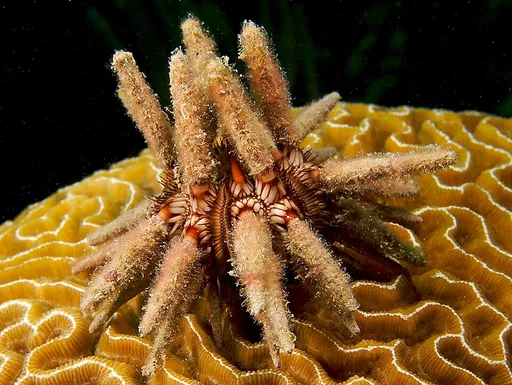 5.1 in (13 cm)20 gal (75 L)75–81°F (24–27°C)
Slate pencil urchin
Eucidaris tribuloides
5.1 in (13 cm) · 20 gal (75 L)
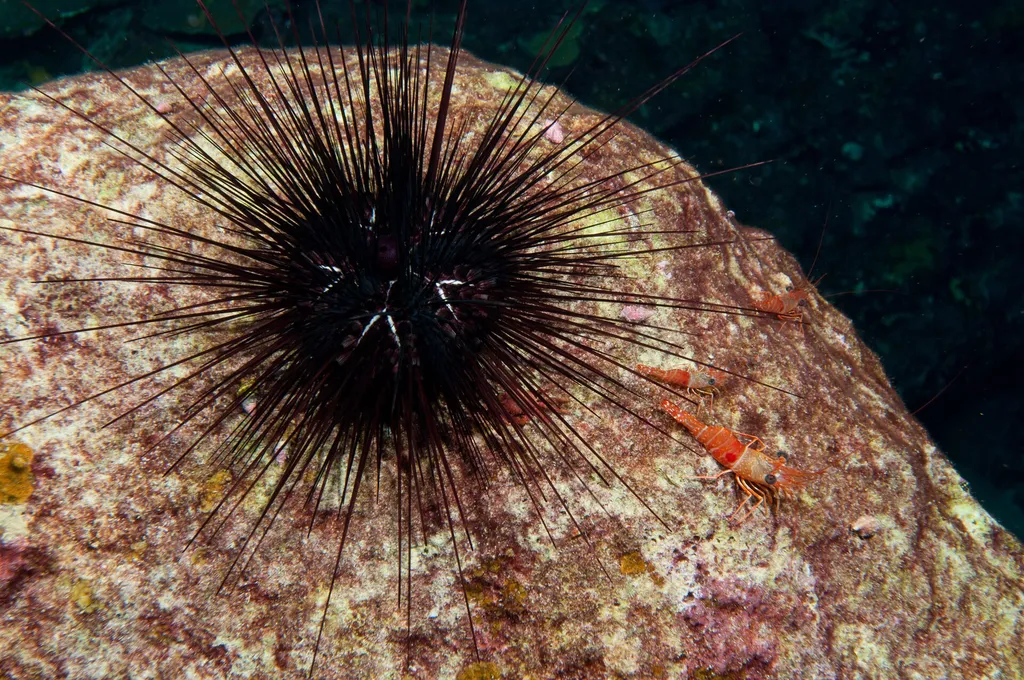 3.9 in (10 cm)79 gal (300 L)72–81°F (22–27°C)
Caribbean long-spined urchin
Diadema antillarum
3.9 in (10 cm) · 79 gal (300 L)
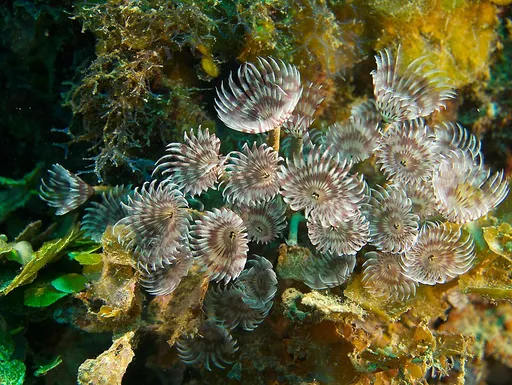 3.9 in (10 cm)11 gal (40 L)75–81°F (24–27°C)
Social feather duster
Bispira brunnea
3.9 in (10 cm) · 11 gal (40 L)
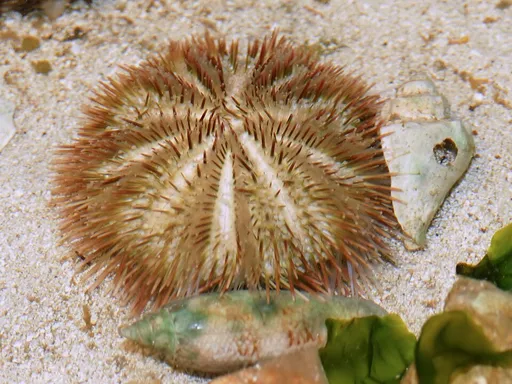 3.9 in (10 cm)20 gal (75 L)72–81°F (22–27°C)
White urchin
Lytechinus variegatus
3.9 in (10 cm) · 20 gal (75 L)
 3.9 in (10 cm)11 gal (40 L)75–81°F (24–27°C)
Yellow sea cucumber
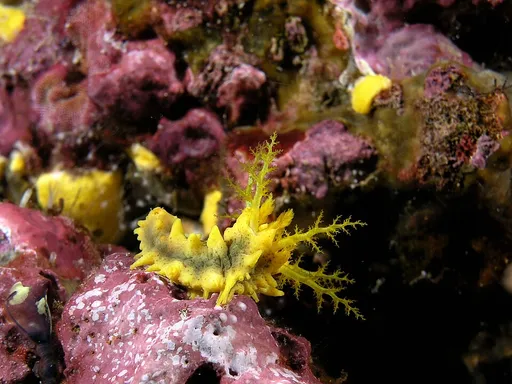
Colochirus robustus
3.9 in (10 cm) · 11 gal (40 L)
- 3.9 in (10 cm)53 gal (200 L)73–82°F (23–28°C)
Shingle urchin
Colobocentrotus atratus
3.9 in (10 cm) · 53 gal (200 L)