Caribbean long-spined urchin
Diadema antillarum
Also known as Long-spined black urchin, Lime urchin
SaltwaterInvertebrate
Care at a glance
- Temperature
- 72–81°F
- 22–27°C
- pH
- 8.1–8.4
- Adult size
- 3.9 in
- 10 cm
- Minimum tank
- 79 gal
- 300 L
- Temperament
- Peaceful
- Social behavior
- Solitary
- Tankmates
- With caution
- Swim level
- Bottom
- Difficulty
- Easy
- Breeding
- Hard
- Rarity
- Rare
- Reef safe
- Reef safe with caution
- Family
- Diadematidae
- Origin
- Tropical western Atlantic reefs, Florida and the Caribbean to Brazil
Overview
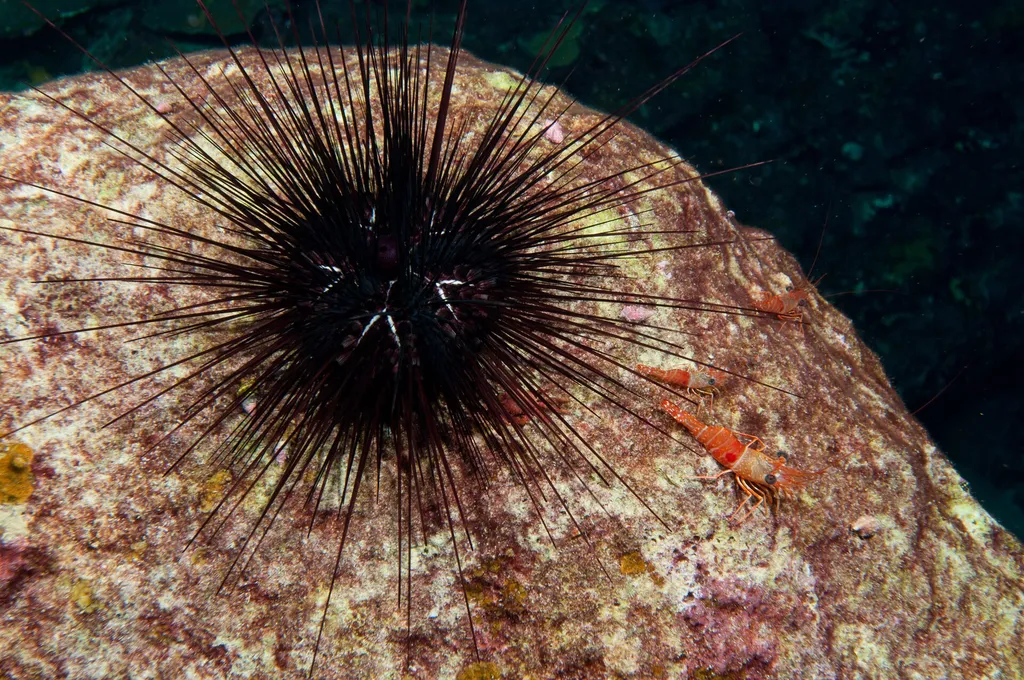
Peaceful, nocturnal, and one of the best algae grazers there is, taking turf, hair algae, and coralline alike. It is a reef caution because a hungry one grazes zoanthids and young coral, and because those long brittle spines are a hazard to the keeper and to slow fish. Keep one per tank at 22 to 27 C, feed dried seaweed when the rock is clean, drip acclimate it slowly, keep calcium and alkalinity steady so the spines regrow, and never use copper. Spine loss means poor water. Triggers, puffers, and large wrasses will eat it.
In the wild
The Caribbean long-spined urchin lives on coral reefs, hard bottom, seagrass beds, and mangrove roots throughout the tropical western Atlantic, from Florida and Bermuda through the Caribbean to Brazil, mostly at 1 to 10 m. It spends the day wedged in a crevice and grazes within about a metre of home at night. In the tank it needs solid, well-spaced rock with caves that fit a spine span of 60 cm, no sharp overhangs to snap spines on, and 300 liters or more. Water stays at 22 to 27 C with pH 8.1 to 8.4.
Good to know
Diadema antillarum is a diadematid urchin. The test is 5 to 10 cm across, black, with the iridescent blue lines on the test the genus shares; it lacks the orange ring around the anal cone that marks the Indo-Pacific D. setosum, and the hollow, needle-sharp spines run 10 to 12 cm in most animals and up to 30 cm in big ones; they are mildly venomous and break off in skin like a bee sting that lingers. Juveniles have black and white banded spines and the odd adult is white. In 1983 and 1984 a waterborne disease killed more than 95 percent of them across the Caribbean, reefs turned to algae, and recovery had barely begun when a second die-off started in 2022, this time traced to a ciliate, Philaster apodigitiformis. Most trade listings for black long-spine urchins are the Indo-Pacific Diadema setosum, not this species, and Florida prohibits any harvest or sale of D. antillarum, so true Caribbean stock is scarce.
Did you know
Before 1983 this urchin was the main lawnmower of Caribbean reefs. When disease wiped it out in about a year, algae smothered coral across the whole region, and hatcheries in Florida, Puerto Rico, and Jamaica now rear larvae and plant juveniles back on reefs to try to reverse it.
Common questions
What size tank does a Caribbean long-spined urchin need?
A Caribbean long-spined urchin needs at least 79 gal (300 L). It spends most of its time in the bottom.
What temperature and pH does a Caribbean long-spined urchin need?
A Caribbean long-spined urchin is comfortable at 72–81°F (22–27°C) with a pH of 8.1–8.4.
How big does a Caribbean long-spined urchin get?
An adult Caribbean long-spined urchin reaches about 3.9 in (10 cm).
Related species
 9.8 in (25 cm)50 gal (190 L)72–79°F (22–26°C)
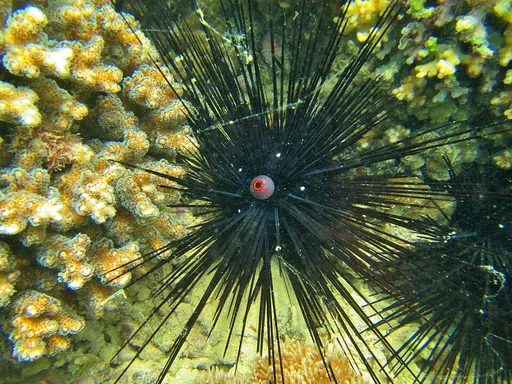
Long-spine urchin
Diadema setosum
9.8 in (25 cm) · 50 gal (190 L)
 3.1 in (8 cm)50 gal (190 L)72–79°F (22–26°C)
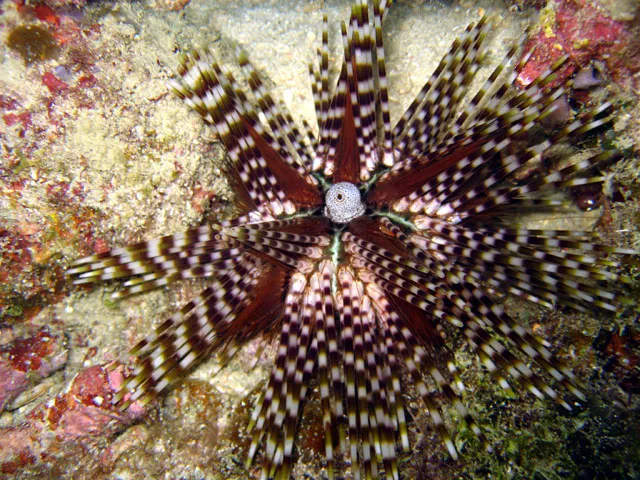
Banded urchin
Echinothrix calamaris
3.1 in (8 cm) · 50 gal (190 L)
 7.9 in (20 cm)100 gal (380 L)72–82°F (22–28°C)
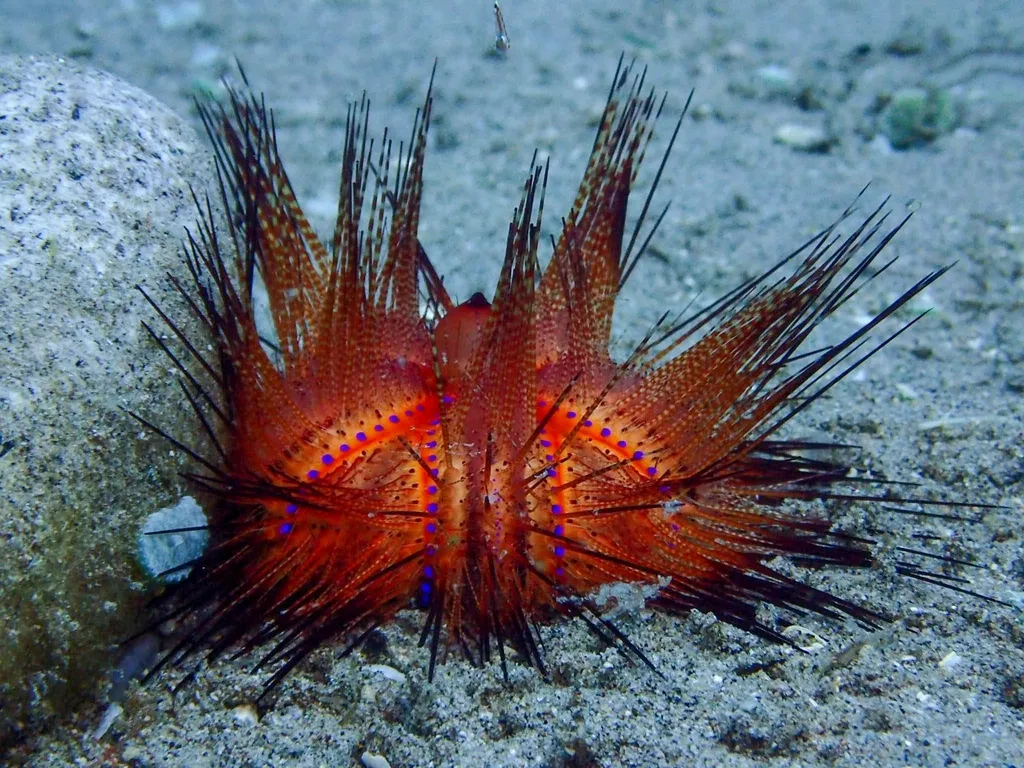
Blue spot urchin
Astropyga radiata
7.9 in (20 cm) · 100 gal (380 L)
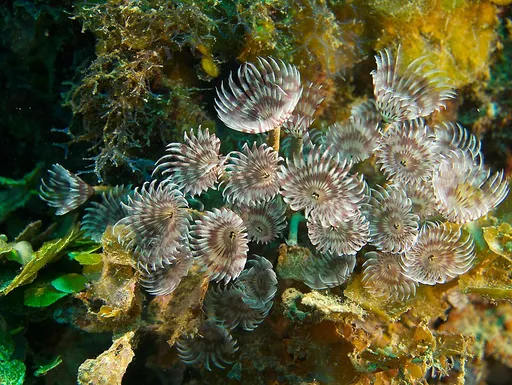 3.9 in (10 cm)11 gal (40 L)75–81°F (24–27°C)
Social feather duster
Bispira brunnea
3.9 in (10 cm) · 11 gal (40 L)
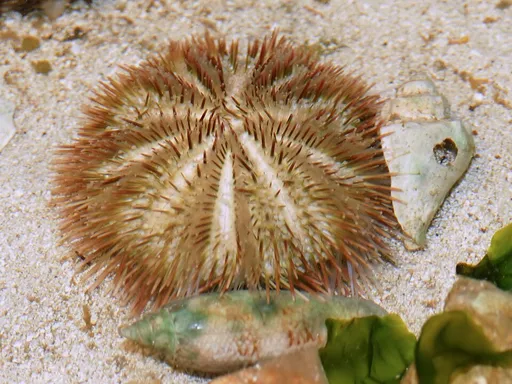 3.9 in (10 cm)20 gal (75 L)72–81°F (22–27°C)
White urchin
Lytechinus variegatus
3.9 in (10 cm) · 20 gal (75 L)
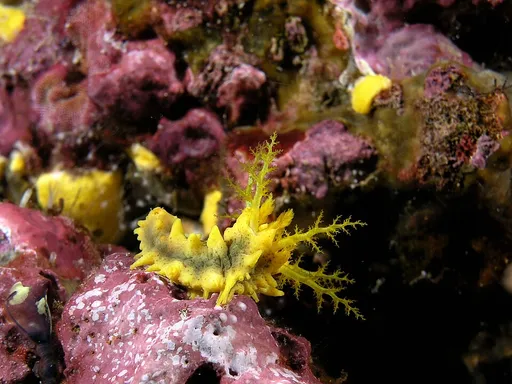 3.9 in (10 cm)11 gal (40 L)75–81°F (24–27°C)
Yellow sea cucumber
Colochirus robustus
3.9 in (10 cm) · 11 gal (40 L)