Collector urchin
Tripneustes gratilla
Also known as Pincushion Urchin, Hairy Pincushion Urchin, Halloween Urchin
SaltwaterInvertebrate
Care at a glance
- Temperature
- 75–81°F
- 24–27°C
- pH
- 8.1–8.4
- Adult size
- 5.9 in
- 15 cm
- Minimum tank
- 20 gal
- 75 L
- Temperament
- Peaceful
- Social behavior
- Solitary
- Swim level
- Bottom
- Difficulty
- Easy
- Breeding
- No record
- Rarity
- Common
- Reef safe
- Reef safe
- Family
- Toxopneustidae
- Origin
- Indo-Pacific reefs, from East Africa and the Red Sea across to Hawaii and French Polynesia
Overview
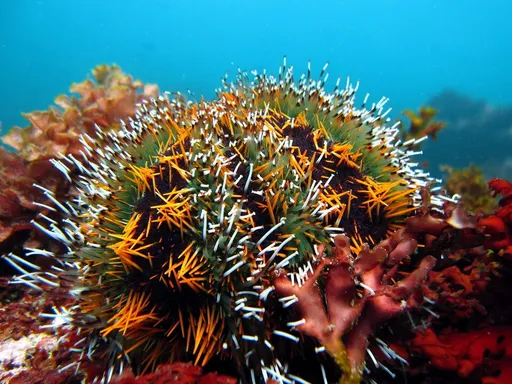
A peaceful, constant grazer that feeds day and night working over algae, making it one of the more effective algae-control animals a reef tank can hold. It is reef safe, leaving coral tissue alone, but true to its collector name it picks up loose shells, rubble, and bits of algae to pile onto its spines as camouflage, and a big specimen can bulldoze small frags or shift light rockwork while foraging, so give it secured aquascaping and keep an eye on anything not glued down. If tank algae runs low, clip on dried seaweed so it does not start looking for other food sources. Like other urchins it needs a slow drip acclimation, since sudden swings in salinity or pH can kill it outright.
In the wild
Collector urchins range across the Indo-Pacific, from East Africa and the Red Sea to Hawaii and French Polynesia, living on open reef flats, seagrass beds, and rubble from just below the surface down to about 30 metres. Juveniles favor rocky cover while larger adults move out onto more open ground to graze. In the aquarium it wants a mature tank with a steady supply of algae to work through, live rock to forage over, and enough open floor space for an animal that can reach 15 cm across.
Good to know
Tripneustes gratilla is a regular urchin in the family Toxopneustidae, with a dark purplish to black test covered in short white spines, sometimes tipped in orange. It is one of the larger reef urchins in the trade, reaching 10 to 15 cm across the test. In the wild it is a voracious grazer of algae and seagrass, capable of stripping up to half of a seagrass bed's growth during peak feeding season, which is why fisheries programs in places like Hawaii have raised and released it specifically to knock back invasive algae on damaged reefs.
Did you know
It is a genuine tool for reef restoration: hatcheries in Hawaii have bred collector urchins by the thousands specifically to release onto reefs overrun with invasive algae, using the same appetite that makes it a good aquarium algae eater to help damaged wild reefs recover.
Common questions
What size tank does a Collector urchin need?
A Collector urchin needs at least 20 gal (75 L). It spends most of its time in the bottom.
What temperature and pH does a Collector urchin need?
A Collector urchin is comfortable at 75–81°F (24–27°C) with a pH of 8.1–8.4.
How big does a Collector urchin get?
An adult Collector urchin reaches about 5.9 in (15 cm).
Related species
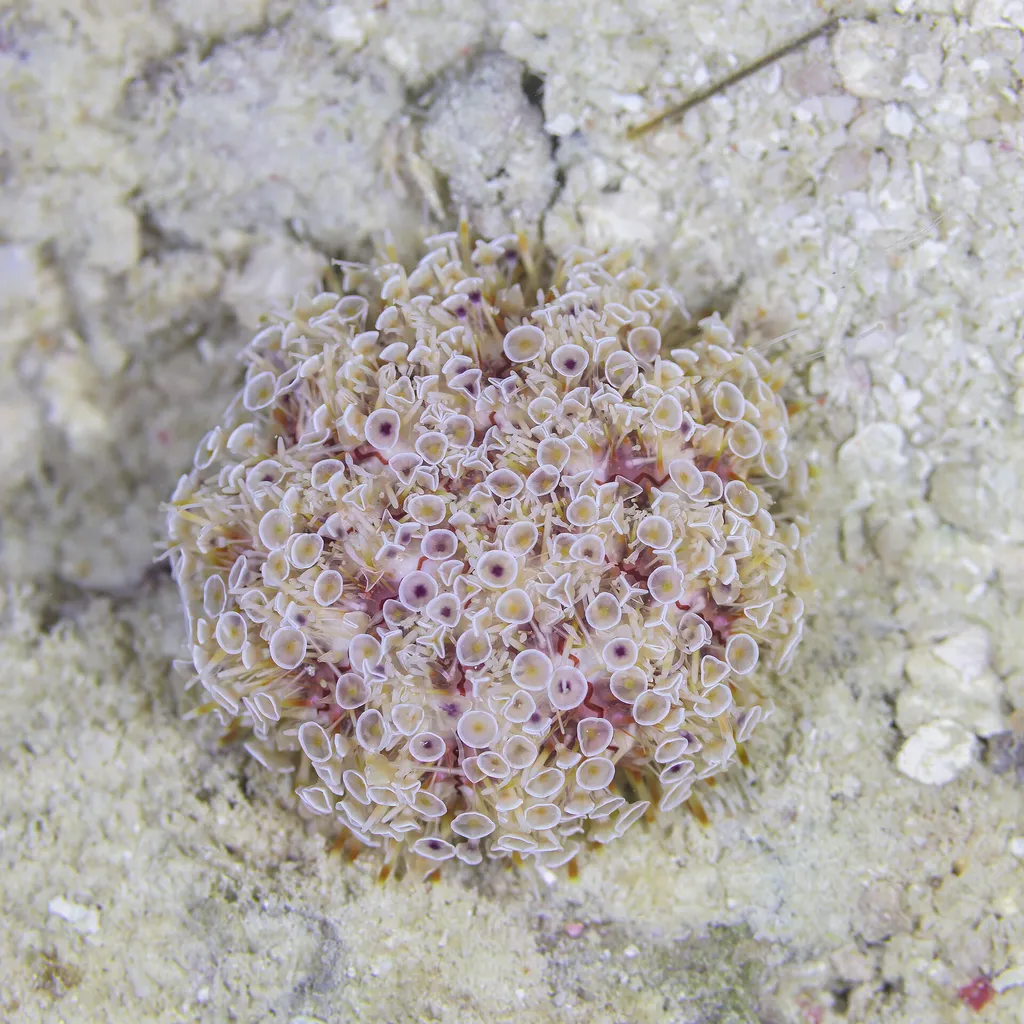 5.9 in (15 cm)100 gal (380 L)72–82°F (22–28°C)
Flower urchin
Toxopneustes pileolus
5.9 in (15 cm) · 100 gal (380 L)
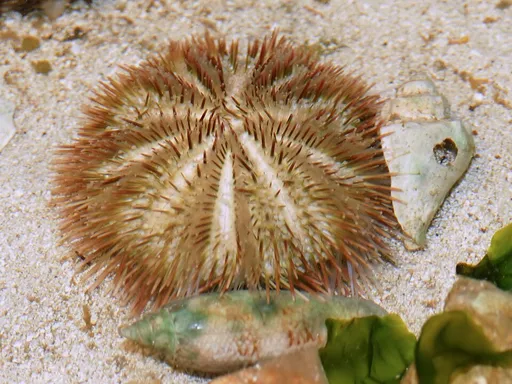 3.9 in (10 cm)20 gal (75 L)72–81°F (22–27°C)
White urchin
Lytechinus variegatus
3.9 in (10 cm) · 20 gal (75 L)
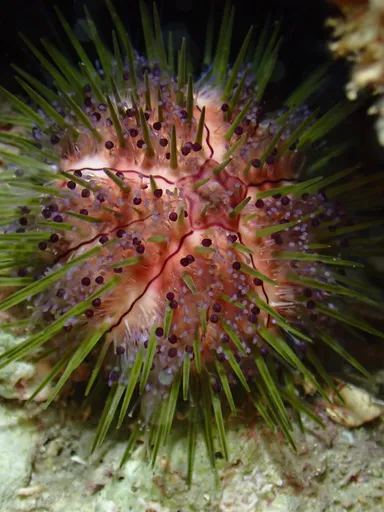 2 in (5 cm)11 gal (40 L)72–81°F (22–27°C)
Jewel urchin
Lytechinus williamsi
2 in (5 cm) · 11 gal (40 L)
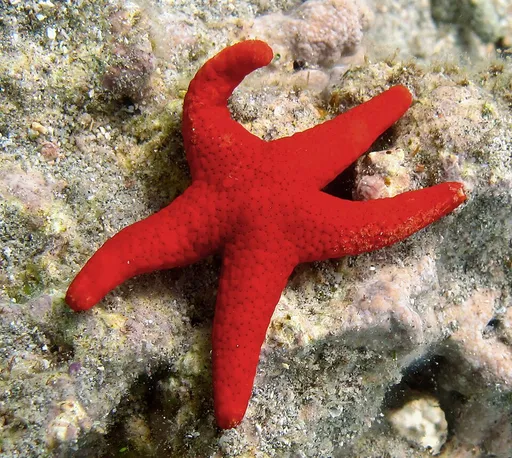 5.9 in (15 cm)40 gal (150 L)75–81°F (24–27°C)
Fromia star
Fromia milleporella
5.9 in (15 cm) · 40 gal (150 L)
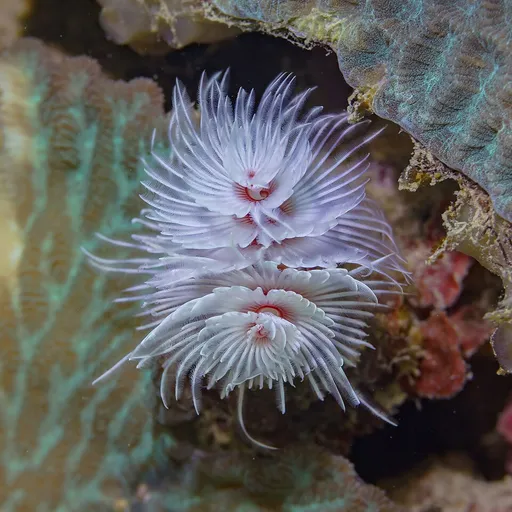 5.9 in (15 cm)20 gal (75 L)75–81°F (24–27°C)
Giant feather duster
Sabellastarte spectabilis
5.9 in (15 cm) · 20 gal (75 L)
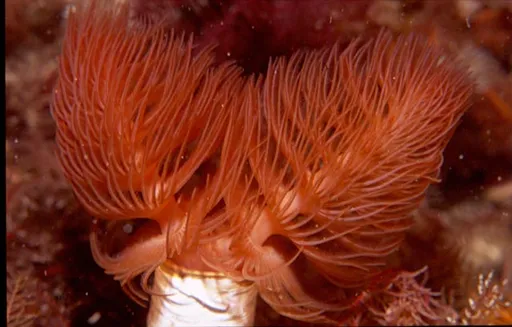 5.1 in (13 cm)20 gal (75 L)75–81°F (24–27°C)
Coco worm
Protula bispiralis
5.1 in (13 cm) · 20 gal (75 L)