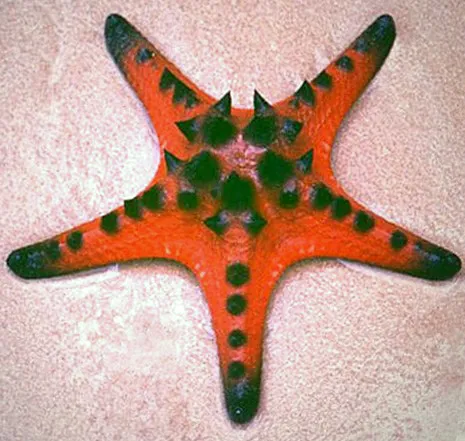
Chocolate chip star
Protoreaster nodosus
Also known as Chocolate Chip Sea Star, Horned Sea Star, Horned Starfish, Cushion Star
SaltwaterInvertebrate
Care at a glance
- Temperature
- 75–81°F
- 24–27°C
- pH
- 8.1–8.4
- Adult size
- 11.8 in
- 30 cm
- Minimum tank
- 53 gal
- 200 L
- Temperament
- Peaceful
- Social behavior
- Solitary
- Swim level
- Bottom
- Difficulty
- Easy
- Breeding
- No record
- Rarity
- Common
- Reef safe
- Not reef safe
- Family
- Oreasteridae
- Origin
- Indo-Pacific sand flats and seagrass beds, from Thailand to Samoa, north to Japan, south to New Caledonia
Overview
Not reef safe: this is a slow-moving predator that will happily eat soft and stony corals, clam mantles, anemones, sponges, tube worms, and other sessile invertebrates, so it belongs in a fish-only-with-live-rock display rather than anywhere near a reef. It is otherwise one of the hardier, easier sea stars in the hobby, scavenging detritus and leftover food but also readily taking offered chopped shrimp, clam, squid, or silverside a couple of times a week. Its slow, plodding pace makes it easy prey for boisterous or predatory fish like triggerfish and puffers, so stick to peaceful or moderately active FOWLR tankmates that will leave it alone. Give it the same slow drip acclimation as any other sea star; despite its overall toughness once settled, a sudden salinity or pH swing during introduction can still kill it.
In the wild
Native to shallow, sheltered sand and mud flats and seagrass beds across the Indo-Pacific, from Thailand to Samoa, north to Japan and south to New Caledonia, rather than exposed hard reef. It moves slowly across open sand hunting for food, so the aquarium should offer a soft sand substrate to travel over along with rockwork it can go around rather than climb. A tank of at least 200 litres (53 US gal) gives one of these large, slow-growing stars enough open floor space to roam.
Good to know
Named for the rows of dark, cone-shaped tubercles studding its tan to reddish-orange body, which look distinctly like chocolate chips pressed into a cookie. Like other members of family Oreasteridae, the cushion stars, it feeds by pushing its stomach out through its mouth and over its food, digesting soft tissue externally before drawing the liquefied meal back inside, which lets it eat prey far larger than its mouth could otherwise swallow. It is heavily collected for the dried curio and souvenir trade in parts of Southeast Asia, a pressure that has measurably thinned wild populations in some areas alongside aquarium collection.
Did you know
Although it almost always keeps the standard five arms, wild individuals are occasionally found with four or six, a natural variation seen across many sea stars rather than a sign of injury or regeneration in progress.
Common questions
What size tank does a Chocolate chip star need?
A Chocolate chip star needs at least 53 gal (200 L). It spends most of its time in the bottom.
What temperature and pH does a Chocolate chip star need?
A Chocolate chip star is comfortable at 75–81°F (24–27°C) with a pH of 8.1–8.4.
How big does a Chocolate chip star get?
An adult Chocolate chip star reaches about 11.8 in (30 cm).
Related species
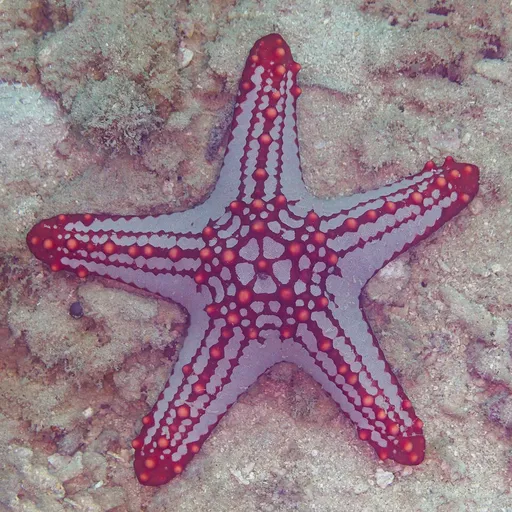 11.8 in (30 cm)53 gal (200 L)75–81°F (24–27°C)
Red knob sea star
Protoreaster linckii
11.8 in (30 cm) · 53 gal (200 L)
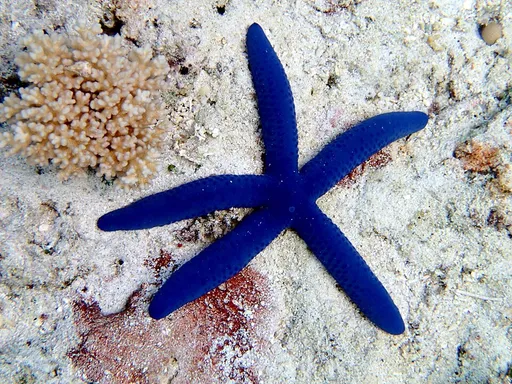 11.8 in (30 cm)53 gal (200 L)75–81°F (24–27°C)
Blue linckia star
Linckia laevigata
11.8 in (30 cm) · 53 gal (200 L)
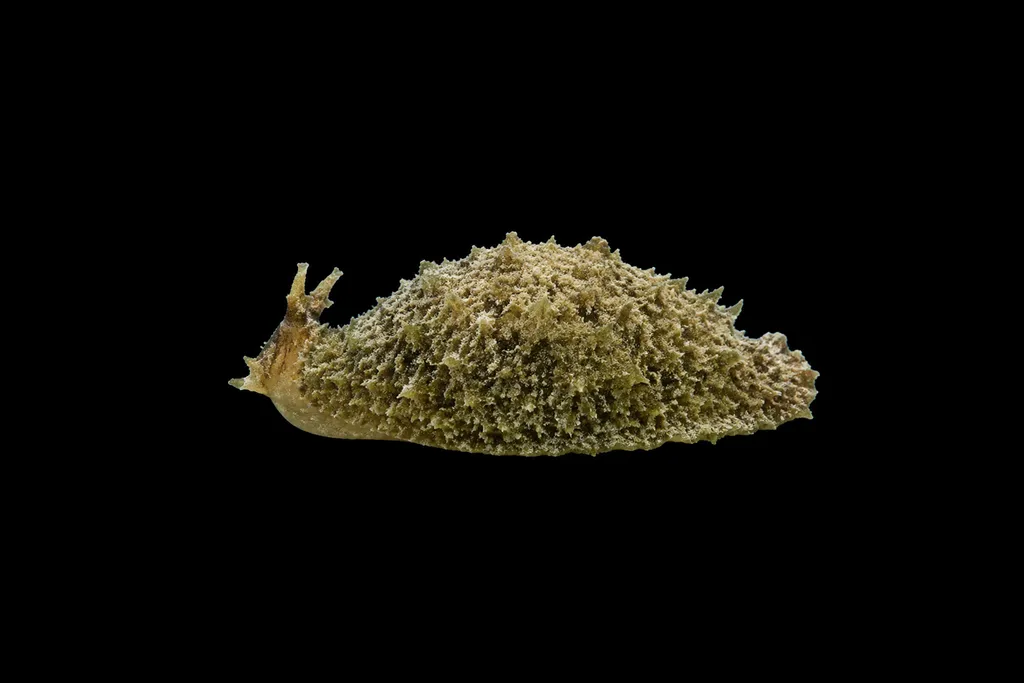 11.8 in (30 cm)50 gal (190 L)75–81°F (24–27°C)
Wedge sea hare
Dolabella auricularia
11.8 in (30 cm) · 50 gal (190 L)
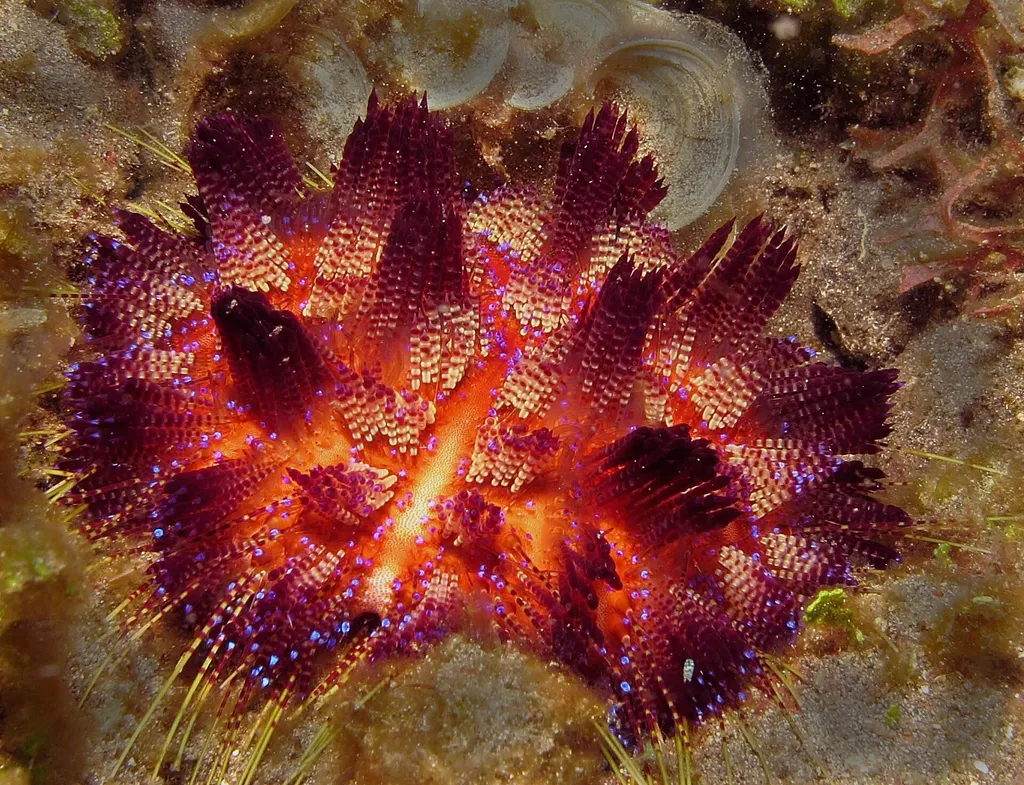 9.8 in (25 cm)201 gal (760 L)72–81°F (22–27°C)
Fire urchin
Asthenosoma varium
9.8 in (25 cm) · 201 gal (760 L)
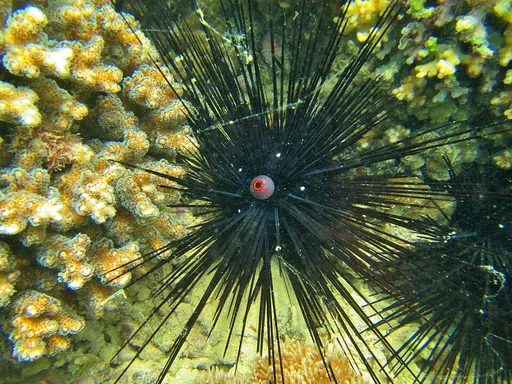 9.8 in (25 cm)50 gal (190 L)72–79°F (22–26°C)
Long-spine urchin
Diadema setosum
9.8 in (25 cm) · 50 gal (190 L)
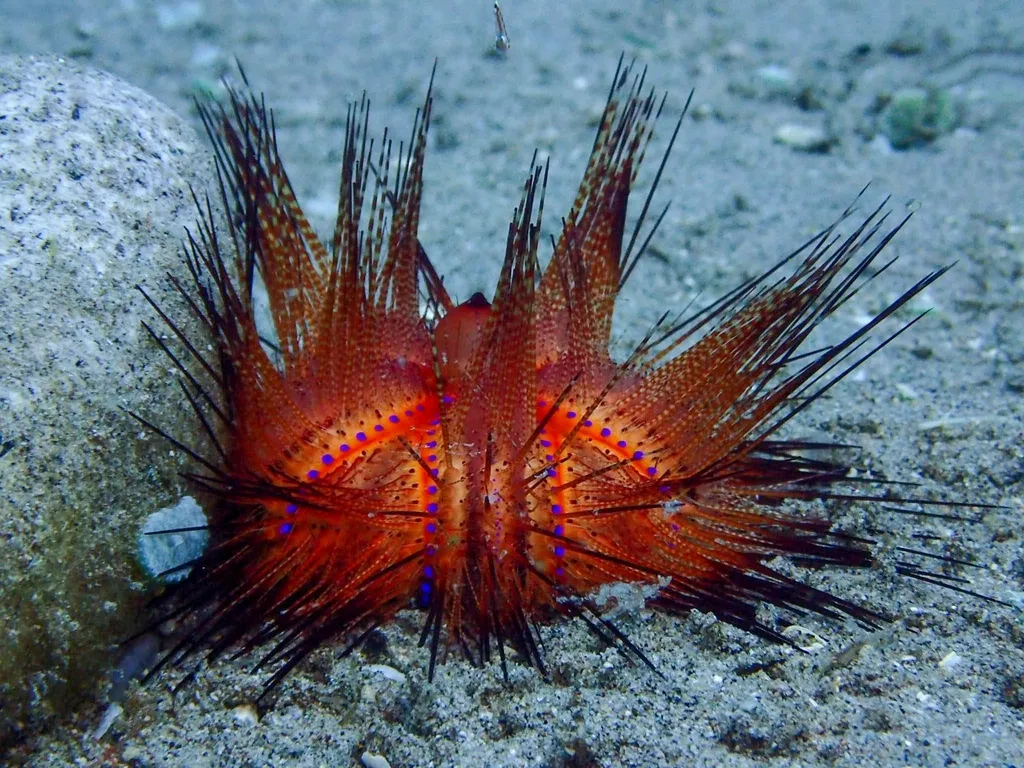 7.9 in (20 cm)100 gal (380 L)72–82°F (22–28°C)
Blue spot urchin
Astropyga radiata
7.9 in (20 cm) · 100 gal (380 L)