Red knob sea star
Protoreaster linckii
Also known as African Sea Star, African Red Knob Sea Star, Red Spine Star, Red Knob Starfish
SaltwaterInvertebrate
Care at a glance
- Temperature
- 75–81°F
- 24–27°C
- pH
- 8.1–8.4
- Adult size
- 11.8 in
- 30 cm
- Minimum tank
- 53 gal
- 200 L
- Temperament
- Peaceful
- Social behavior
- Solitary
- Swim level
- Bottom
- Difficulty
- Easy
- Breeding
- No record
- Rarity
- Common
- Reef safe
- Not reef safe
- Family
- Oreasteridae
- Origin
- western Indian Ocean, along the East African coast and Madagascar, north to India and Sri Lanka
Overview
Not reef safe: as it grows it becomes an active predator of soft corals, sponges, tube worms, clams, and even other sea stars, so like its chocolate chip relative it is strictly a fish-only-with-live-rock animal, never a reef tank one. Small juveniles graze more on algae and biofilm and can look deceptively harmless, but that does not last, since the same animal turns predatory as it matures. Feed it chopped clam, shrimp, squid, or fish once or twice a week; it scavenges the rest of the time and will not go hungry between meals. Use a slow drip acclimation and keep salinity and pH stable during introduction, since like every sea star here it is intolerant of sudden water chemistry swings even though it is otherwise a tough, easygoing animal once established.
In the wild
Found along the western Indian Ocean, mainly the East African coast and Madagascar, north to India and Sri Lanka, with a small isolated population off Western Australia, on sandy and muddy seabeds from shallow tidal pools down to about 100 m. It forages slowly over open bottom day and night, so it needs a soft sand substrate to move across plus enough floor space that it is not constantly climbing over rockwork or other tankmates. A tank of at least 200 litres (53 US gal) suits one of these large, heavy-bodied stars long term.
Good to know
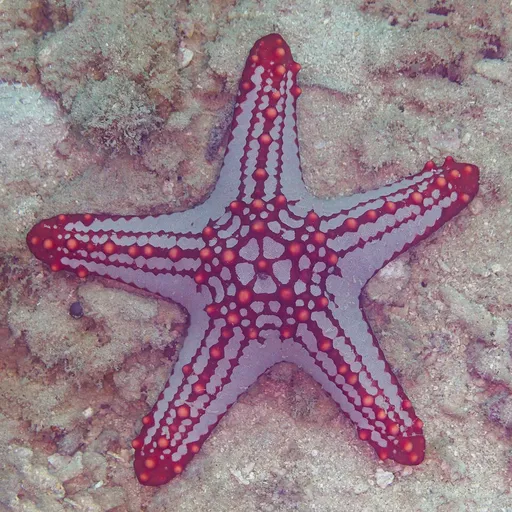
Easy to tell apart from other large sea stars by its thick gray body and the rows of bright red, knob-like tubercles running along each of its five arms, connected by thin red lines into a pattern that looks almost like a wired grid. It belongs to family Oreasteridae, the cushion stars, alongside the chocolate chip star, and grows into one of the largest sea stars in the hobby at up to about 30 cm across. Wild populations are also collected and dried for the curio trade, particularly in Tanzania, where mummified specimens are sold as souvenirs.
Did you know
Despite its armor-plated look, it is a slow enough mover that it can end up prey itself: large triggerfish and pufferfish are known to flip and eat sea stars in the wild, part of why FOWLR tanks built around those fish are a poor match for it.
Common questions
What size tank does a Red knob sea star need?
A Red knob sea star needs at least 53 gal (200 L). It spends most of its time in the bottom.
What temperature and pH does a Red knob sea star need?
A Red knob sea star is comfortable at 75–81°F (24–27°C) with a pH of 8.1–8.4.
How big does a Red knob sea star get?
An adult Red knob sea star reaches about 11.8 in (30 cm).
Related species
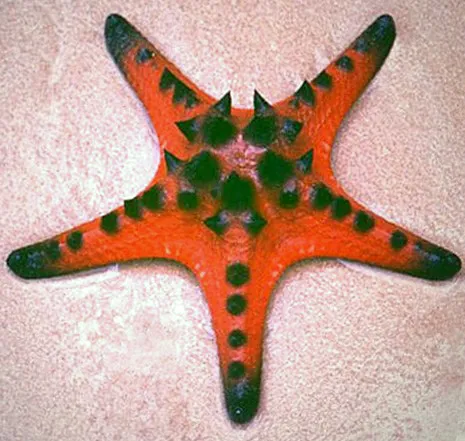 11.8 in (30 cm)53 gal (200 L)75–81°F (24–27°C)
Chocolate chip star
Protoreaster nodosus
11.8 in (30 cm) · 53 gal (200 L)
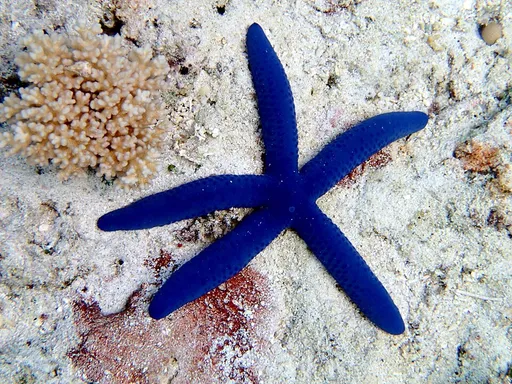 11.8 in (30 cm)53 gal (200 L)75–81°F (24–27°C)
Blue linckia star
Linckia laevigata
11.8 in (30 cm) · 53 gal (200 L)
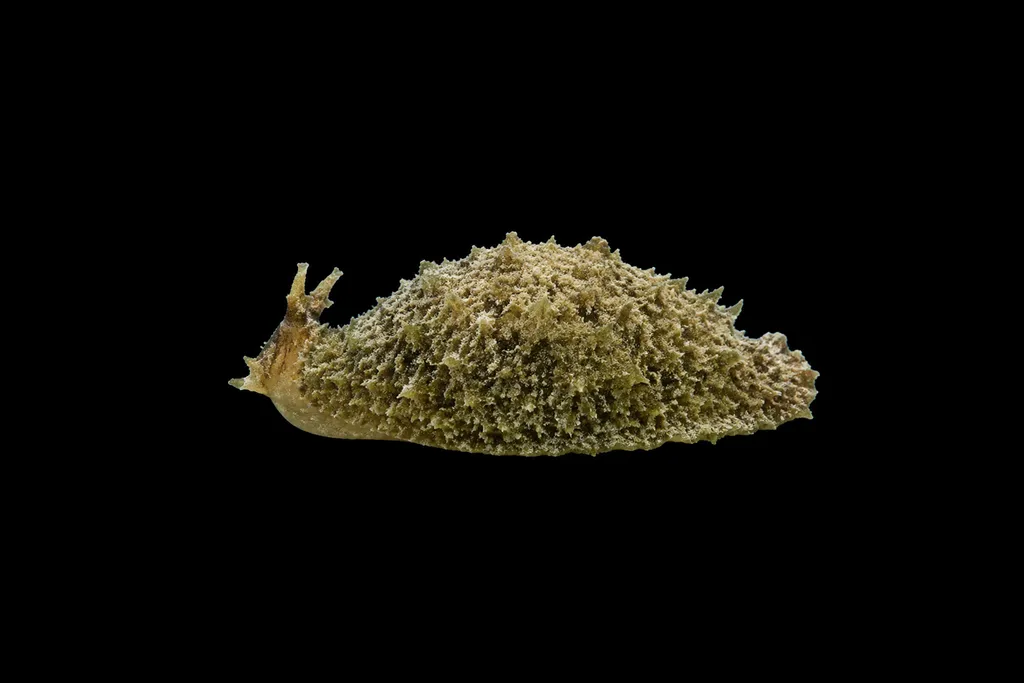 11.8 in (30 cm)50 gal (190 L)75–81°F (24–27°C)
Wedge sea hare
Dolabella auricularia
11.8 in (30 cm) · 50 gal (190 L)
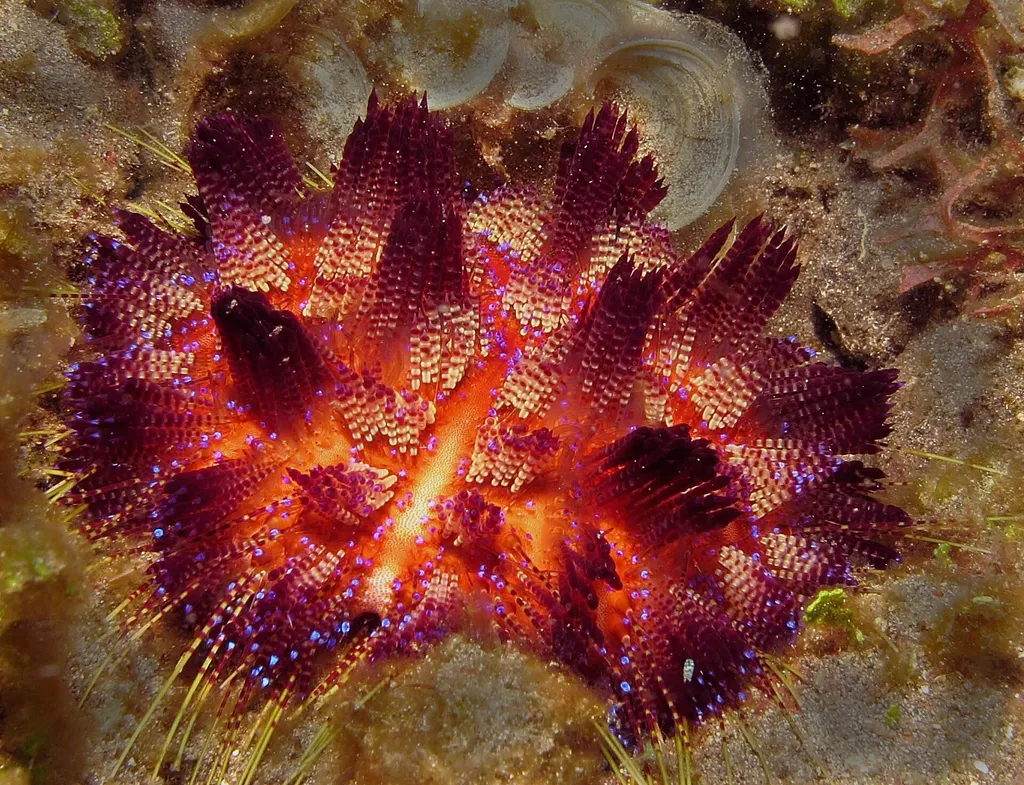 9.8 in (25 cm)201 gal (760 L)72–81°F (22–27°C)
Fire urchin
Asthenosoma varium
9.8 in (25 cm) · 201 gal (760 L)
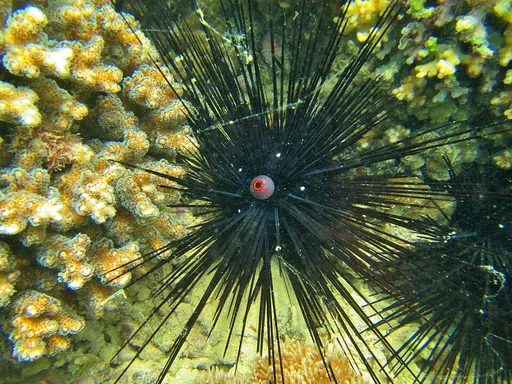 9.8 in (25 cm)50 gal (190 L)72–79°F (22–26°C)
Long-spine urchin
Diadema setosum
9.8 in (25 cm) · 50 gal (190 L)
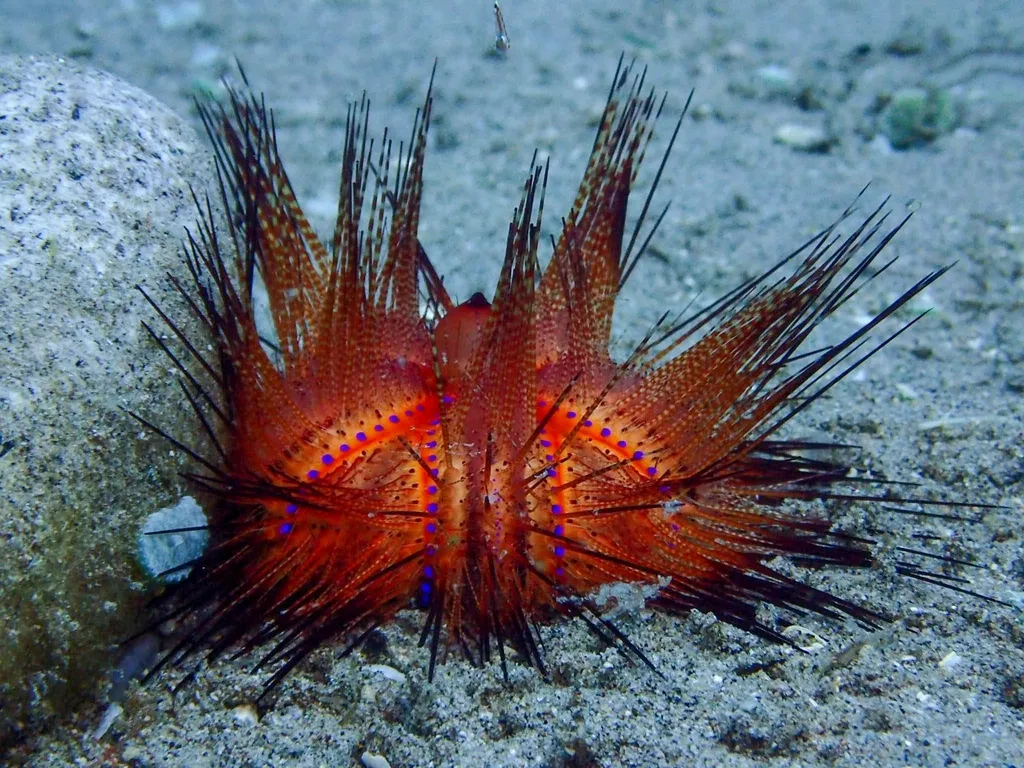 7.9 in (20 cm)100 gal (380 L)72–82°F (22–28°C)
Blue spot urchin
Astropyga radiata
7.9 in (20 cm) · 100 gal (380 L)