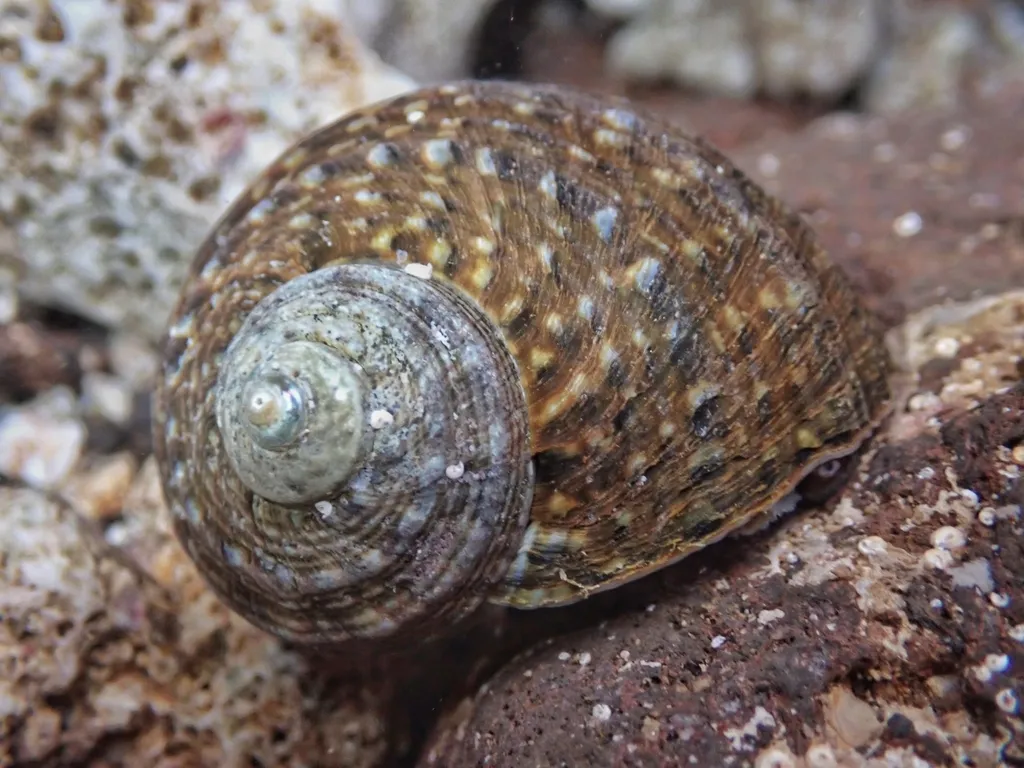
Mexican turbo snail
Turbo fluctuosus
Also known as Turban Snail, Chevron Snail, Turbo Grazer, Wavy Turban
SaltwaterSnail
Care at a glance
- Temperature
- 75–81°F
- 24–27°C
- pH
- 8.1–8.4
- Adult size
- 2.4 in
- 6 cm
- Minimum tank
- 11 gal
- 40 L
- Temperament
- Peaceful
- Social behavior
- Solitary
- Swim level
- Bottom
- Difficulty
- Easy
- Breeding
- No record
- Rarity
- Very common
- Reef safe
- Reef safe
- Family
- Turbinidae
- Origin
- Eastern Pacific, from the Gulf of California south to Peru, including the Galapagos and Tres Marias Islands
Overview
One of the hardest-working algae grazers sold for reef tanks, plowing through hair algae, film algae, diatoms and cyanobacteria on rock and glass. The catch is its cool-water background: kept at typical warm reef temperatures it often fades out within months, and it does noticeably better toward the cooler end of a reef-safe range than the mid to upper 20s Celsius. It is also large and strong enough to bulldoze loose rock and knock over unglued frags while it forages, so give it a securely stacked aquascape rather than loose rubble.
In the wild
Turbo fluctuosus lives in the intertidal zone of the eastern Pacific, from the Gulf of California south to Peru, clinging to rocks and dead coral wherever fresh algae growth is thickest. That native range runs noticeably cooler than a tropical coral reef, and the snail is adapted to water in the low to mid 20s Celsius rather than the upper 20s that many reef tanks run at. In the aquarium it wants a lot of open rock and glass to graze across, plus rockwork that is stacked securely, since it is large and strong enough to shift loose pieces while it forages.
Good to know
Turbo fluctuosus is a top-shell snail in the family Turbinidae, named for its heavy, top-shaped shell and the thick, calcified operculum that seals the opening once the animal withdraws. It reaches roughly 5–6 cm across the shell, larger than most other cleanup-crew snails, and draws calcium carbonate straight from the water to build and thicken that shell over time. Wild collection off Mexico slows sharply in the hottest months, which is part of why the species can be harder to find in stores from around July through September.
Did you know
Mexican turbo snails are wild-collected off the coast of Mexico, and harvest all but stops during the hottest months of the year, which is why local fish stores often run short of them from around July through September.
Weekly picks
Tank mates
Mexican turbo snail is a peaceful, solitary species that keeps to the bottom. These picks share a community profile with it, are safe together in both directions, and overlap on water type, temperature and pH.
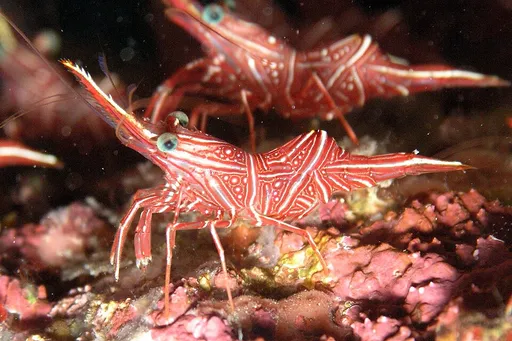
Camel / dancing shrimp
Rhynchocinetes durbanensis
Saltwater2 in (5 cm) · 16 gal (60 L)75–81°F (24–27°C)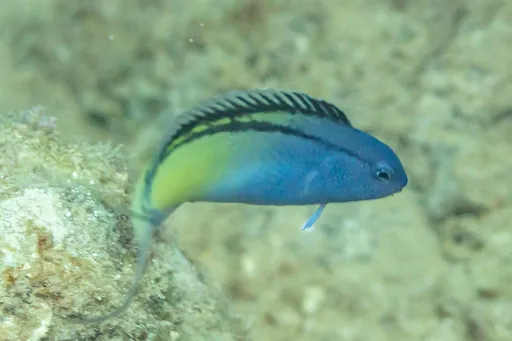
Red Sea mimic blenny
Ecsenius gravieri
Saltwater3.1 in (8 cm) · 20 gal (75 L)75–81°F (24–27°C)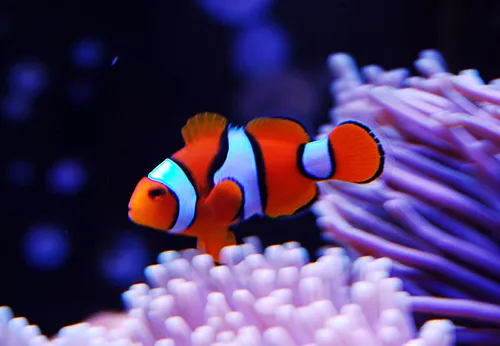
Percula clownfish
Amphiprion percula
Saltwater3.1 in (8 cm) · 20 gal (75 L)75–82°F (24–28°C)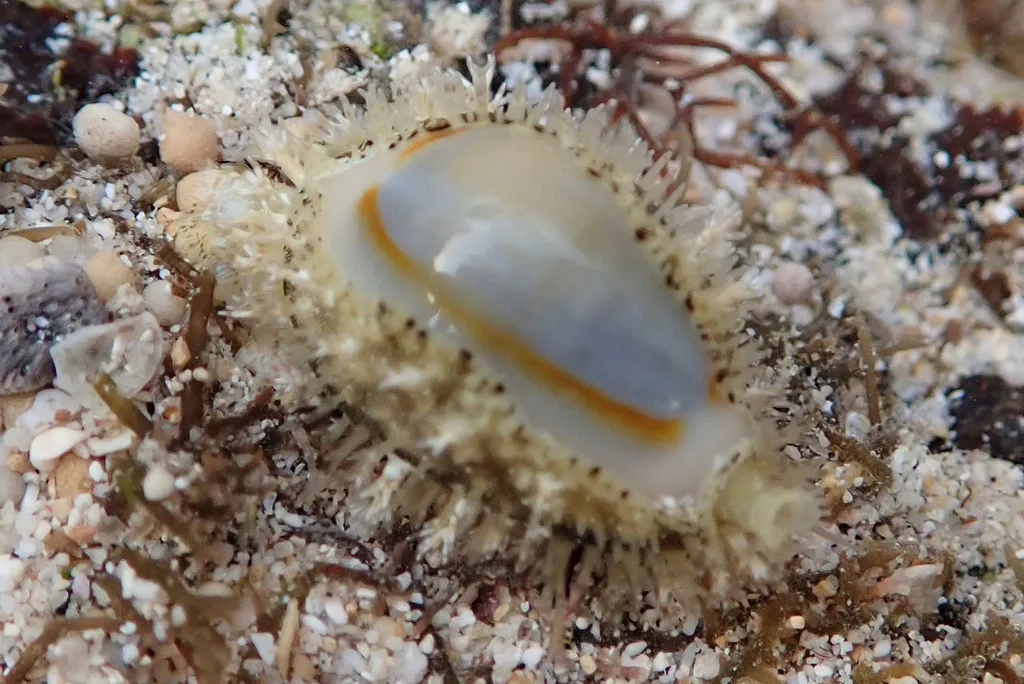
Ring cowrie
Monetaria annulus
Saltwater1.2 in (3 cm) · 20 gal (75 L)75–81°F (24–27°C)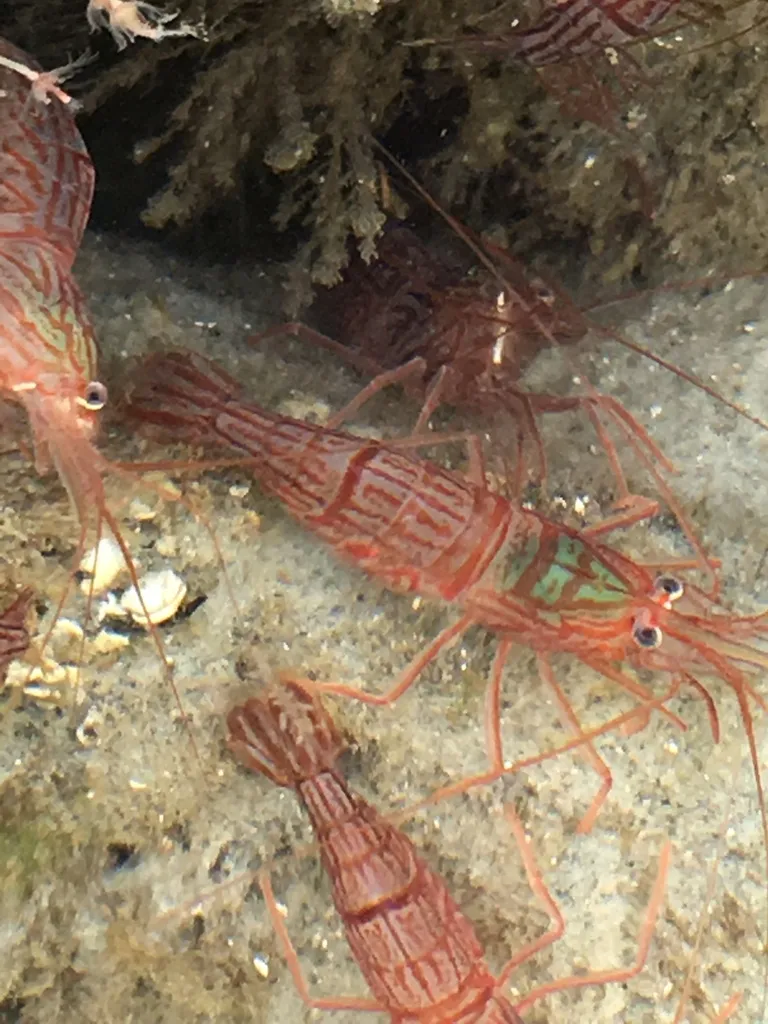
Peppermint shrimp
Lysmata wurdemanni
Saltwater2 in (5 cm) · 11 gal (40 L)72–81°F (22–27°C)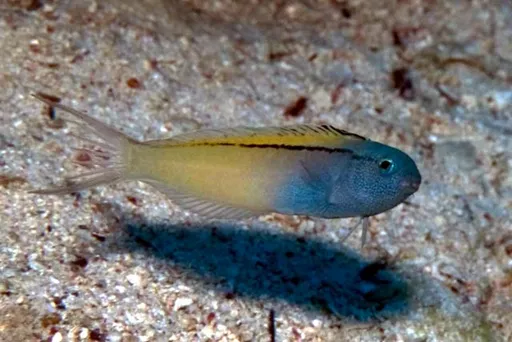
Blackline fang blenny
Meiacanthus nigrolineatus
Saltwater3.5 in (9 cm) · 20 gal (75 L)75–81°F (24–27°C)
Common questions
What size tank does a Mexican turbo snail need?
A Mexican turbo snail needs at least 11 gal (40 L). It spends most of its time in the bottom.
What temperature and pH does a Mexican turbo snail need?
A Mexican turbo snail is comfortable at 75–81°F (24–27°C) with a pH of 8.1–8.4.
How big does a Mexican turbo snail get?
An adult Mexican turbo snail reaches about 2.4 in (6 cm).
Related species
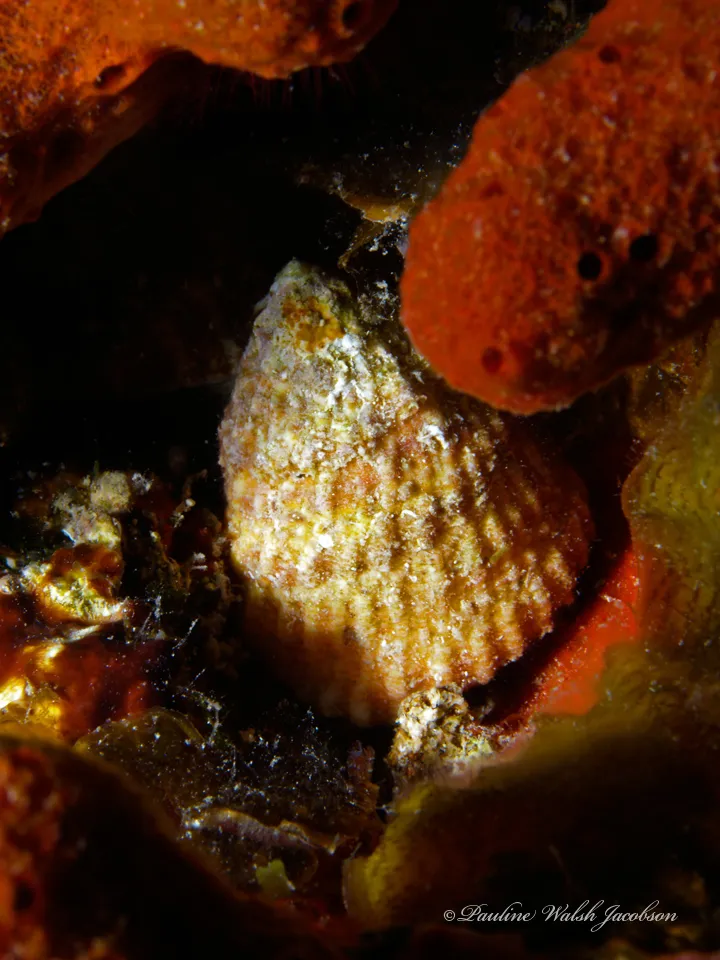 1 in (2.5 cm)11 gal (40 L)72–79°F (22–26°C)
Astraea turbo snail
Astraea tecta
1 in (2.5 cm) · 11 gal (40 L)
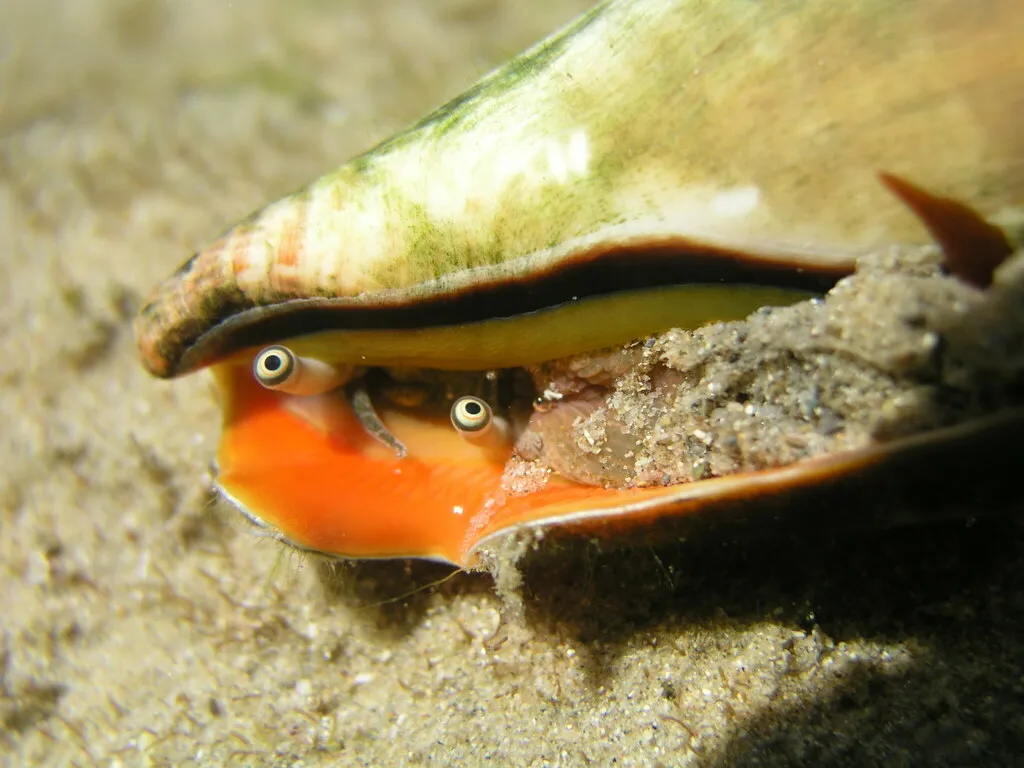 2.8 in (7 cm)20 gal (75 L)75–81°F (24–27°C)
Tiger / strawberry conch
Conomurex luhuanus
2.8 in (7 cm) · 20 gal (75 L)
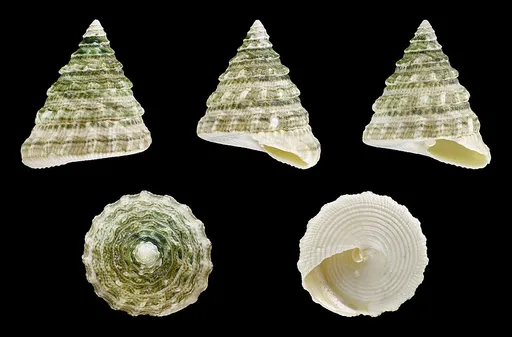 2 in (5 cm)11 gal (40 L)75–81°F (24–27°C)
Pyramid top snail
Tectus fenestratus
2 in (5 cm) · 11 gal (40 L)
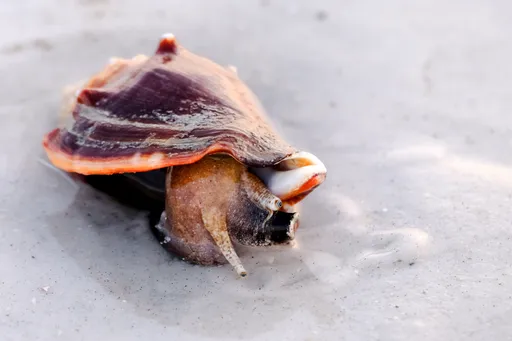 3.1 in (8 cm)20 gal (75 L)75–81°F (24–27°C)
Fighting conch
Strombus alatus
3.1 in (8 cm) · 20 gal (75 L)
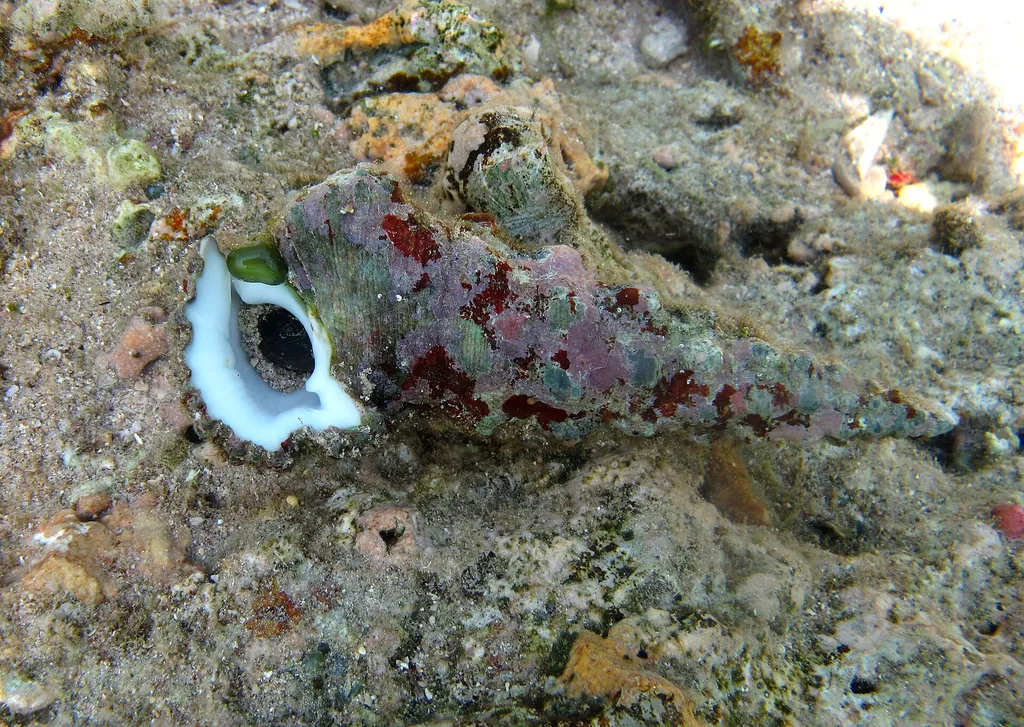 1.6 in (4 cm)11 gal (40 L)72–79°F (22–26°C)
Cerith snail
Cerithium sp.
1.6 in (4 cm) · 11 gal (40 L)
- 1.2 in (3 cm)20 gal (75 L)75–81°F (24–27°C)
Ring cowrie
Monetaria annulus
1.2 in (3 cm) · 20 gal (75 L)