Scarlet goby
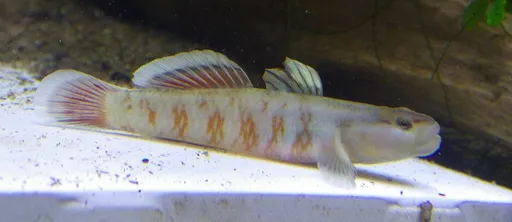
Rhinogobius zhoui
Also known as Zhou's scarlet goby, Zhou's goby, Vermilion goby
FreshwaterFish
Care at a glance
- Temperature
- 61–75°F
- 16–24°C
- pH
- 7.0–8.0
- Adult size
- 1.6 in
- 4 cm
- Minimum tank
- 12 gal
- 45 L
- Temperament
- Mostly peaceful
- Social behavior
- Solitary
- Tankmates
- With caution
- Swim level
- Bottom
- Difficulty
- Difficult
- Breeding
- Hard
- Rarity
- Rare
- Family
- Gobiidae
- Origin
- Native to the Lianhua Mountain area of Haifeng County in Guangdong Province, China, in shallow, fast-flowing, well-oxygenated headwater streams.
Overview
Keep it in a cool tank of 45 litres or more at 16 to 24 C with a pH of 7.0 to 8.0 and strong, oxygen rich flow. Males are territorial, so provide many rocky caves and either keep a single male or give a group enough broken sight lines in a larger tank. Do not house it with small ornamental shrimp, which it will hunt. Feed meaty foods such as frozen bloodworm, brine shrimp, small live foods and sinking carnivore pellets, since it ignores floating flake.
In the wild
The scarlet goby comes from cool, clear, fast-flowing mountain headwaters that are very high in oxygen. It is a bottom dweller that perches on and darts between smooth rocks. Recreate this with a cool tank, sand or fine gravel, plenty of smooth rockwork forming caves, strong flow and extra aeration. Pristine, well oxygenated water and frequent changes are essential, which makes it a fish for experienced keepers.
Good to know
Rhinogobius zhoui was described in 2008 and named after the collector who first brought it to attention. Males are boldly patterned in red and orange with spotted cheeks and defend small territories among the rocks. It is a cool water species best kept without a heater in most rooms.
Did you know
Because it needs cool, spotless, fast water, it usually does best in a dedicated hillstream style tank rather than a warm community aquarium.
Common questions
What size tank does a Scarlet goby need?
A Scarlet goby needs at least 12 gal (45 L). It spends most of its time in the bottom.
What temperature and pH does a Scarlet goby need?
A Scarlet goby is comfortable at 61–75°F (16–24°C) with a pH of 7.0–8.0.
How big does a Scarlet goby get?
An adult Scarlet goby reaches about 1.6 in (4 cm).
Related species
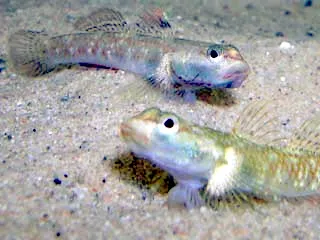 2 in (5 cm)16 gal (60 L)61–75°F (16–24°C)
White-cheek goby
Rhinogobius duospilus
2 in (5 cm) · 16 gal (60 L)
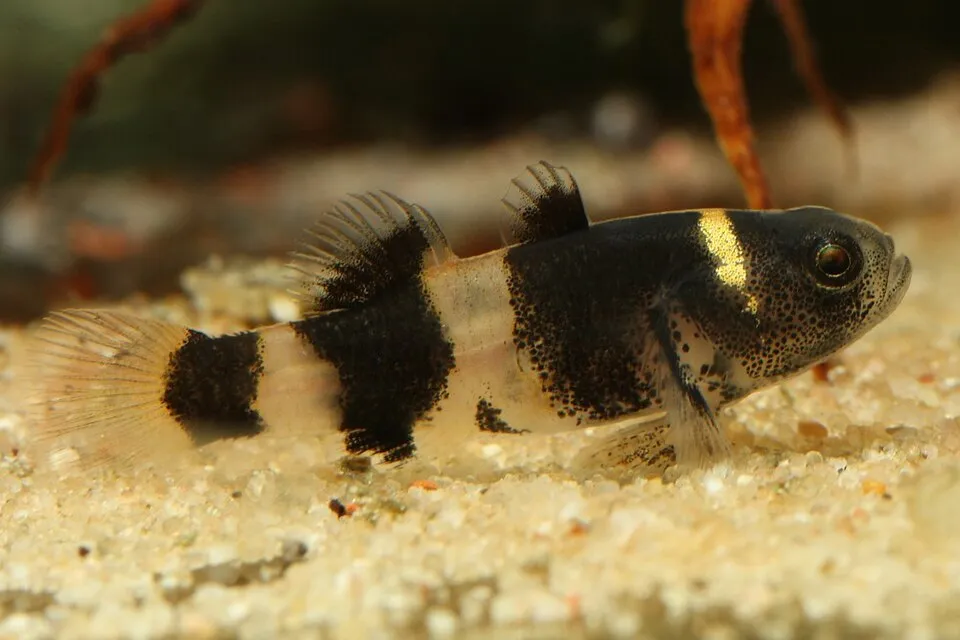 1.6 in (4 cm)12 gal (45 L)72–82°F (22–28°C)
Bumblebee goby
Brachygobius doriae
1.6 in (4 cm) · 12 gal (45 L)
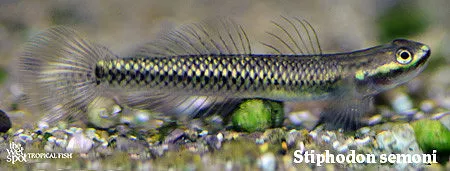 1.8 in (4.5 cm)13 gal (50 L)68–79°F (20–26°C)
Cobalt blue goby
Stiphodon semoni
1.8 in (4.5 cm) · 13 gal (50 L)
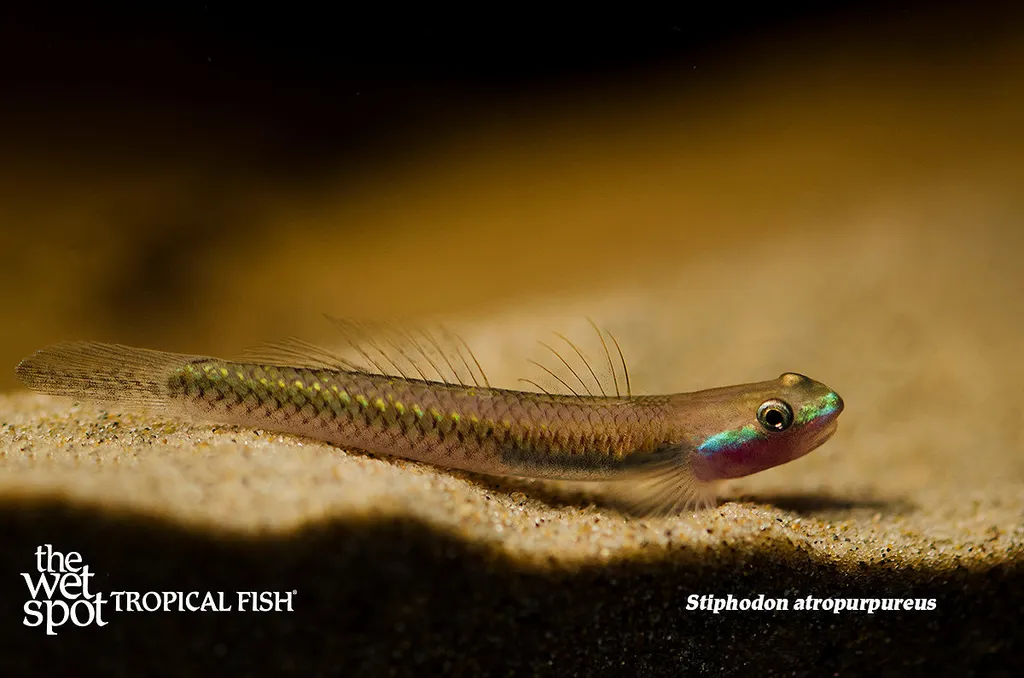 2 in (5 cm)20 gal (75 L)72–81°F (22–27°C)
Blue neon dwarf goby
Stiphodon atropurpureus
2 in (5 cm) · 20 gal (75 L)
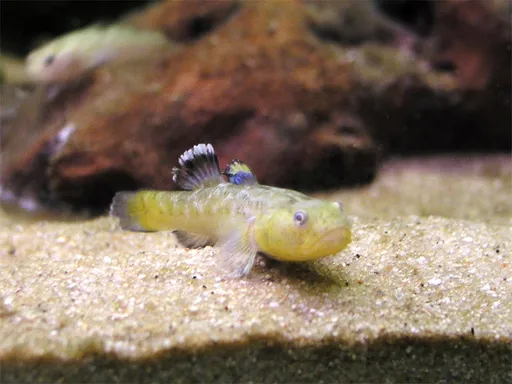 2.4 in (6 cm)16 gal (60 L)64–82°F (18–28°C)
Desert goby
Chlamydogobius eremius
2.4 in (6 cm) · 16 gal (60 L)
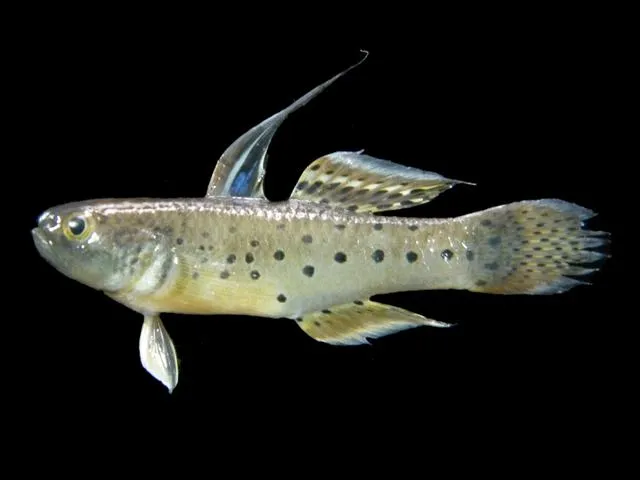 3.5 in (9 cm)21 gal (80 L)68–79°F (20–26°C)
Knight goby
Stigmatogobius sadanundio
3.5 in (9 cm) · 21 gal (80 L)