Knight goby
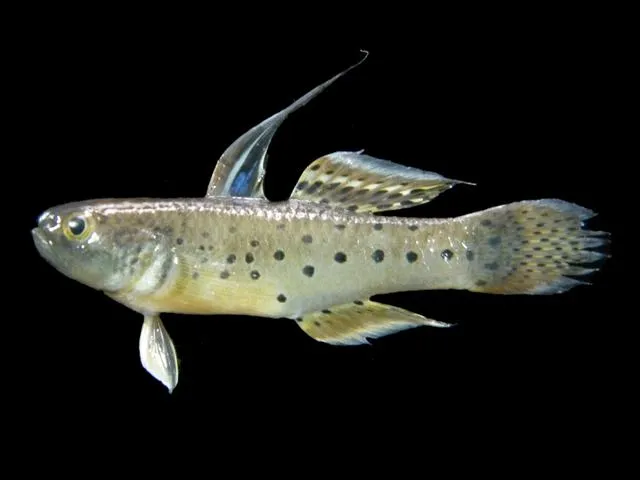
Stigmatogobius sadanundio
FreshwaterBrackishFish
Care at a glance
- Temperature
- 68–79°F
- 20–26°C
- pH
- 6.5–7.5
- Adult size
- 3.5 in
- 9 cm
- Minimum tank
- 21 gal
- 80 L
- Temperament
- Mostly peaceful
- Social behavior
- Social
- Tankmates
- With caution
- Swim level
- Bottom
- Difficulty
- Difficult
- Breeding
- No record
- Rarity
- Very rare
- Family
- Gobiidae
- Origin
- South Asia, South East Asia
Overview
The knight goby is a spotted, bottom-loving fish that is territorial toward its own kind and other floor dwellers, so it is not a true schooling fish. It can be kept as a small group only if you give each fish its own cave or crevice and break the floor into separate territories, otherwise keep just a single pair. It will eat small fish and may nip slow, long-finned tankmates, so choose robust mid-water companions. It is not fussy and takes frozen, live, and dried foods along with a little algae, but it relishes bloodworms and brine shrimp. It naturally lives in tidal, slightly salty water and does best with a small amount of marine salt, though it also does well in hard, alkaline fresh water. A tank of 80 liters or larger suits a pair or a well-spaced group.
In the wild
The knight goby comes from South and Southeast Asia, from India and Sri Lanka through to Indonesia, where it lives in the lower, tidal reaches of rivers, estuaries, and mangrove-lined creeks. This is brackish country, so while it manages in fresh water it does better with some salt added, around a quarter of full seawater strength. Keep it fairly cool for a tropical fish, about 20 to 26 °C, with a pH near 6.5 to 7.5 or a touch higher. A soft sand floor, scattered rocks and roots for caves, and dim lighting will help bring it out during the day.
Good to know
The knight goby is a true goby in the family Gobiidae and grows to about 9 cm. Like all true gobies, its pelvic fins are fused into a cup-shaped sucker under the body, which lets it grip surfaces and hold station in moving, tidal water. It is a cave spawner: the female sticks a large clutch of eggs, sometimes close to a thousand, inside a shelter, and the male guards and fans them until they hatch. Rearing the tiny larvae usually calls for brackish conditions, so home breeding is difficult and not reliably recorded.
Did you know
Male knight gobies carry tall, black-spotted dorsal fins that they raise and flare when courting or facing a rival, a display that earns the fish its other common name, the fan dance goby.
Common questions
What size tank does a Knight goby need?
A Knight goby needs at least 21 gal (80 L). It spends most of its time in the bottom.
What temperature and pH does a Knight goby need?
A Knight goby is comfortable at 68–79°F (20–26°C) with a pH of 6.5–7.5.
How big does a Knight goby get?
An adult Knight goby reaches about 3.5 in (9 cm).
Related species
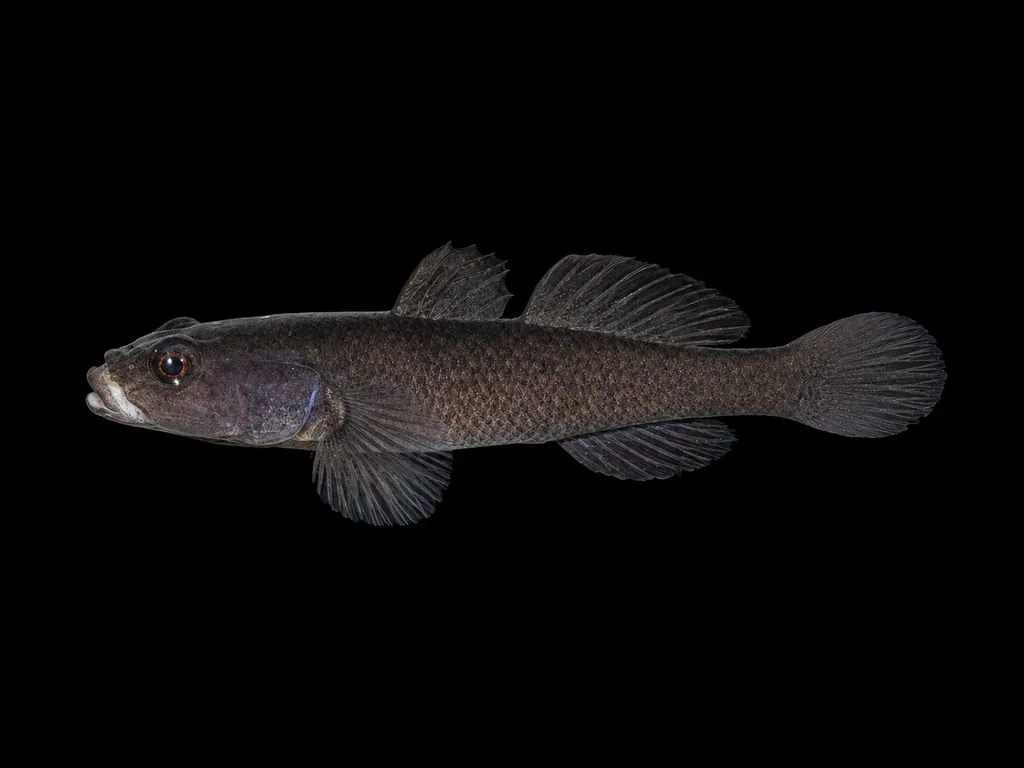 3.1 in (8 cm)21 gal (80 L)79–82°F (26–28°C)
Black toraja goby
Mugilogobius sarasinorum
3.1 in (8 cm) · 21 gal (80 L)
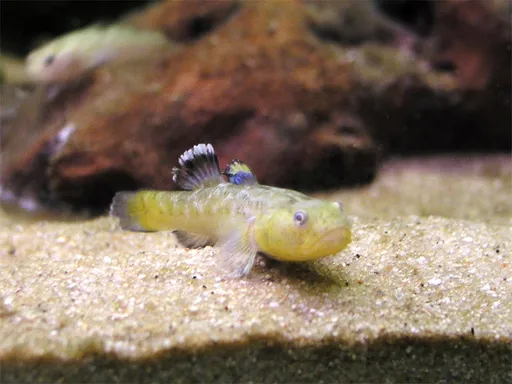 2.4 in (6 cm)16 gal (60 L)64–82°F (18–28°C)
Desert goby
Chlamydogobius eremius
2.4 in (6 cm) · 16 gal (60 L)
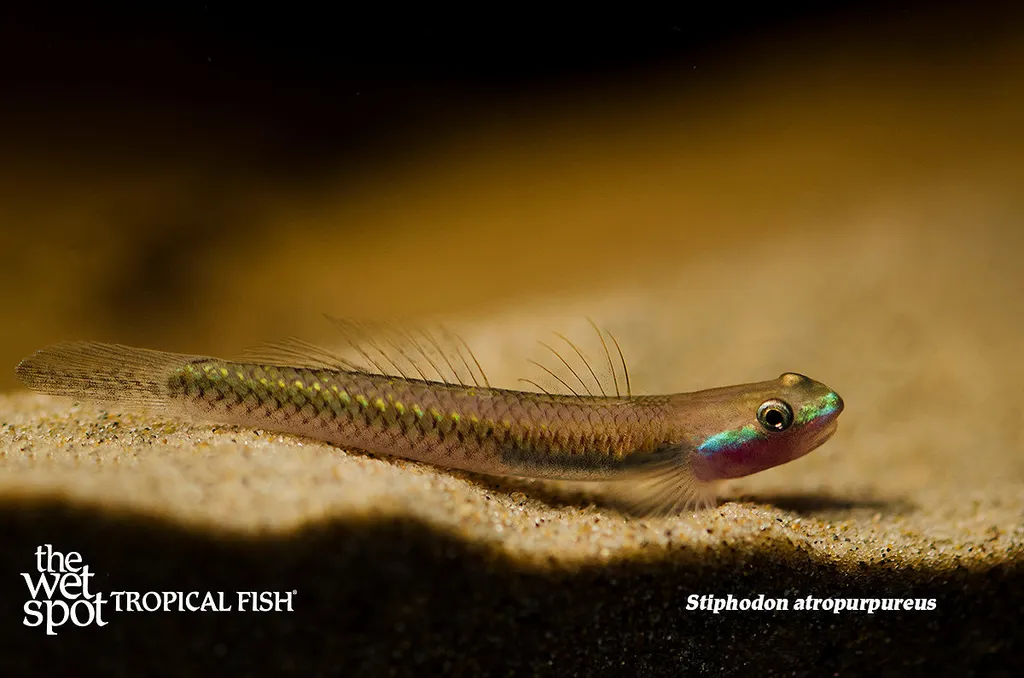 2 in (5 cm)20 gal (75 L)72–81°F (22–27°C)
Blue neon dwarf goby
Stiphodon atropurpureus
2 in (5 cm) · 20 gal (75 L)
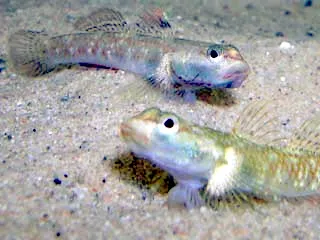 2 in (5 cm)16 gal (60 L)61–75°F (16–24°C)
White-cheek goby
Rhinogobius duospilus
2 in (5 cm) · 16 gal (60 L)
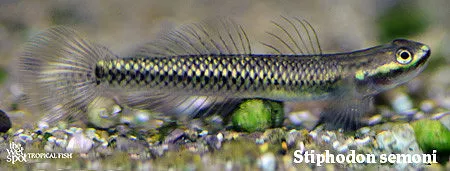 1.8 in (4.5 cm)13 gal (50 L)68–79°F (20–26°C)
Cobalt blue goby
Stiphodon semoni
1.8 in (4.5 cm) · 13 gal (50 L)
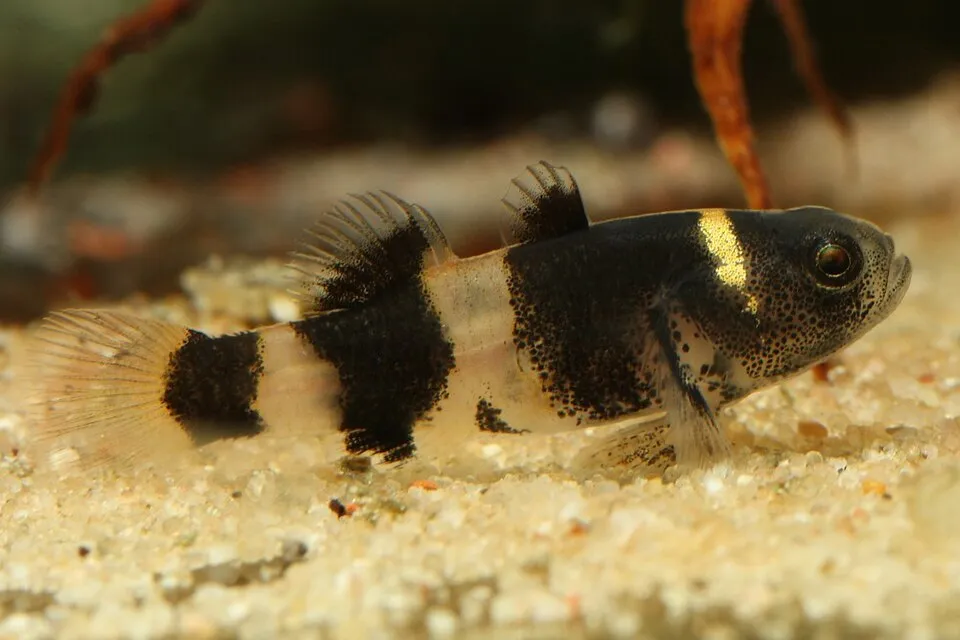 1.6 in (4 cm)12 gal (45 L)72–82°F (22–28°C)
Bumblebee goby
Brachygobius doriae
1.6 in (4 cm) · 12 gal (45 L)