Black toraja goby
Mugilogobius sarasinorum
Also known as Sarasin's goby
FreshwaterFish
Care at a glance
- Temperature
- 79–82°F
- 26–28°C
- pH
- 6.5–7.5
- Adult size
- 3.1 in
- 8 cm
- Minimum tank
- 21 gal
- 80 L
- Temperament
- Mostly peaceful
- Social behavior
- Social
- Tankmates
- With caution
- Swim level
- Bottom
- Difficulty
- Difficult
- Breeding
- No record
- Rarity
- Very rare
- Family
- Gobiidae
- Origin
- Sulawesi
Overview
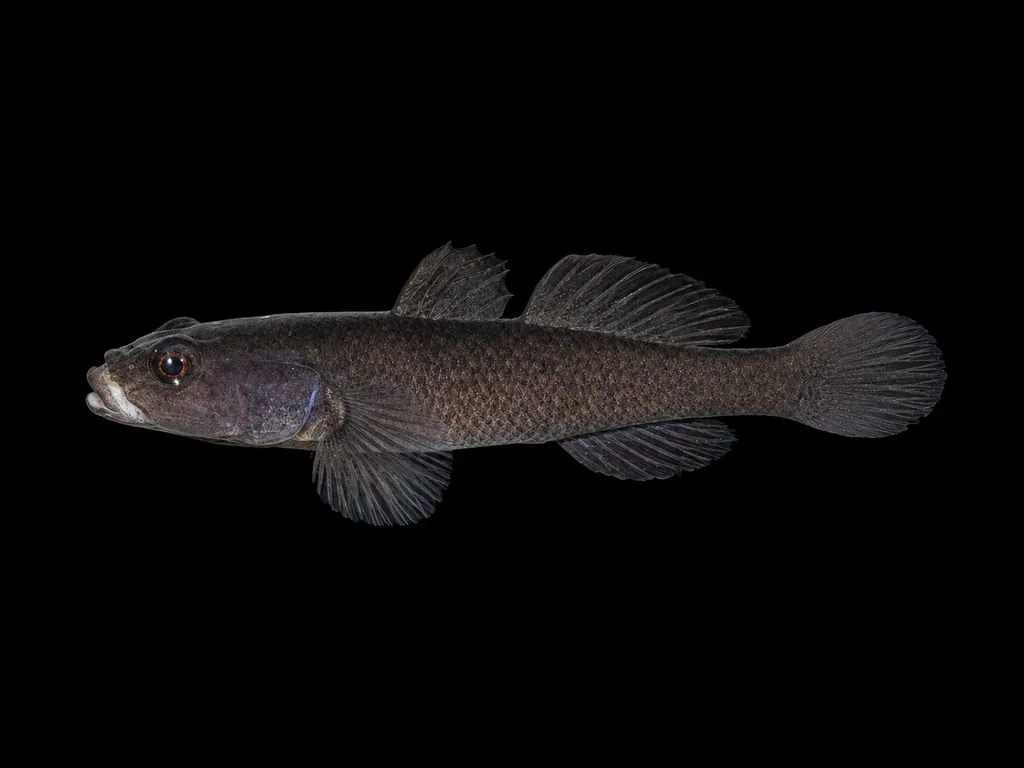
This little Sulawesi goby is calm with tankmates but pushy with its own kind, so it settles best as a small group given plenty of broken-up floor space and a separate cave or crevice for each fish. It spends its time perched on the bottom, guarding a patch and darting out to grab food, so keep it with gentle open-water fish rather than other floor dwellers that compete for the same spots. It rarely bothers with flake and does far better on small frozen and live foods such as bloodworms, daphnia, and brine shrimp. Use fine sand, smooth stones, and a few plants to mark out territories. A tank of 80 liters or larger gives a group room to spread out.
In the wild
This species lives only in Lake Poso, a deep, ancient lake in central Sulawesi, where it keeps to shallow margins over silty sand, mud, and gravel, along steep gravel banks, and around large limestone rocks with patches of aquatic plants. The water there stays warm and stable all year, so aim for about 26 to 28 °C and a near-neutral pH of roughly 6.5 to 7.5. Recreate the lake edge with a soft sand floor, rounded rocks and pale stone to form caves, and some hardy plants to break up the open space. Steady, gentle, well-filtered flow and clean, oxygen-rich water suit it best.
Good to know
The black toraja goby belongs to Gobiidae, the true goby family, and reaches about 8 cm in length. Like other true gobies it has pelvic fins joined into a small suction disc on the underside, which helps it hold position on the bottom. It is named for the Swiss naturalists Paul and Fritz Sarasin, who collected the first specimens, and it is treated as endangered in the wild because of its very small natural range. Its breeding in aquariums has not been documented, though gobies in general lay adhesive eggs that a parent tends until they hatch.
Did you know
Mugilogobius sarasinorum lives in a single lake, Lake Poso in central Sulawesi, and is found nowhere else on Earth in the wild, an unusually narrow home range for any fish.
Common questions
What size tank does a Black toraja goby need?
A Black toraja goby needs at least 21 gal (80 L). It spends most of its time in the bottom.
What temperature and pH does a Black toraja goby need?
A Black toraja goby is comfortable at 79–82°F (26–28°C) with a pH of 6.5–7.5.
How big does a Black toraja goby get?
An adult Black toraja goby reaches about 3.1 in (8 cm).
Related species
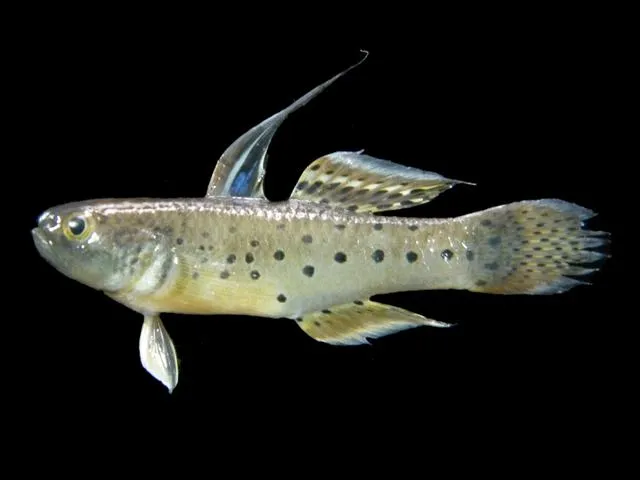 3.5 in (9 cm)21 gal (80 L)68–79°F (20–26°C)
Knight goby
Stigmatogobius sadanundio
3.5 in (9 cm) · 21 gal (80 L)
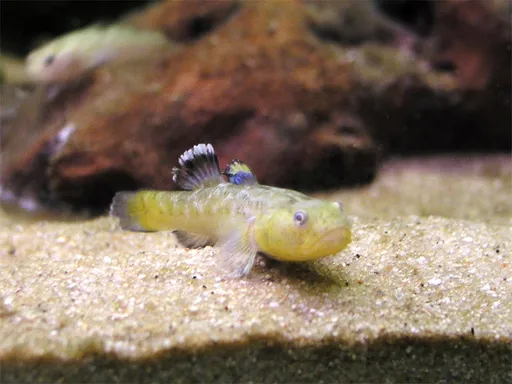 2.4 in (6 cm)16 gal (60 L)64–82°F (18–28°C)
Desert goby
Chlamydogobius eremius
2.4 in (6 cm) · 16 gal (60 L)
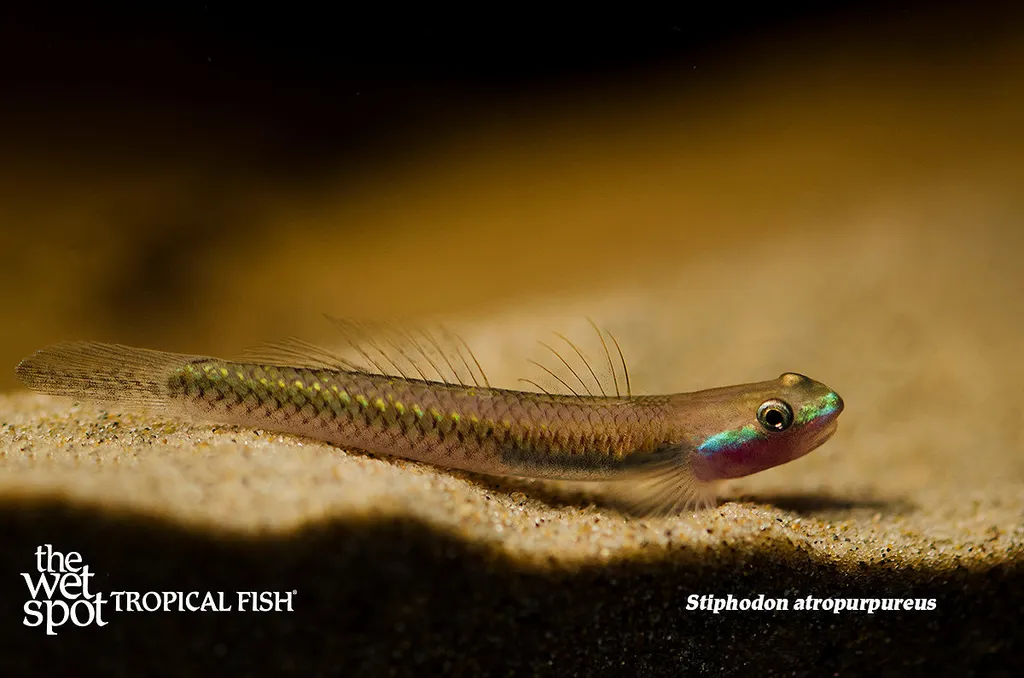 2 in (5 cm)20 gal (75 L)72–81°F (22–27°C)
Blue neon dwarf goby
Stiphodon atropurpureus
2 in (5 cm) · 20 gal (75 L)
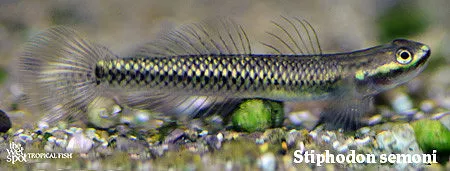 1.8 in (4.5 cm)13 gal (50 L)68–79°F (20–26°C)
Cobalt blue goby
Stiphodon semoni
1.8 in (4.5 cm) · 13 gal (50 L)
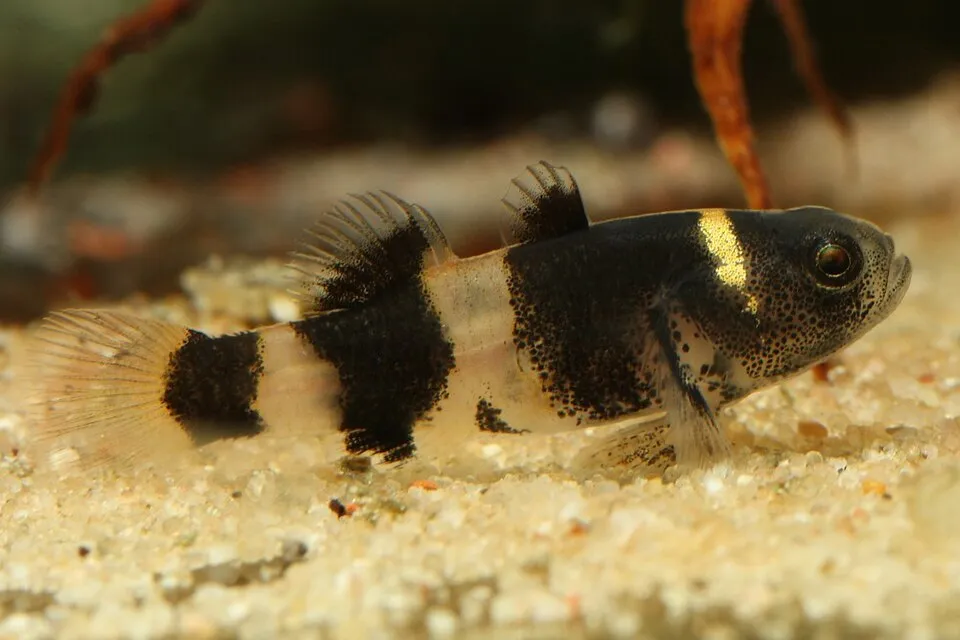 1.6 in (4 cm)12 gal (45 L)72–82°F (22–28°C)
Bumblebee goby
Brachygobius doriae
1.6 in (4 cm) · 12 gal (45 L)
 2 in (5 cm)16 gal (60 L)61–75°F (16–24°C)
White-cheek goby
Rhinogobius duospilus
2 in (5 cm) · 16 gal (60 L)