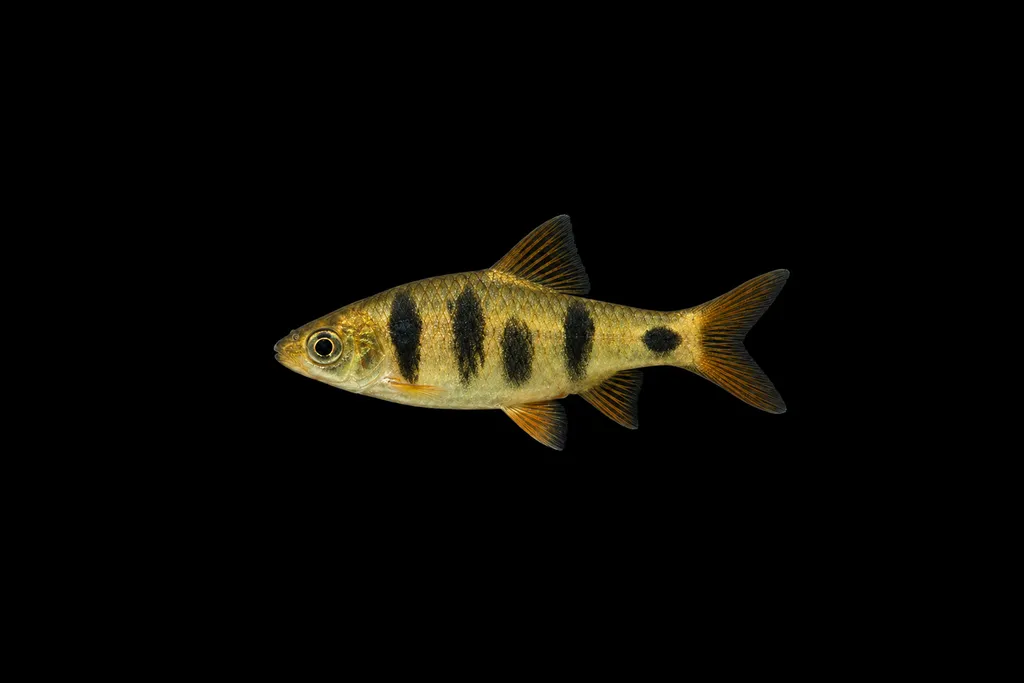
Canius barb
Pethia canius
Also known as Puntius canius
FreshwaterFish
Care at a glance
- Temperature
- 68–79°F
- 20–26°C
- pH
- 6.0–7.5
- Adult size
- 1.6 in
- 4 cm
- Minimum tank
- 20 gal
- 75 L
- Temperament
- Peaceful
- Social behavior
- Schooling
- Swim level
- Middle
- Difficulty
- Easy
- Breeding
- No record
- Rarity
- Rare
- Family
- Cyprinidae
- Origin
- Ganges delta region, India and Bangladesh
Overview
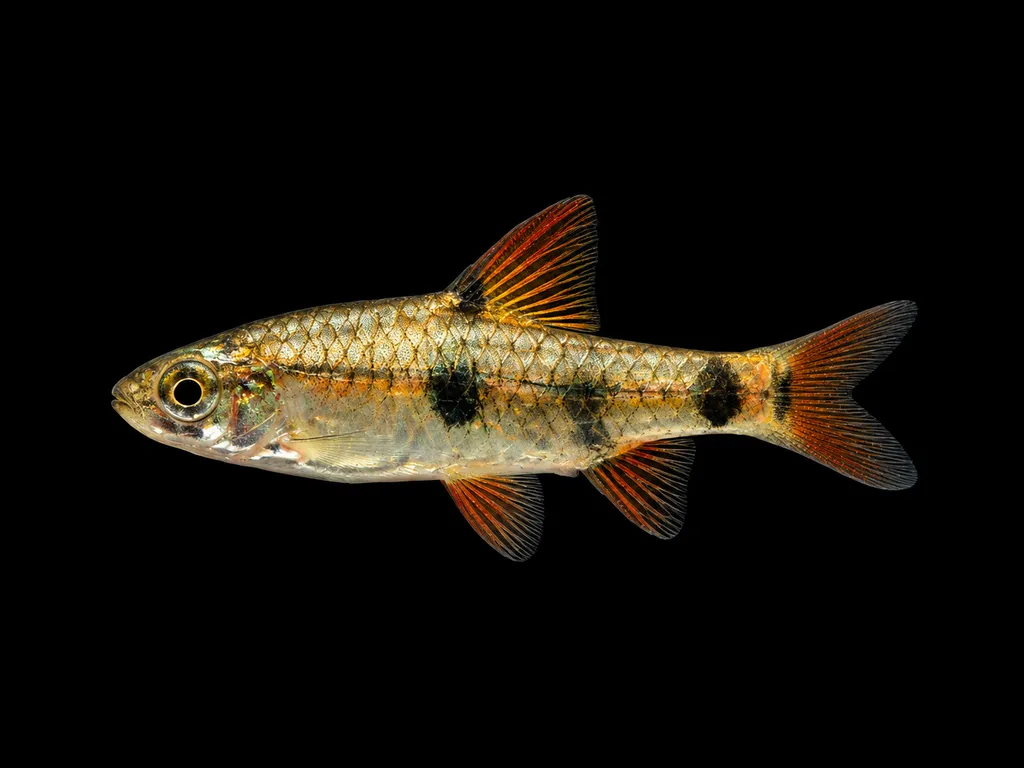
The Canius barb is a tiny, shy dwarf barb for a calm, planted community tank. It is an easy fish to keep.
Did you know
The Canius barb is a true miniature that matures at under three centimeters. It belongs to the small golden-dwarf-barb group. Members of that group carry only a short, incomplete lateral line, not the full row of pored scales most fish have.
Caring for the Canius barb
Keep Canius barbs in a group of at least eight to ten, since single fish or small groups stay nervous and hidden. A planted, dimly lit tank of 20 gal (75 L) or more, with driftwood, cover and a dark substrate, suits a group.
Use gentle filtration with little current. Keep the water in the cooler tropical band, at 68 to 79°F (20 to 26°C) and a pH of 6.0 to 7.5. Feed small foods such as fine flake, micro pellets and small frozen or live foods like daphnia and baby brine shrimp.
The Canius barb is small and shy, and it swims in the lower and middle water among plants. It does best in a calm setup with other little, gentle community fish, such as honey gouramis and small rasboras. Its captive breeding is poorly documented. Like its kin, it likely scatters eggs among fine-leaved plants.
Good to know
Pethia canius is a dwarf barb of the family Cyprinidae, described by Hamilton in 1822. It is closely related to the golden dwarf barb, Pethia gelius. It is flat-bodied and has no barbels.
In the wild
The Canius barb comes from still and slow-moving waters of the Ganges delta region, in West Bengal in eastern India and in Bangladesh. These are quiet and often shaded habitats.
Weekly picks
Tank mates
The Canius barb is a peaceful, schooling species that keeps to the middle. These picks share a community profile with it, are safe together in both directions, and overlap on water type, temperature and pH.
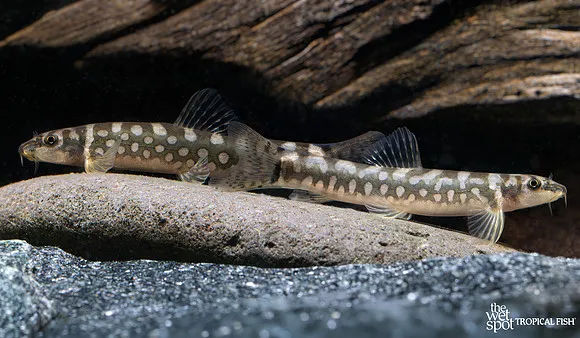
Guenther's zipper loach
Nemacheilus guentheri
Freshwater2.6 in (6.7 cm) · 20 gal (75 L)68–79°F (20–26°C)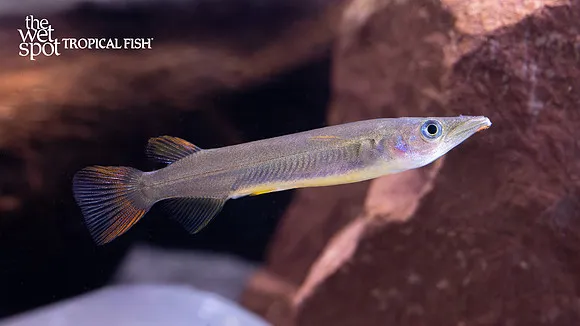
Rex halfbeak
Nomorhamphus rex
Freshwater2.2 in (5.5 cm) · 20 gal (75 L)72–79°F (22–26°C)
Cosuatis barb
Oreichthys cosuatis
Freshwater3.1 in (8 cm) · 20 gal (75 L)68–79°F (20–26°C)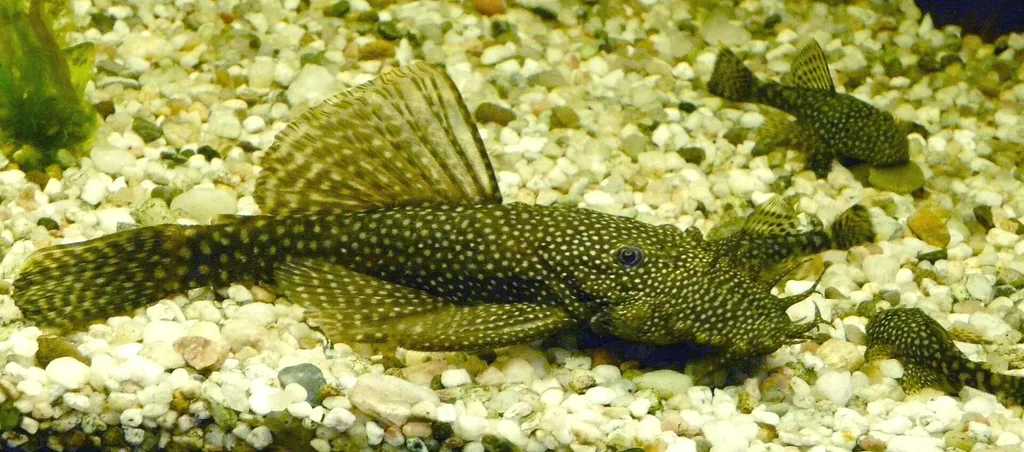
Bristlenose pleco
Ancistrus sp.
Freshwater4.9 in (12.5 cm) · 20 gal (75 L)70–79°F (21–26°C)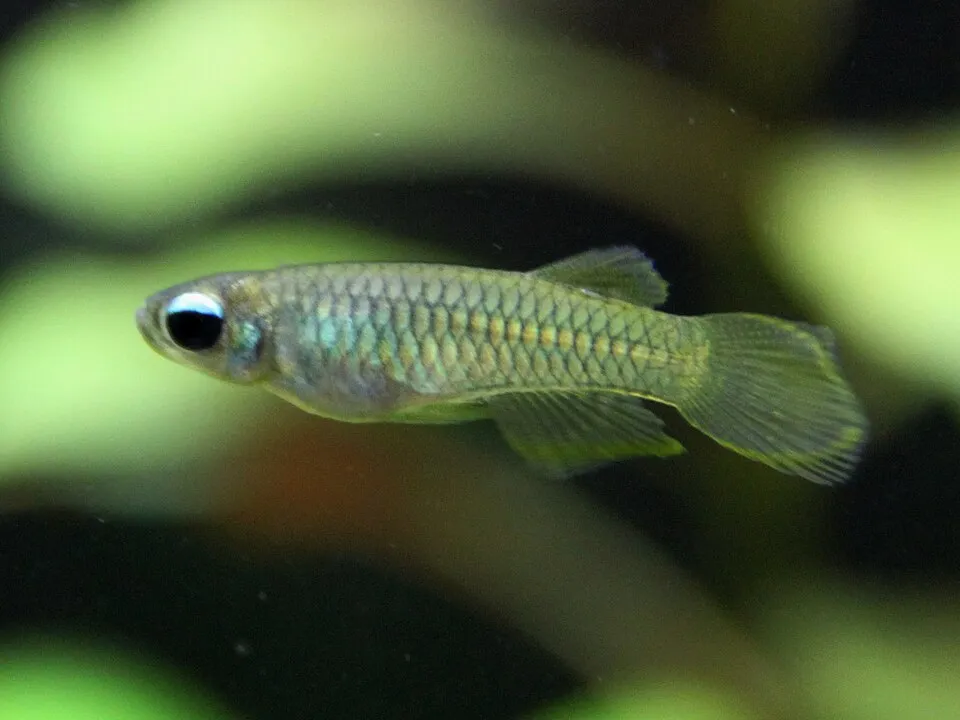
Norman's lampeye
Poropanchax normani
Freshwater1.6 in (4 cm) · 20 gal (75 L)72–79°F (22–26°C)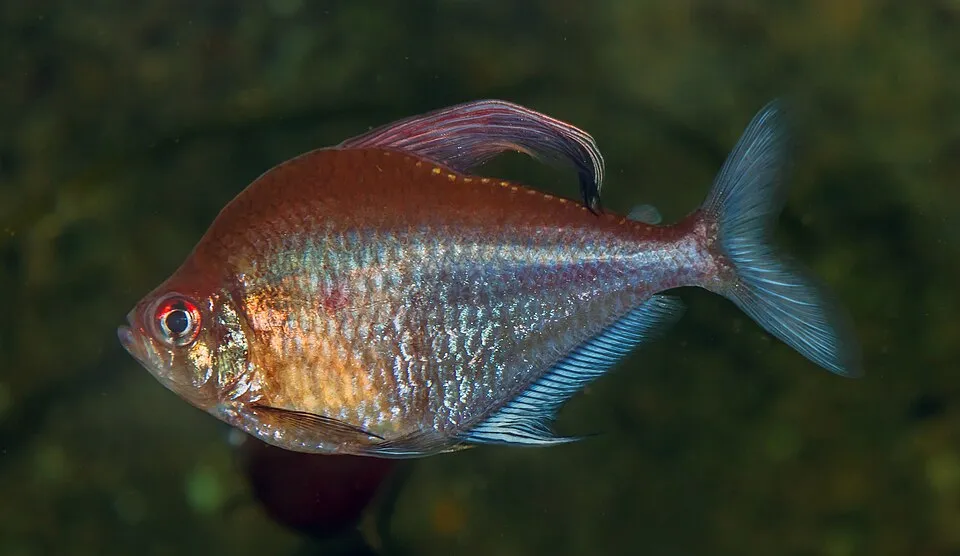
Bleeding heart tetra
Hyphessobrycon erythrostigma
Freshwater2.4 in (6 cm) · 20 gal (75 L)70–81°F (21–27°C)
Common questions
What size tank does a Canius barb need?
A Canius barb needs at least 20 gal (75 L). It spends most of its time in the middle.
What temperature and pH does a Canius barb need?
A Canius barb is comfortable at 68–79°F (20–26°C) with a pH of 6.0–7.5.
What does a Canius barb eat?
A Canius barb eats small foods such as fine flake and micro pellets. It also takes small frozen or live foods like daphnia and baby brine shrimp.
How big does a Canius barb get?
An adult Canius barb reaches about 1.6 in (4 cm).
Does a Canius barb need a group?
Yes. A Canius barb is a schooling species and should be kept in a group, not singly.
How does a Canius barb breed?
The Canius barb's captive breeding is poorly documented. Like its kin, it likely scatters its eggs among fine-leaved plants.
Related species
 1.6 in (4 cm)20 gal (75 L)64–75°F (18–24°C)
Golden dwarf barb
Pethia gelius
1.6 in (4 cm) · 20 gal (75 L)
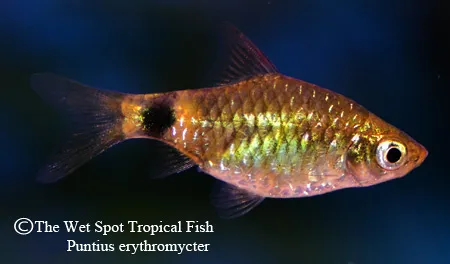 1.6 in (4 cm)14 gal (54 L)72–79°F (22–26°C)
Redlip barb
Pethia erythromycter
1.6 in (4 cm) · 14 gal (54 L)
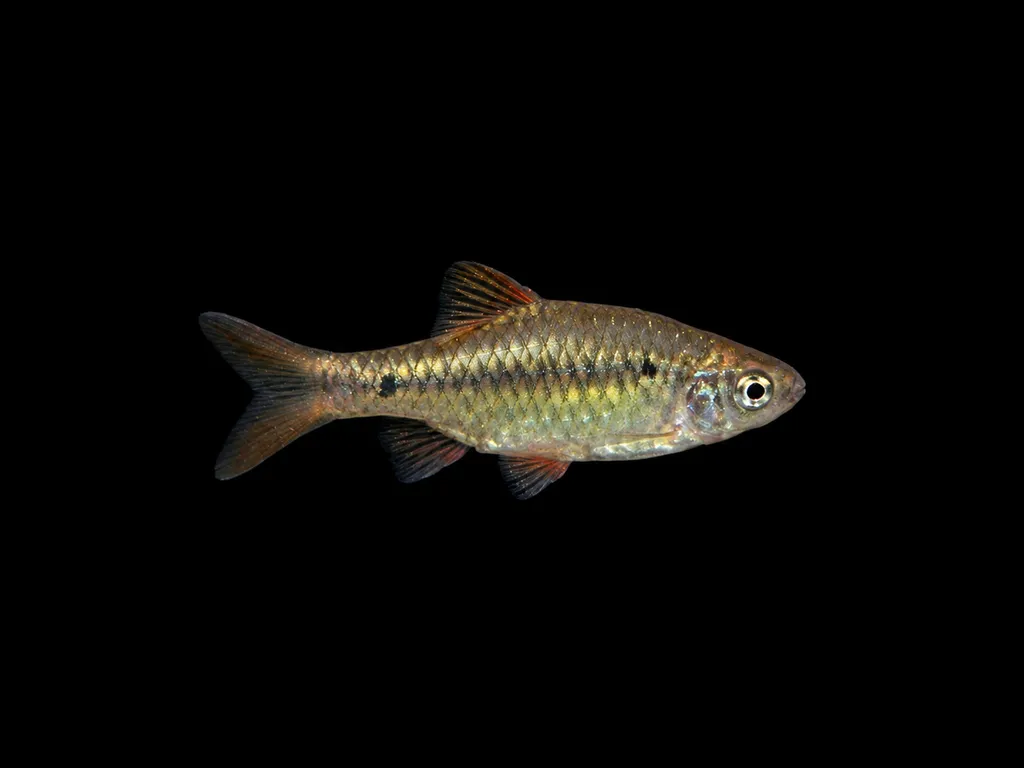 1.8 in (4.5 cm)14 gal (54 L)68–77°F (20–25°C)
Manipur barb
Pethia manipurensis
1.8 in (4.5 cm) · 14 gal (54 L)
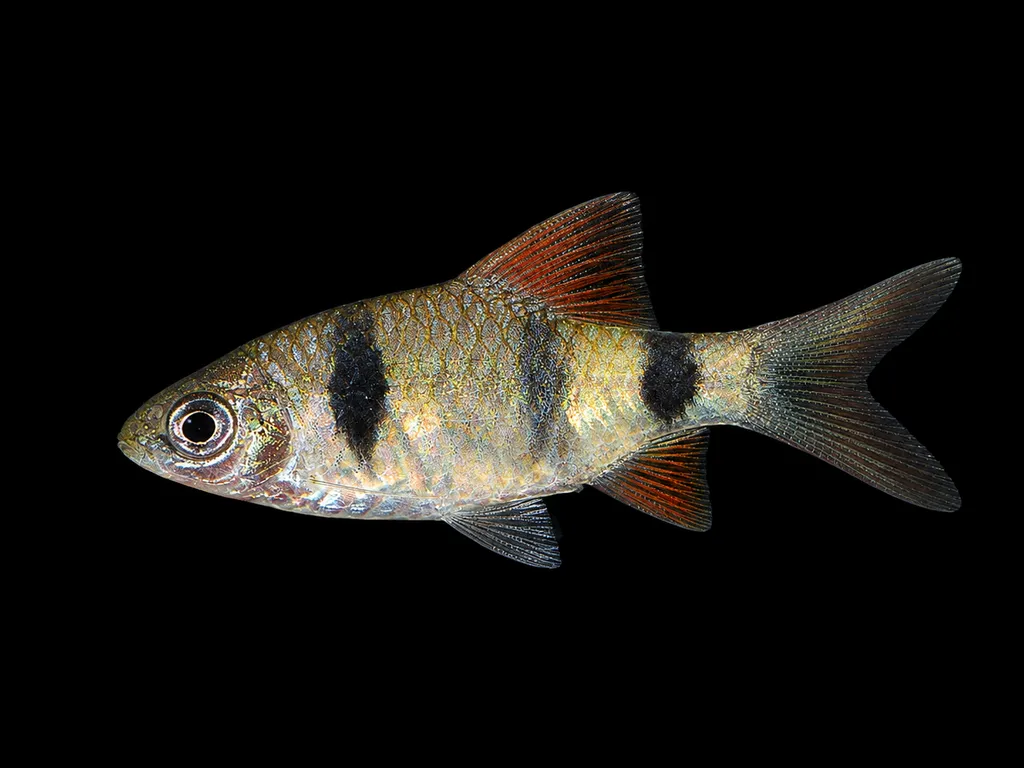 1.8 in (4.5 cm)14 gal (54 L)68–77°F (20–25°C)
Narayan barb
Pethia narayani
1.8 in (4.5 cm) · 14 gal (54 L)
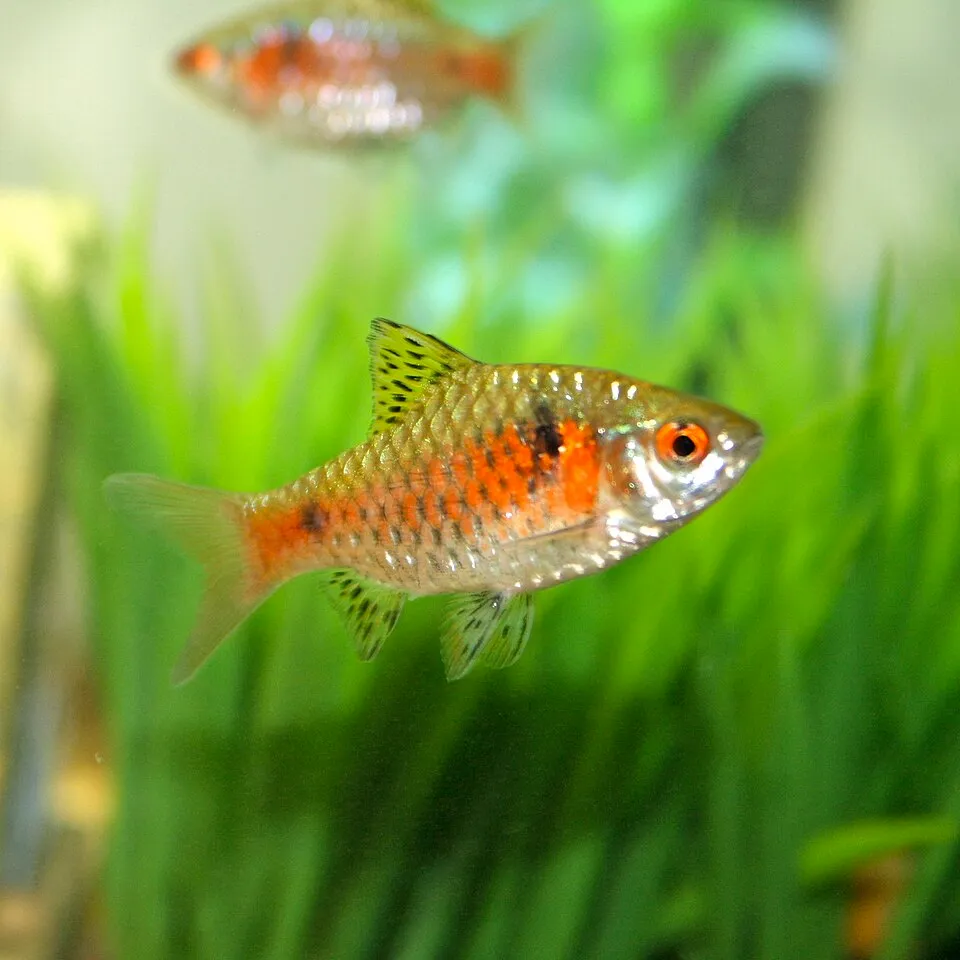 1.8 in (4.5 cm)20 gal (75 L)61–77°F (16–25°C)
Odessa barb
Pethia padamya
1.8 in (4.5 cm) · 20 gal (75 L)
 1.8 in (4.5 cm)14 gal (54 L)68–77°F (20–25°C)
Tiantian barb
Pethia tiantian
1.8 in (4.5 cm) · 14 gal (54 L)