Dwarf barb
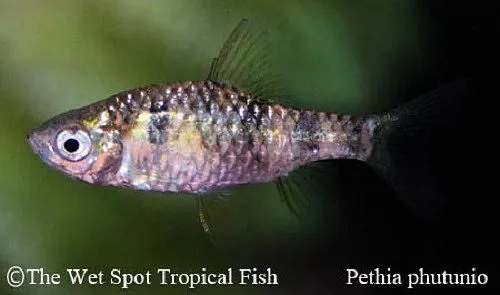
Pethia phutunio
Also known as Spottedsail barb, Green dwarf barb, Puntius phutunio
FreshwaterFish
Care at a glance
- Temperature
- 72–79°F
- 22–26°C
- pH
- 6.0–7.2
- Adult size
- 1.4 in
- 3.5 cm
- Minimum tank
- 12 gal
- 45 L
- Temperament
- Peaceful
- Social behavior
- Schooling
- Swim level
- Middle
- Difficulty
- Easy
- Breeding
- Medium
- Rarity
- Common
- Family
- Cyprinidae
- Origin
- Native to still and slow waters across India, Bangladesh, Nepal, and Sri Lanka.
Overview
Keep dwarf barbs in a group of at least eight to ten in a tank of 45 litres or more at 22 to 26 C with a pH of 6.0 to 7.2. A larger group keeps them confident and brings out the best color, especially over dark substrate with plants. Feed small flakes, micropellets, and frozen daphnia, cyclops, and baby brine shrimp. It is a gentle schooler that suits other small, calm community fish and dwarf shrimp too large to be eaten.
In the wild
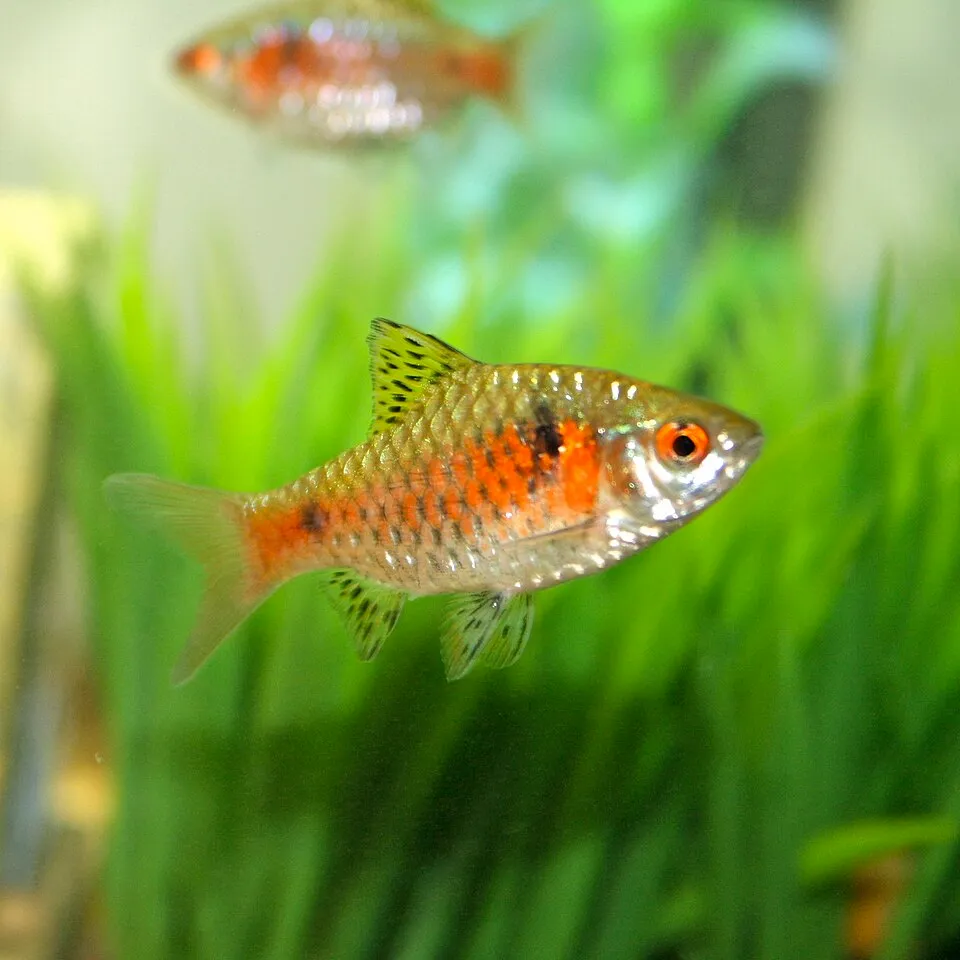
The dwarf barb lives in ponds, ditches, and slow streams across the northern Indian subcontinent. It shoals in soft to moderately hard water among plants and leaf litter. Males show a row of dark bars and a green-gold sheen, brightest in a shaded, planted tank. It is a small, peaceful barb well suited to nano community tanks.
Good to know
Long traded as Puntius phutunio, the dwarf barb was moved into the genus Pethia in the 2012 barb revision. It is one of the smallest barbs at around 3 to 3.5 cm and carries only tiny barbels at the mouth. FishBase lists it under the common name spottedsail barb, after the marked dorsal fin.
Did you know
In a big group the males light up green and gold as they jostle for position, giving a lot of movement and color in a small planted tank.
Weekly picks
Tank mates
Dwarf barb is a peaceful, schooling species that keeps to the middle. These picks share a community profile with it, are safe together in both directions, and overlap on water type, temperature and pH.
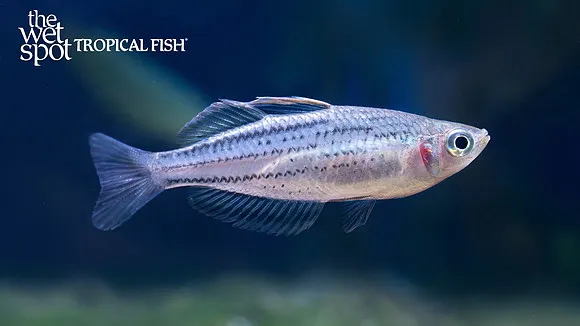
Green panchax
Aplocheilus blockii
Freshwater2 in (5 cm) · 11 gal (40 L)72–82°F (22–28°C)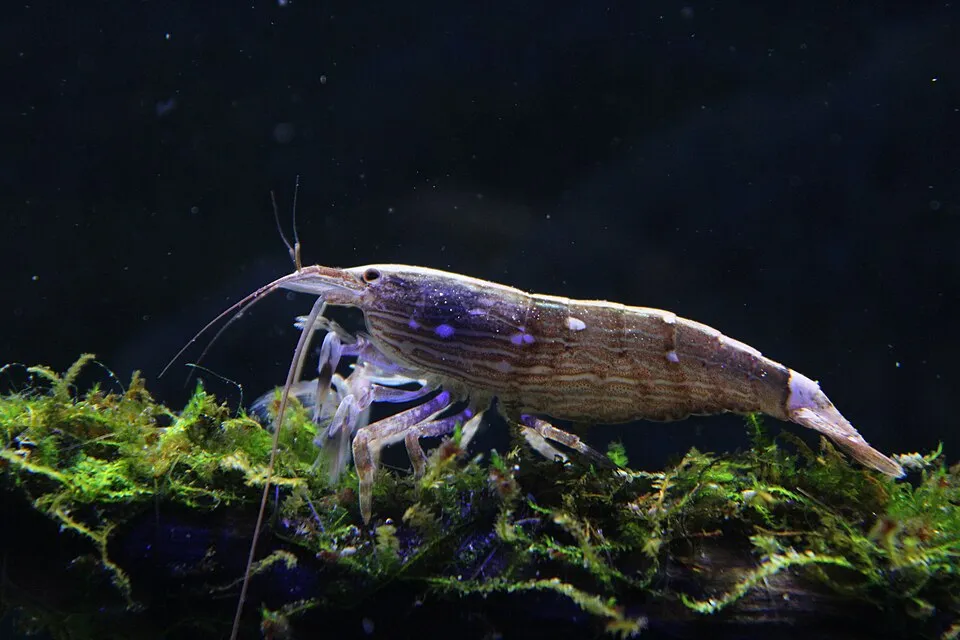
Bamboo shrimp
Atyopsis moluccensis
Freshwater3.9 in (10 cm) · 13 gal (50 L)72–84°F (22–29°C)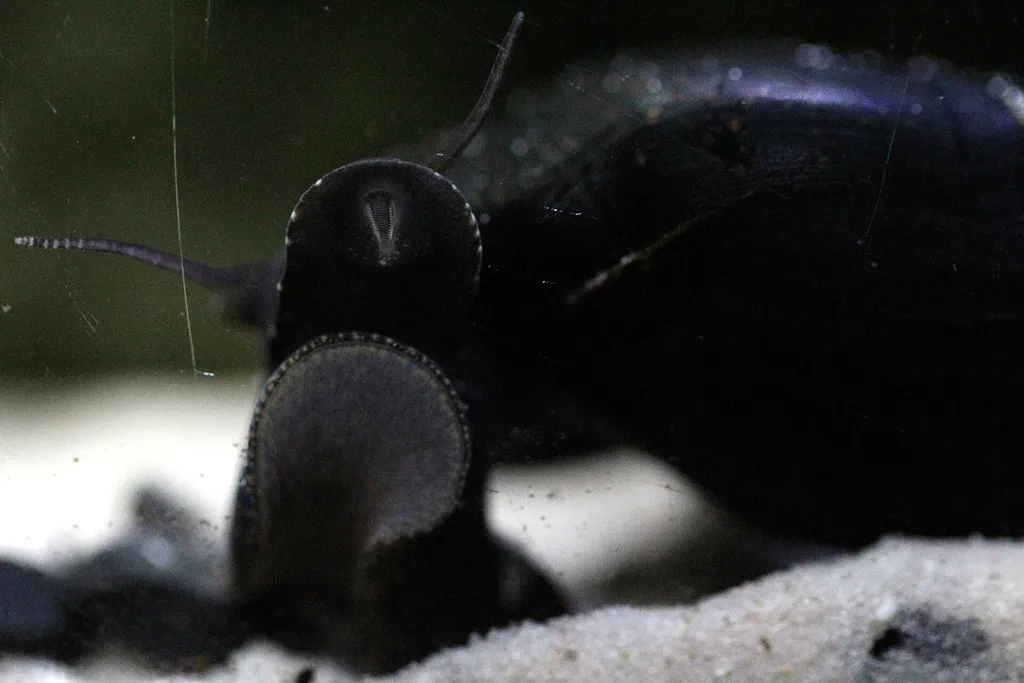
Black devil snail
Faunus ater
Freshwater3.9 in (10 cm) · 13 gal (50 L)72–86°F (22–30°C)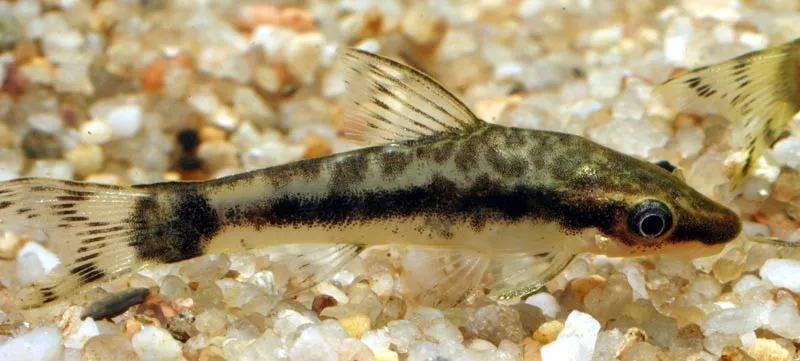
Golden dwarf sucker
Otocinclus macrospilus
Freshwater1.4 in (3.5 cm) · 11 gal (40 L)70–79°F (21–26°C)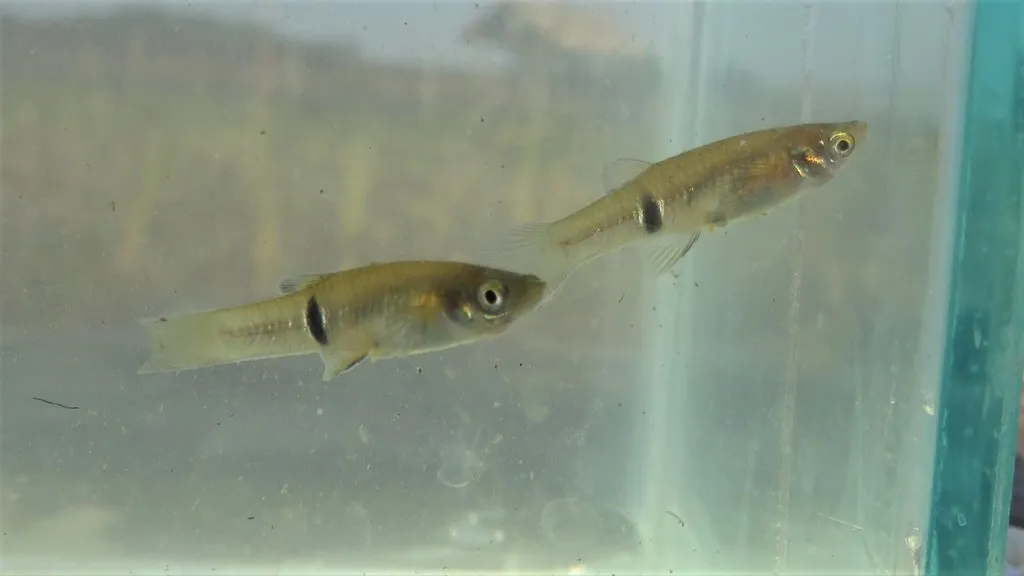
Dusky millions fish
Phalloceros caudimaculatus
Freshwater2.4 in (6 cm) · 12 gal (45 L)64–75°F (18–24°C)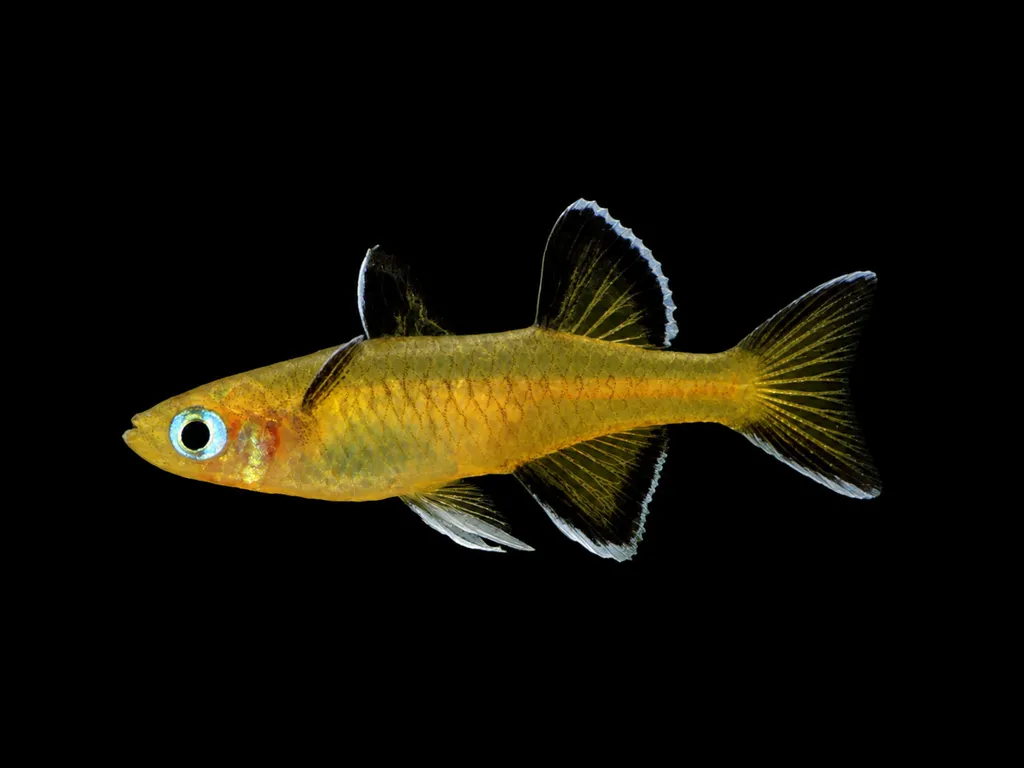
Honey blue-eye
Pseudomugil mellis
Freshwater1.4 in (3.5 cm) · 11 gal (40 L)68–82°F (20–28°C)
Common questions
What size tank does a Dwarf barb need?
A Dwarf barb needs at least 12 gal (45 L). It spends most of its time in the middle.
What temperature and pH does a Dwarf barb need?
A Dwarf barb is comfortable at 72–79°F (22–26°C) with a pH of 6.0–7.2.
How big does a Dwarf barb get?
An adult Dwarf barb reaches about 1.4 in (3.5 cm).
Does a Dwarf barb need a group?
Yes. A Dwarf barb is a schooling species and should be kept in a group, not singly.
Related species
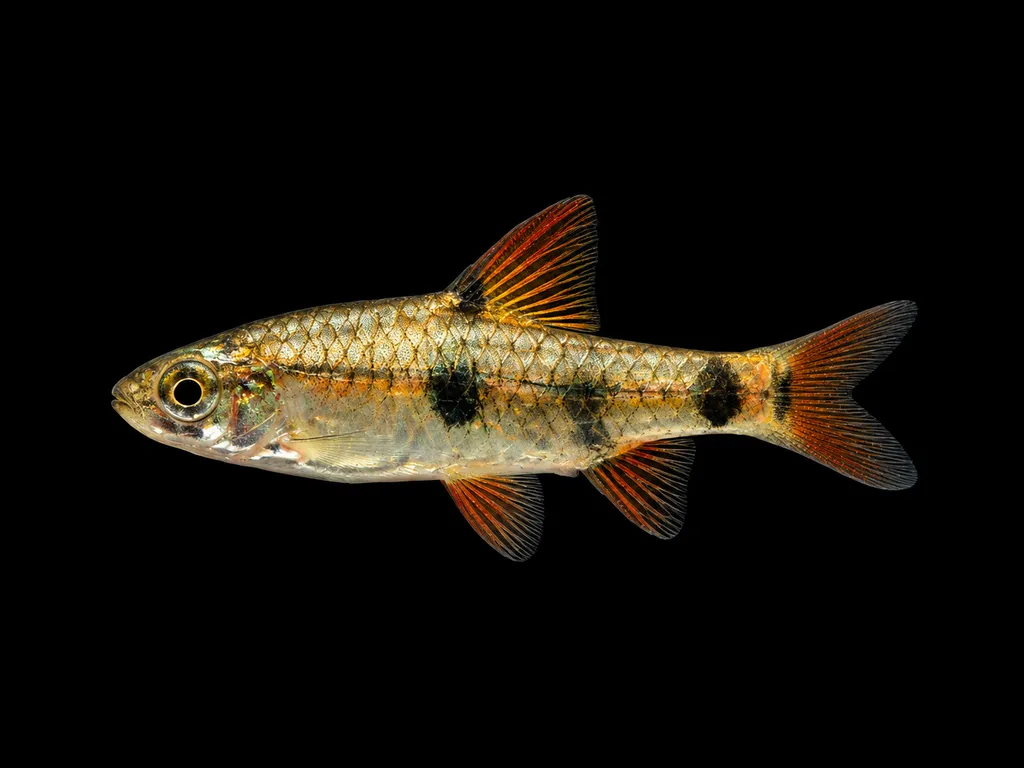 1.6 in (4 cm)20 gal (75 L)68–79°F (20–26°C)
Canius barb
Pethia canius
1.6 in (4 cm) · 20 gal (75 L)
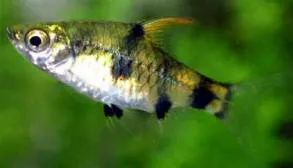 1.6 in (4 cm)20 gal (75 L)64–75°F (18–24°C)
Golden dwarf barb
Pethia gelius
1.6 in (4 cm) · 20 gal (75 L)
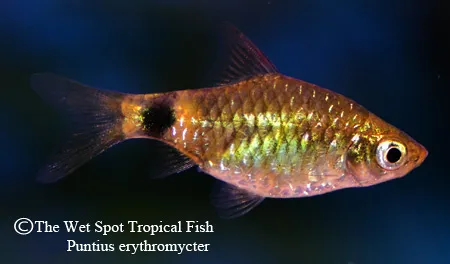 1.6 in (4 cm)14 gal (54 L)72–79°F (22–26°C)
Redlip barb
Pethia erythromycter
1.6 in (4 cm) · 14 gal (54 L)
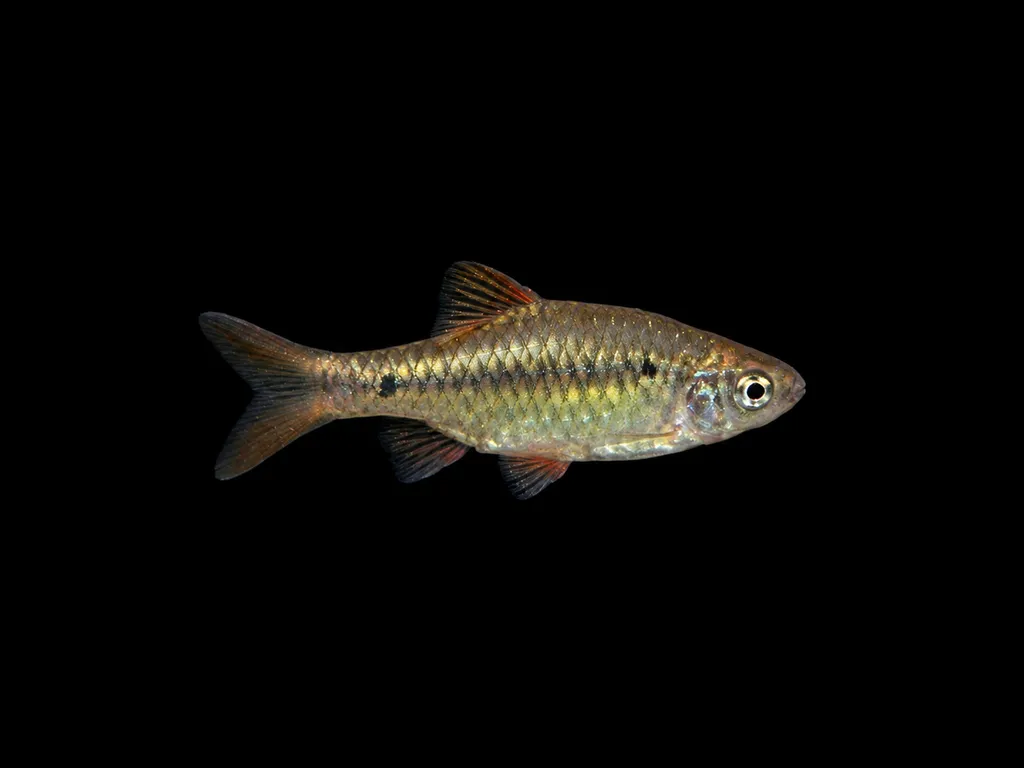 1.8 in (4.5 cm)14 gal (54 L)68–77°F (20–25°C)
Manipur barb
Pethia manipurensis
1.8 in (4.5 cm) · 14 gal (54 L)
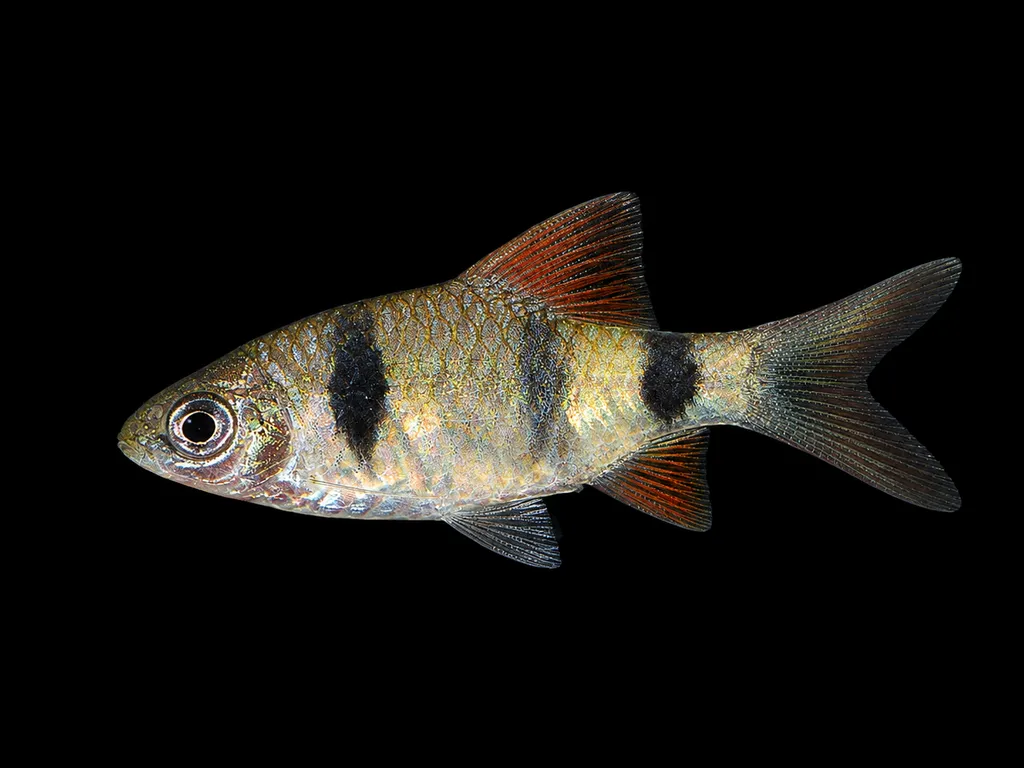 1.8 in (4.5 cm)14 gal (54 L)68–77°F (20–25°C)
Narayan barb
Pethia narayani
1.8 in (4.5 cm) · 14 gal (54 L)
 1.8 in (4.5 cm)20 gal (75 L)61–77°F (16–25°C)
Odessa barb
Pethia padamya
1.8 in (4.5 cm) · 20 gal (75 L)