Redlip barb
Pethia erythromycter
Also known as Red mustache barb, Red lipstick barb
FreshwaterFish
Care at a glance
- Temperature
- 72–79°F
- 22–26°C
- pH
- 6.5–7.5
- Adult size
- 1.6 in
- 4 cm
- Minimum tank
- 14 gal
- 54 L
- Temperament
- Peaceful
- Social behavior
- Schooling
- Swim level
- Middle
- Difficulty
- Easy
- Breeding
- Egg scatterer · Medium
- Rarity
- Rare
- Family
- Cyprinidae
- Origin
- Irrawaddy basin, Myanmar
Overview
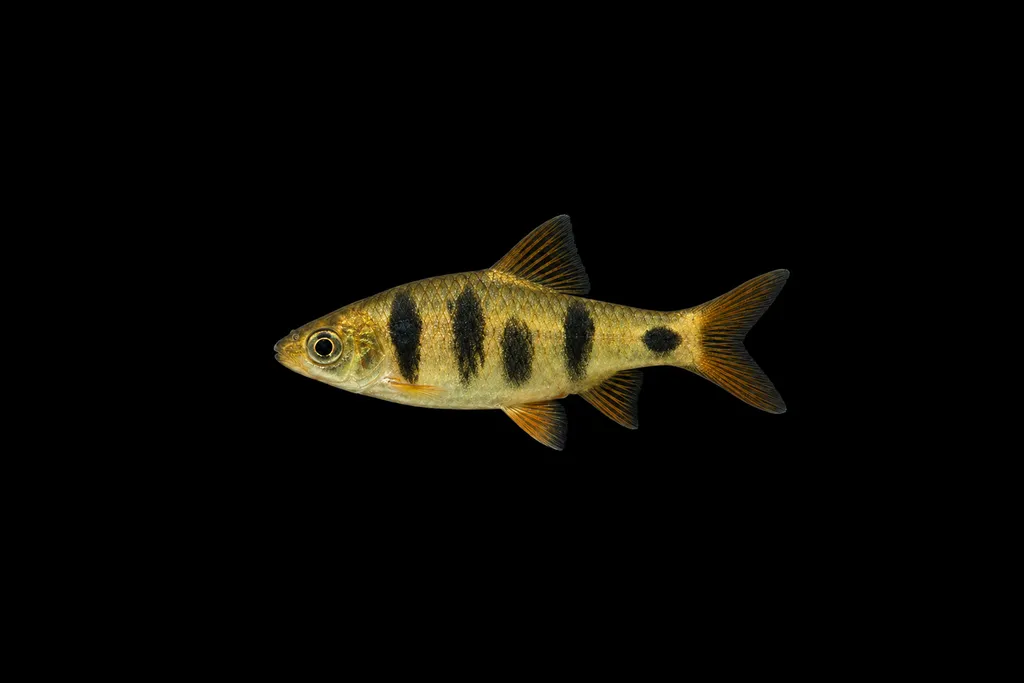
The redlip barb is a dwarf barb that shoals in the middle water of a well-planted tank. It is easy to keep.
Did you know
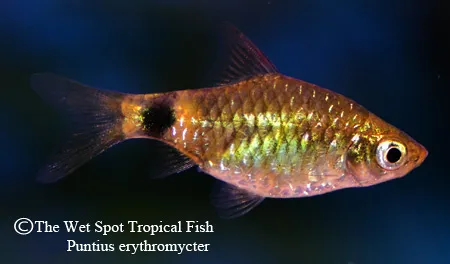
The redlip barb takes both its common and scientific names from the male's bright red nose. Erythromycter means red nose, from the Greek words for red and for snout.
Caring for the redlip barb
Keep redlip barbs in a group of eight or more. Males then spend their time displaying to each other and color up far better than lone fish. A modest planted tank of 14 gal (54 L) is enough for a good-sized group.
Give them a densely planted tank with fine substrate, leaf litter or wood, and calm to moderate flow. Keep the water at 72 to 79°F (22 to 26°C) and a pH of 6.5 to 7.5. Soft, clean water and cover from floating plants bring out the males' colors and encourage natural behavior.
Feed small foods they can manage, such as fine flake, micro pellets, and frozen or live daphnia, cyclops and baby brine shrimp. They are tiny and slow to the food, so avoid fast or greedy tank mates. They are peaceful and mix well with other small, gentle species, such as rasboras, small tetras, and dwarf shrimp too large to be eaten.
Breeding males grow a scarlet snout with small white tubercles. These little breeding bumps are unusual on a barb this small. The redlip barb is an egg scatterer that lays among fine plants, and the adults will eat their own eggs if left in. Breeding it is moderately achievable.
Good to know
Pethia erythromycter is a small carp-family fish in the Cyprinidae, described by Kullander in 2008. It is also known as the red mustache barb and the red lipstick barb.
In the wild
The redlip barb comes from streams and their margins in the Irrawaddy basin of Kachin, in far northern Myanmar. It favors clear, gently flowing water.
Weekly picks
Tank mates
The redlip barb is a peaceful, schooling species that keeps to the middle. These picks share a community profile with it, are safe together in both directions, and overlap on water type, temperature and pH.
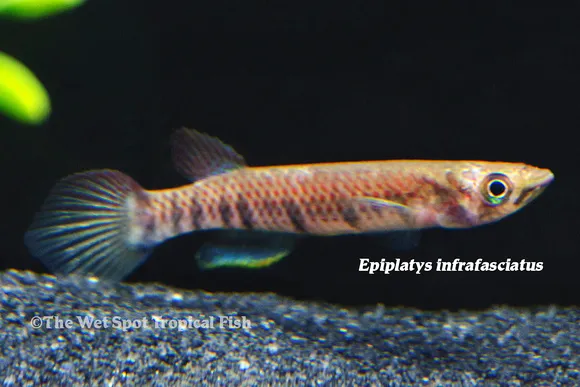
Infrafasciatus killifish
Epiplatys infrafasciatus
Freshwater2.4 in (6 cm) · 14 gal (54 L)68–77°F (20–25°C)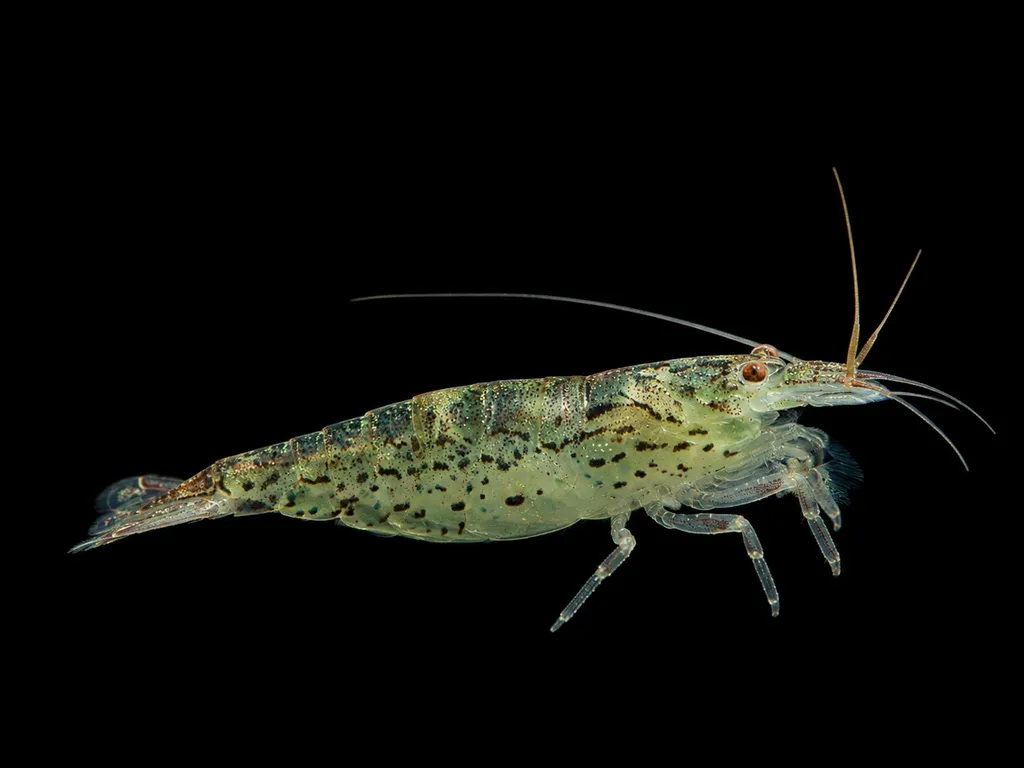
Green lace shrimp
Atyoida pilipes
Freshwater2.8 in (7 cm) · 14 gal (54 L)73–82°F (23–28°C)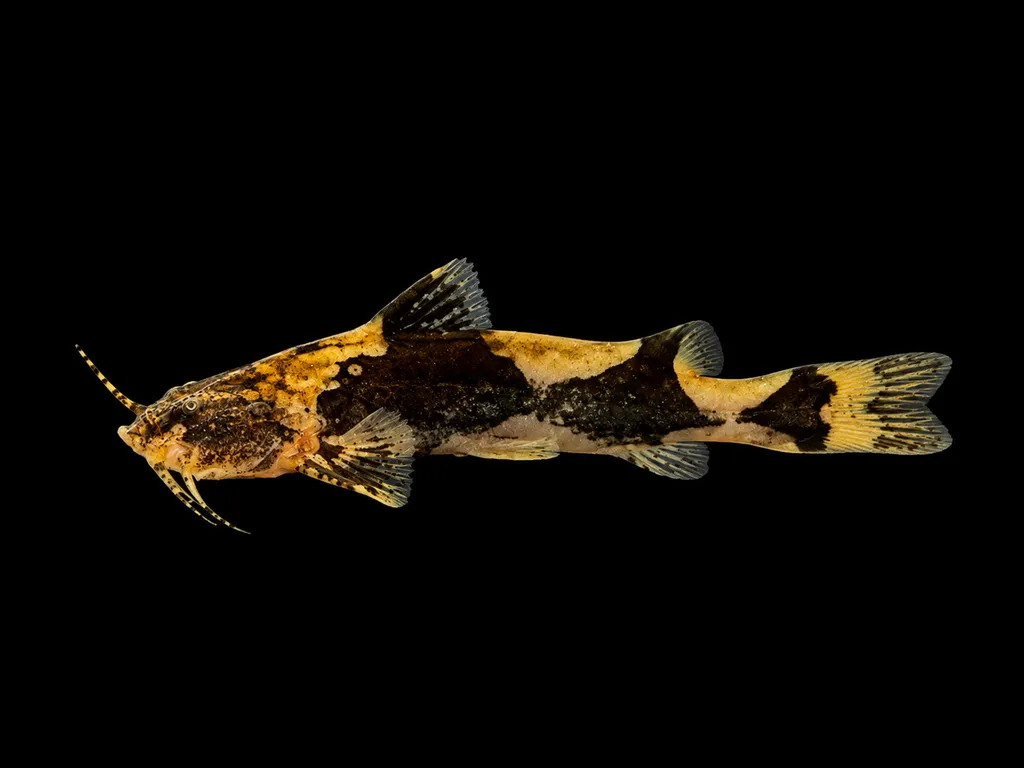
Portellus bee catfish
Akysis portellus
Freshwater1.6 in (4 cm) · 14 gal (54 L)72–79°F (22–26°C)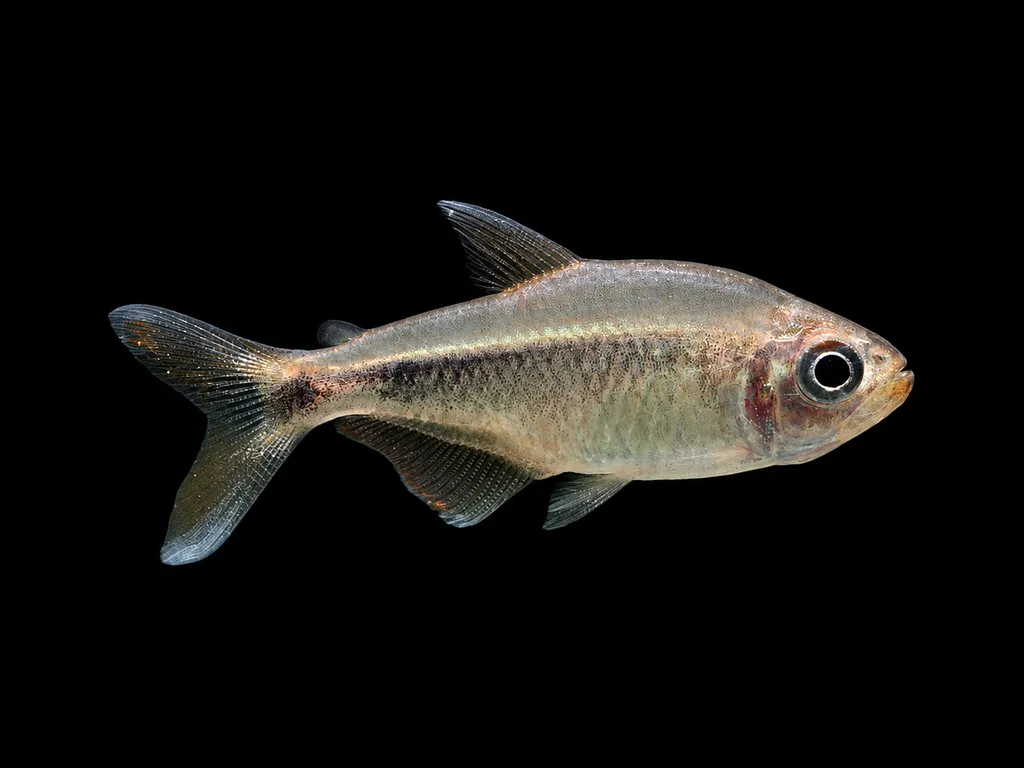
Hansen's hasemania
Hasemania hanseni
Freshwater1.6 in (4 cm) · 14 gal (54 L)72–81°F (22–27°C)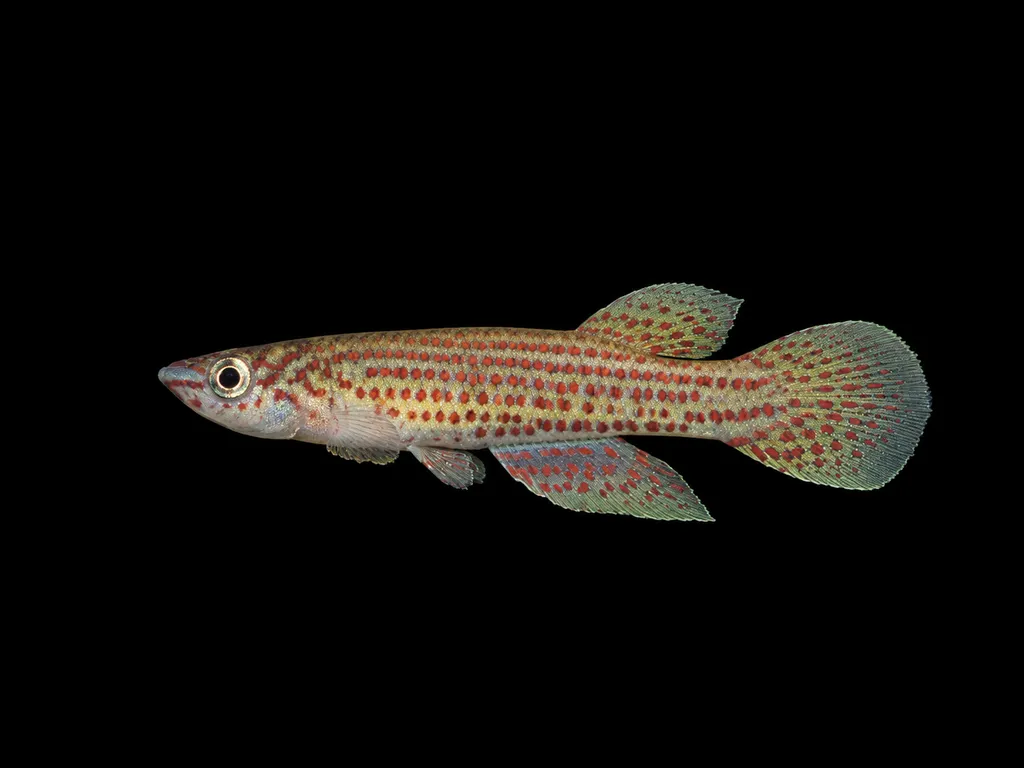
Singa panchax
Epiplatys singa
Freshwater2.4 in (6 cm) · 14 gal (54 L)68–77°F (20–25°C)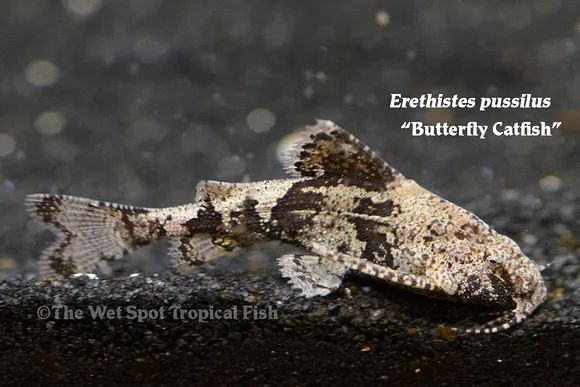
Butterfly moth catfish
Erethistes pusillus
Freshwater2 in (5 cm) · 14 gal (54 L)68–79°F (20–26°C)
Common questions
What size tank does a redlip barb need?
A redlip barb needs at least 14 gal (54 L). It spends most of its time in the middle.
What temperature and pH does a redlip barb need?
A redlip barb is comfortable at 72–79°F (22–26°C) with a pH of 6.5–7.5.
What does a redlip barb eat?
A redlip barb eats small foods, such as fine flake, micro pellets, and frozen or live daphnia, cyclops and baby brine shrimp.
How big does a redlip barb get?
An adult redlip barb reaches about 1.6 in (4 cm).
Does a redlip barb need a group?
Yes. A redlip barb is a schooling species and should be kept in a group, not singly.
How can you tell a male redlip barb from a female?
Males in breeding condition have a scarlet snout with small white tubercles.
How does a redlip barb breed?
Redlip barbs scatter their eggs among fine plants, and the adults will eat the eggs if left in. Breeding them is moderately achievable.
Related species
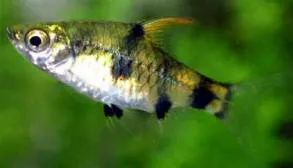
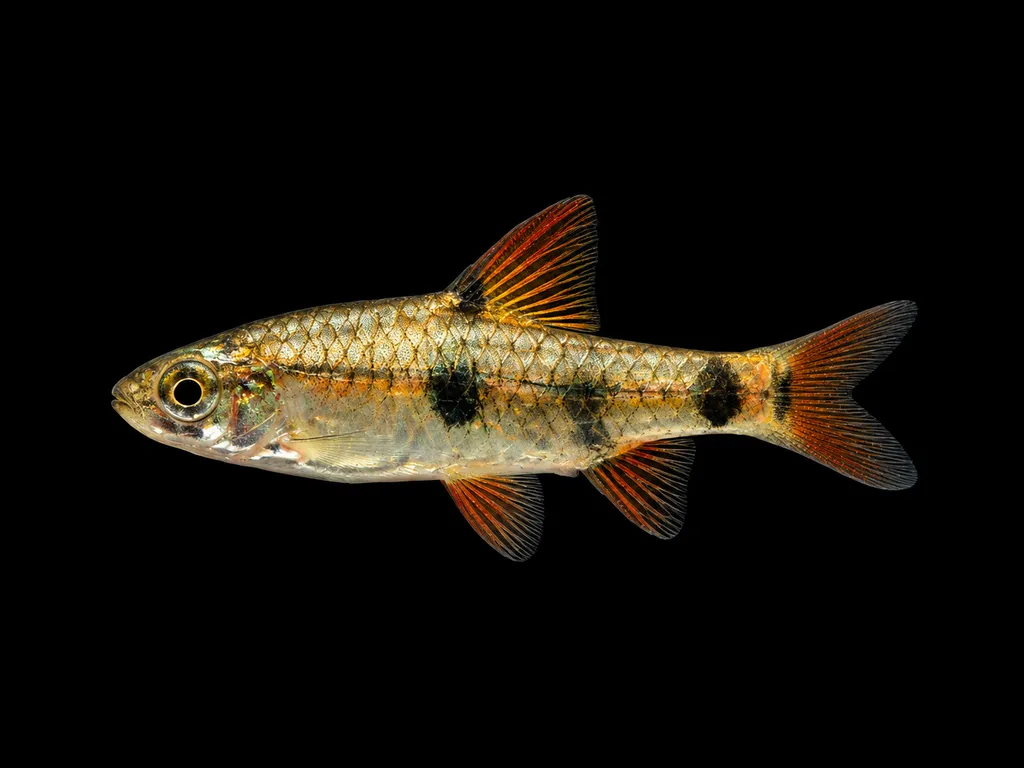 1.6 in (4 cm)20 gal (75 L)68–79°F (20–26°C)
Canius barb
Pethia canius
1.6 in (4 cm) · 20 gal (75 L)
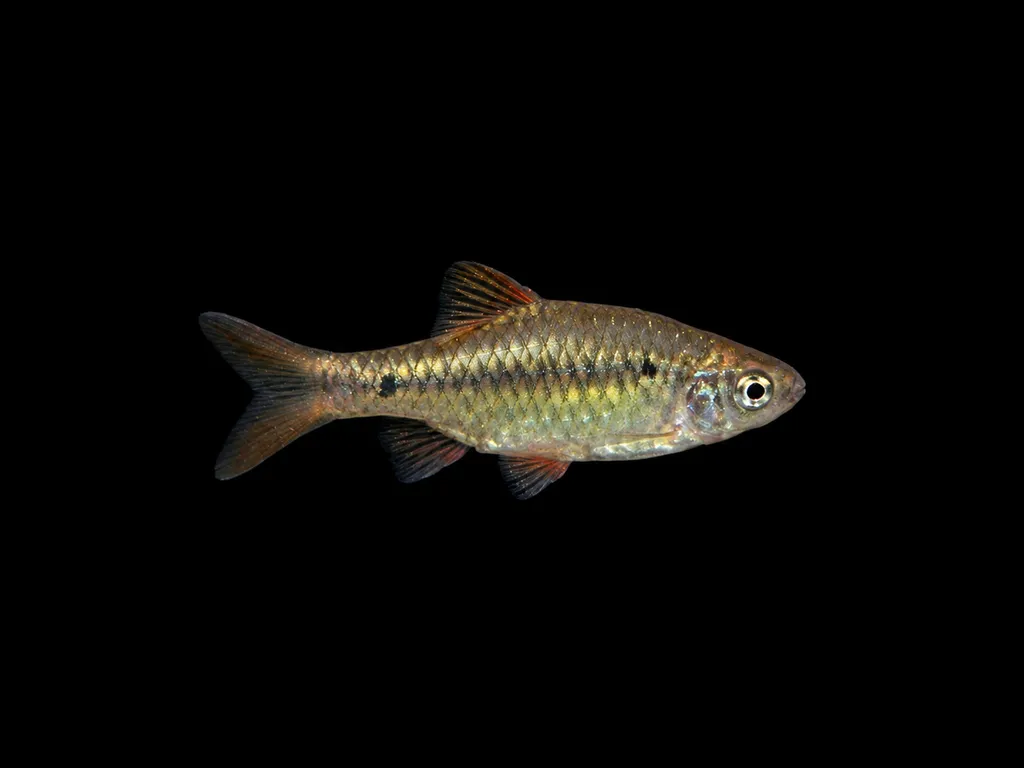
 1.6 in (4 cm)20 gal (75 L)64–75°F (18–24°C)
Golden dwarf barb
Pethia gelius
1.6 in (4 cm) · 20 gal (75 L)
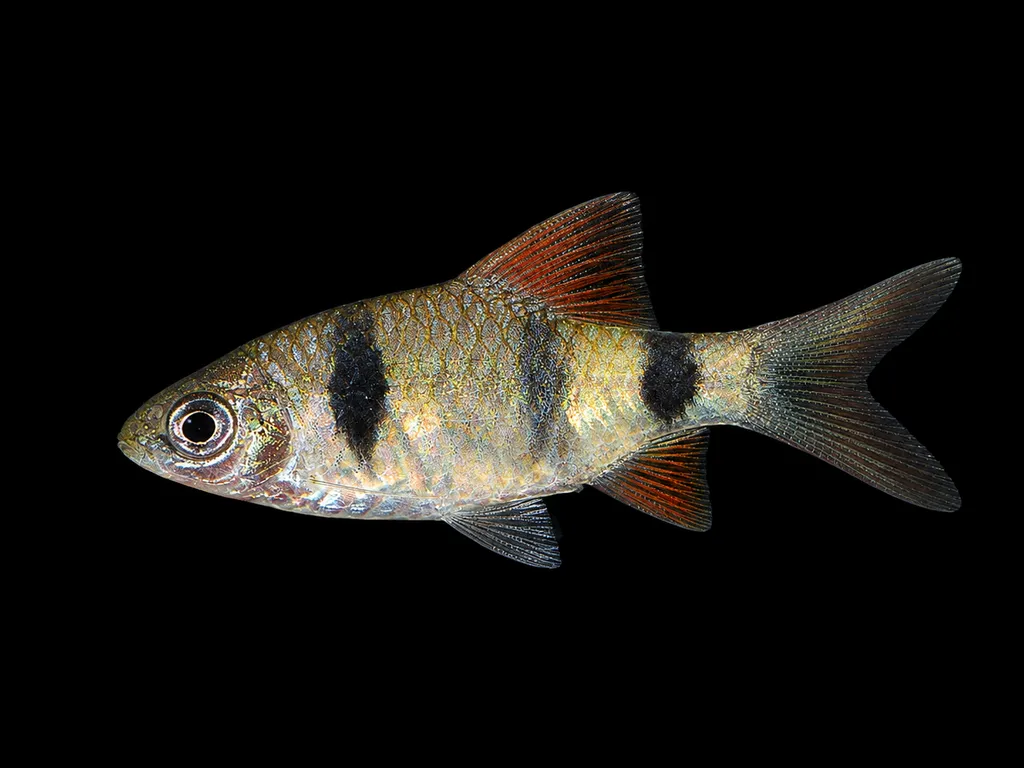
 1.8 in (4.5 cm)14 gal (54 L)68–77°F (20–25°C)
Manipur barb
Pethia manipurensis
1.8 in (4.5 cm) · 14 gal (54 L)
 1.8 in (4.5 cm)14 gal (54 L)68–77°F (20–25°C)
Narayan barb
Pethia narayani
1.8 in (4.5 cm) · 14 gal (54 L)
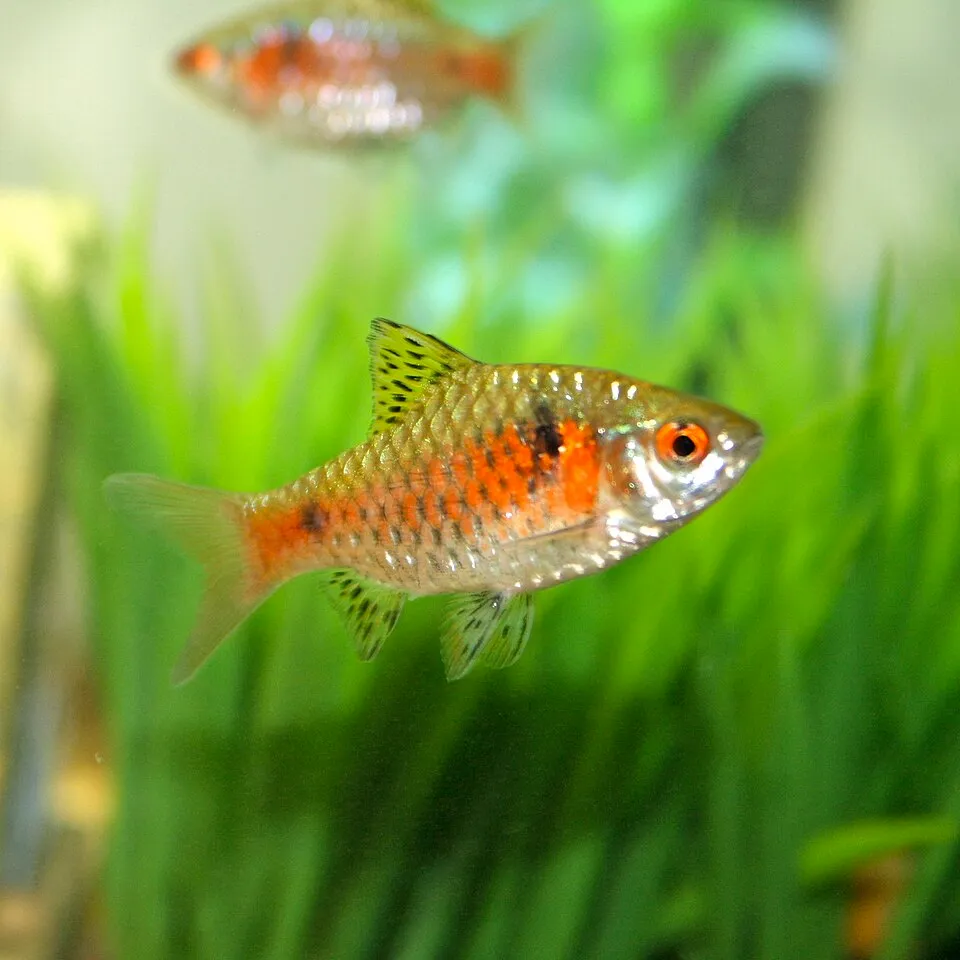 1.8 in (4.5 cm)20 gal (75 L)61–77°F (16–25°C)
Odessa barb
Pethia padamya
1.8 in (4.5 cm) · 20 gal (75 L)
 1.8 in (4.5 cm)14 gal (54 L)68–77°F (20–25°C)
Tiantian barb
Pethia tiantian
1.8 in (4.5 cm) · 14 gal (54 L)