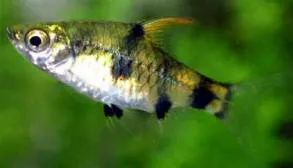
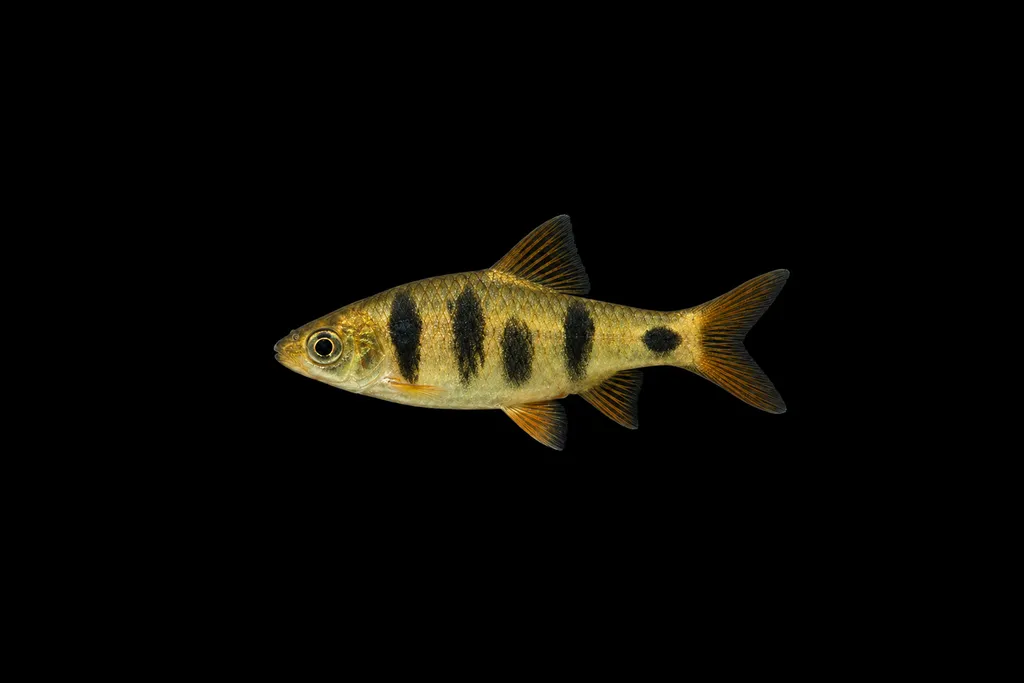
Golden dwarf barb
Pethia gelius
Also known as Gold Clown Barb
FreshwaterFish
Care at a glance
- Temperature
- 64–75°F
- 18–24°C
- pH
- 6.0–7.0
- Adult size
- 1.6 in
- 4 cm
- Minimum tank
- 20 gal
- 75 L
- Temperament
- Peaceful
- Social behavior
- Schooling
- Swim level
- Middle
- Difficulty
- Easy
- Breeding
- Medium
- Rarity
- Common
- Family
- Cyprinidae
- Origin
- South Asia: Ganges and Brahmaputra drainages of northern India, Nepal, and Bangladesh
Overview
Keep them in a group of at least 8 to 10, in a tank of 75 liters or up. They are peaceful but timid, sitting in the middle of the water column and schooling tightly when nervous. Loners hide and lose their color, so the group matters. This is a cool-water species that does well from 18 to 24 C and arguably prefers the lower end, so a heater often is not needed in a temperate room, which makes them a good fit for an unheated coldwater community. Water should be soft and run slightly acidic to neutral, around pH 6 to 7. Feed small flakes, micro pellets, and frozen treats like daphnia or baby brine. Keep tankmates small and gentle, since boisterous or larger fish will outcompete these timid barbs at feeding time.
In the wild
Golden dwarf barbs come from slow, plant-choked stretches of the Ganges and Brahmaputra drainages across northern India, Nepal, and Bangladesh. These are cool, soft waters that run on the acidic to neutral side. To match that, give them a densely planted tank with driftwood, a soft sandy or silty substrate, and gentle flow. They settle best under subdued, dappled light, so floating plants or a few tall stems to break up the surface help a lot. A footprint of about 60 by 30 cm, roughly 75 liters, gives a small group room to school. Keep the water between 18 and 24 C with a pH of 6 to 7.
Good to know
This is a small cyprinid in the family Cyprinidae, reaching about 4 cm as a kept adult. FishBase lists a touch larger, but most care sources put it near 3.5 to 4 cm, and that is what you will see in the tank. It is an egg scatterer with no parental care, and a healthy adult lives a few years. Most fish in the trade are commercially bred.
Did you know
Despite being a barb, this fish does best in cool water and often does not want a heater at all, which is unusual in the tropical end of the hobby. Drop the temperature toward the low end of its range and a settled group tends to color up rather than slow down, the opposite of what most aquarium fish do.
Weekly picks
Tank mates
Golden dwarf barb is a peaceful, schooling species that keeps to the middle. These picks share a community profile with it, are safe together in both directions, and overlap on water type, temperature and pH.
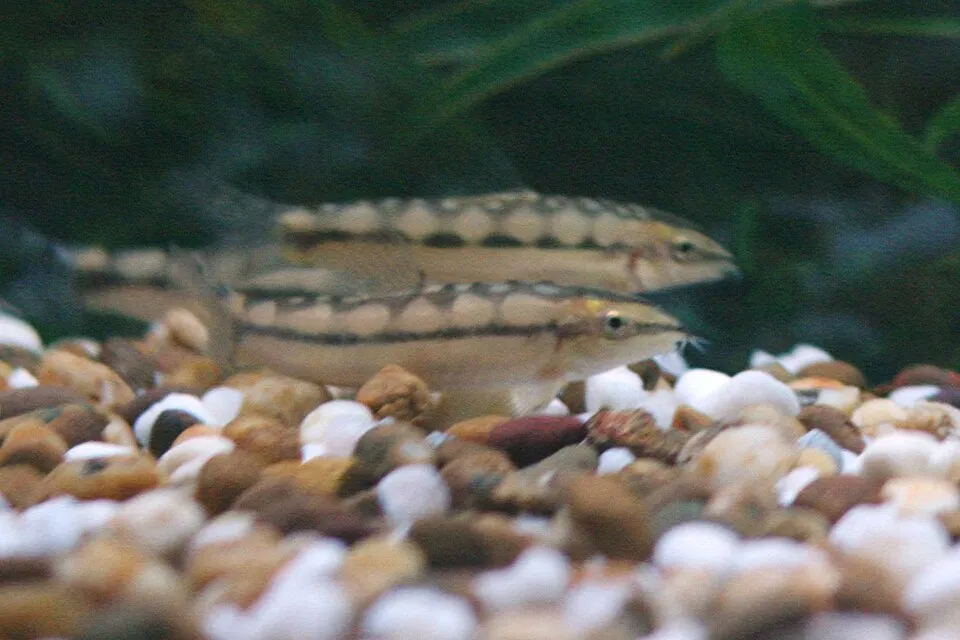
Dwarf botia
Ambastaia sidthimunki
Freshwater2.4 in (6 cm) · 20 gal (75 L)68–86°F (20–30°C)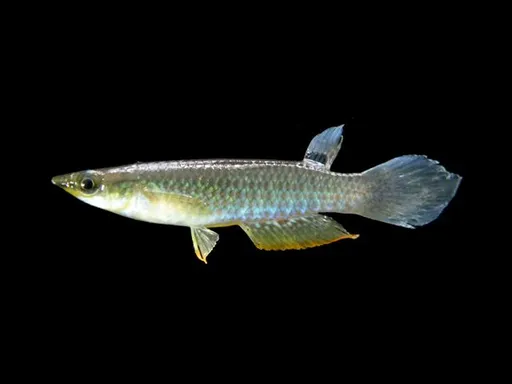
Blue panchax
Aplocheilus panchax
Freshwater3.5 in (9 cm) · 20 gal (75 L)72–82°F (22–28°C)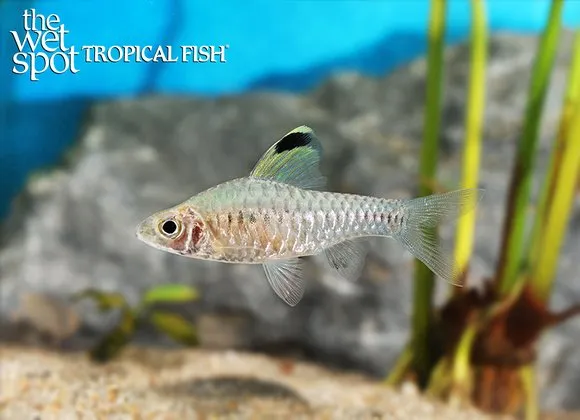
Cosuatis barb
Oreichthys cosuatis
Freshwater3.1 in (8 cm) · 20 gal (75 L)68–79°F (20–26°C)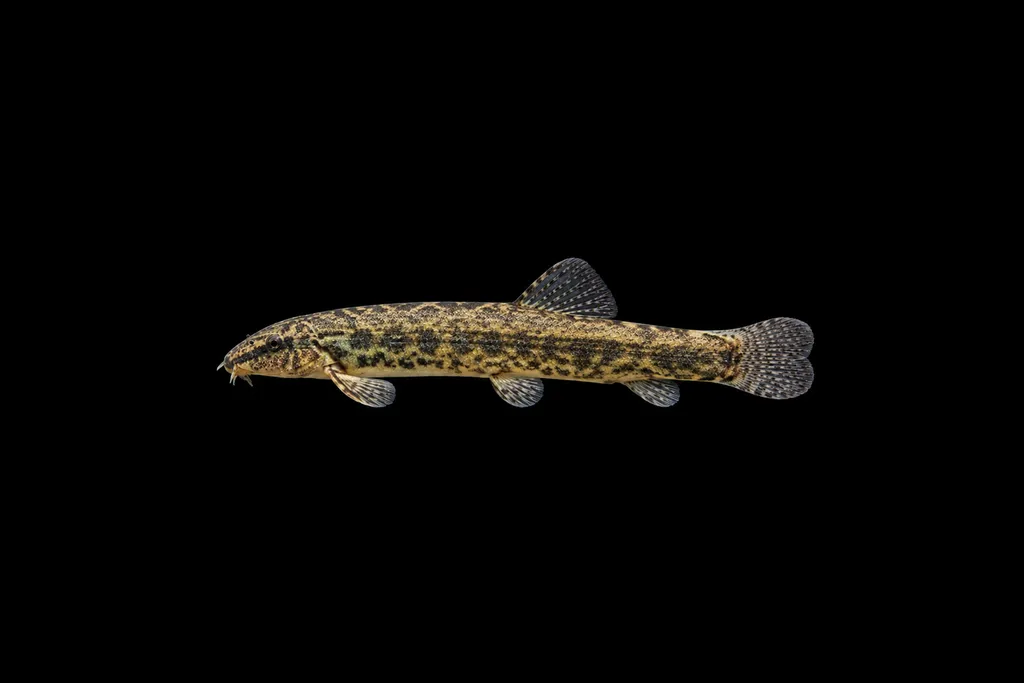
Nilgiri loach
Schistura nilgiriensis
Freshwater2.4 in (6 cm) · 20 gal (75 L)64–75°F (18–24°C)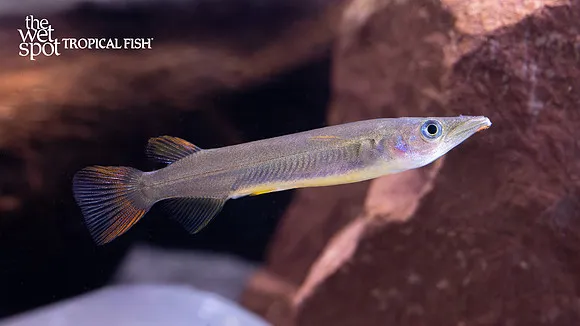
Rex halfbeak
Nomorhamphus rex
Freshwater2.2 in (5.5 cm) · 20 gal (75 L)72–79°F (22–26°C)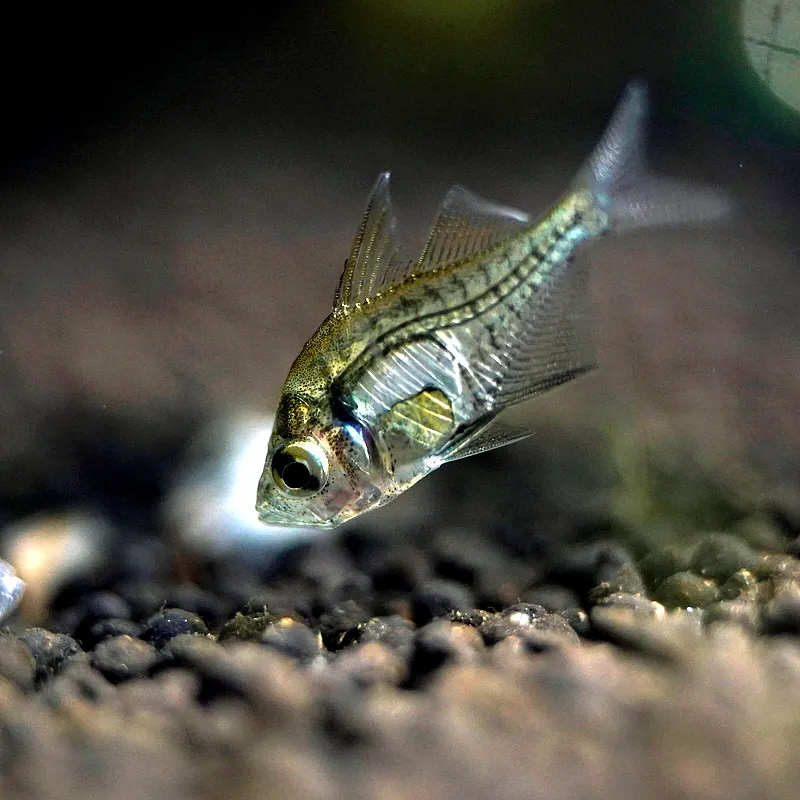
Indian glassy fish
Parambassis ranga
Freshwater3.1 in (8 cm) · 20 gal (75 L)68–86°F (20–30°C)
Common questions
What size tank does a Golden dwarf barb need?
A Golden dwarf barb needs at least 20 gal (75 L). It spends most of its time in the middle.
What temperature and pH does a Golden dwarf barb need?
A Golden dwarf barb is comfortable at 64–75°F (18–24°C) with a pH of 6.0–7.0.
How big does a Golden dwarf barb get?
An adult Golden dwarf barb reaches about 1.6 in (4 cm).
Does a Golden dwarf barb need a group?
Yes. A Golden dwarf barb is a schooling species and should be kept in a group, not singly.
Related species
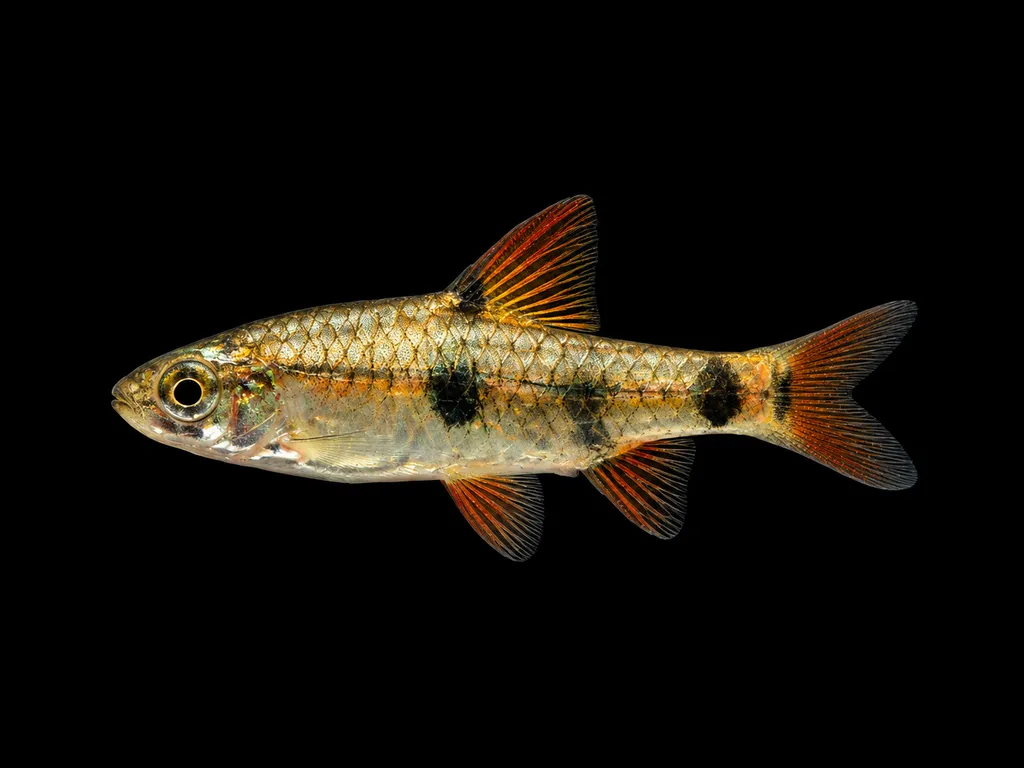 1.6 in (4 cm)20 gal (75 L)68–79°F (20–26°C)
Canius barb
Pethia canius
1.6 in (4 cm) · 20 gal (75 L)
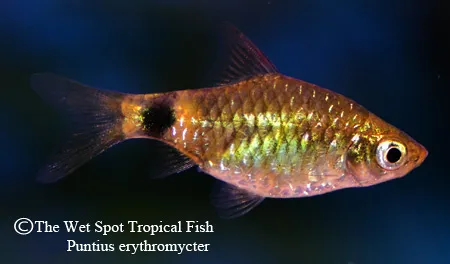 1.6 in (4 cm)14 gal (54 L)72–79°F (22–26°C)
Redlip barb
Pethia erythromycter
1.6 in (4 cm) · 14 gal (54 L)
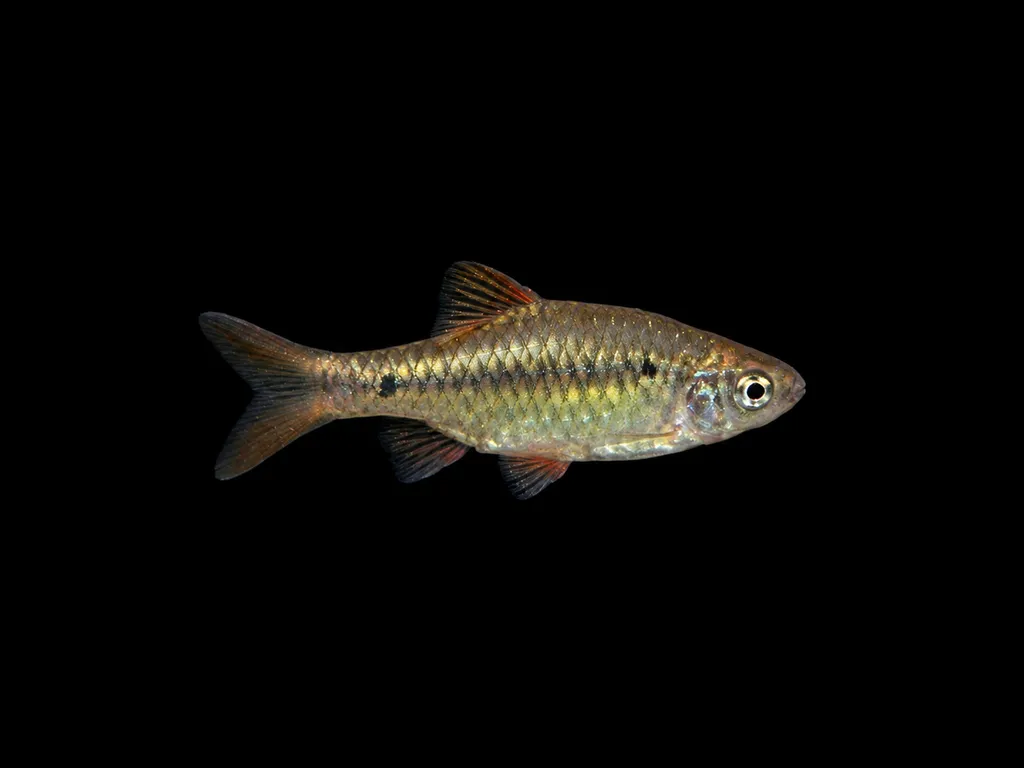 1.8 in (4.5 cm)14 gal (54 L)68–77°F (20–25°C)
Manipur barb
Pethia manipurensis
1.8 in (4.5 cm) · 14 gal (54 L)
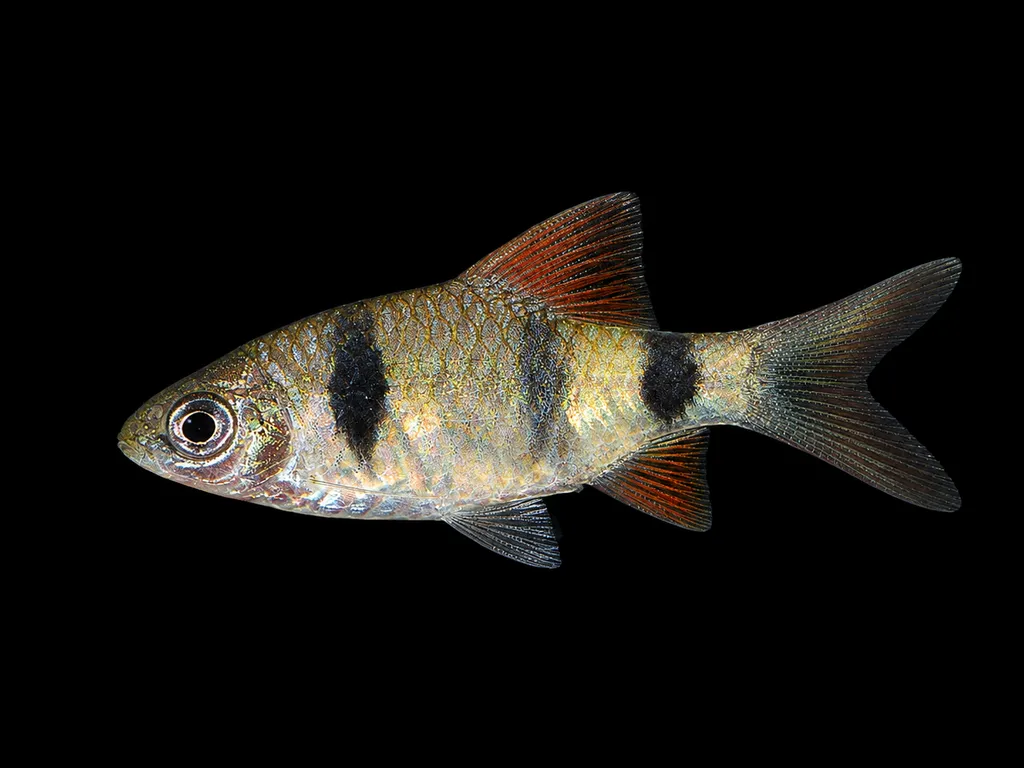 1.8 in (4.5 cm)14 gal (54 L)68–77°F (20–25°C)
Narayan barb
Pethia narayani
1.8 in (4.5 cm) · 14 gal (54 L)
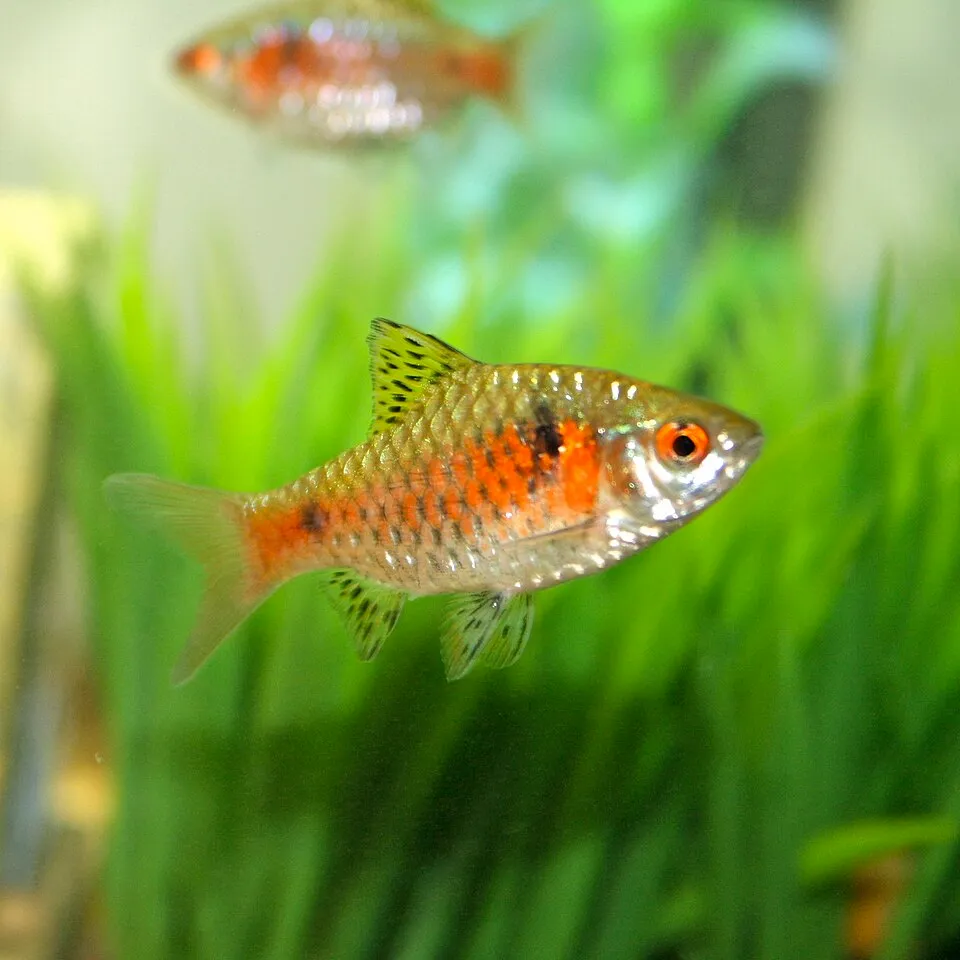 1.8 in (4.5 cm)20 gal (75 L)61–77°F (16–25°C)
Odessa barb
Pethia padamya
1.8 in (4.5 cm) · 20 gal (75 L)
 1.8 in (4.5 cm)14 gal (54 L)68–77°F (20–25°C)
Tiantian barb
Pethia tiantian
1.8 in (4.5 cm) · 14 gal (54 L)