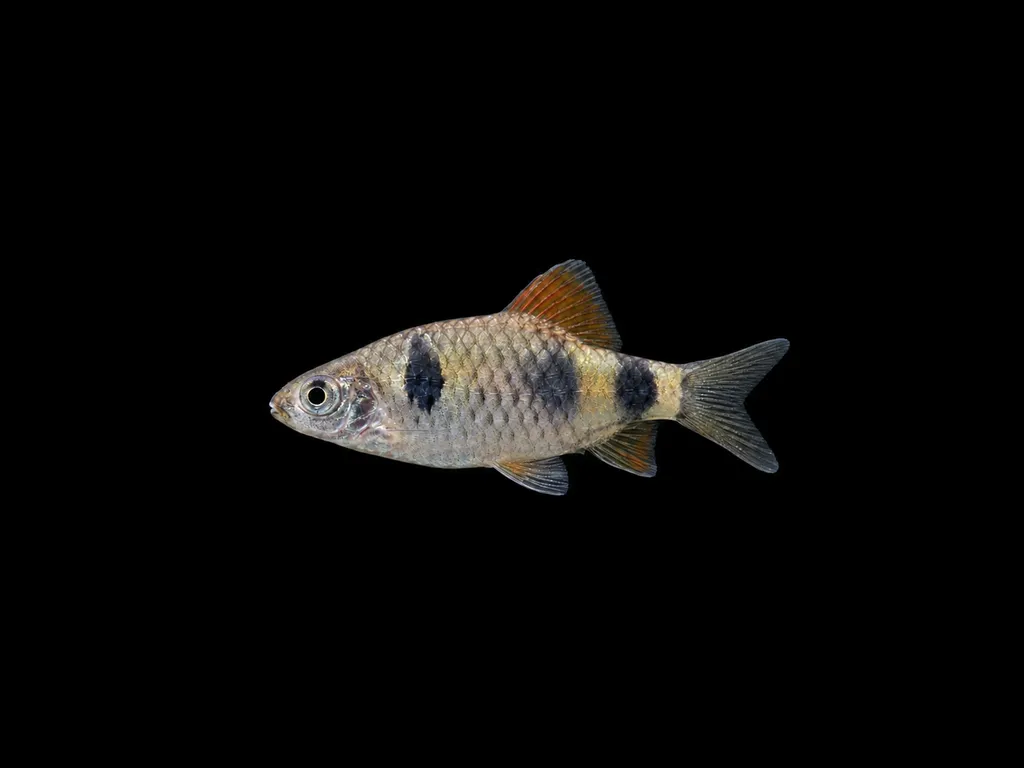
Tiantian barb
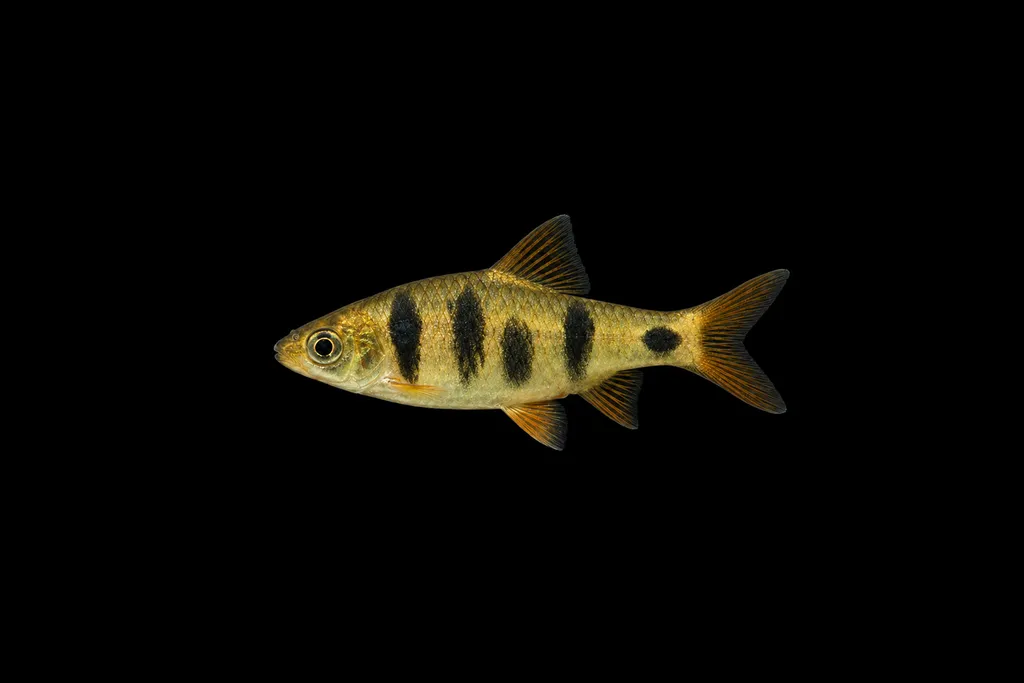
Pethia tiantian
Also known as Puntius tiantian, Burmese bumble bee barb
FreshwaterFish
Care at a glance
- Temperature
- 68–77°F
- 20–25°C
- pH
- 6.0–7.2
- Adult size
- 1.8 in
- 4.5 cm
- Minimum tank
- 14 gal
- 54 L
- Temperament
- Peaceful
- Social behavior
- Schooling
- Swim level
- Middle
- Difficulty
- Medium
- Breeding
- No record
- Rarity
- Rare
- Family
- Cyprinidae
- Origin
- Upper Irrawaddy near Putao, northern Myanmar
Overview
The Tiantian barb is a peaceful nano shoaler with a cool streak, for the middle water of a planted tank. It needs a little experience to keep well.
Did you know
The Tiantian barb was described only in 2005. It is one of a cluster of small barbs that scientists found in remote streams where India, Myanmar and Tibet meet. New fishes still turn up there.
Caring for the Tiantian barb
Keep Tiantian barbs in a group of six or more, in a well-planted tank with open swimming space. A tank of 14 gal (54 L) is enough for a good group. Add fine substrate, some wood or leaf litter, and gentle flow.
Keep the water on the cooler side, at 68 to 77°F (20 to 25°C) and a pH of 6.0 to 7.2. Clean, well-oxygenated water suits this small mountain fish. Being tiny, it needs small foods such as fine flake, micro pellets, and frozen or live daphnia, cyclops and baby brine shrimp.
The Tiantian barb is peaceful and needs calm company. It pairs well with other small, cool-tolerant hill-stream fish such as dario and small loaches. Avoid fast, greedy tank mates that would beat it to the food.
Aquarium breeding is not on record. As a small Pethia, it is presumably an egg scatterer that gives no parental care.
Good to know
The Tiantian barb, Pethia tiantian, is a tiny member of the carp family, Cyprinidae. Kullander and Fang described it from hill streams in the far north of its range. Its doubled, sing-song name is unusual among barbs.
In the wild
The Tiantian barb comes from clear, cool hill streams of the far eastern Himalaya. Its home is the Putao region of northern Myanmar, close to the northeast India border.
Weekly picks
Tank mates
The Tiantian barb is a peaceful, schooling species that keeps to the middle. These picks share a community profile with it, are safe together in both directions, and overlap on water type, temperature and pH.
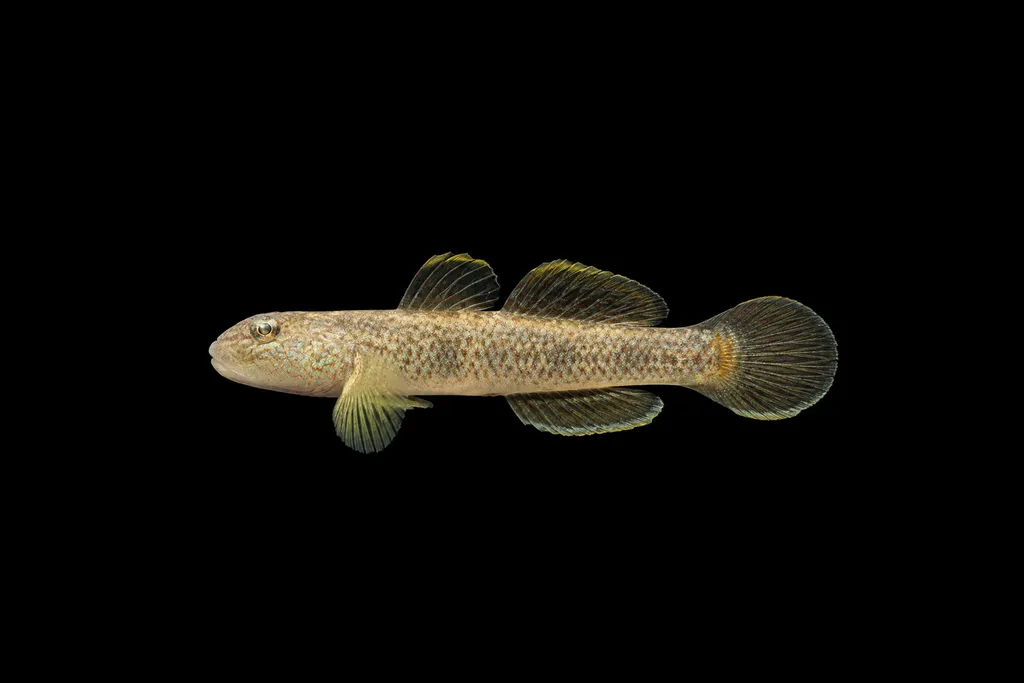
Yellow fin rhinogobius
Rhinogobius leavelli
Freshwater3.1 in (8 cm) · 14 gal (54 L)64–77°F (18–25°C)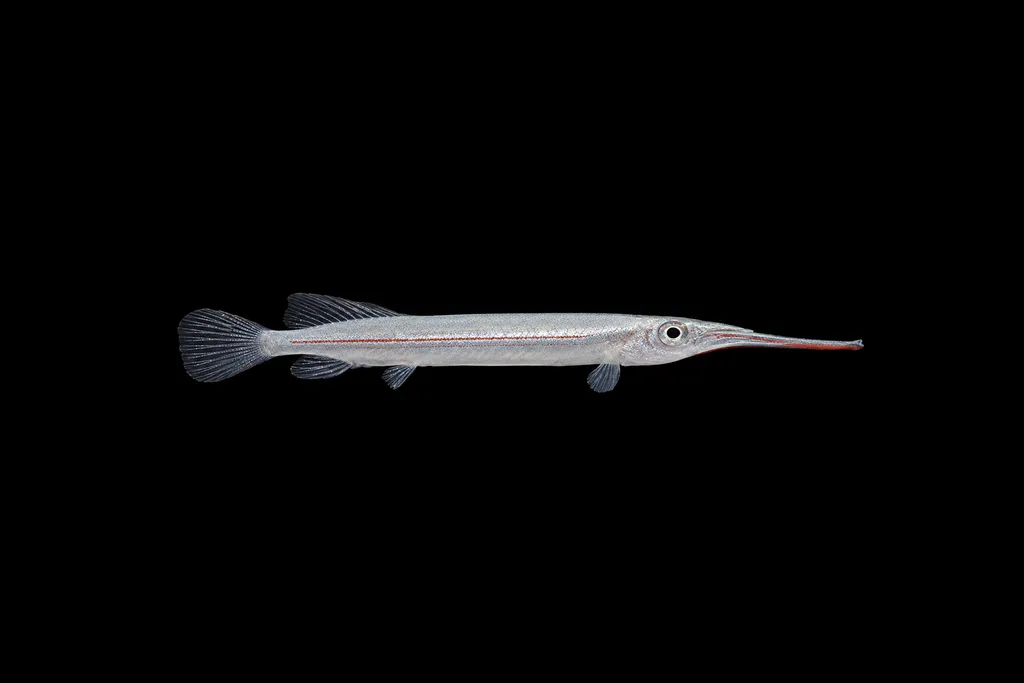
Fire halfbeak
Hemirhamphodon kapuasensis
Freshwater2.4 in (6 cm) · 14 gal (54 L)73–81°F (23–27°C)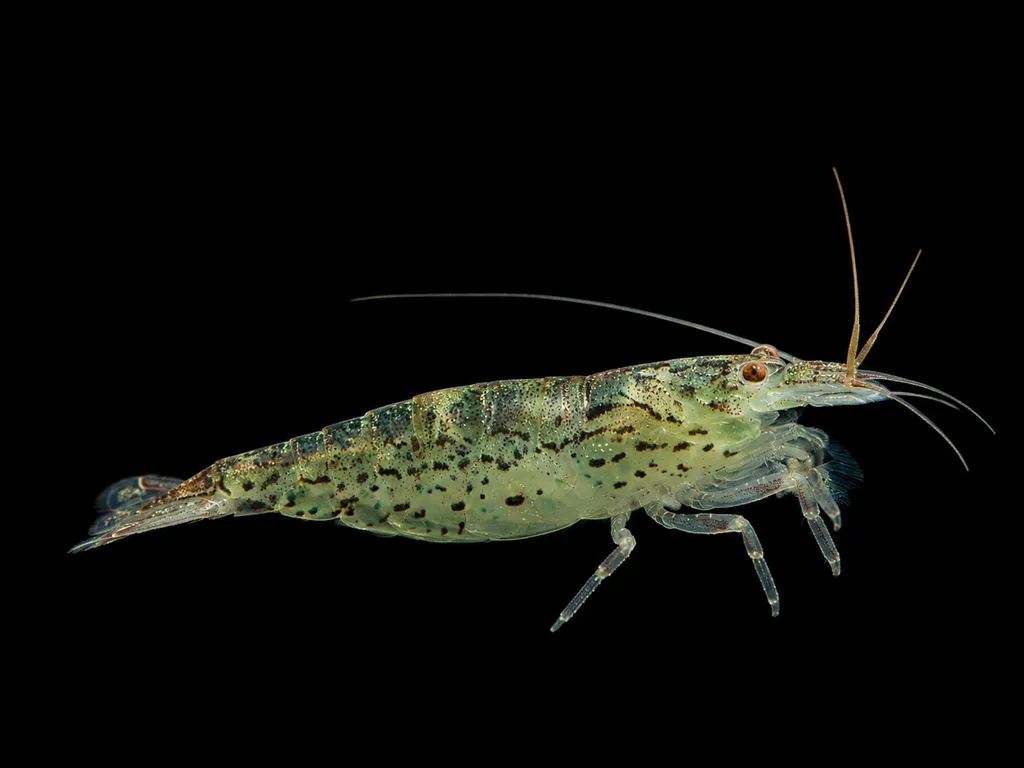
Green lace shrimp
Atyoida pilipes
Freshwater2.8 in (7 cm) · 14 gal (54 L)73–82°F (23–28°C)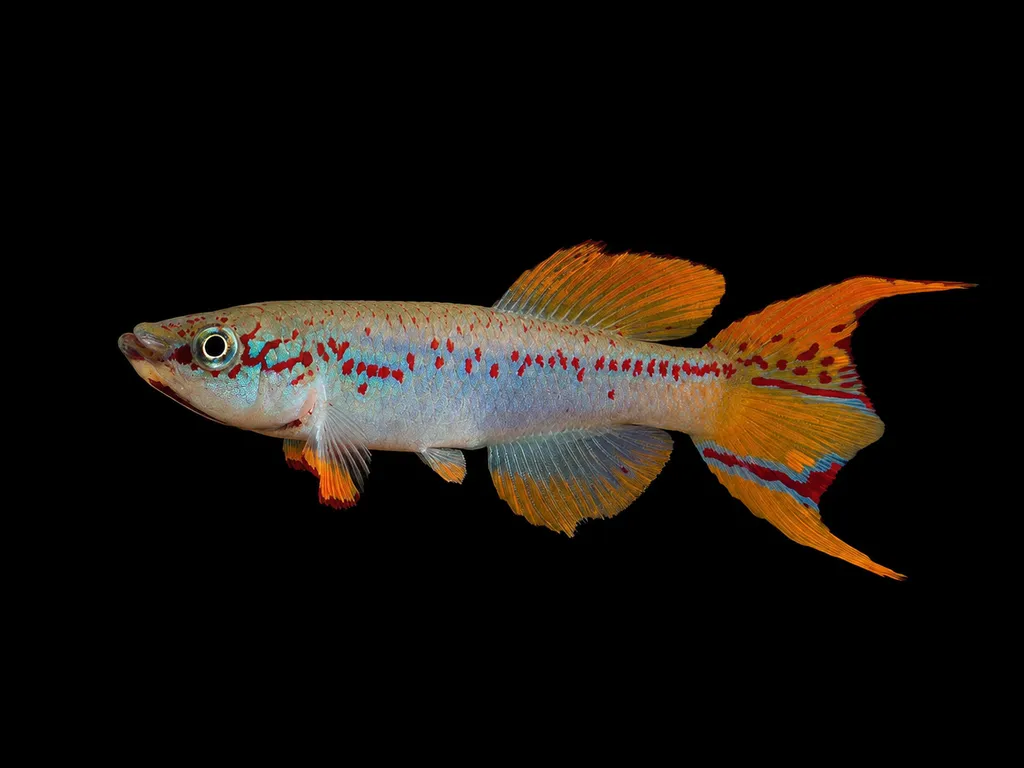
Delta killifish
Fundulopanchax deltaensis
Freshwater3.1 in (8 cm) · 14 gal (54 L)68–77°F (20–25°C)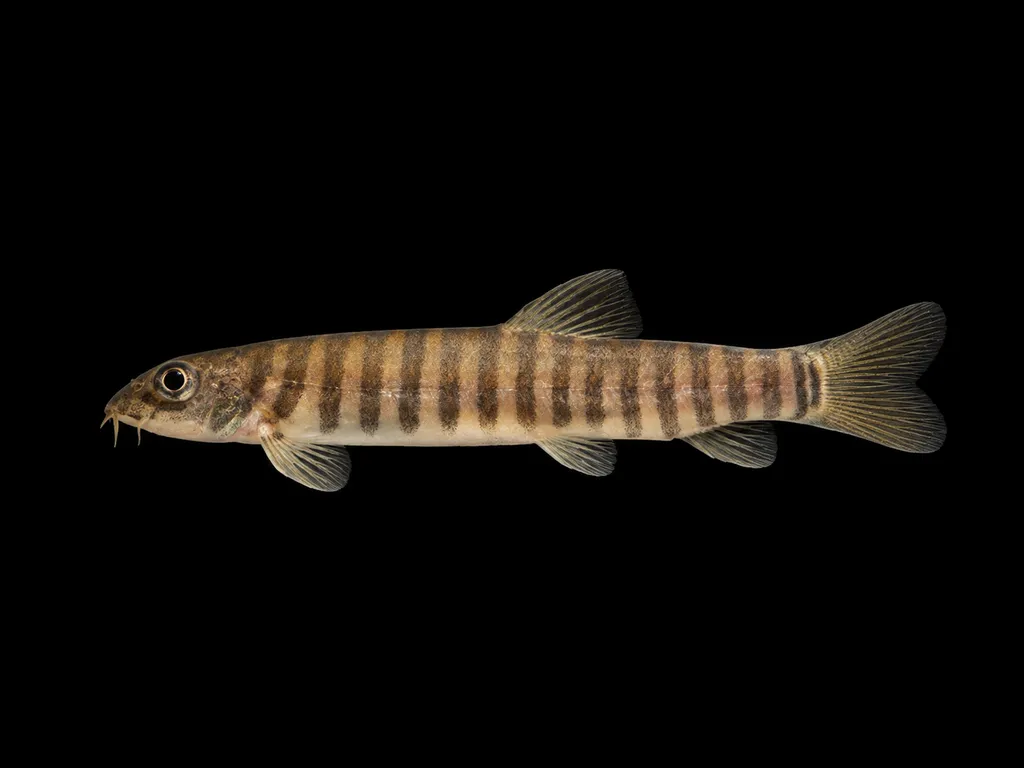
Assam banded loach
Neonoemacheilus assamensis
Freshwater1.8 in (4.5 cm) · 14 gal (54 L)68–79°F (20–26°C)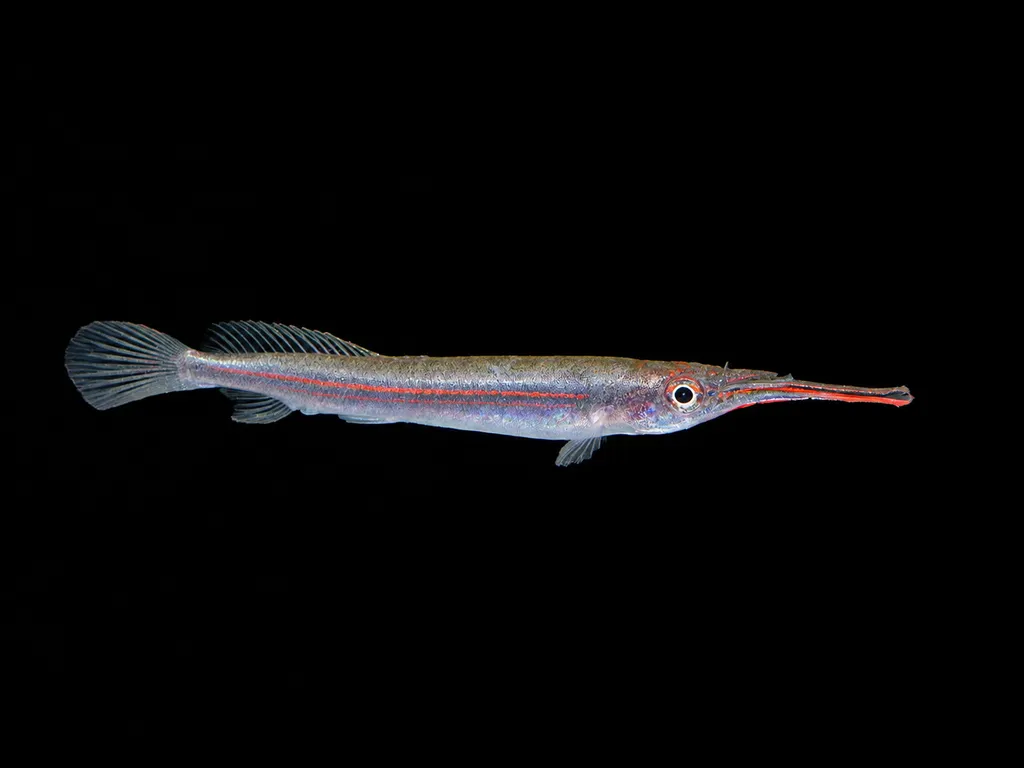
Red line halfbeak
Hemirhamphodon phaiosoma
Freshwater2.6 in (6.5 cm) · 14 gal (54 L)73–81°F (23–27°C)
Common questions
What size tank does a Tiantian barb need?
A Tiantian barb needs at least 14 gal (54 L). It spends most of its time in the middle.
What temperature and pH does a Tiantian barb need?
A Tiantian barb is comfortable at 68–77°F (20–25°C) with a pH of 6.0–7.2.
What does a Tiantian barb eat?
A Tiantian barb is tiny and needs small foods. Offer fine flake, micro pellets, and frozen or live daphnia, cyclops and baby brine shrimp.
How big does a Tiantian barb get?
An adult Tiantian barb reaches about 1.8 in (4.5 cm).
Does a Tiantian barb need a group?
Yes. A Tiantian barb is a schooling species and should be kept in a group, not singly.
How does a Tiantian barb breed?
The Tiantian barb has no aquarium breeding on record. As a small Pethia, it is presumably an egg scatterer that gives no parental care.
Related species
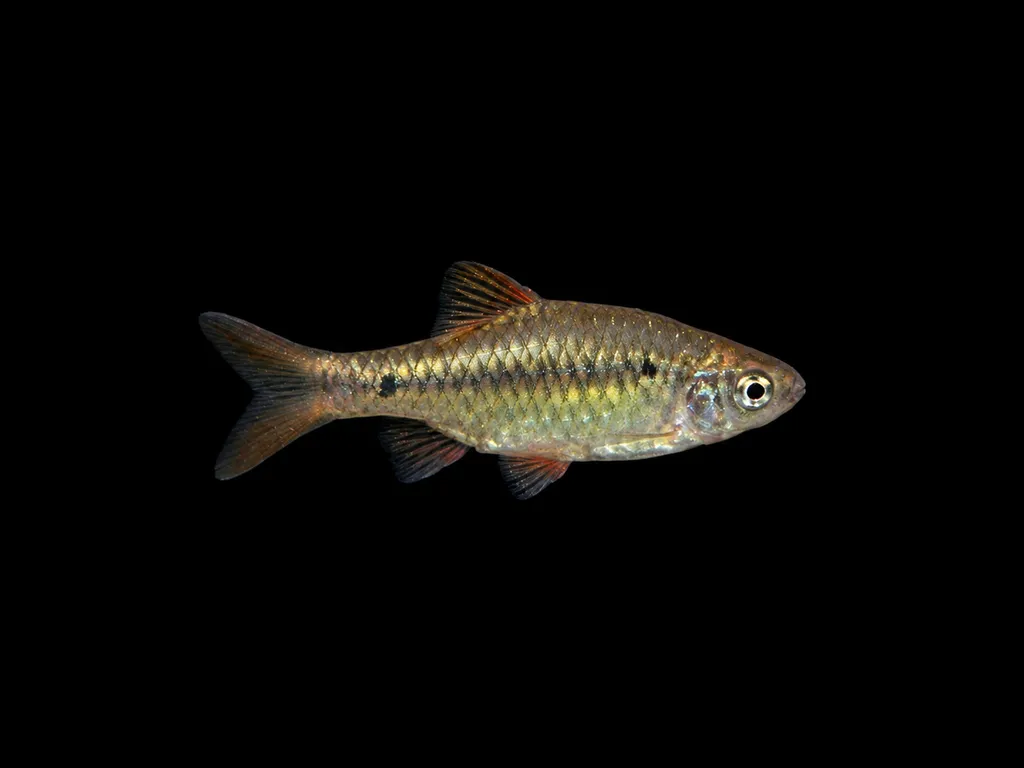 1.8 in (4.5 cm)14 gal (54 L)68–77°F (20–25°C)
Manipur barb
Pethia manipurensis
1.8 in (4.5 cm) · 14 gal (54 L)
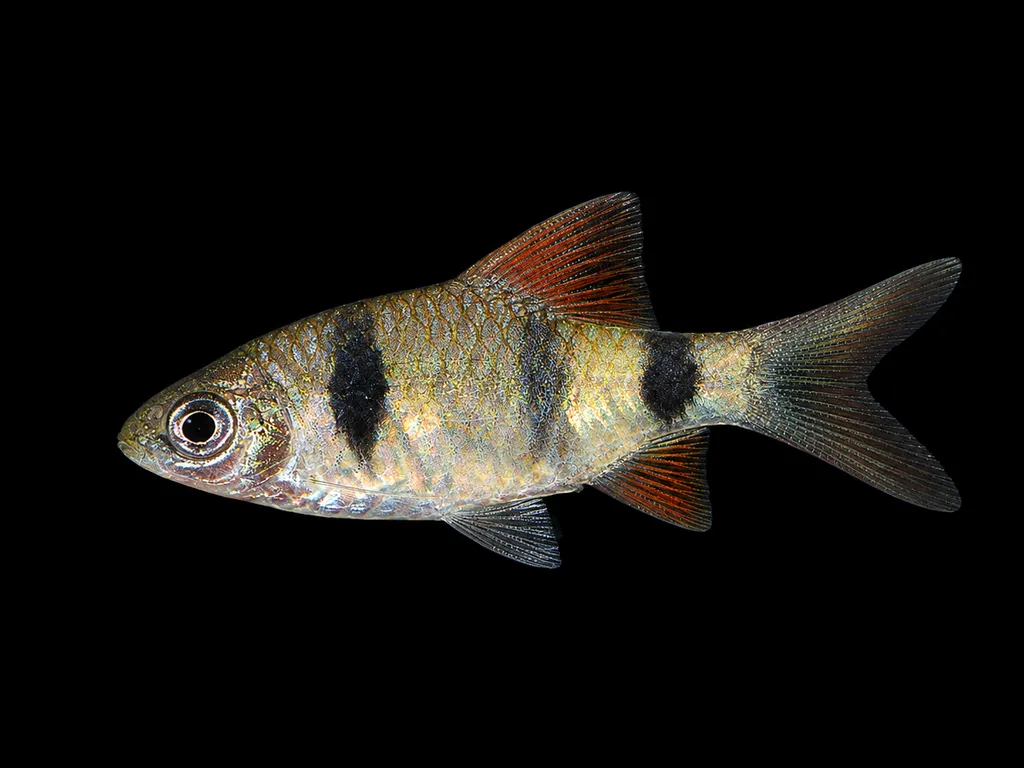 1.8 in (4.5 cm)14 gal (54 L)68–77°F (20–25°C)
Narayan barb
Pethia narayani
1.8 in (4.5 cm) · 14 gal (54 L)
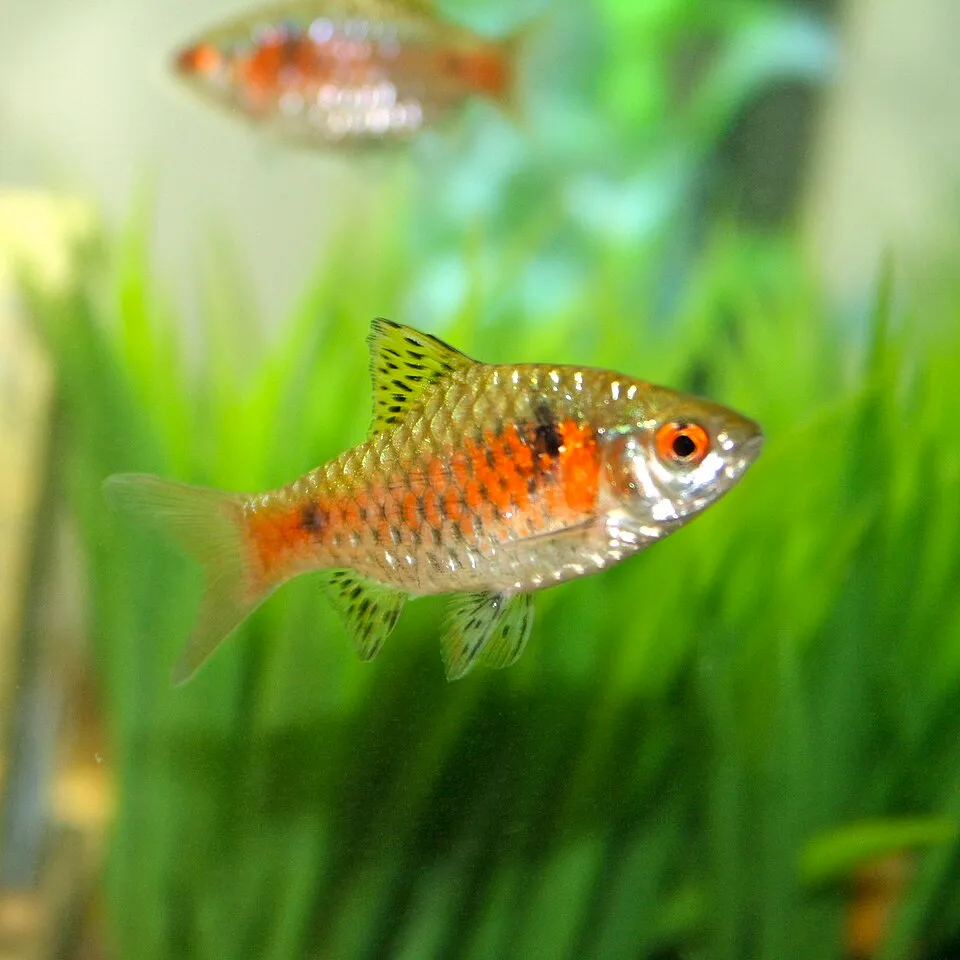 1.8 in (4.5 cm)20 gal (75 L)61–77°F (16–25°C)
Odessa barb
Pethia padamya
1.8 in (4.5 cm) · 20 gal (75 L)
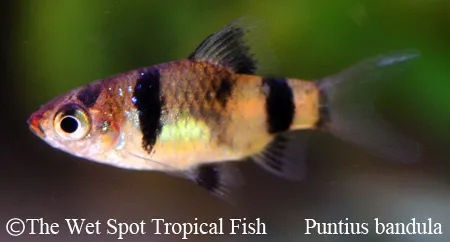 2 in (5 cm)20 gal (75 L)73–81°F (23–27°C)
Bandula barb
Pethia bandula
2 in (5 cm) · 20 gal (75 L)
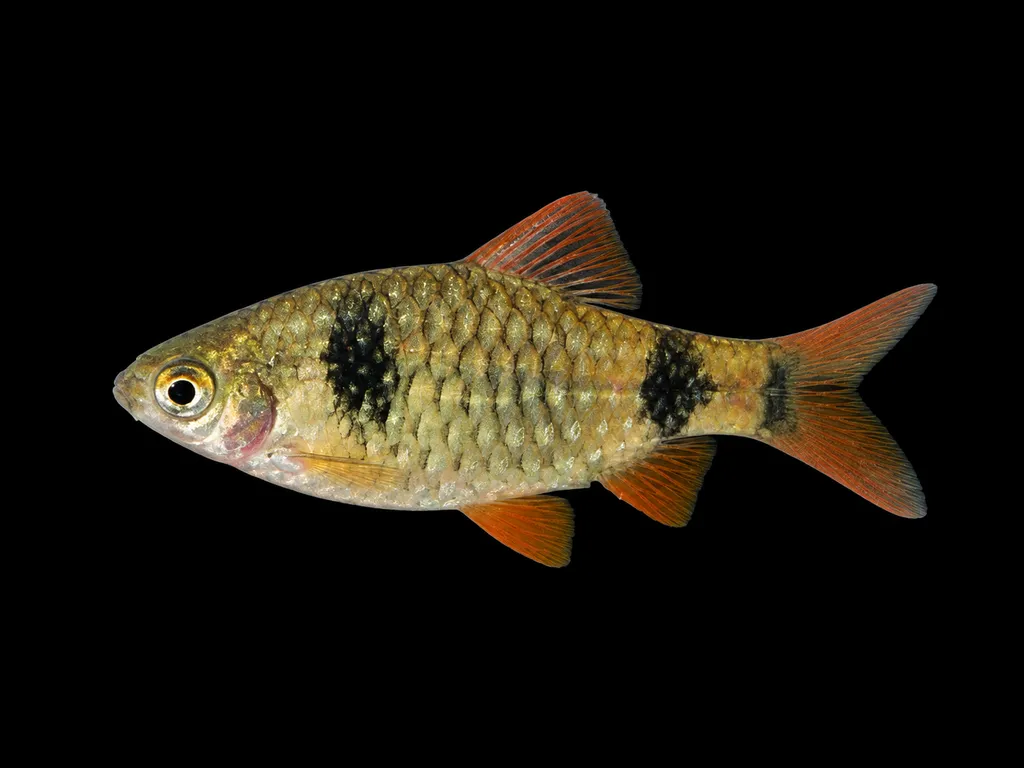 2 in (5 cm)16 gal (60 L)72–81°F (22–27°C)
Cuming's barb
Pethia cumingii
2 in (5 cm) · 16 gal (60 L)
 2 in (5 cm)20 gal (75 L)72–81°F (22–27°C)
Setna barb
Pethia setnai
2 in (5 cm) · 20 gal (75 L)