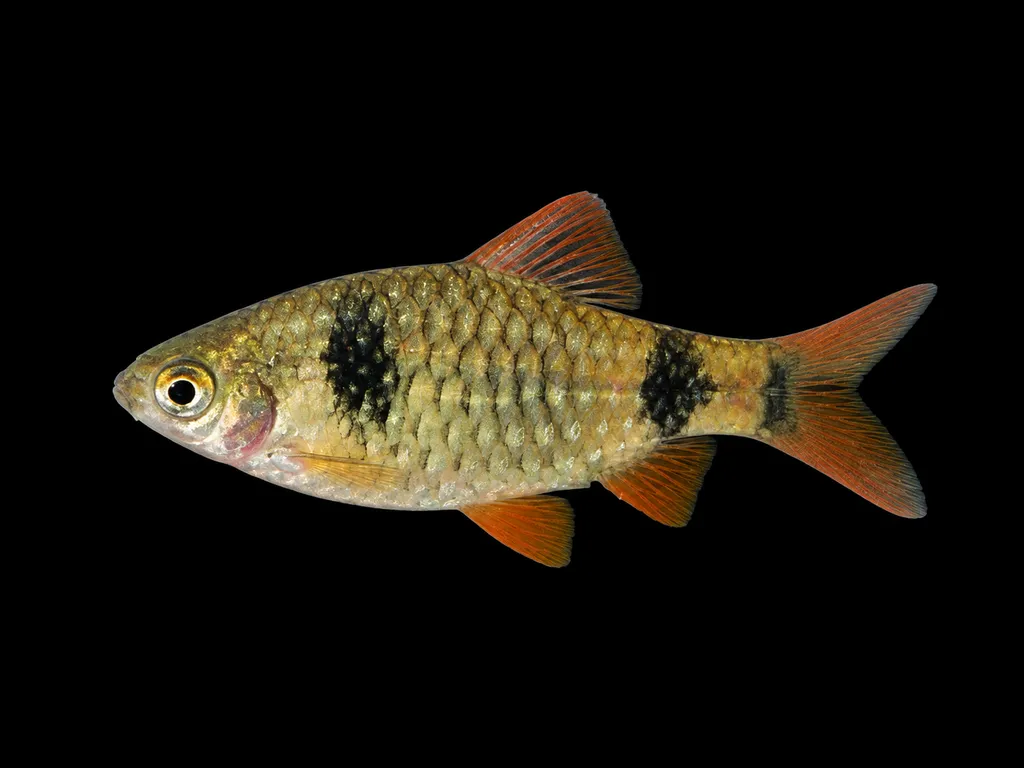
Cuming's barb
Pethia cumingii
Also known as Two-spot barb, Puntius cumingii, Barbus cumingii, Pethia cummingii
FreshwaterFish
Care at a glance
- Temperature
- 72–81°F
- 22–27°C
- pH
- 6.0–7.0
- Adult size
- 2 in
- 5 cm
- Minimum tank
- 16 gal
- 60 L
- Temperament
- Peaceful
- Social behavior
- Schooling
- Swim level
- Middle
- Difficulty
- Easy
- Breeding
- Medium
- Rarity
- Common
- Family
- Cyprinidae
- Origin
- Endemic to the Bentota and Gin river basins of southwestern Sri Lanka.
Overview
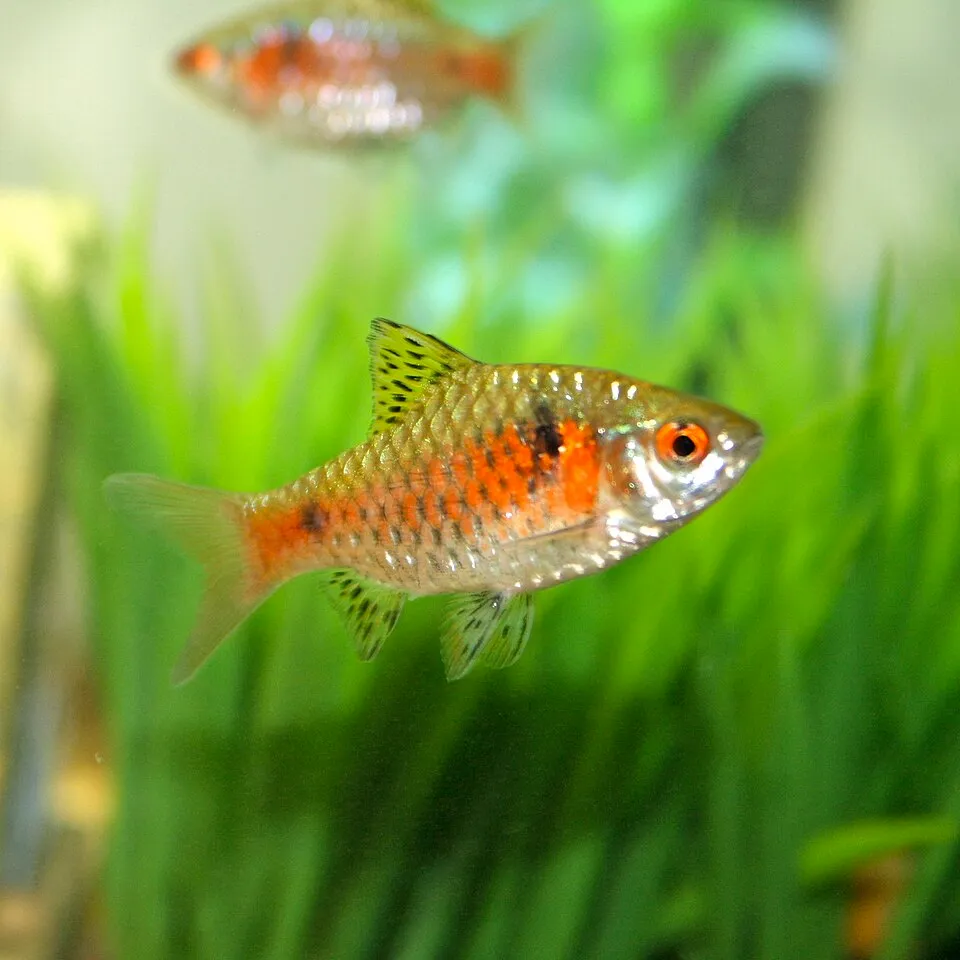
Keep Cuming's barb in a group of at least six to eight in a tank of 60 litres or more, with soft, slightly acidic water at 22 to 27 C and a pH of 6.0 to 7.0. A shaded tank with plants, leaf litter, and dark substrate brings out the fin color. Feed small flakes, micropellets, and frozen foods such as daphnia and bloodworm. It is a peaceful schooler that suits a quiet community, though males spar harmlessly for display.
In the wild
Cuming's barb comes from shaded, slow to moderate forest streams in southwestern Sri Lanka. It lives in small shoals among leaf litter and submerged plants in soft, slightly acidic water. Wild fish carry two smudgy dark bars on a silver body, with fin color that ranges from yellow to red depending on population. Habitat loss has made it scarcer in the wild, so most tank fish are captive bred.
Good to know
Long known as Puntius cumingii or Barbus cumingii, the species moved to the genus Pethia in a 2012 revision of the small South Asian barbs. Two natural color forms exist, one with yellow fins and one with red, and both are sold under the same name. It was named after Hugh Cuming, a nineteenth century shell and specimen collector.
Did you know
Males deepen to a strong red or yellow in the fins when they display to each other, and a well conditioned group in a dark tank is one of the more colorful small barbs.
Weekly picks
Tank mates
Cuming's barb is a peaceful, schooling species that keeps to the middle. These picks share a community profile with it, are safe together in both directions, and overlap on water type, temperature and pH.
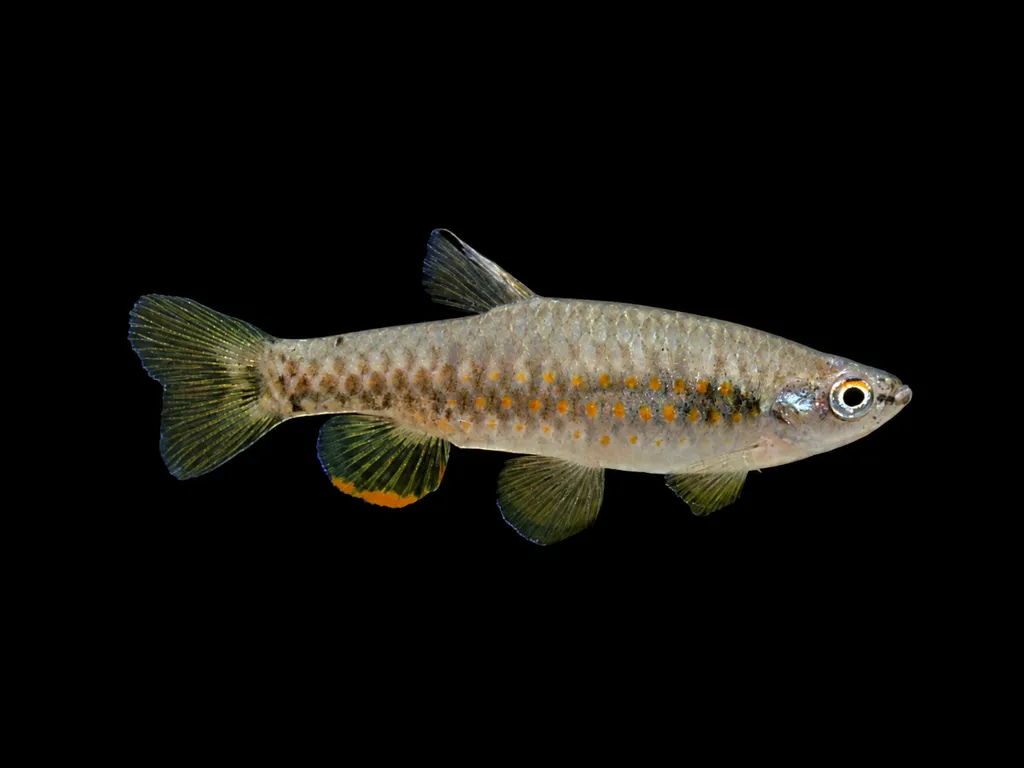
Fanning characin
Pyrrhulina rachoviana
Freshwater2 in (5 cm) · 16 gal (60 L)68–79°F (20–26°C)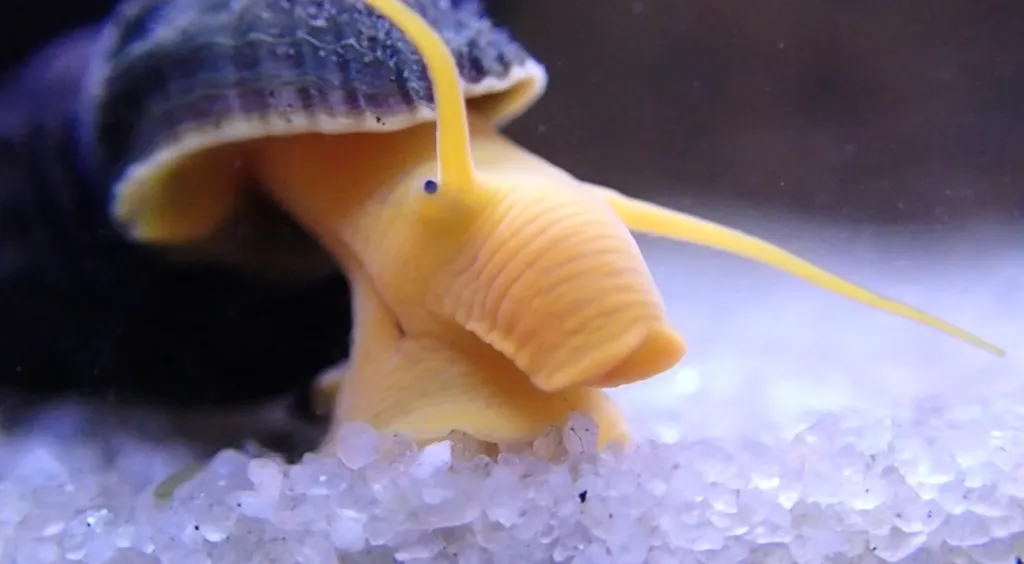
Gold rabbit snail
Tylomelania gemmifera
Freshwater2.8 in (7 cm) · 16 gal (60 L)75–82°F (24–28°C)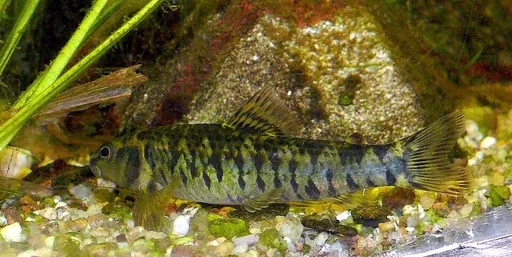
Darter tetra
Characidium fasciatum
Freshwater2.8 in (7 cm) · 16 gal (60 L)68–79°F (20–26°C)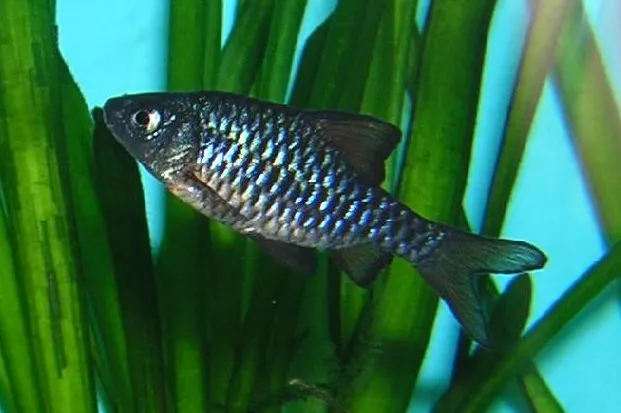
Checkered barb
Oliotius oligolepis
Freshwater1.8 in (4.5 cm) · 16 gal (60 L)68–79°F (20–26°C)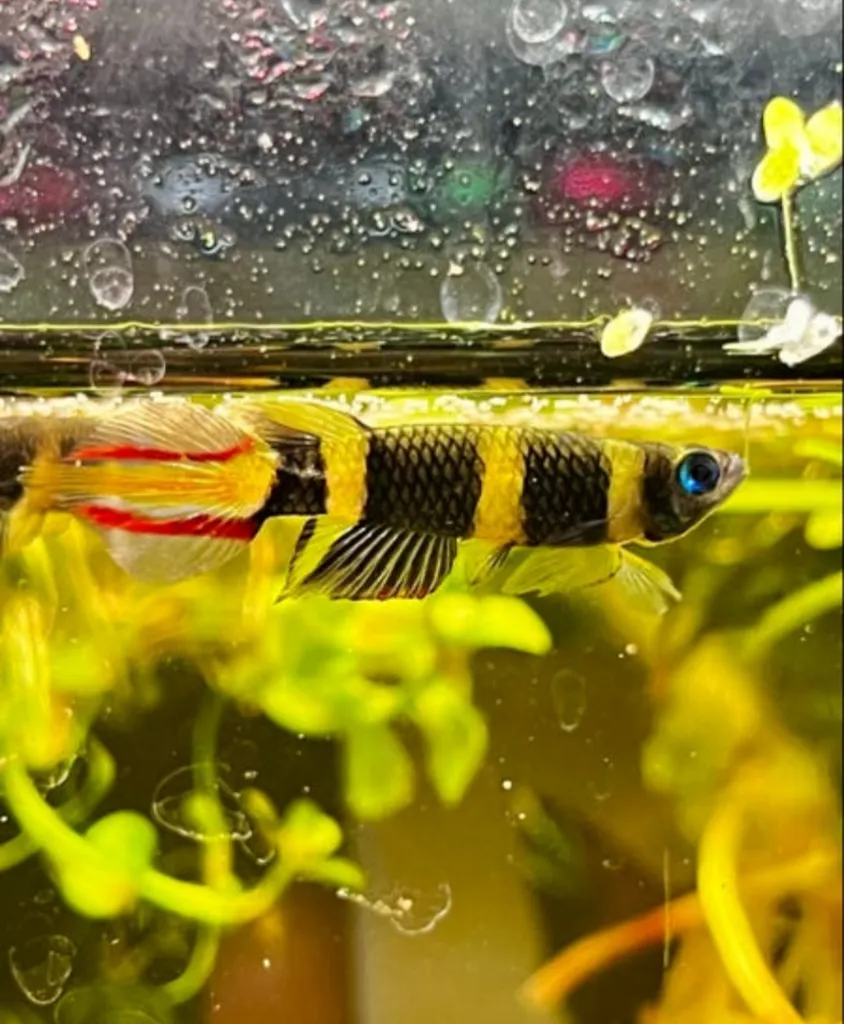
Clown killifish
Epiplatys annulatus
Freshwater1.4 in (3.5 cm) · 15 gal (55 L)68–79°F (20–26°C)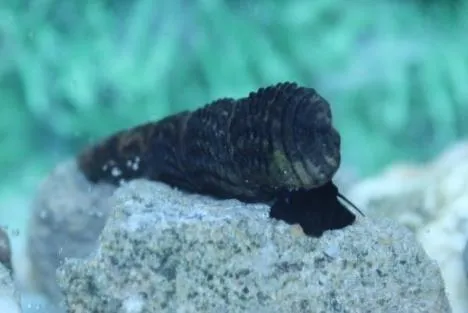
White spotted rabbit snail
Tylomelania towutica
Freshwater4.3 in (11 cm) · 16 gal (60 L)75–84°F (24–29°C)
Common questions
What size tank does a Cuming's barb need?
A Cuming's barb needs at least 16 gal (60 L). It spends most of its time in the middle.
What temperature and pH does a Cuming's barb need?
A Cuming's barb is comfortable at 72–81°F (22–27°C) with a pH of 6.0–7.0.
How big does a Cuming's barb get?
An adult Cuming's barb reaches about 2 in (5 cm).
Does a Cuming's barb need a group?
Yes. A Cuming's barb is a schooling species and should be kept in a group, not singly.
Related species
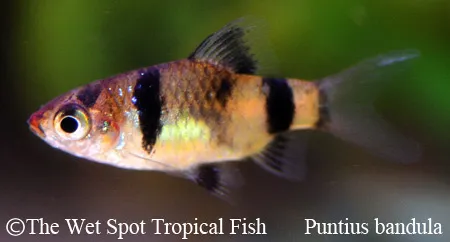 2 in (5 cm)20 gal (75 L)73–81°F (23–27°C)
Bandula barb
Pethia bandula
2 in (5 cm) · 20 gal (75 L)
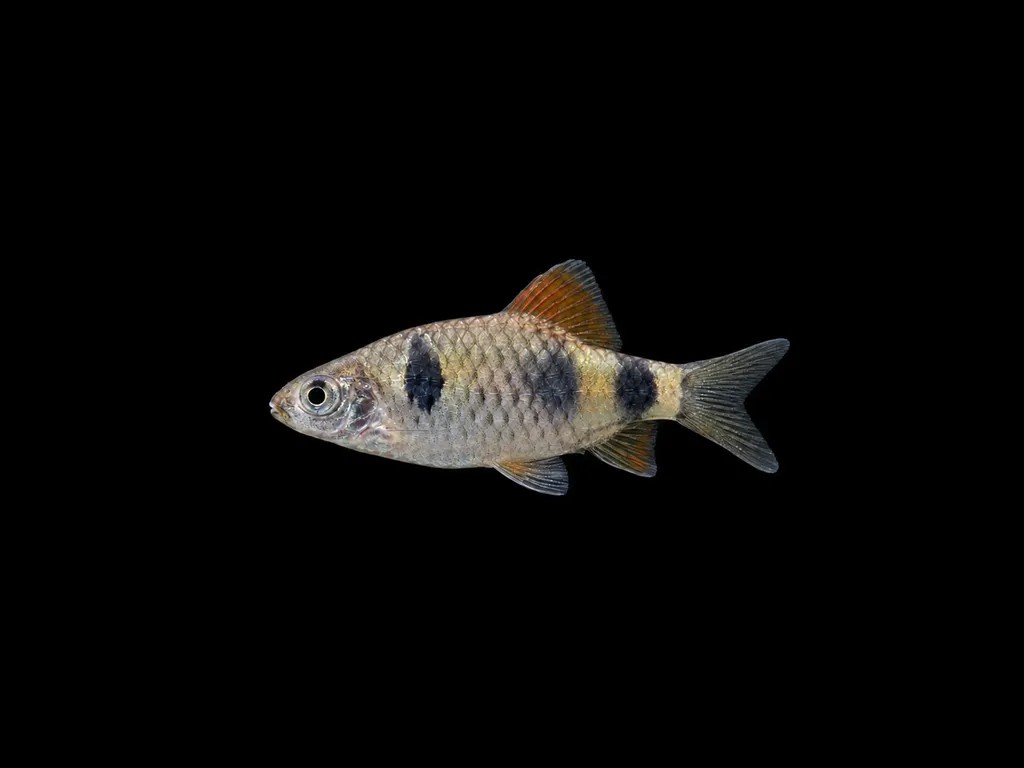 2 in (5 cm)20 gal (75 L)72–81°F (22–27°C)
Setna barb
Pethia setnai
2 in (5 cm) · 20 gal (75 L)
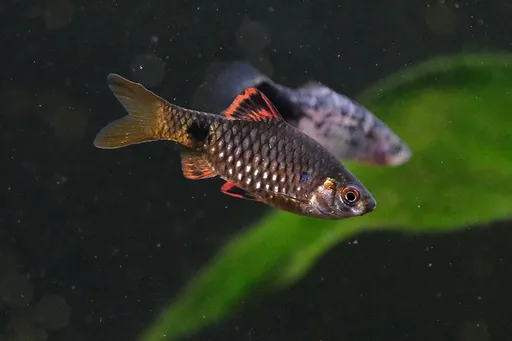 2 in (5 cm)20 gal (75 L)64–79°F (18–26°C)
Stoliczka's barb
Pethia stoliczkana
2 in (5 cm) · 20 gal (75 L)
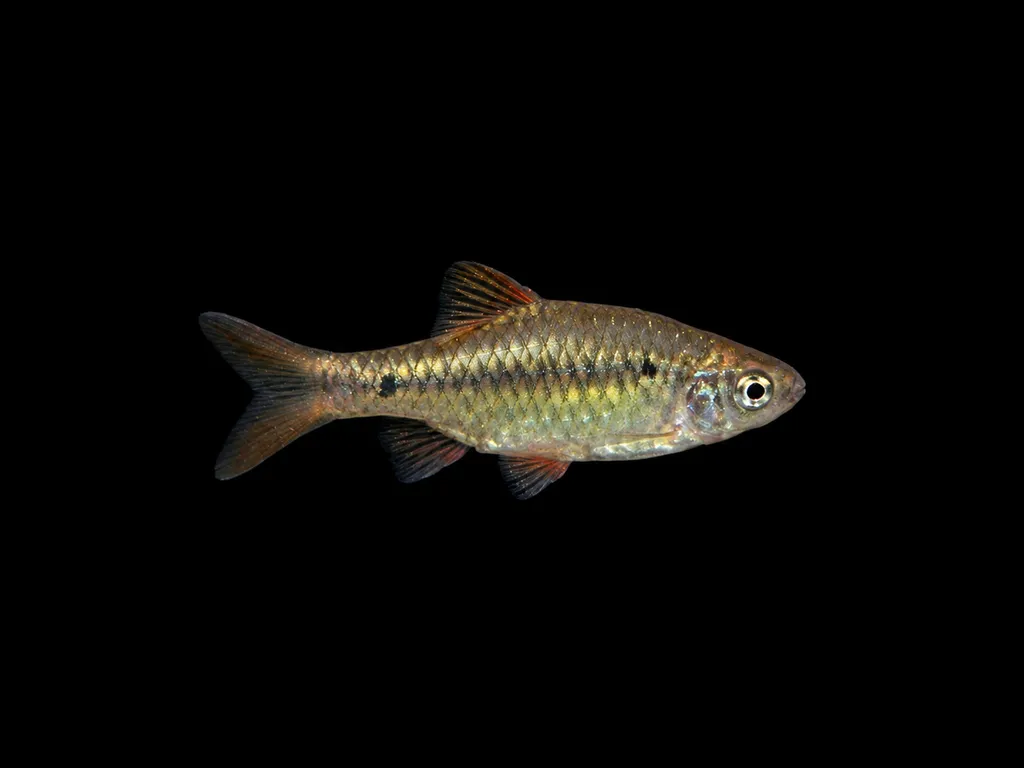 1.8 in (4.5 cm)14 gal (54 L)68–77°F (20–25°C)
Manipur barb
Pethia manipurensis
1.8 in (4.5 cm) · 14 gal (54 L)
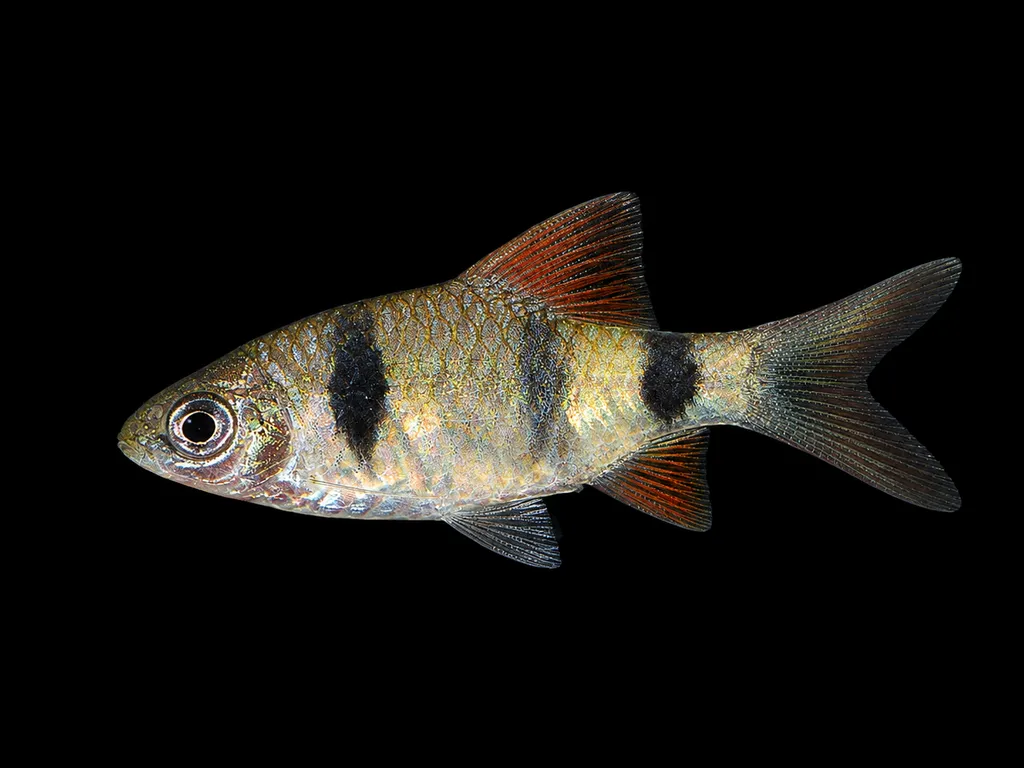 1.8 in (4.5 cm)14 gal (54 L)68–77°F (20–25°C)
Narayan barb
Pethia narayani
1.8 in (4.5 cm) · 14 gal (54 L)
 1.8 in (4.5 cm)20 gal (75 L)61–77°F (16–25°C)
Odessa barb
Pethia padamya
1.8 in (4.5 cm) · 20 gal (75 L)