Fanning characin
Pyrrhulina rachoviana
Also known as Rachow's pyrrhulina, Fanning pyrrhulina, Rachow's fanning characin
FreshwaterFish
Care at a glance
- Temperature
- 68–79°F
- 20–26°C
- pH
- 6.0–7.5
- Adult size
- 2 in
- 5 cm
- Minimum tank
- 16 gal
- 60 L
- Temperament
- Peaceful
- Social behavior
- Social
- Swim level
- Top
- Difficulty
- Easy
- Breeding
- Substrate spawner · Medium
- Rarity
- Rare
- Family
- Lebiasinidae
- Origin
- Native to the lower Parana and La Plata basin of southern South America.
Overview
The fanning characin is a peaceful, undemanding fish for the top of a planted tank. It is easy to keep and a good first fish.
Did you know
The fanning characin is subtropical, so in the wild it lives through a wider temperature swing than most Amazon fish.
Caring for the fanning characin
Keep a small group of fanning characins in a planted tank of at least 16 gal (60 L), with gentle filtration and floating cover. They stay near the top and can jump, so fit a tight lid.
They tolerate cooler water than most tropical fish. Keep the temperature at 68 to 79°F (20 to 26°C) and the pH at 6.0 to 7.5. They are peaceful and safe with other community fish.
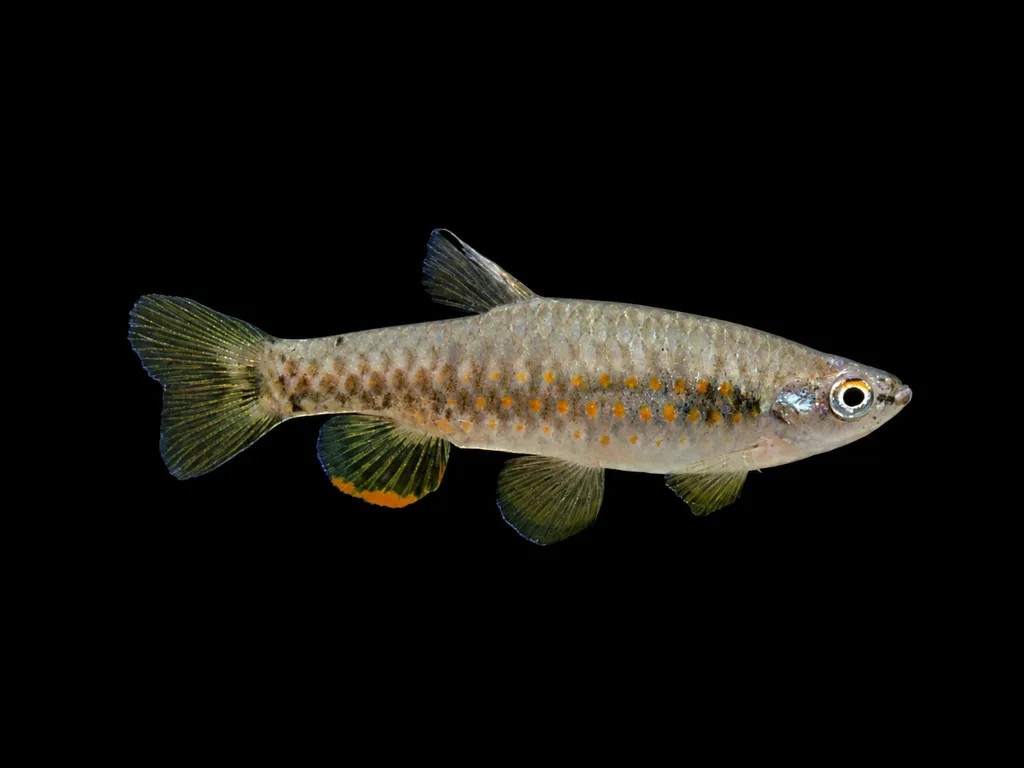
Males have reddish, spotted fins, and they set up small spawning sites. A male cleans a leaf or other surface and coaxes the female to lay her eggs on it. He then hovers over the eggs and fans fresh water across them with his fins until they hatch. Breeding them takes some experience.
Good to know
The fanning characin is a small characin in the family Lebiasinidae, with a dark stripe through the eye. It is also known as Rachow's pyrrhulina or the fanning pyrrhulina. Its common name comes from the male's habit of fanning the eggs.
In the wild
The fanning characin comes from slow, shallow, well vegetated waters in the lower Parana and La Plata basin of southern South America. It stays near the surface there, among plants and overhanging cover.
Weekly picks
Tank mates
The fanning characin is a peaceful, social species that keeps to the top. These picks share a community profile with it, are safe together in both directions, and overlap on water type, temperature and pH.
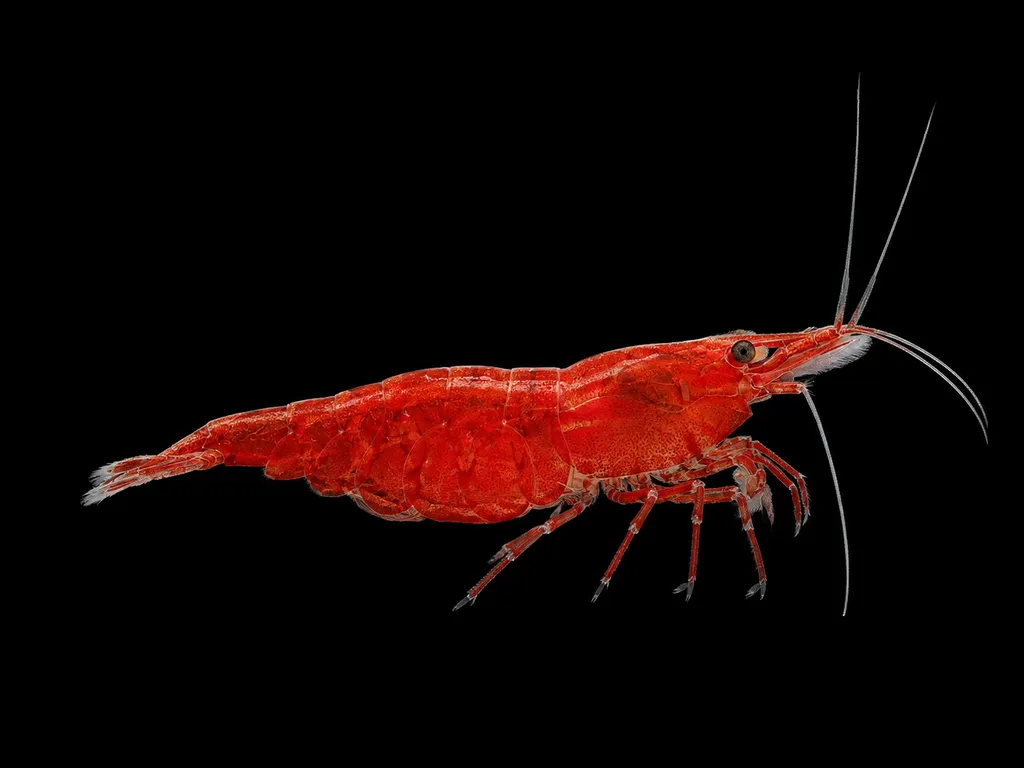
Neocaridina shrimp
Neocaridina davidi
Freshwater1.6 in (4 cm) · 5 gal (19 L)59–84°F (15–29°C)
Guppy
Poecilia reticulata
FreshwaterBrackish2.4 in (6 cm) · 10 gal (38 L)64–82°F (18–28°C)
Neon tetra
Paracheirodon innesi
Freshwater1.5 in (3.8 cm) · 11 gal (40 L)70–77°F (21–25°C)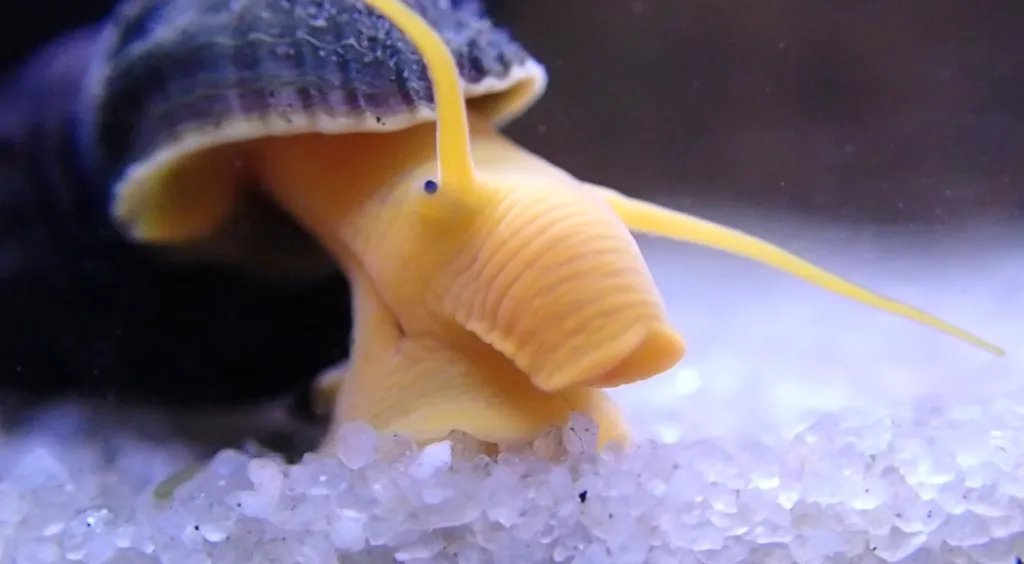
Gold rabbit snail
Tylomelania gemmifera
Freshwater2.8 in (7 cm) · 16 gal (60 L)75–82°F (24–28°C)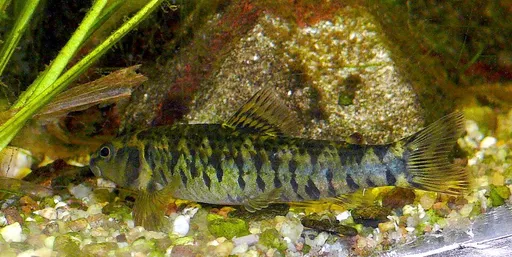
Darter tetra
Characidium fasciatum
Freshwater2.8 in (7 cm) · 16 gal (60 L)68–79°F (20–26°C)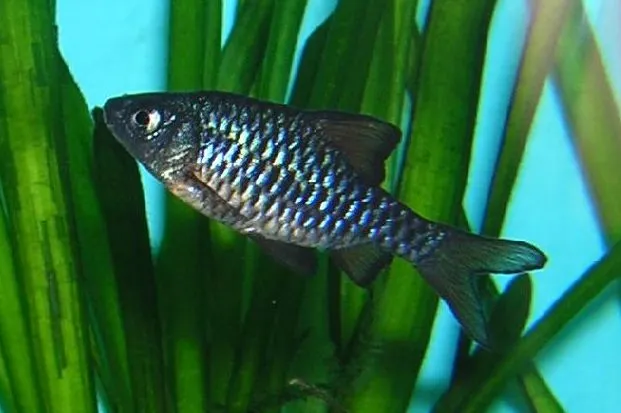
Checkered barb
Oliotius oligolepis
Freshwater1.8 in (4.5 cm) · 16 gal (60 L)68–79°F (20–26°C)
Common questions
What size tank does a fanning characin need?
A fanning characin needs at least 16 gal (60 L). It spends most of its time in the top.
What temperature and pH does a fanning characin need?
A fanning characin is comfortable at 68–79°F (20–26°C) with a pH of 6.0–7.5.
How big does a fanning characin get?
An adult fanning characin reaches about 2 in (5 cm).
How can you tell a male fanning characin from a female?
Male fanning characins have reddish, spotted fins.
How does a fanning characin breed?
Male fanning characins set up small spawning sites. A male cleans a leaf, the female lays her eggs on it, and he fans them with his fins until they hatch. Breeding them takes some experience.
Related species
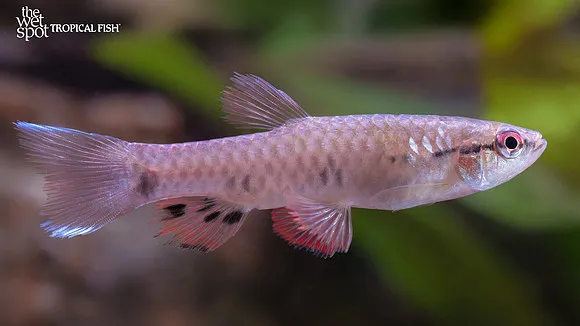 2.8 in (7 cm)20 gal (75 L)73–81°F (23–27°C)
Spotted pyrrhulina
Pyrrhulina spilota
2.8 in (7 cm) · 20 gal (75 L)
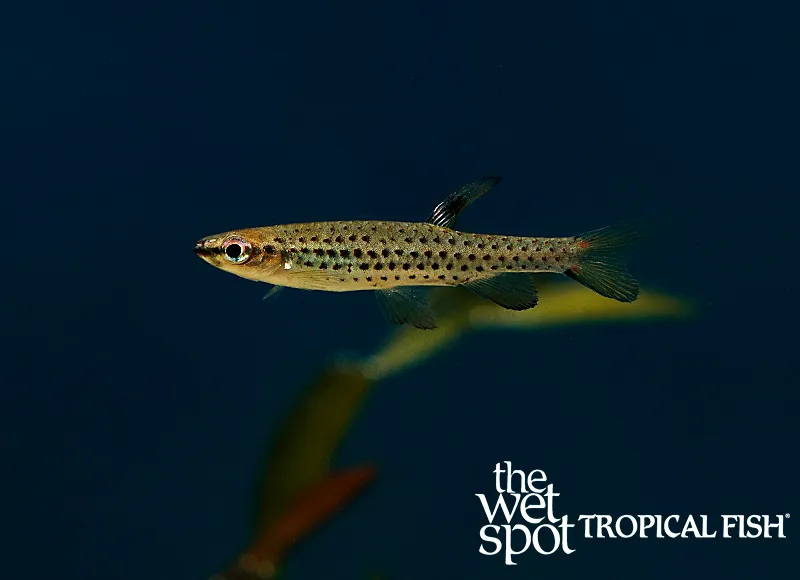 2 in (5 cm)16 gal (60 L)75–82°F (24–28°C)
Spotted splash tetra
Copella nattereri
2 in (5 cm) · 16 gal (60 L)
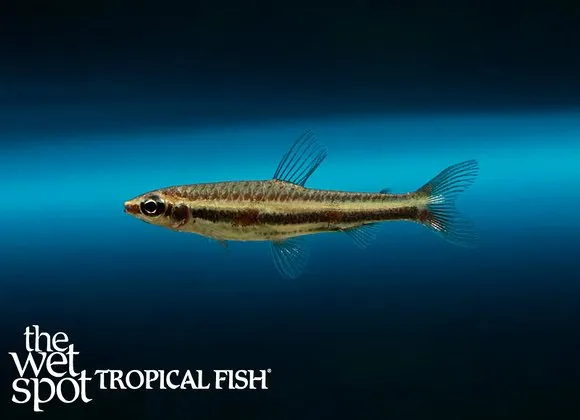 2 in (5 cm)14 gal (54 L)73–81°F (23–27°C)
Marilyn's pencilfish
Nannostomus marilynae
2 in (5 cm) · 14 gal (54 L)
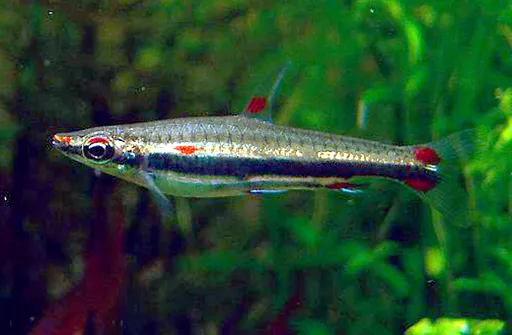 2.2 in (5.5 cm)16 gal (60 L)73–82°F (23–28°C)
Harrison's pencilfish
Nannostomus harrisoni
2.2 in (5.5 cm) · 16 gal (60 L)
 2.4 in (6 cm)18 gal (70 L)70–81°F (21–27°C)
Golden pencilfish
Nannostomus beckfordi
2.4 in (6 cm) · 18 gal (70 L)
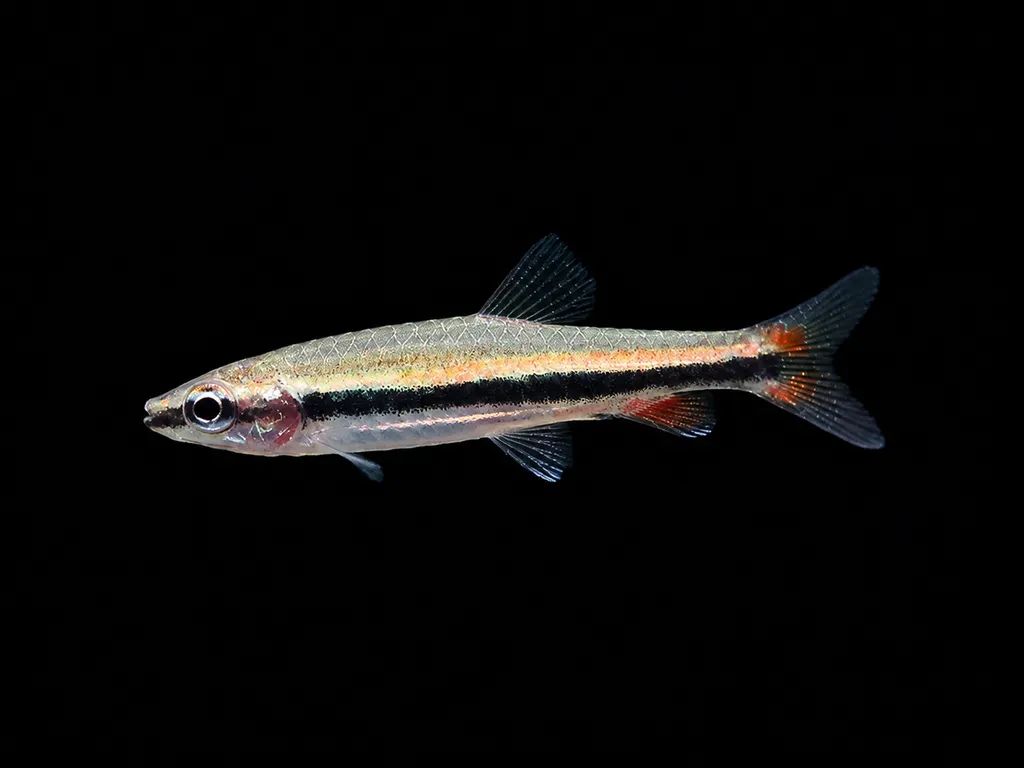 1.6 in (4 cm)14 gal (54 L)75–82°F (24–28°C)
Elegant pencilfish
Nannostomus limatus
1.6 in (4 cm) · 14 gal (54 L)