Spotted pyrrhulina
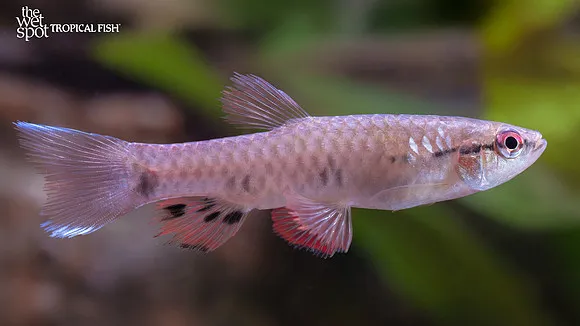
Pyrrhulina spilota
Also known as Blotched pyrrhulina, Four spot splash tetra
FreshwaterFish
Care at a glance
- Temperature
- 73–81°F
- 23–27°C
- pH
- 5.5–7.0
- Adult size
- 2.8 in
- 7 cm
- Minimum tank
- 20 gal
- 75 L
- Temperament
- Mostly peaceful
- Social behavior
- Social
- Swim level
- Top
- Difficulty
- Medium
- Breeding
- Substrate spawner · Medium
- Rarity
- Rare
- Family
- Lebiasinidae
- Origin
- Ucayali basin, Peru
Overview
The spotted pyrrhulina is a lively characin for the top of a planted community tank. It is a step up from the easiest fish.
Did you know
The spotted pyrrhulina belongs to the same family as the splash tetras, which are famous for laying eggs on leaves above the waterline. It keeps the leaf-spawning habit, but it lays below the surface.
Caring for the spotted pyrrhulina
Give spotted pyrrhulinas a planted tank of at least 20 gal (75 L), with open water at the top and floating cover. Add broad-leaved plants near the surface, a dark substrate and gentle filtration. They stay near the surface and can jump, so keep a tight lid on the tank.
Keep the water soft and mildly acidic, at 73 to 81°F (23 to 27°C) and a pH of 5.5 to 7.0. Feed floating and near-surface foods such as flake and small floating pellets. Add frozen or live foods such as bloodworm, daphnia and mosquito larvae.
A spotted pyrrhulina is fine alone, but a small group brings out its natural behavior. Keep more females than males, since males display and spar with each other over territory near the top of the tank.
It is mostly peaceful but an active, fairly large characin. Pair it with calm fish of the middle and lower tank rather than very tiny or very timid ones. Keepers often use it as a dither fish to coax shy dwarf cichlids into the open.
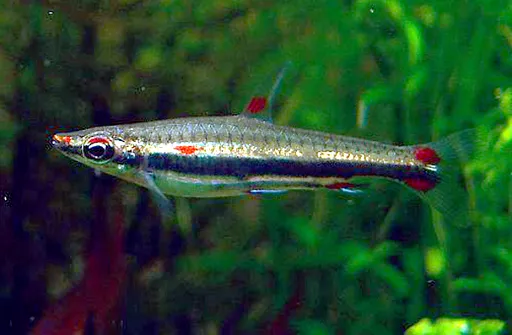
Males are more strongly marked than females. The female lays a clutch of eggs on a submerged leaf or broad plant. The male alone guards and fans the eggs until they hatch, and breeding is moderately difficult.
Good to know
Pyrrhulina spilota is a member of the family Lebiasinidae and a relative of the pencilfishes. It is a bronze, surface-oriented insectivore, blotched with wine-red.
In the wild
The spotted pyrrhulina comes from the upper Amazon in Peru, around the Ucayali and Maranon. It patrols the still surface of shaded backwaters, over soft and very acidic water.
Weekly picks
Tank mates
The spotted pyrrhulina is a mostly peaceful, social species that keeps to the top. These picks share a community profile with it, are safe together in both directions, and overlap on water type, temperature and pH.
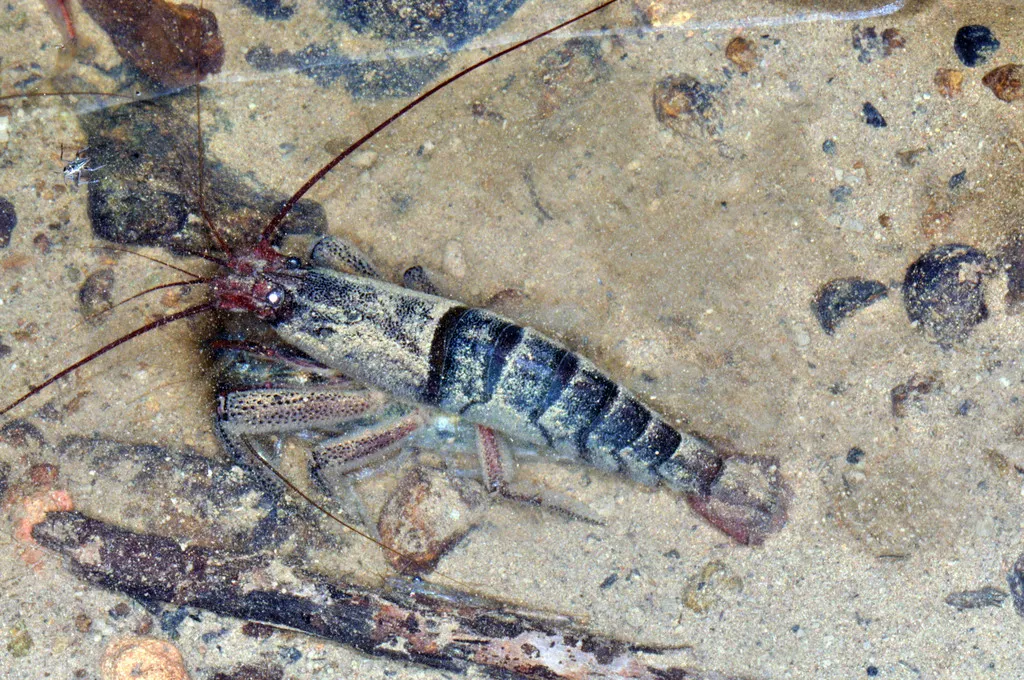
Marble wood shrimp
Atya scabra
Freshwater3.9 in (10 cm) · 20 gal (75 L)73–82°F (23–28°C)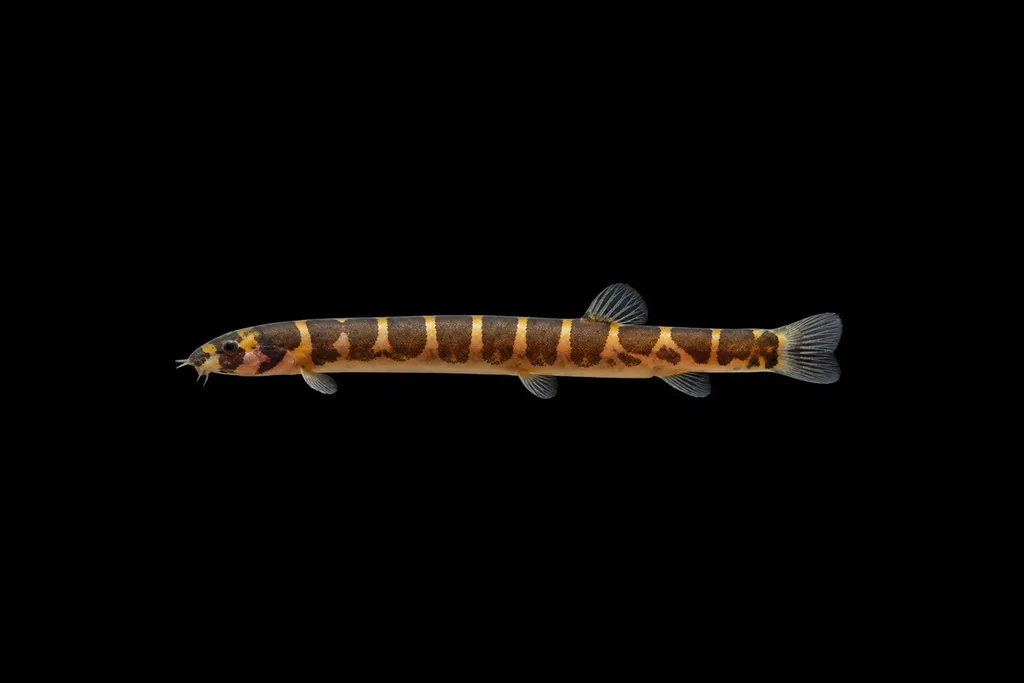
Borneo kuhli loach
Pangio borneensis
Freshwater2.5 in (6.3 cm) · 20 gal (75 L)72–81°F (22–27°C)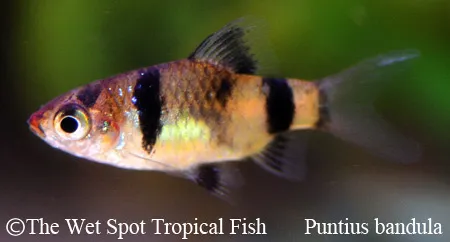
Bandula barb
Pethia bandula
Freshwater2 in (5 cm) · 20 gal (75 L)73–81°F (23–27°C)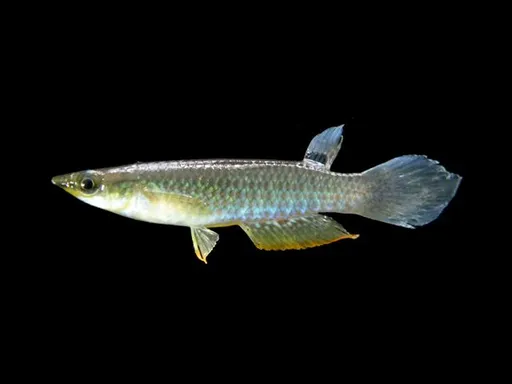
Blue panchax
Aplocheilus panchax
Freshwater3.5 in (9 cm) · 20 gal (75 L)72–82°F (22–28°C)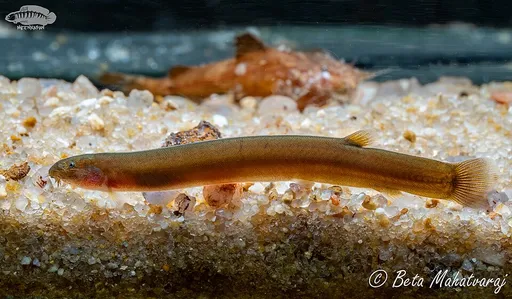
Cinnamon loach
Pangio pangia
Freshwater2.4 in (6 cm) · 20 gal (75 L)72–81°F (22–27°C)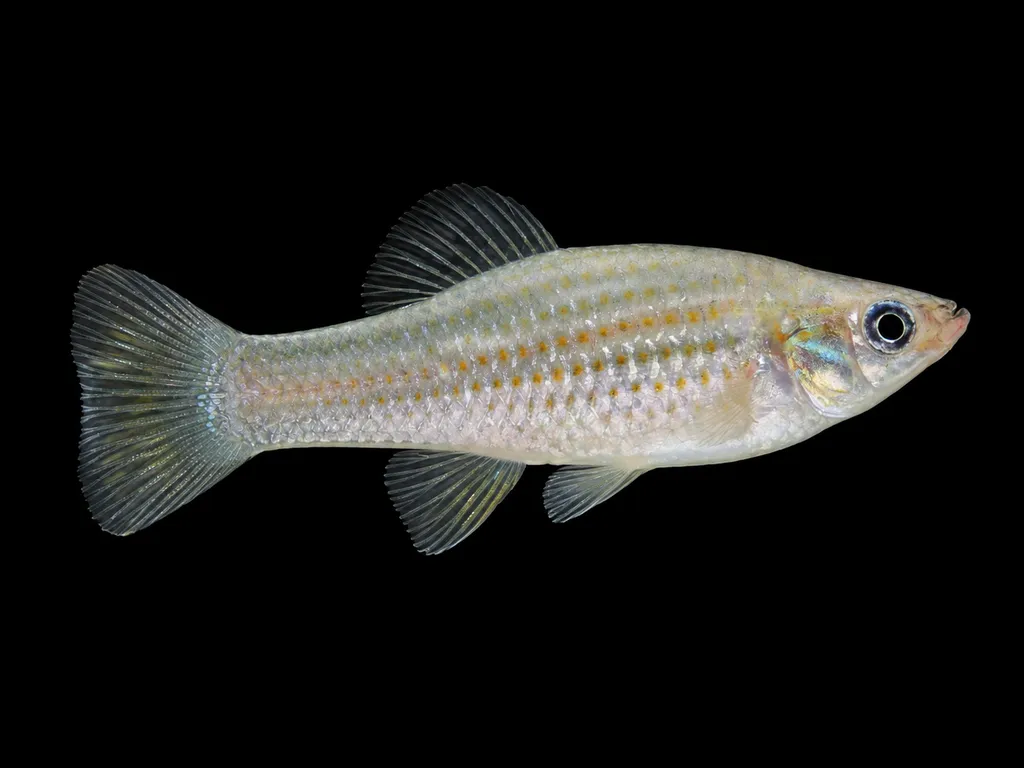
Amazon molly
Poecilia formosa
Freshwater3.5 in (9 cm) · 20 gal (75 L)68–82°F (20–28°C)
Common questions
What size tank does a spotted pyrrhulina need?
A spotted pyrrhulina needs at least 20 gal (75 L). It spends most of its time in the top.
What temperature and pH does a spotted pyrrhulina need?
A spotted pyrrhulina is comfortable at 73–81°F (23–27°C) with a pH of 5.5–7.0.
What does a spotted pyrrhulina eat?
A spotted pyrrhulina eats floating and near-surface foods, such as flake and small floating pellets. It also takes frozen or live bloodworm, daphnia and mosquito larvae.
How big does a spotted pyrrhulina get?
An adult spotted pyrrhulina reaches about 2.8 in (7 cm).
How can you tell a male spotted pyrrhulina from a female?
Males are more strongly marked than females.
How does a spotted pyrrhulina breed?
The spotted pyrrhulina spawns on a submerged leaf or broad plant, where the female lays a clutch of eggs. The male alone guards and fans the eggs until they hatch. Breeding it is moderately difficult.
Related species
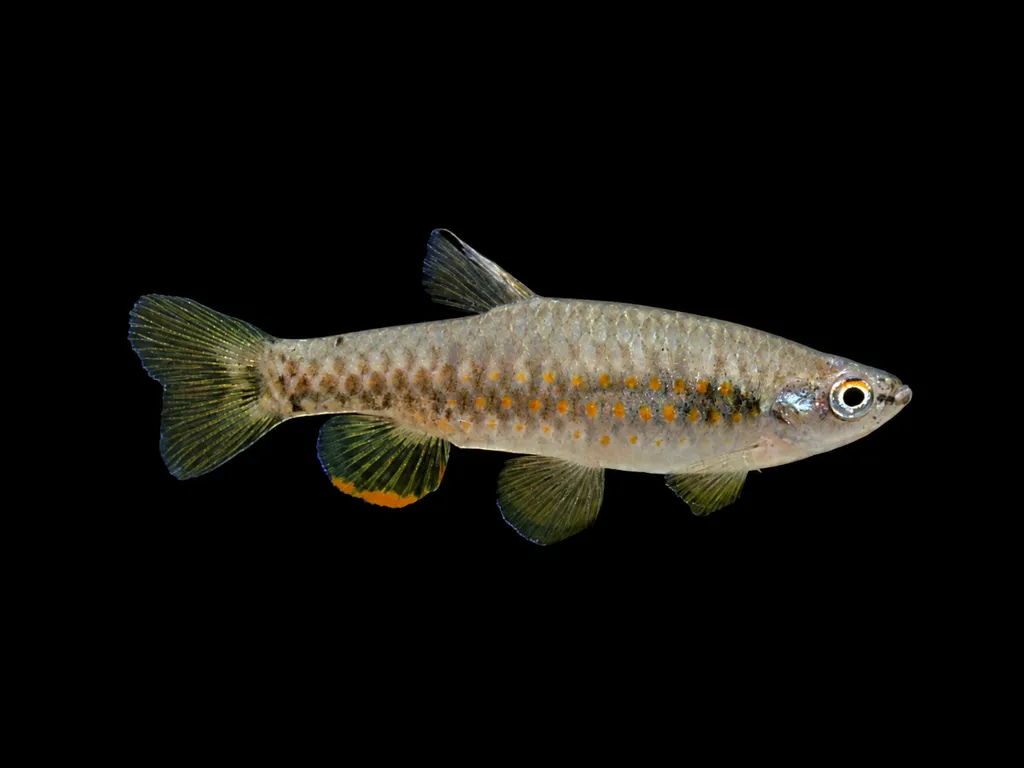 2 in (5 cm)16 gal (60 L)68–79°F (20–26°C)
Fanning characin
Pyrrhulina rachoviana
2 in (5 cm) · 16 gal (60 L)
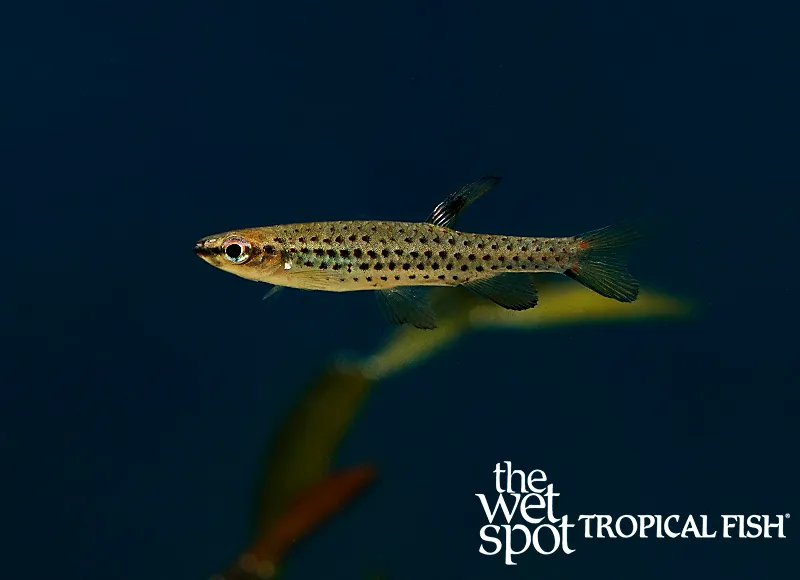 2 in (5 cm)16 gal (60 L)75–82°F (24–28°C)
Spotted splash tetra
Copella nattereri
2 in (5 cm) · 16 gal (60 L)
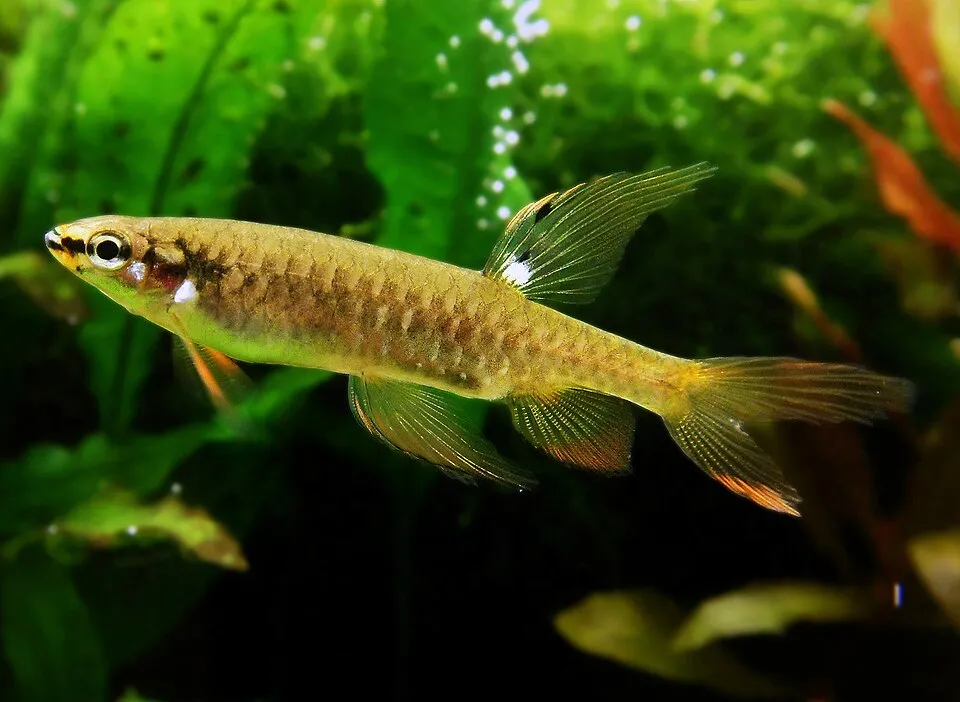 2.2 in (5.5 cm)18 gal (70 L)68–82°F (20–28°C)
Splash tetra
Copella arnoldi
2.2 in (5.5 cm) · 18 gal (70 L)
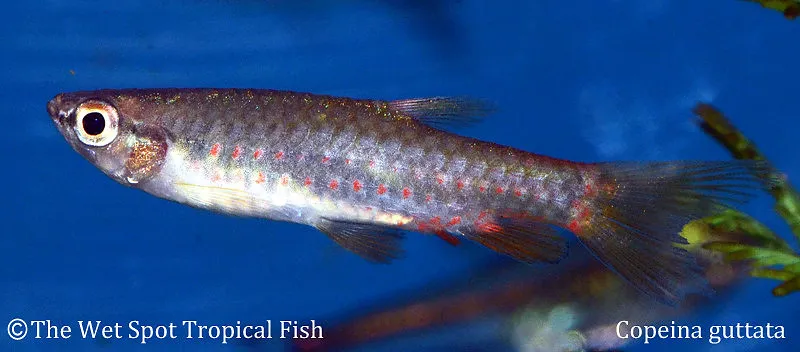 3.9 in (10 cm)32 gal (120 L)73–82°F (23–28°C)
Red-spotted tetra
Copeina guttata
3.9 in (10 cm) · 32 gal (120 L)
 2.4 in (6 cm)18 gal (70 L)70–81°F (21–27°C)
Golden pencilfish
Nannostomus beckfordi
2.4 in (6 cm) · 18 gal (70 L)
 2.2 in (5.5 cm)16 gal (60 L)73–82°F (23–28°C)
Harrison's pencilfish
Nannostomus harrisoni
2.2 in (5.5 cm) · 16 gal (60 L)