Pygmy hatchetfish
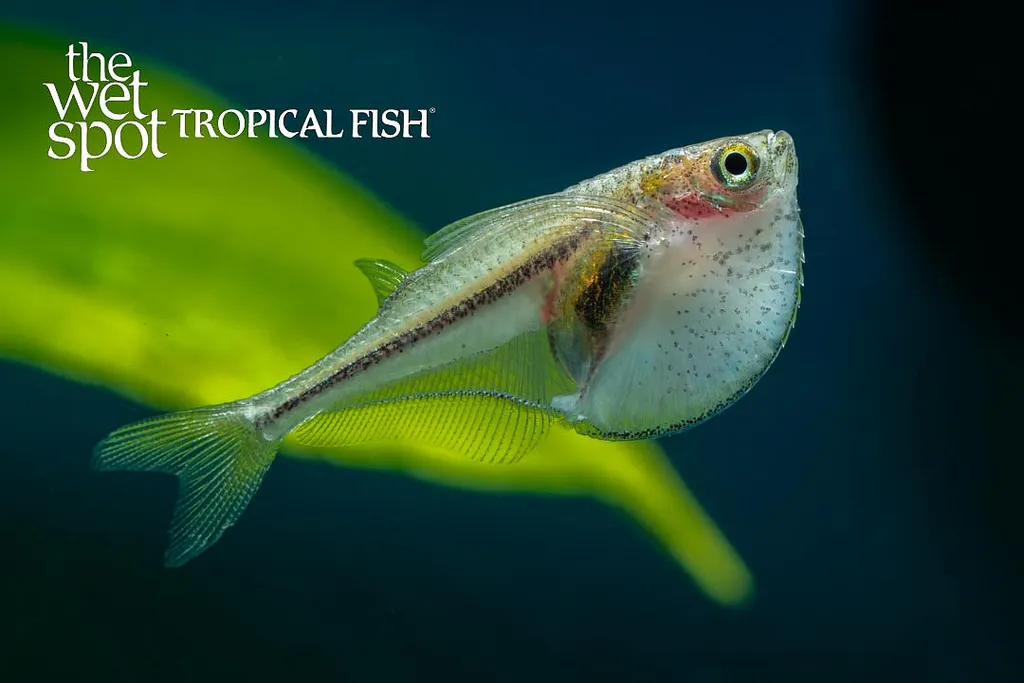
Carnegiella myersi
FreshwaterFish
Care at a glance
- Temperature
- 73–79°F
- 23–26°C
- pH
- 5.5–7.0
- Adult size
- 1 in
- 2.5 cm
- Minimum tank
- 26 gal
- 100 L
- Temperament
- Peaceful
- Social behavior
- Shoaling
- Swim level
- Top
- Difficulty
- Medium
- Breeding
- No record
- Rarity
- Very rare
- Family
- Gasteropelecidae
- Origin
- Peru, Bolivia
Overview
Peaceful and strictly a schooling fish, so keep six or more, ideally more, in a tank of around 100 liters with a lot of surface area. They stay at the very top of the water. Keep them in the low to mid 20s C with a pH from about 5.5 to 7. They feed at the surface, so offer small floating foods, crushed flake, and small live or frozen items like fruit flies and mosquito larvae. Pair them only with peaceful fish that use the lower levels.
In the wild
Pygmy hatchetfish come from slow streams and shallow, tannin-stained waters in Peru and Bolivia, usually under floating plants. The water is soft and acidic. Give them a tank with surface cover, calm flow, and a tight lid. They sit right at the top, so floating plants make them feel secure.
Good to know
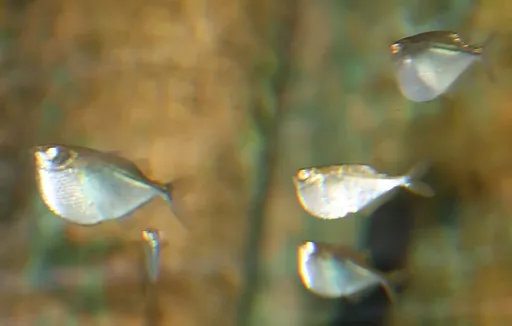
This tiny fish is in the family Gasteropelecidae, the freshwater hatchetfishes, and reaches about 2.5 cm. The deep, keel-like chest houses strong muscles that power the pectoral fins. It is an egg scatterer with no parental care, and aquarium breeding is rarely recorded. It is listed as least concern.
Did you know
Hatchetfish are the closest thing to a flying fish in the hobby. They beat their wing-like pectoral fins to skim and leap across the surface after insects or away from danger, so a fully covered tank with no gaps is a must.
Weekly picks
Tank mates
Pygmy hatchetfish is a peaceful, shoaling species that keeps to the top. These picks share a community profile with it, are safe together in both directions, and overlap on water type, temperature and pH.
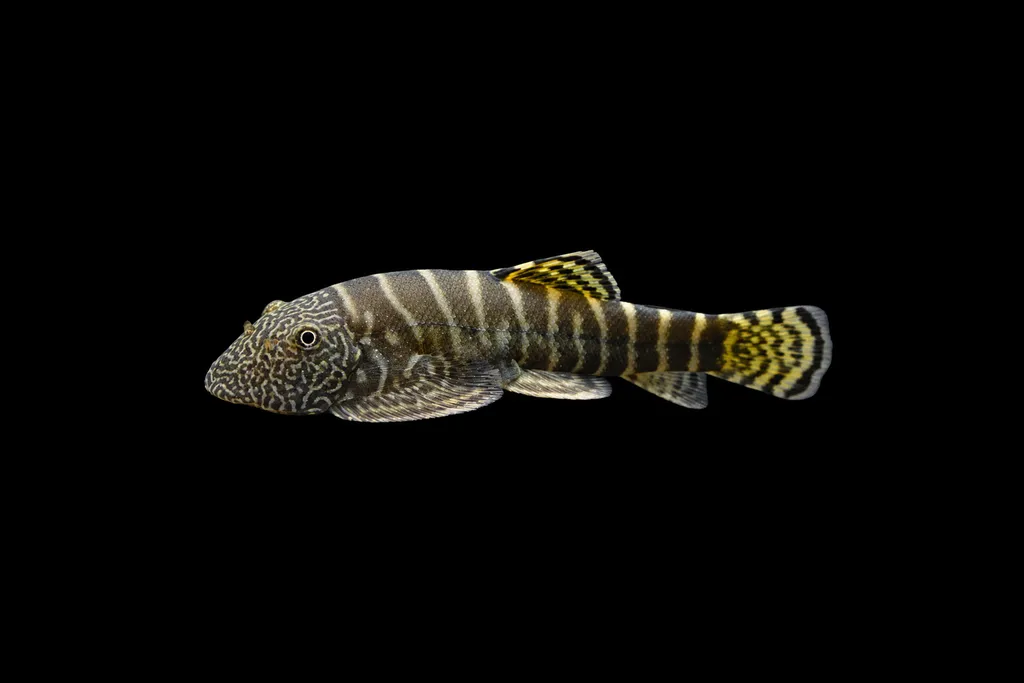
Zebra Borneo sucker
Gastromyzon zebrinus
Freshwater2.9 in (7.3 cm) · 24 gal (90 L)72–79°F (22–26°C)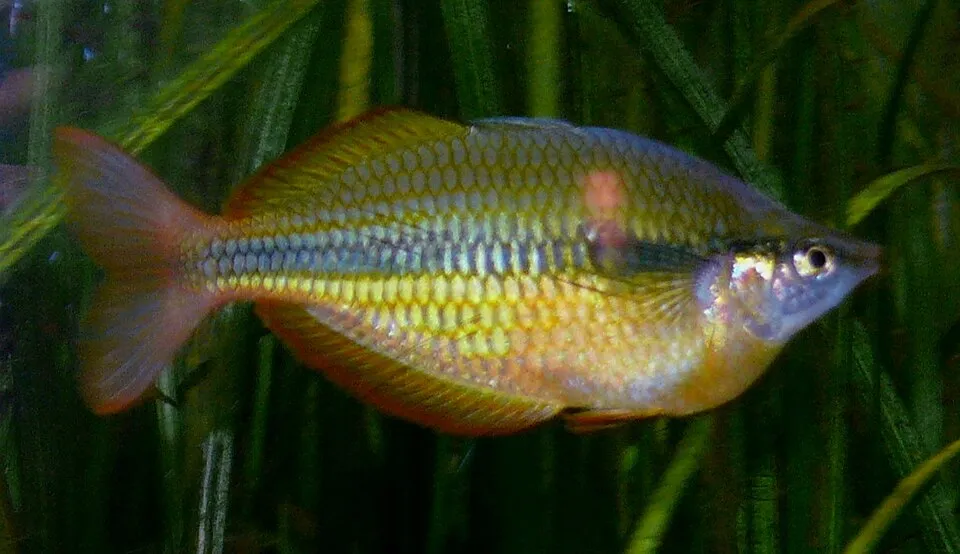
Lake Tebera rainbowfish
Melanotaenia herbertaxelrodi
Freshwater3.5 in (9 cm) · 25 gal (95 L)68–79°F (20–26°C)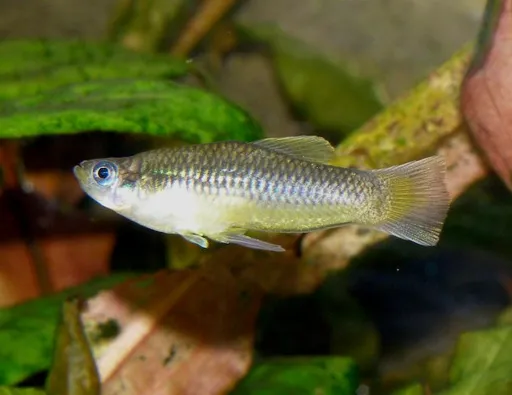
Blue-eyed livebearer
Priapella intermedia
Freshwater2.8 in (7 cm) · 24 gal (90 L)72–82°F (22–28°C)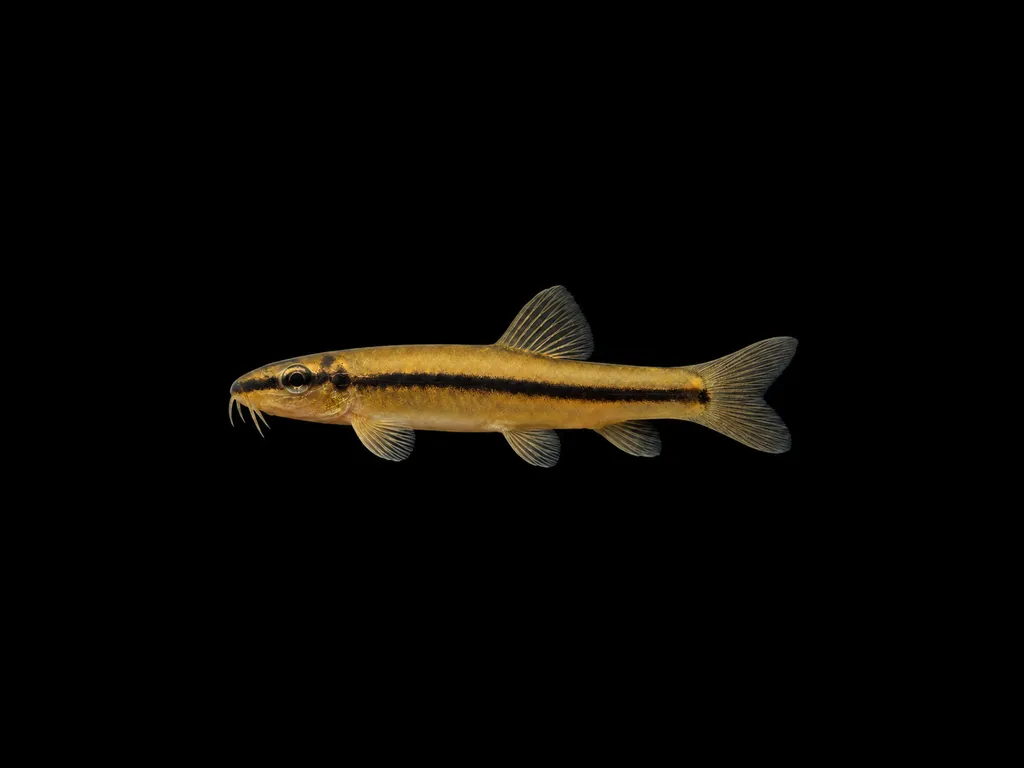
Twin-spot loach
Nemacheilus binotatus
Freshwater2.8 in (7 cm) · 24 gal (90 L)72–81°F (22–27°C)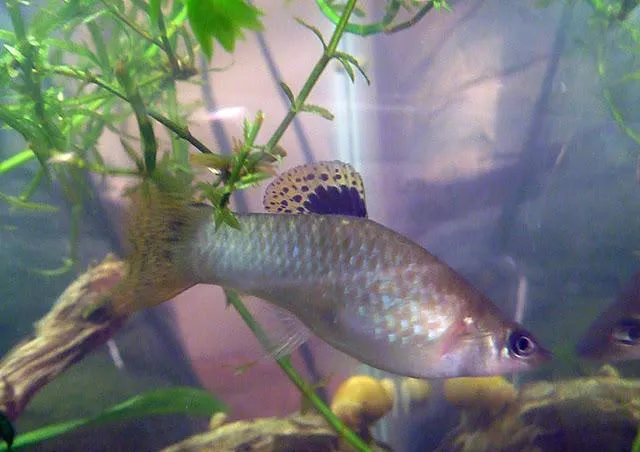
Gill's molly
Poecilia gillii
FreshwaterBrackish3.9 in (10 cm) · 26 gal (100 L)72–86°F (22–30°C)
Wrestling halfbeak
Dermogenys pusilla
FreshwaterBrackish2.8 in (7 cm) · 25 gal (95 L)75–82°F (24–28°C)
Common questions
What size tank does a Pygmy hatchetfish need?
A Pygmy hatchetfish needs at least 26 gal (100 L). It spends most of its time in the top.
What temperature and pH does a Pygmy hatchetfish need?
A Pygmy hatchetfish is comfortable at 73–79°F (23–26°C) with a pH of 5.5–7.0.
How big does a Pygmy hatchetfish get?
An adult Pygmy hatchetfish reaches about 1 in (2.5 cm).
Does a Pygmy hatchetfish need a group?
Yes. A Pygmy hatchetfish is a shoaling species and should be kept in a group, not singly.
Related species
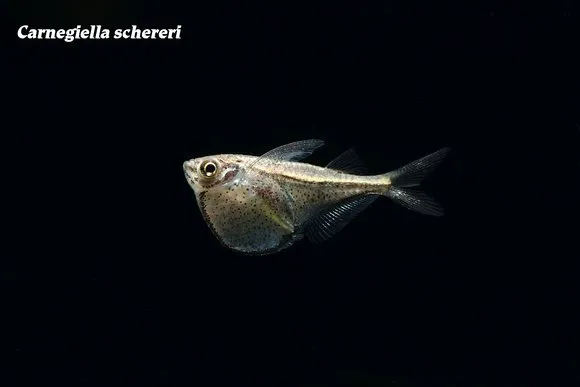 1 in (2.6 cm)14 gal (54 L)73–82°F (23–28°C)
Scherer's hatchetfish
Carnegiella schereri
1 in (2.6 cm) · 14 gal (54 L)
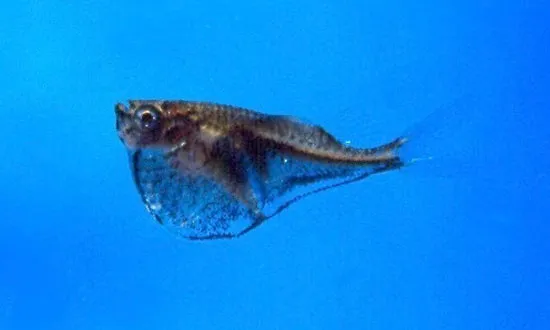 1.4 in (3.5 cm)30 gal (115 L)68–82°F (20–28°C)
Blackwing hatchetfish
Carnegiella marthae
1.4 in (3.5 cm) · 30 gal (115 L)
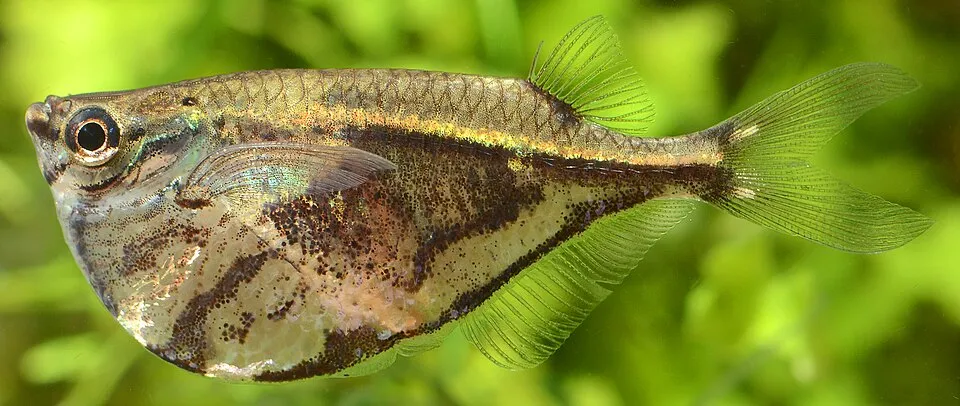 1.6 in (4 cm)32 gal (120 L)68–82°F (20–28°C)
Marbled hatchetfish
Carnegiella strigata
1.6 in (4 cm) · 32 gal (120 L)
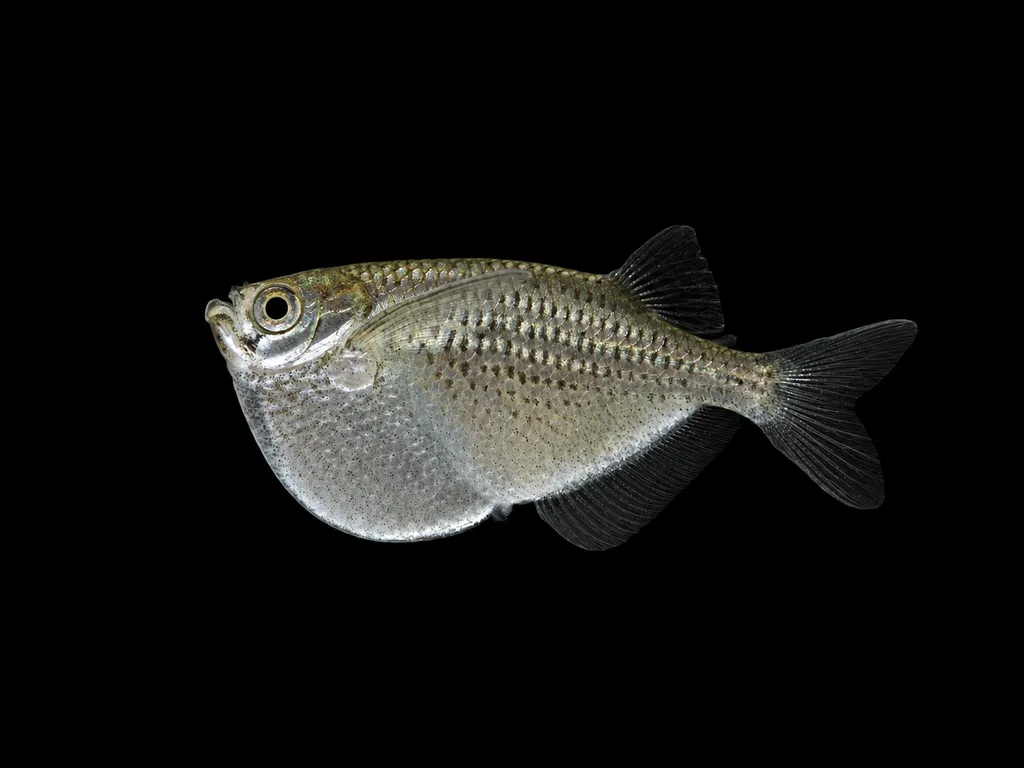 1.4 in (3.5 cm)30 gal (112 L)73–82°F (23–28°C)
Silver hatchetfish
Gasteropelecus levis
1.4 in (3.5 cm) · 30 gal (112 L)
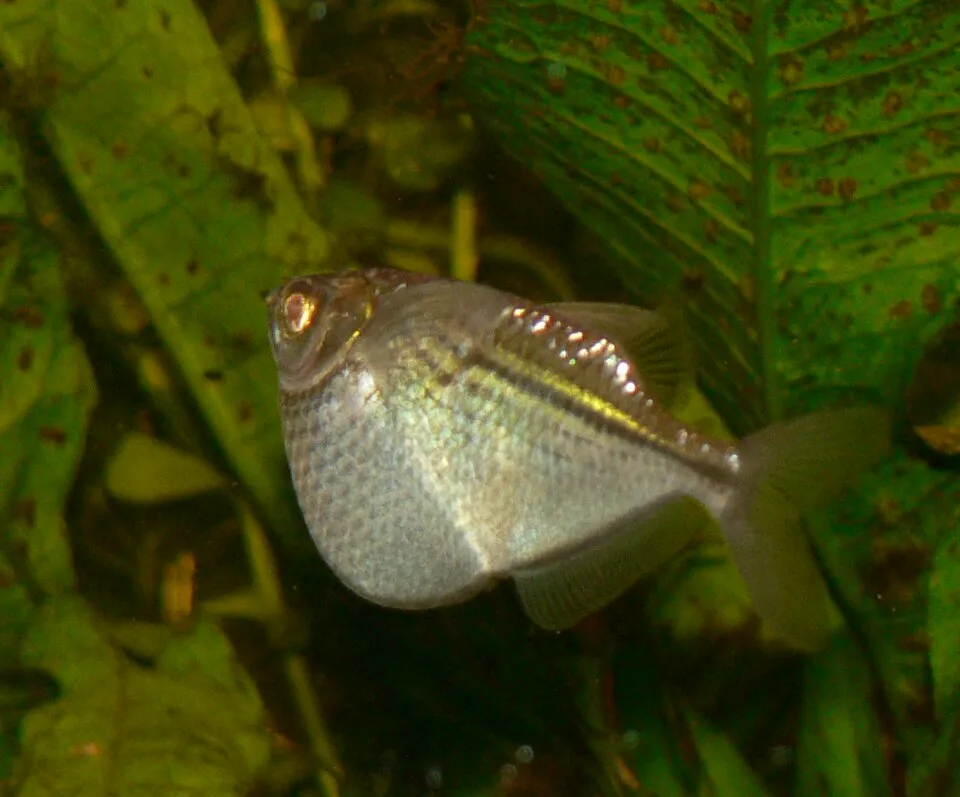 1.6 in (4 cm)33 gal (125 L)68–82°F (20–28°C)
Common hatchetfish
Gasteropelecus sternicla
1.6 in (4 cm) · 33 gal (125 L)
 3.5 in (9 cm)26 gal (100 L)73–82°F (23–28°C)
Spotfin hatchetfish
Thoracocharax stellatus
3.5 in (9 cm) · 26 gal (100 L)