Common hatchetfish
Gasteropelecus sternicla
Also known as Silver hatchetfish
FreshwaterFish
Care at a glance
- Temperature
- 68–82°F
- 20–28°C
- pH
- 5.5–7.0
- Adult size
- 1.6 in
- 4 cm
- Minimum tank
- 33 gal
- 125 L
- Temperament
- Peaceful
- Social behavior
- Shoaling
- Swim level
- Top
- Difficulty
- Medium
- Breeding
- No record
- Rarity
- Rare
- Family
- Gasteropelecidae
- Origin
- Brazil
Overview
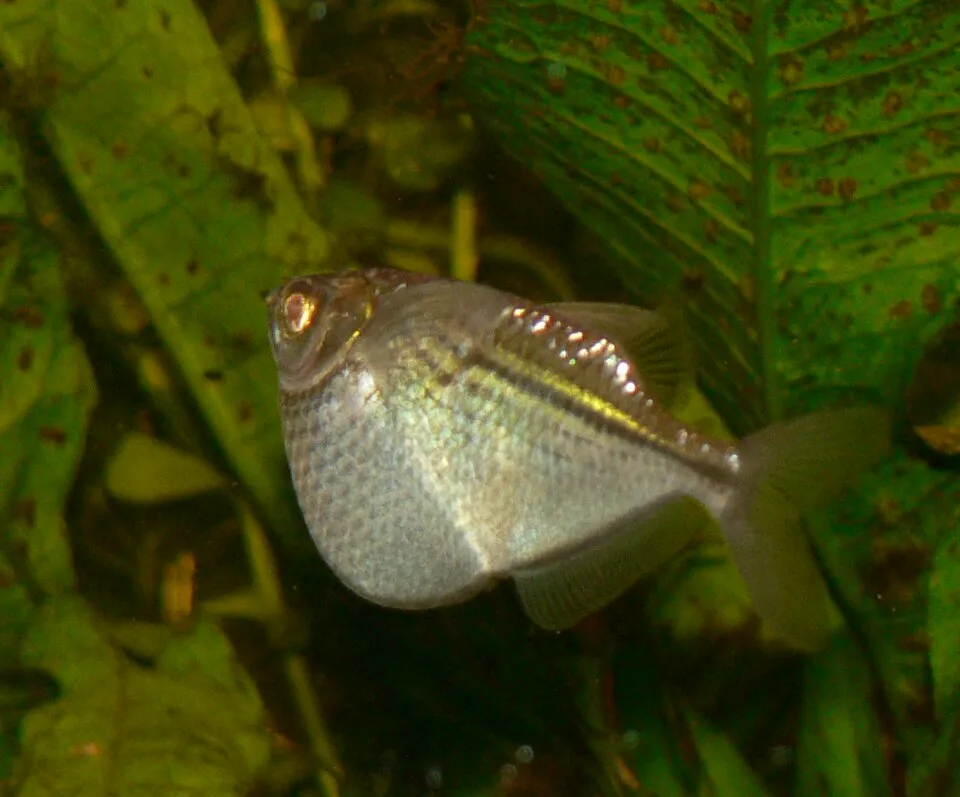
Most shops sell this fish as the silver hatchet; the silver hatchetfish proper is Gasteropelecus levis, a near twin with the same care. Keep them in a group of at least six, since they get jumpy and stressed alone. They sit at the top and rarely come down, so a tank around 125 liters or more with surface room suits them. Aim for the low to high 20s C and a pH on the acidic to neutral side. They are peaceful with calm tankmates and take small floating foods, flake, and tiny live or frozen insects.
In the wild
Common hatchetfish come from slow, shaded streams in the Amazon Basin, mostly around Brazil. The water there is soft, acidic, and stained brown with tannins, with leaf litter and overhanging plants up top. At home, give them a tight-fitting lid, some floating plants for cover, and gentle flow. They spend their whole life right at the surface, so the top of the tank matters most.
Good to know
This is a member of the Gasteropelecidae family, the freshwater hatchetfishes. Adults stay small, around 4 cm. They are egg scatterers with no recorded captive breeding success to speak of, and they get their name from the deep, keel-shaped chest that holds their oversized pectoral muscles.
Did you know
They can launch out of the water and beat their pectoral fins to skim across the surface, which is why a covered tank is not optional. In the wild this short burst helps them break away from a chasing predator.
Weekly picks
Tank mates
Common hatchetfish is a peaceful, shoaling species that keeps to the top. These picks share a community profile with it, are safe together in both directions, and overlap on water type, temperature and pH.
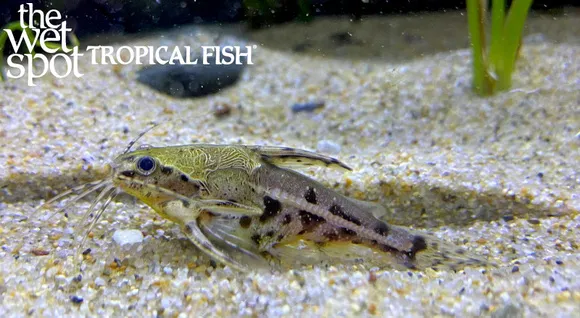
Marbled talking catfish
Amblydoras nauticus
Freshwater4.3 in (11 cm) · 30 gal (112 L)73–82°F (23–28°C)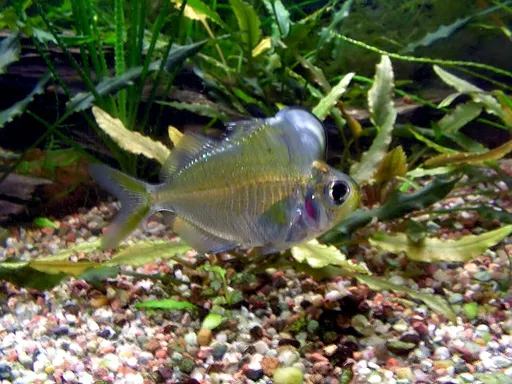
Humphead glassfish
Parambassis pulcinella
Freshwater3.9 in (10 cm) · 32 gal (120 L)73–81°F (23–27°C)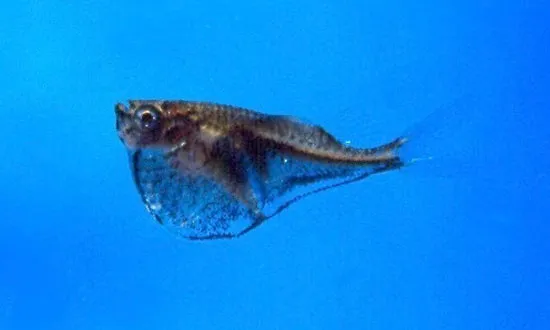
Blackwing hatchetfish
Carnegiella marthae
Freshwater1.4 in (3.5 cm) · 30 gal (115 L)68–82°F (20–28°C)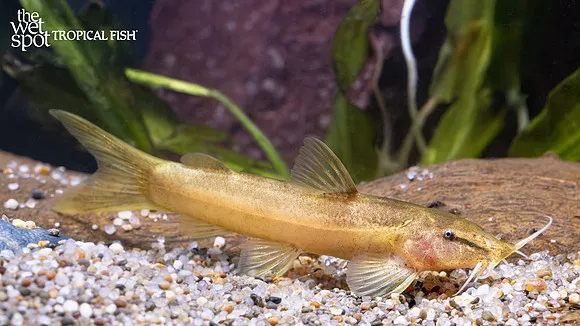
Kuhli cat
Amphilius platychir
Freshwater4.3 in (11 cm) · 30 gal (112 L)68–77°F (20–25°C)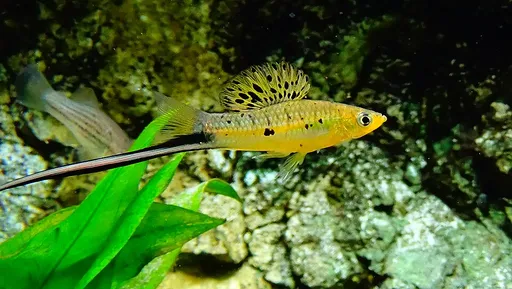
Montezuma swordtail
Xiphophorus montezumae
Freshwater5.5 in (14 cm) · 32 gal (120 L)68–79°F (20–26°C)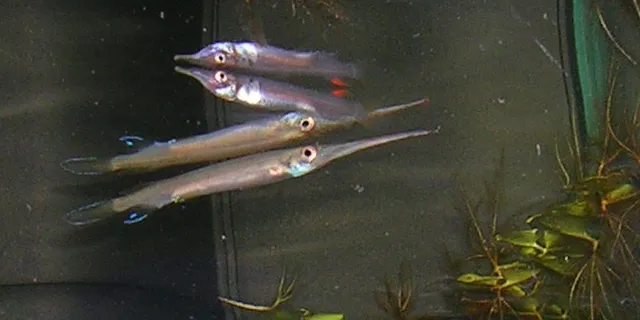
Forest halfbeak
Hemirhamphodon pogonognathus
Freshwater3.5 in (9 cm) · 34 gal (130 L)75–82°F (24–28°C)
Common questions
What size tank does a Common hatchetfish need?
A Common hatchetfish needs at least 33 gal (125 L). It spends most of its time in the top.
What temperature and pH does a Common hatchetfish need?
A Common hatchetfish is comfortable at 68–82°F (20–28°C) with a pH of 5.5–7.0.
How big does a Common hatchetfish get?
An adult Common hatchetfish reaches about 1.6 in (4 cm).
Does a Common hatchetfish need a group?
Yes. A Common hatchetfish is a shoaling species and should be kept in a group, not singly.
Related species
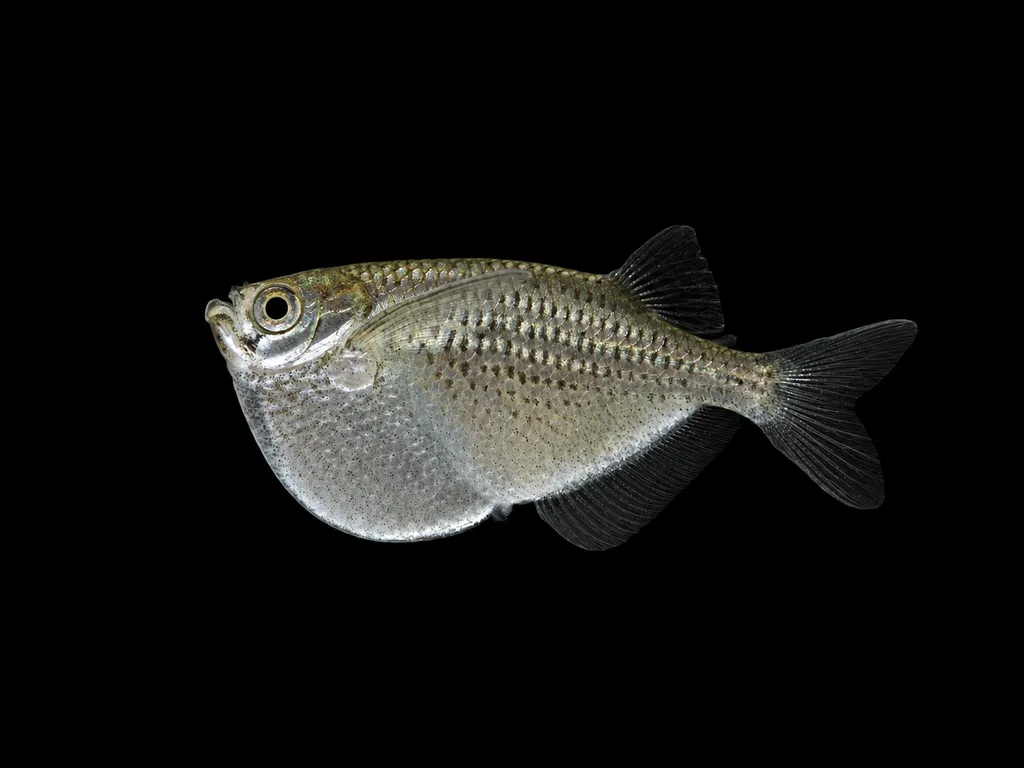 1.4 in (3.5 cm)30 gal (112 L)73–82°F (23–28°C)
Silver hatchetfish
Gasteropelecus levis
1.4 in (3.5 cm) · 30 gal (112 L)
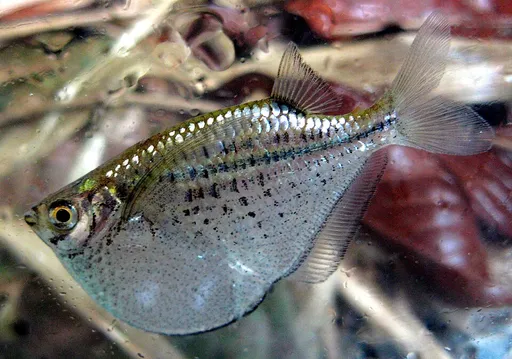 3.5 in (9 cm)26 gal (100 L)73–82°F (23–28°C)
Spotted hatchetfish
Gasteropelecus maculatus
3.5 in (9 cm) · 26 gal (100 L)
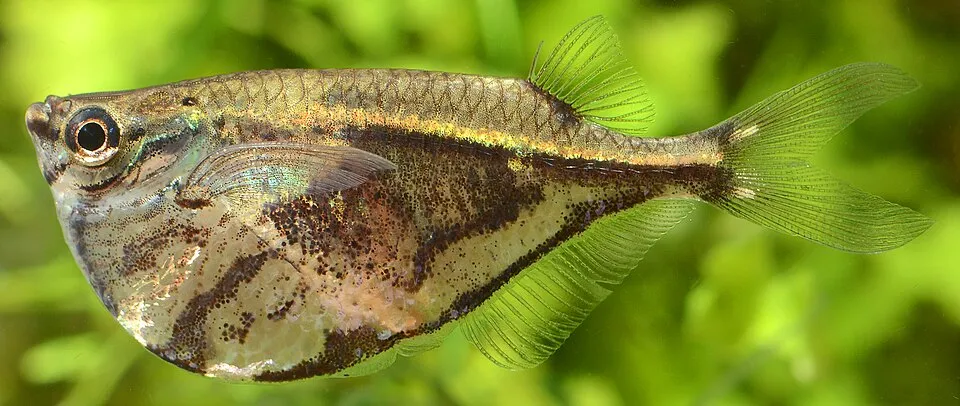 1.6 in (4 cm)32 gal (120 L)68–82°F (20–28°C)
Marbled hatchetfish
Carnegiella strigata
1.6 in (4 cm) · 32 gal (120 L)
- 1.4 in (3.5 cm)30 gal (115 L)68–82°F (20–28°C)
Blackwing hatchetfish
Carnegiella marthae
1.4 in (3.5 cm) · 30 gal (115 L)
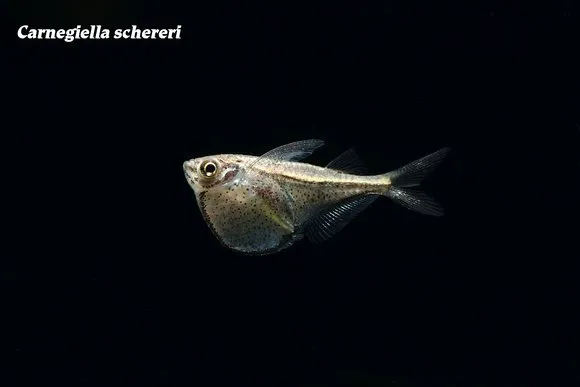 1 in (2.6 cm)14 gal (54 L)73–82°F (23–28°C)
Scherer's hatchetfish
Carnegiella schereri
1 in (2.6 cm) · 14 gal (54 L)
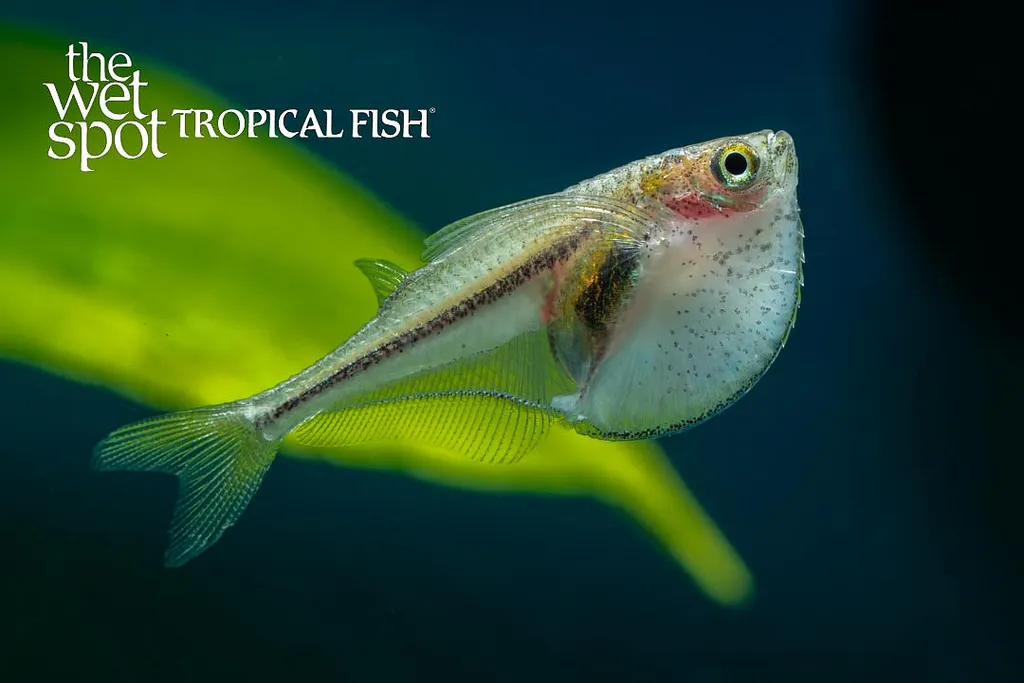 1 in (2.5 cm)26 gal (100 L)73–79°F (23–26°C)
Pygmy hatchetfish
Carnegiella myersi
1 in (2.5 cm) · 26 gal (100 L)