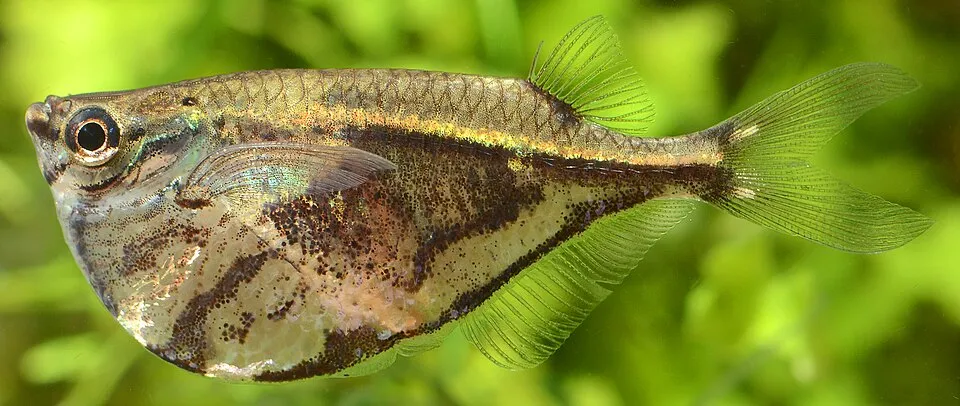
Marbled hatchetfish
Carnegiella strigata
Also known as Marble hatchetfish
FreshwaterFish
Care at a glance
- Temperature
- 68–82°F
- 20–28°C
- pH
- 5.5–7.0
- Adult size
- 1.6 in
- 4 cm
- Minimum tank
- 32 gal
- 120 L
- Temperament
- Peaceful
- Social behavior
- Shoaling
- Swim level
- Top
- Difficulty
- Medium
- Breeding
- No record
- Rarity
- Common
- Family
- Gasteropelecidae
- Origin
- South America
Overview
Keep them in a group of at least six. They are peaceful and spend their time hugging the surface. They take food from the top, so floating flakes, micro-pellets, and small live or frozen foods like mosquito larvae and fruit flies work well. Soft, warm, acidic water suits them. They pair fine with calm mid- and bottom-dwelling tankmates that share the same soft-water needs. A 120 liter tank gives them room to move.
In the wild
Marbled hatchetfish come from slow, shaded streams and tributaries in the Amazon Basin across Brazil, Peru, and Colombia. The water there is soft, acidic, and tea-stained, with floating plants and overhanging cover up top. Match that with a dim, well-planted tank with floating plants, soft acidic water (pH 5.5 to 7), and a tight lid, because these fish live right at the surface.
Good to know
This is a member of Gasteropelecidae, the freshwater hatchetfishes, growing to about 4 cm. The deep, keel-shaped chest houses oversized muscles that power the pectoral fins. They are egg scatterers that give no parental care. The IUCN lists the species as Least Concern.
Did you know
They are true flyers, not just jumpers. Using those big chest muscles they beat their pectoral fins and skim above the surface for a short burst to dodge predators, which is rare among fish and the reason the family carries the hatchet name.
Weekly picks
Tank mates
Marbled hatchetfish is a peaceful, shoaling species that keeps to the top. These picks share a community profile with it, are safe together in both directions, and overlap on water type, temperature and pH.
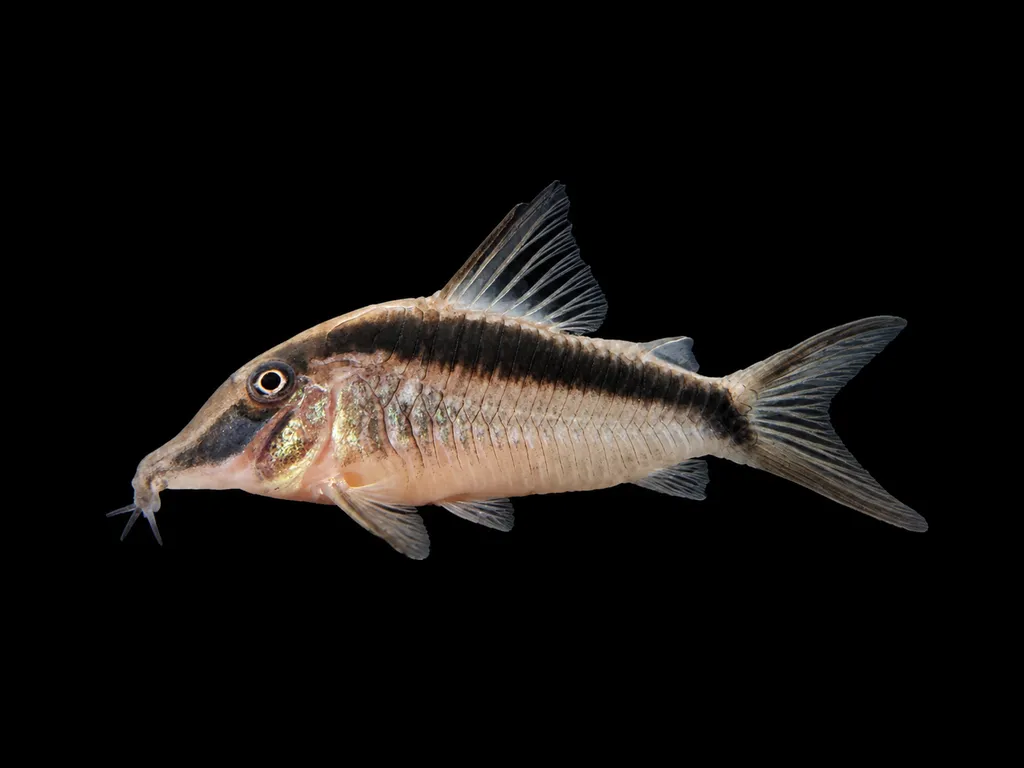
Long nosed arched cory
Corydoras narcissus
Freshwater2.8 in (7 cm) · 30 gal (115 L)73–77°F (23–25°C)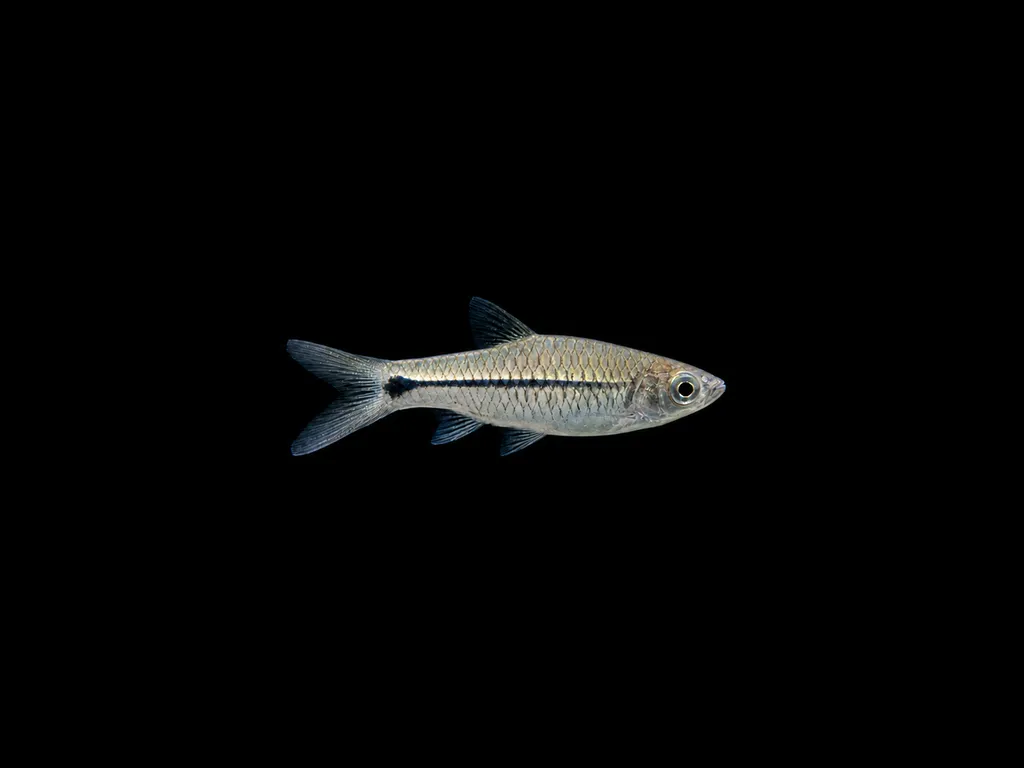
Sidestripe rasbora
Rasbora paviana
Freshwater3.1 in (8 cm) · 32 gal (120 L)72–79°F (22–26°C)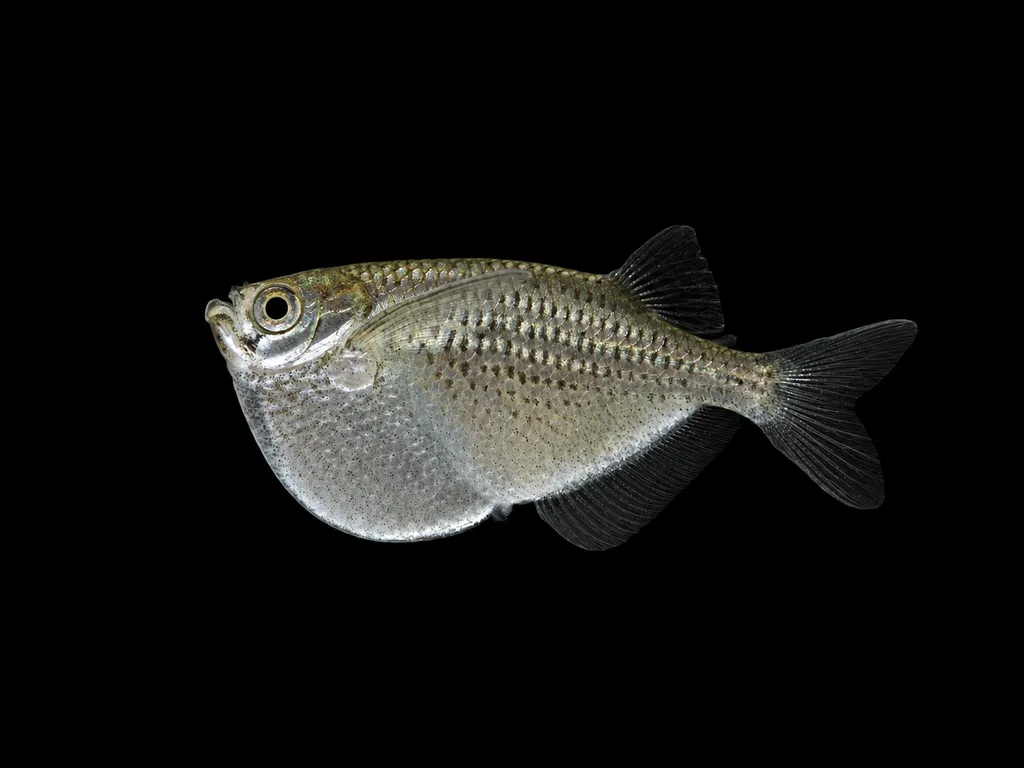
Silver hatchetfish
Gasteropelecus levis
Freshwater1.4 in (3.5 cm) · 30 gal (112 L)73–82°F (23–28°C)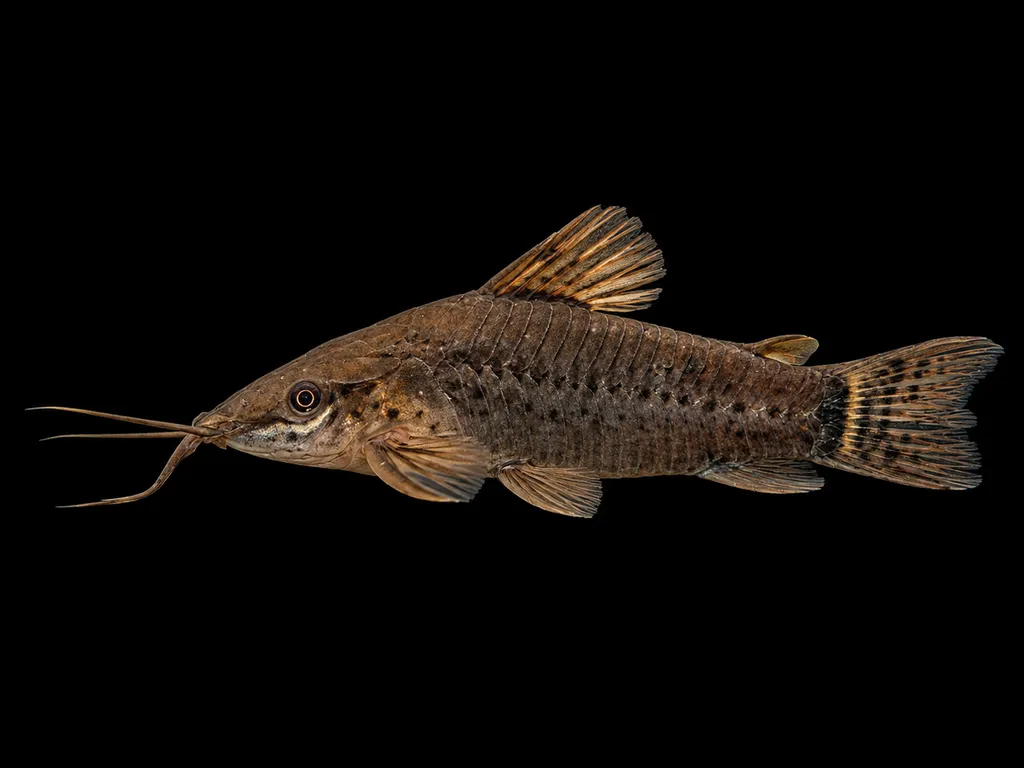
Panama hoplo
Hoplosternum punctatum
Freshwater3.1 in (8 cm) · 30 gal (115 L)72–79°F (22–26°C)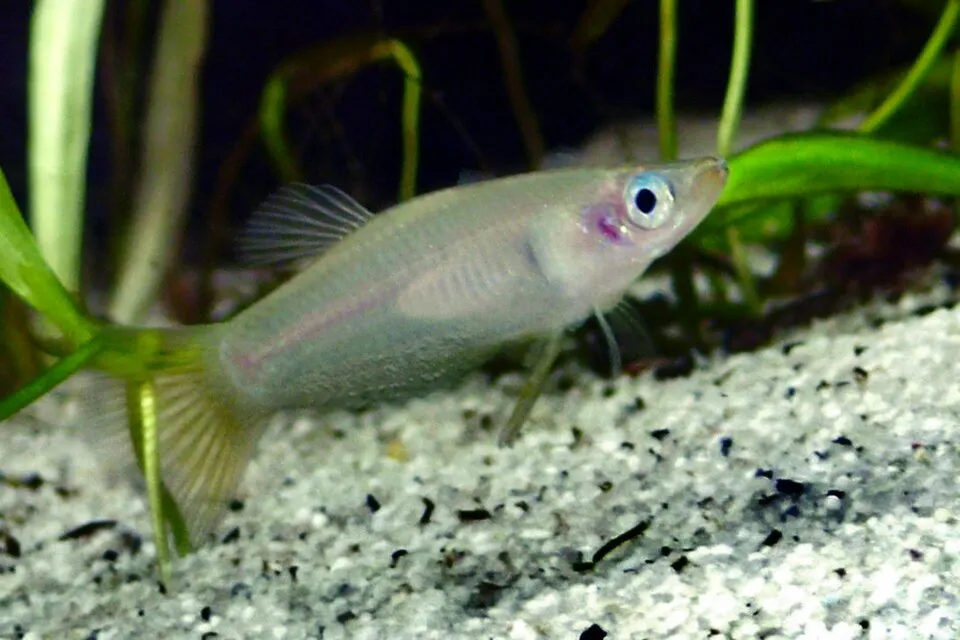
Knife livebearer
Alfaro cultratus
Freshwater3 in (7.6 cm) · 32 gal (120 L)75–82°F (24–28°C)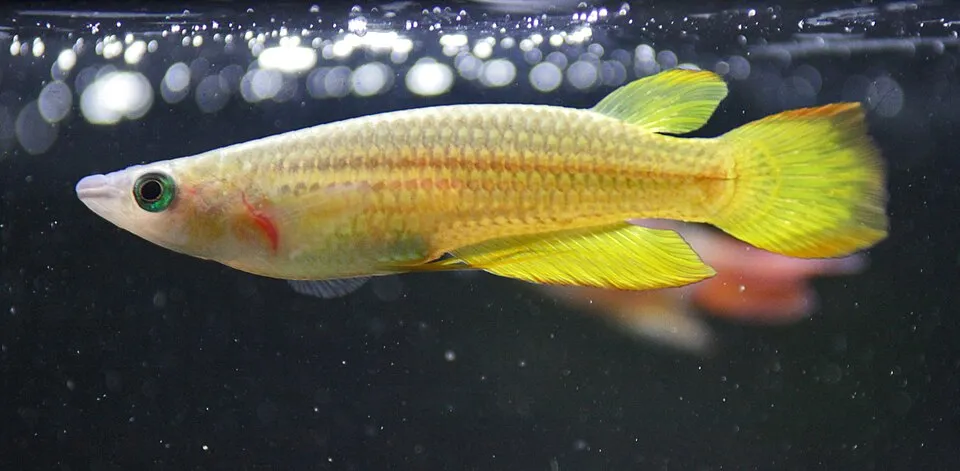
Striped panchax
Aplocheilus lineatus
Freshwater4.3 in (11 cm) · 30 gal (115 L)72–77°F (22–25°C)
Common questions
What size tank does a Marbled hatchetfish need?
A Marbled hatchetfish needs at least 32 gal (120 L). It spends most of its time in the top.
What temperature and pH does a Marbled hatchetfish need?
A Marbled hatchetfish is comfortable at 68–82°F (20–28°C) with a pH of 5.5–7.0.
How big does a Marbled hatchetfish get?
An adult Marbled hatchetfish reaches about 1.6 in (4 cm).
Does a Marbled hatchetfish need a group?
Yes. A Marbled hatchetfish is a shoaling species and should be kept in a group, not singly.
Related species
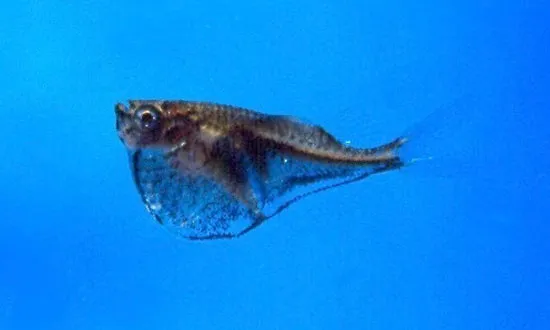 1.4 in (3.5 cm)30 gal (115 L)68–82°F (20–28°C)
Blackwing hatchetfish
Carnegiella marthae
1.4 in (3.5 cm) · 30 gal (115 L)
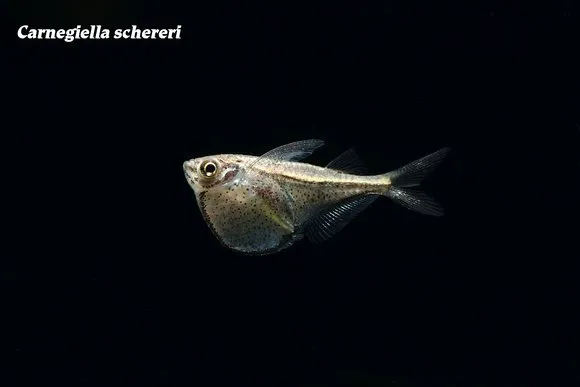 1 in (2.6 cm)14 gal (54 L)73–82°F (23–28°C)
Scherer's hatchetfish
Carnegiella schereri
1 in (2.6 cm) · 14 gal (54 L)
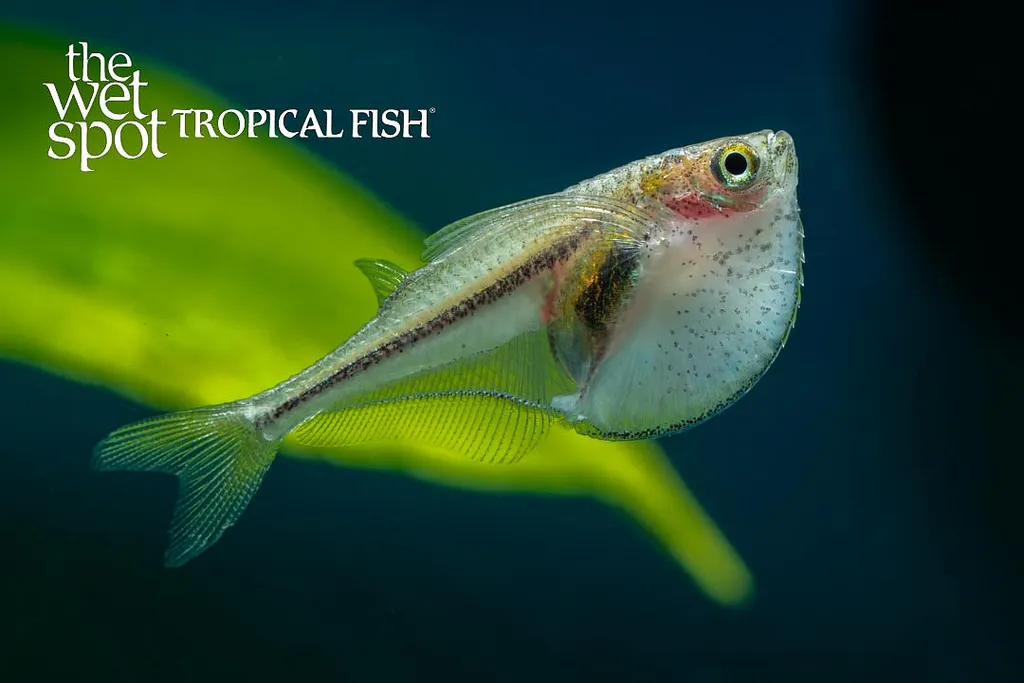 1 in (2.5 cm)26 gal (100 L)73–79°F (23–26°C)
Pygmy hatchetfish
Carnegiella myersi
1 in (2.5 cm) · 26 gal (100 L)
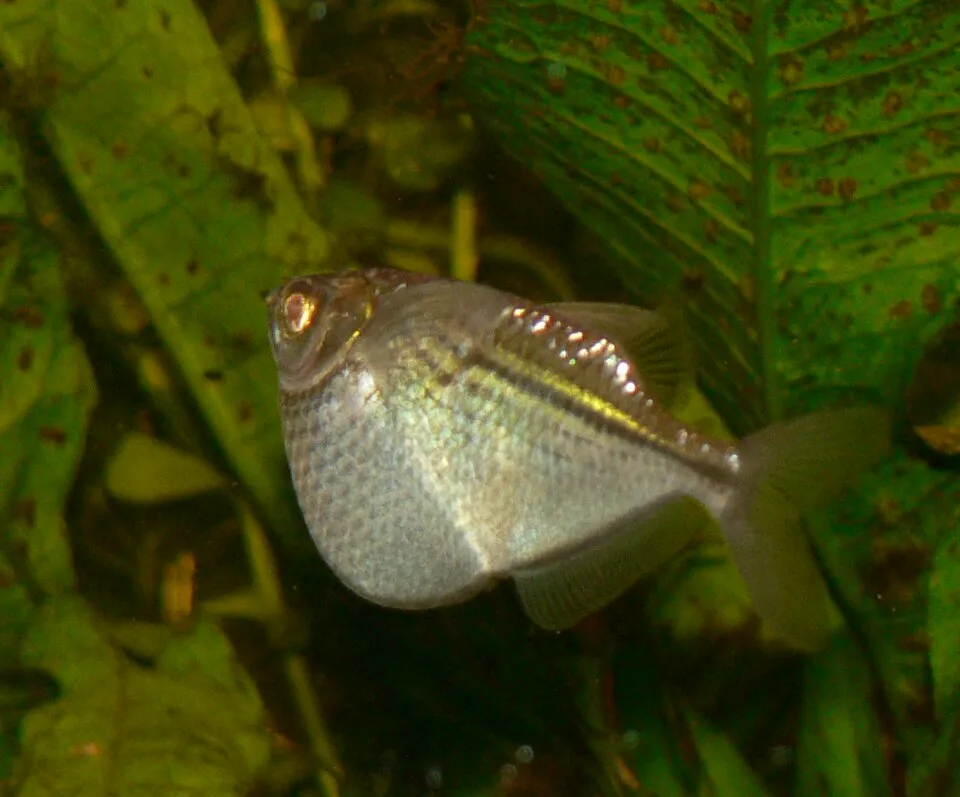 1.6 in (4 cm)33 gal (125 L)68–82°F (20–28°C)
Common hatchetfish
Gasteropelecus sternicla
1.6 in (4 cm) · 33 gal (125 L)
- 1.4 in (3.5 cm)30 gal (112 L)73–82°F (23–28°C)
Silver hatchetfish
Gasteropelecus levis
1.4 in (3.5 cm) · 30 gal (112 L)
 3.5 in (9 cm)26 gal (100 L)73–82°F (23–28°C)
Spotfin hatchetfish
Thoracocharax stellatus
3.5 in (9 cm) · 26 gal (100 L)