Spotted hatchetfish
Gasteropelecus maculatus
Also known as Spotted hatchet, Spotted river hatchetfish
FreshwaterFish
Care at a glance
- Temperature
- 73–82°F
- 23–28°C
- pH
- 6.0–7.5
- Adult size
- 3.5 in
- 9 cm
- Minimum tank
- 26 gal
- 100 L
- Temperament
- Peaceful
- Social behavior
- Shoaling
- Swim level
- Top
- Difficulty
- Medium
- Breeding
- No record
- Rarity
- Rare
- Family
- Gasteropelecidae
- Origin
- Native to Panama and northern South America, including the western Amazon and Magdalena drainages.
Overview
The spotted hatchetfish is a peaceful surface fish for a community tank. It is a sensible next step for a keeper past the beginner stage.
Did you know
When alarmed, spotted hatchetfish beat their winglike pectoral fins and skitter across the surface of the water.
Caring for the spotted hatchetfish
Give spotted hatchetfish a tank of 26 gal (100 L) or more. Add floating plants for cover, and leave open water at the surface for them to cruise. A tight lid is a must, because startled hatchetfish will shoot out of the water.
Keep the water at 73 to 82°F (23 to 28°C) and the pH at 6.0 to 7.5. Keep spotted hatchetfish in a group of six or more. They are peaceful and stick to the very top, so pair them with fish that use the middle and bottom of the tank.
Good to know
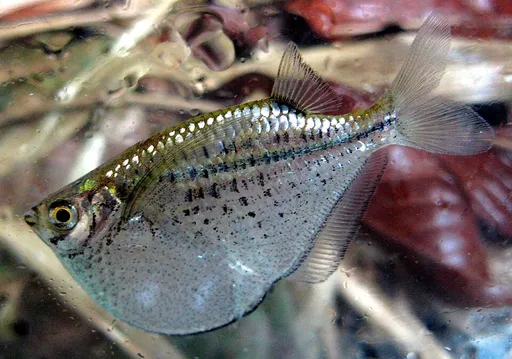
Gasteropelecus maculatus is one of the larger hatchetfishes, and its silvery body is scattered with dark spots. Its deep, muscular breast powers the enlarged pectoral fins. It belongs to the family Gasteropelecidae.
In the wild
The spotted hatchetfish is native to Panama and northern South America, including the western Amazon and Magdalena drainages. It hangs right at the surface of streams, creeks and quiet river margins, often under overhanging plants. Its keeled chest and upturned mouth are built to snatch insects off the surface film. It stays tight to the top in groups.
Weekly picks
Tank mates
The spotted hatchetfish is a peaceful, shoaling species that keeps to the top. These picks share a community profile with it, are safe together in both directions, and overlap on water type, temperature and pH.
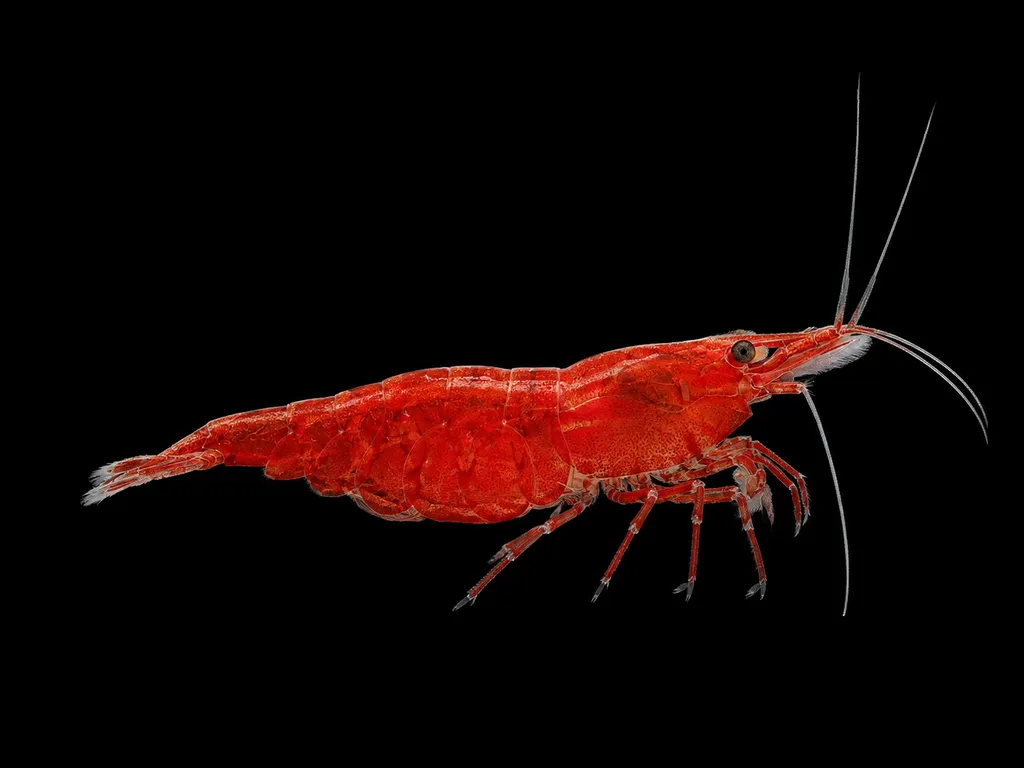
Neocaridina shrimp
Neocaridina davidi
Freshwater1.6 in (4 cm) · 5 gal (19 L)59–84°F (15–29°C)
Guppy
Poecilia reticulata
FreshwaterBrackish2.4 in (6 cm) · 10 gal (38 L)64–82°F (18–28°C)
Neon tetra
Paracheirodon innesi
Freshwater1.5 in (3.8 cm) · 11 gal (40 L)70–77°F (21–25°C)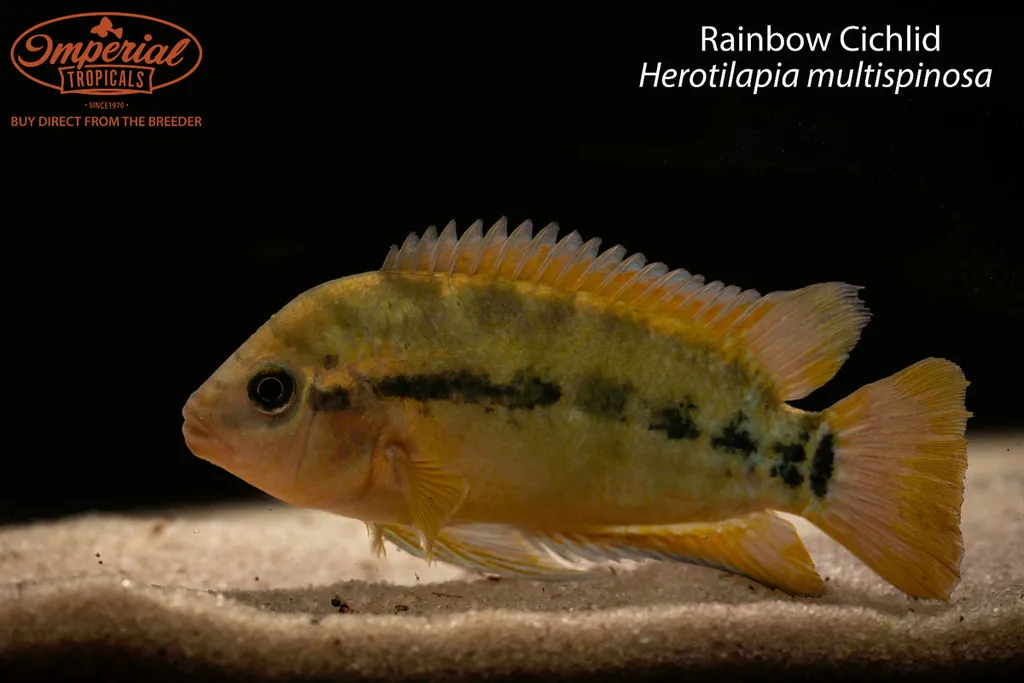
Rainbow cichlid
Herotilapia multispinosa
Freshwater6.3 in (16 cm) · 26 gal (100 L)72–82°F (22–28°C)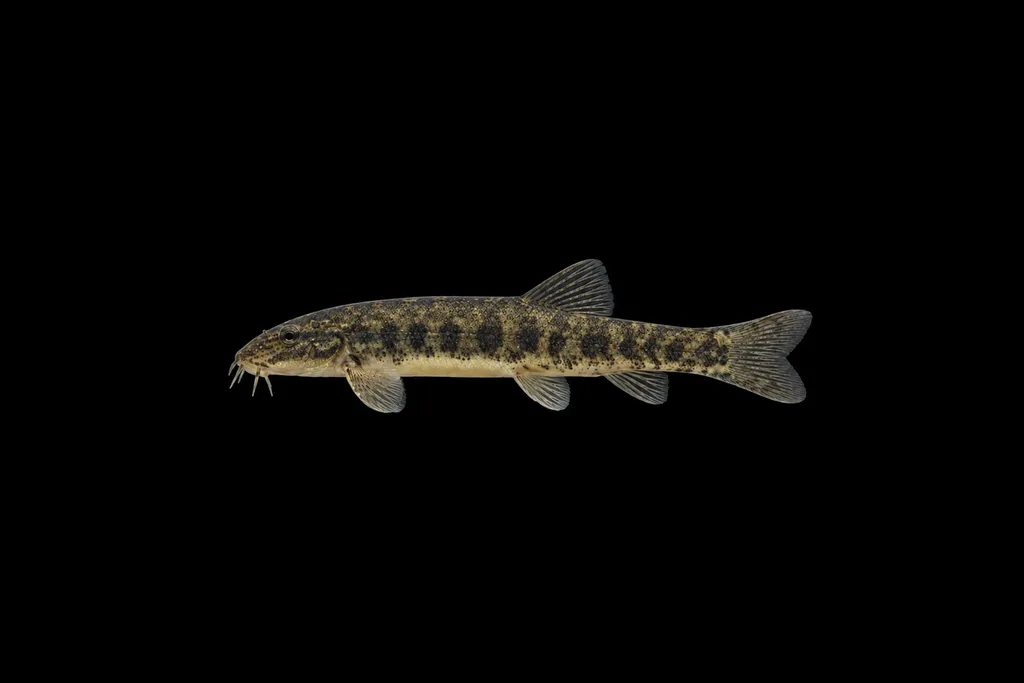
Torrent loach
Psilorhynchus robustus
Freshwater2.8 in (7 cm) · 26 gal (100 L)64–75°F (18–24°C)Siamese flying barb
Laubuka siamensis
Freshwater2.6 in (6.5 cm) · 24 gal (90 L)72–81°F (22–27°C)
Common questions
What size tank does a spotted hatchetfish need?
A spotted hatchetfish needs at least 26 gal (100 L). It spends most of its time in the top.
What temperature and pH does a spotted hatchetfish need?
A spotted hatchetfish is comfortable at 73–82°F (23–28°C) with a pH of 6.0–7.5.
How big does a spotted hatchetfish get?
An adult spotted hatchetfish reaches about 3.5 in (9 cm).
Does a spotted hatchetfish need a group?
Yes. A spotted hatchetfish is a shoaling species and should be kept in a group, not singly.
Related species
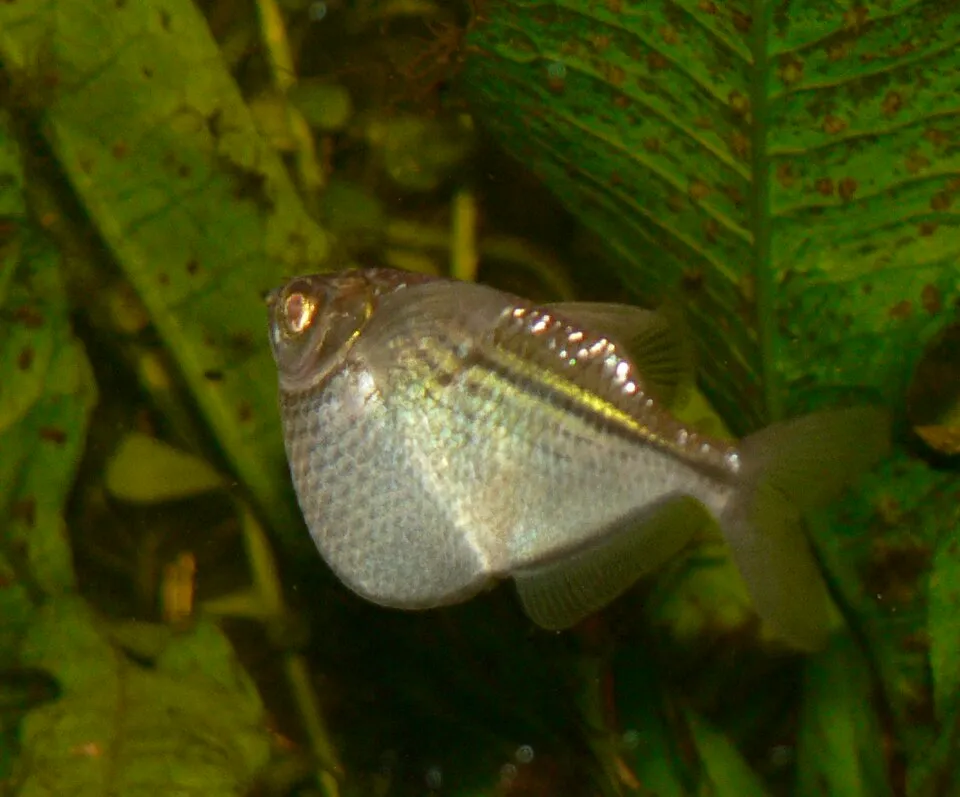 1.6 in (4 cm)33 gal (125 L)68–82°F (20–28°C)
Common hatchetfish
Gasteropelecus sternicla
1.6 in (4 cm) · 33 gal (125 L)
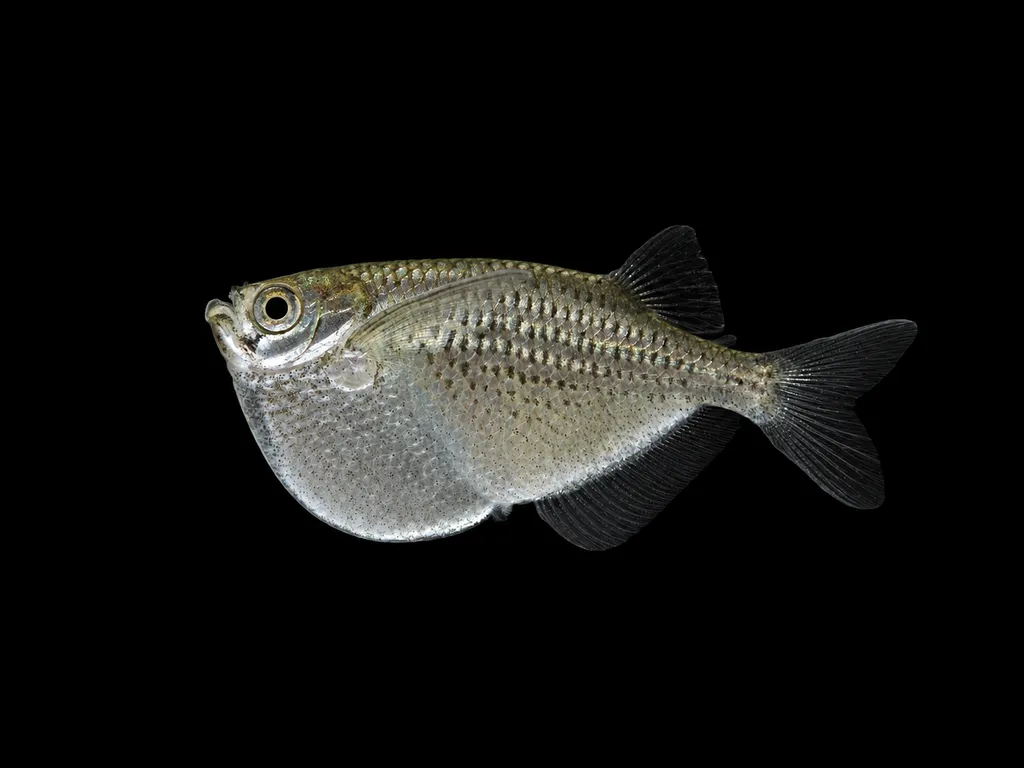 1.4 in (3.5 cm)30 gal (112 L)73–82°F (23–28°C)
Silver hatchetfish
Gasteropelecus levis
1.4 in (3.5 cm) · 30 gal (112 L)
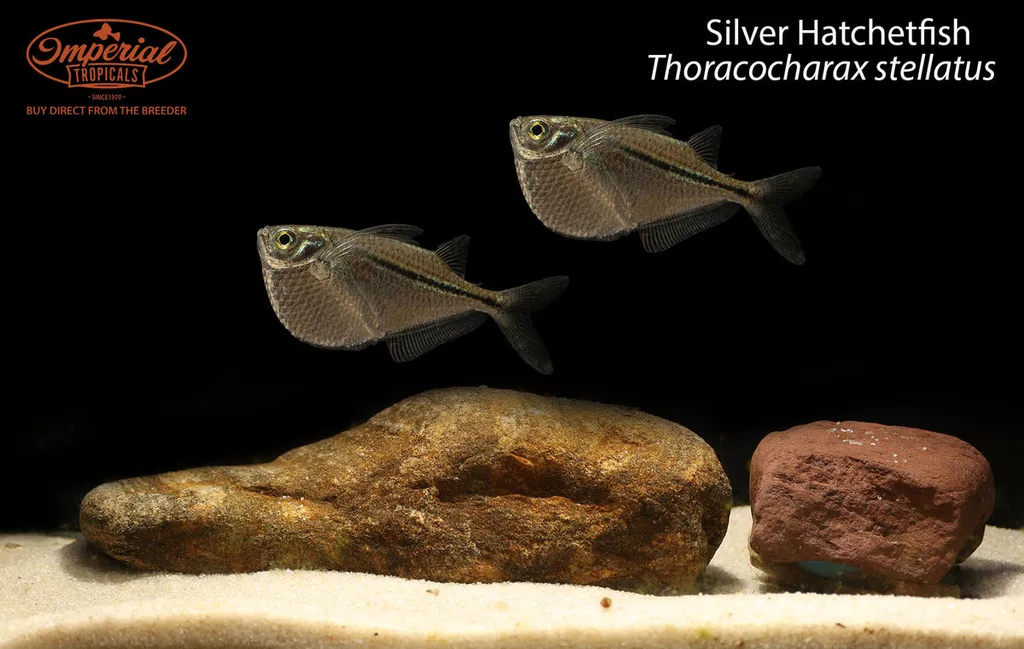 3.5 in (9 cm)26 gal (100 L)73–82°F (23–28°C)
Spotfin hatchetfish
Thoracocharax stellatus
3.5 in (9 cm) · 26 gal (100 L)
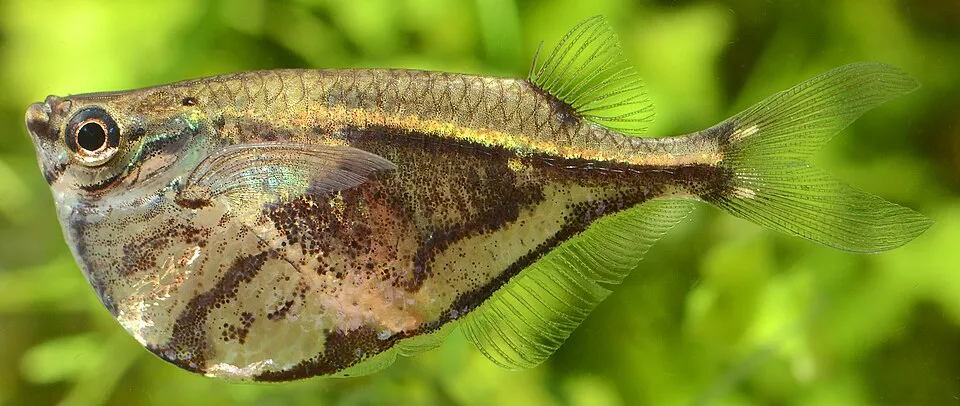 1.6 in (4 cm)32 gal (120 L)68–82°F (20–28°C)
Marbled hatchetfish
Carnegiella strigata
1.6 in (4 cm) · 32 gal (120 L)
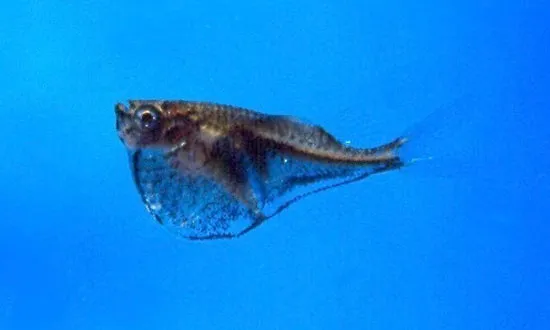 1.4 in (3.5 cm)30 gal (115 L)68–82°F (20–28°C)
Blackwing hatchetfish
Carnegiella marthae
1.4 in (3.5 cm) · 30 gal (115 L)
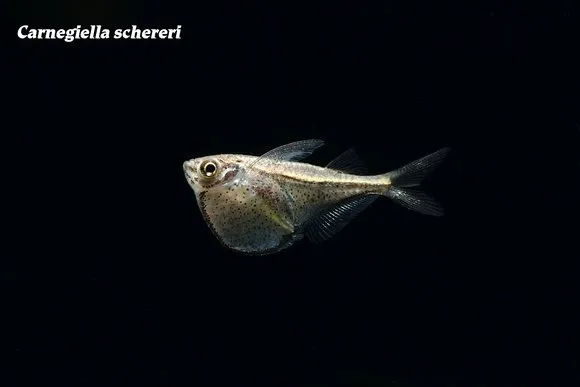 1 in (2.6 cm)14 gal (54 L)73–82°F (23–28°C)
Scherer's hatchetfish
Carnegiella schereri
1 in (2.6 cm) · 14 gal (54 L)