Chopstick snail
Stenomelania torulosa
Also known as Torulosa snail, Spire snail
FreshwaterSnail
Care at a glance
- Temperature
- 73–82°F
- 23–28°C
- pH
- 6.8–8.0
- Adult size
- 2 in
- 5 cm
- Minimum tank
- 11 gal
- 40 L
- Temperament
- Peaceful
- Social behavior
- Solitary
- Swim level
- Bottom
- Difficulty
- Easy
- Breeding
- No record
- Rarity
- Common
- Family
- Thiaridae
- Origin
- Lowland rivers of Southeast Asia
Overview
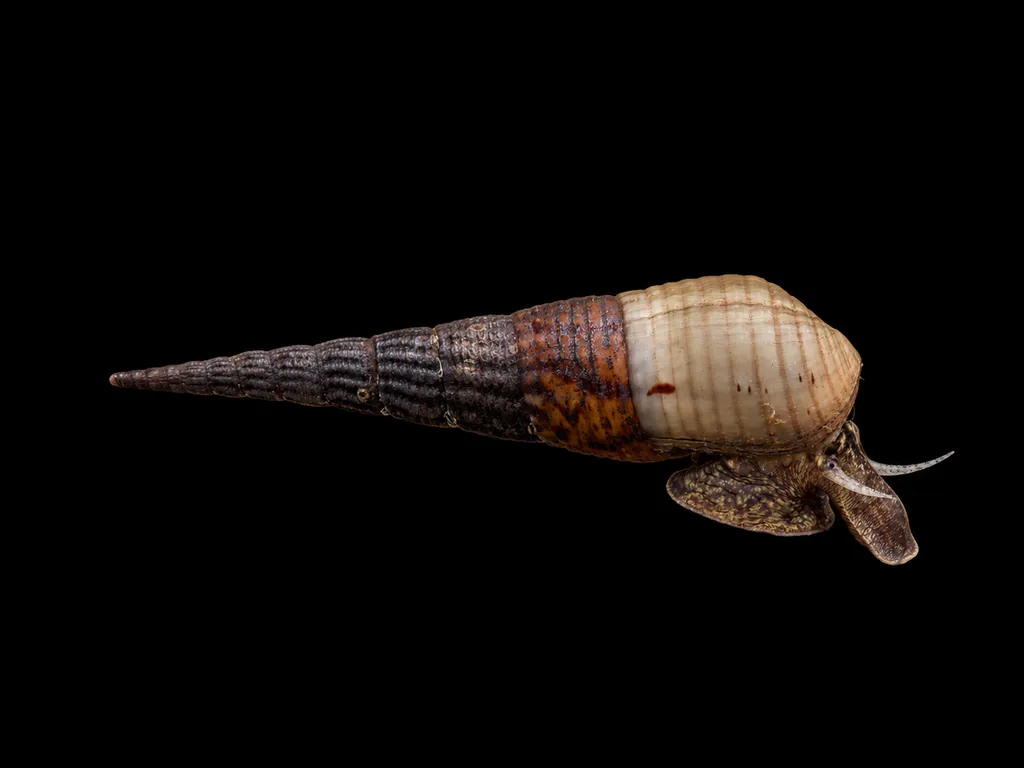
The chopstick snail is a peaceful burrowing snail that does most of its work out of sight. The only visible sign is a slow line moving under the sand. It is easy to keep.
Did you know
The chopstick snail's spire is its tool. The long taper lets it lever through packed sand that no round snail could enter.
Caring for the chopstick snail
Keep the chopstick snail in a tank of at least 11 gal (40 L). Give it soft sand or fine gravel at least a few centimeters deep, since it cannot burrow into coarser gravel.
It needs harder water for shell health, at 73 to 82°F (23 to 28°C) and a pH of 6.8 to 8.0. Soft, acidic water pits and erodes the shell over time, which is the main way these snails are lost.
Feed nothing special, since it lives on what settles. It turns over the top layer of the substrate and eats detritus and algae as it goes. It is peaceful and safe in a community tank.
Thiarid snails like this one are livebearers, and many reproduce without males. Most Stenomelania need brackish water for their larvae, so tank populations rarely explode the way Melanoides do.
Good to know
The chopstick snail, Stenomelania torulosa, belongs to the family Thiaridae. Its shell is a long, narrow, ridged spire. It is also sold as the torulosa snail or the spire snail.
In the wild
The chopstick snail lives in lowland rivers across Southeast Asia, often near the coast, where the water is fresh but mineral-rich.
Weekly picks
Tank mates
The chopstick snail is a peaceful, solitary species that keeps to the bottom. These picks share a community profile with it, are safe together in both directions, and overlap on water type, temperature and pH.
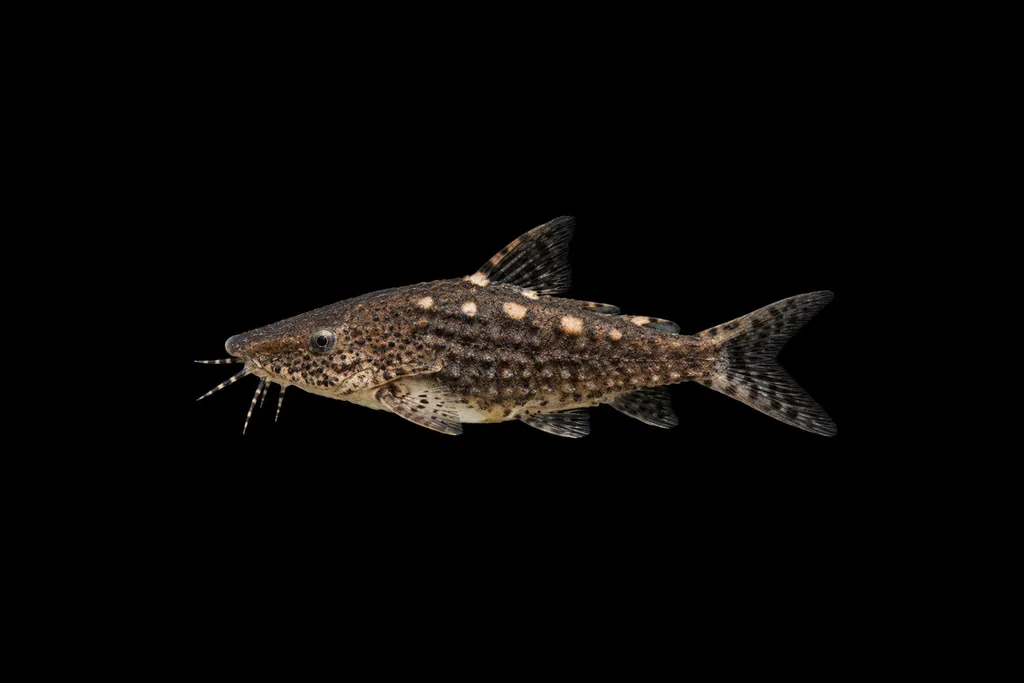
Dwarf warty catfish
Parakysis notialis
Freshwater1 in (2.5 cm) · 11 gal (40 L)73–82°F (23–28°C)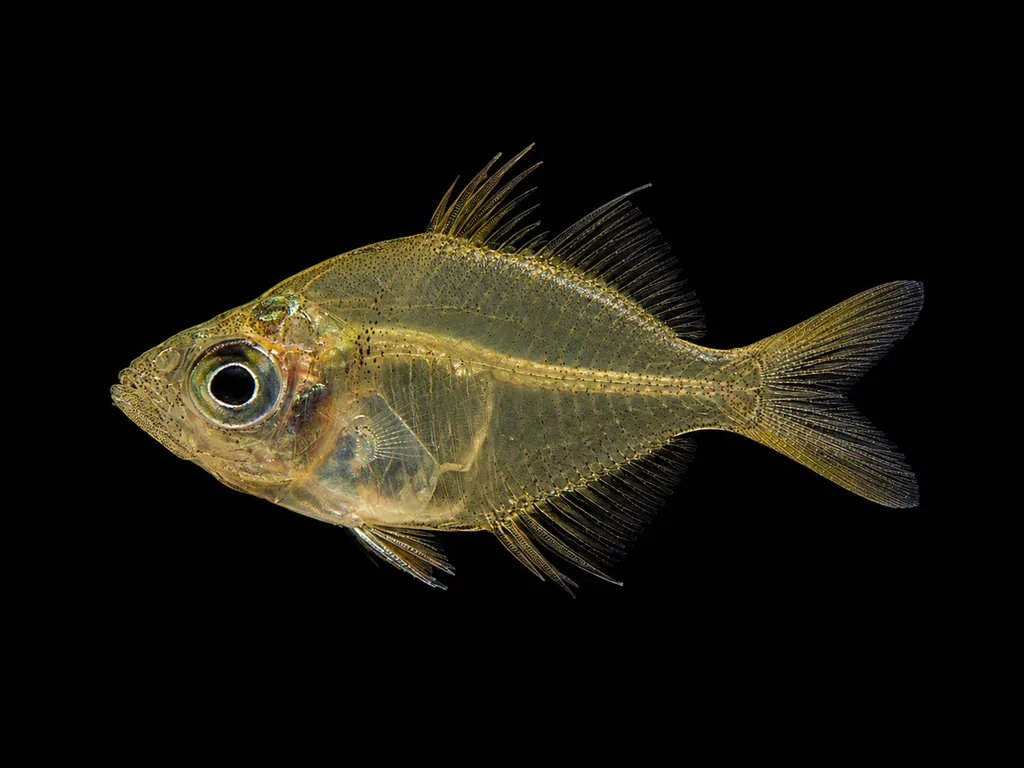
Indian amber glassfish
Parambassis lala
Freshwater1.2 in (3 cm) · 11 gal (40 L)72–82°F (22–28°C)
Green panchax
Aplocheilus blockii
Freshwater2 in (5 cm) · 11 gal (40 L)72–82°F (22–28°C)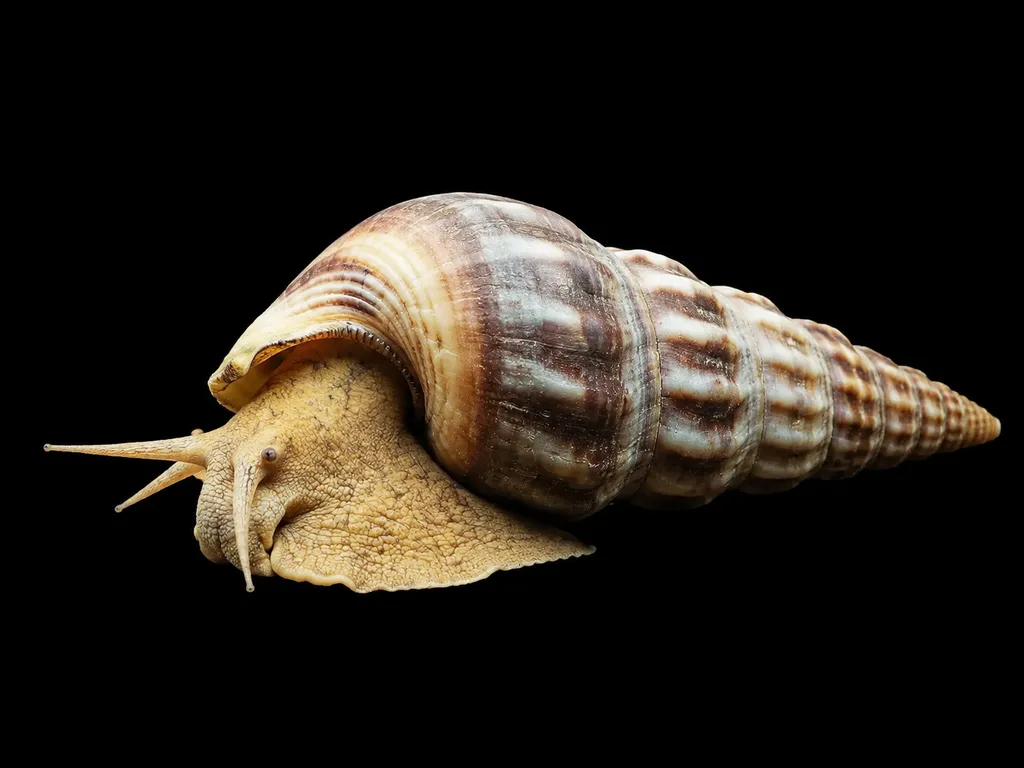
Hercules snail
Brotia herculea
Freshwater3.1 in (8 cm) · 11 gal (40 L)73–82°F (23–28°C)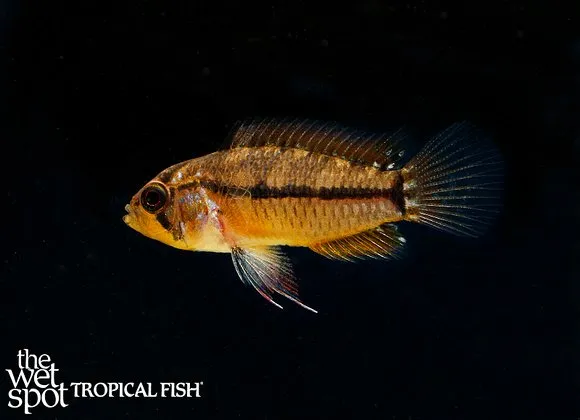
T-bar dwarf cichlid
Apistogrammoides pucallpaensis
Freshwater1.6 in (4 cm) · 11 gal (40 L)75–82°F (24–28°C)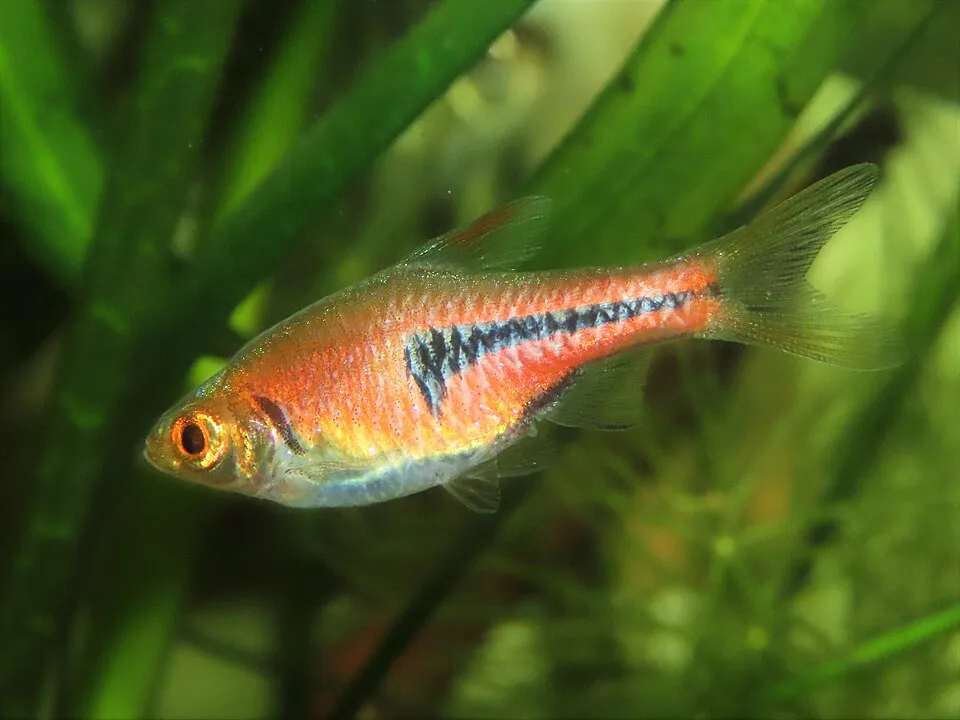
Espei rasbora
Trigonostigma espei
Freshwater1.5 in (3.8 cm) · 11 gal (40 L)73–82°F (23–28°C)
Common questions
What size tank does a chopstick snail need?
A chopstick snail needs at least 11 gal (40 L). It spends most of its time in the bottom.
What temperature and pH does a chopstick snail need?
A chopstick snail is comfortable at 73–82°F (23–28°C) with a pH of 6.8–8.0.
What does a chopstick snail eat?
A chopstick snail lives on what settles, eating detritus and algae as it turns over the top layer of the substrate. It needs no special food.
How big does a chopstick snail get?
An adult chopstick snail reaches about 2 in (5 cm).
How does a chopstick snail breed?
Thiarid snails like the chopstick snail are livebearers, and many reproduce without males. Most Stenomelania need brackish water for their larvae, so tank populations rarely explode the way Melanoides do.
Related species
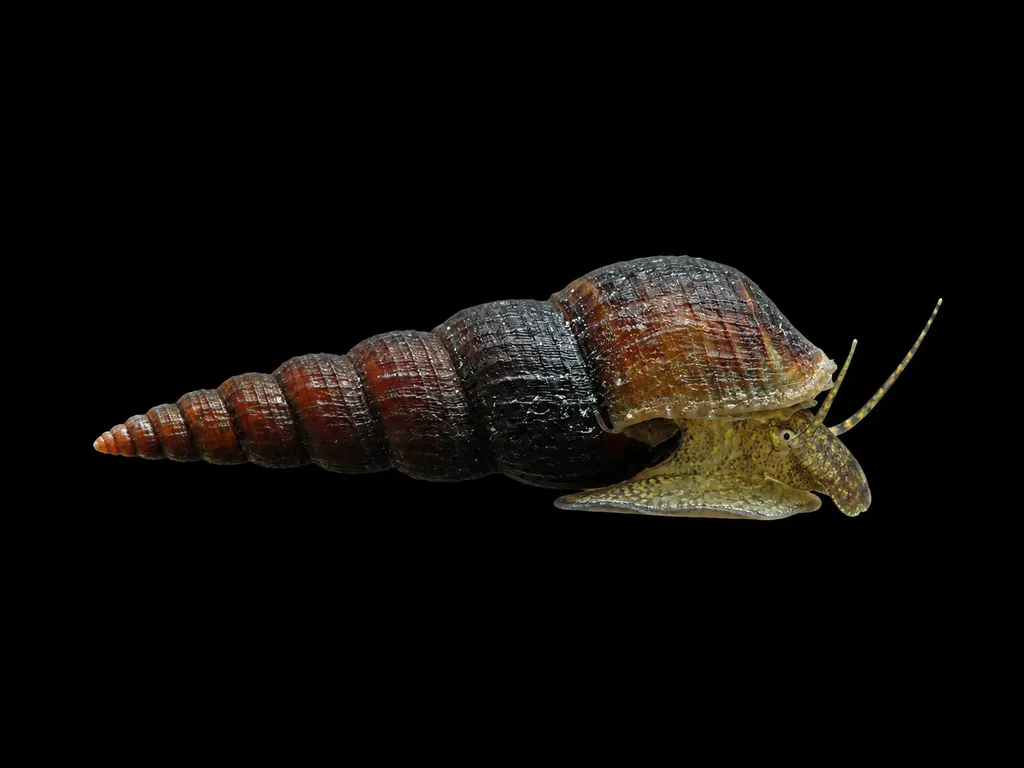 1.6 in (4 cm)5 gal (20 L)72–82°F (22–28°C)
Mahogany trumpet snail
Melanoides maculata
1.6 in (4 cm) · 5 gal (20 L)
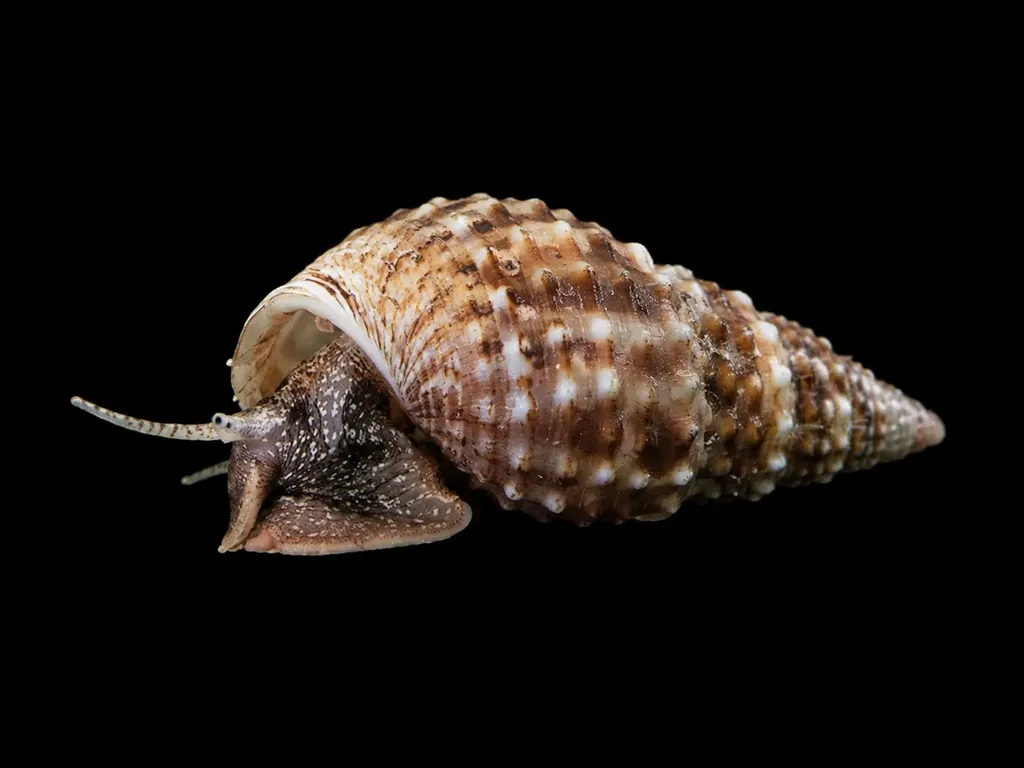 1.6 in (4 cm)11 gal (40 L)73–82°F (23–28°C)
Prambanan snail
Thiara winteri
1.6 in (4 cm) · 11 gal (40 L)
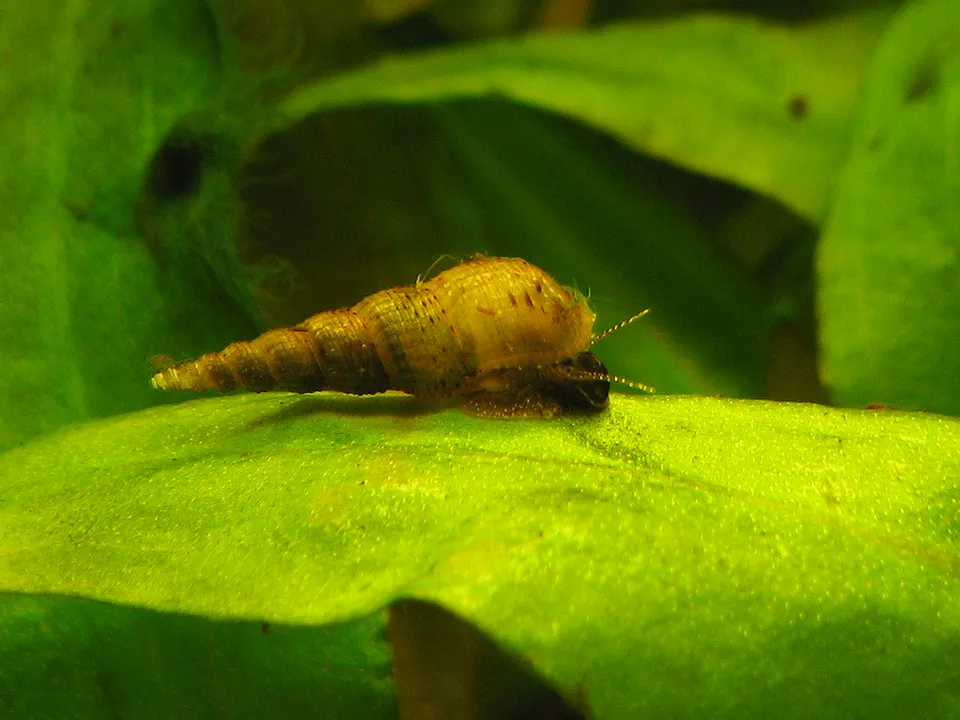 1.2 in (3 cm)5 gal (20 L)70–77°F (21–25°C)
Malaysian trumpet snail
Melanoides tuberculata
1.2 in (3 cm) · 5 gal (20 L)
 2 in (5 cm)5 gal (20 L)73–81°F (23–27°C)
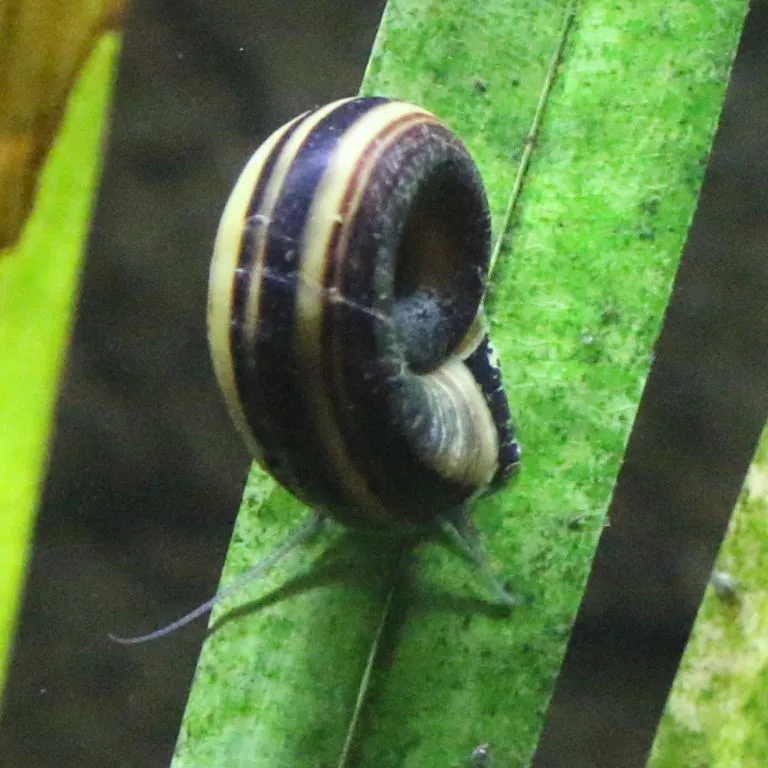
Giant Colombian ramshorn
Marisa cornuarietis
2 in (5 cm) · 5 gal (20 L)
 2 in (5 cm)11 gal (40 L)77–86°F (25–30°C)
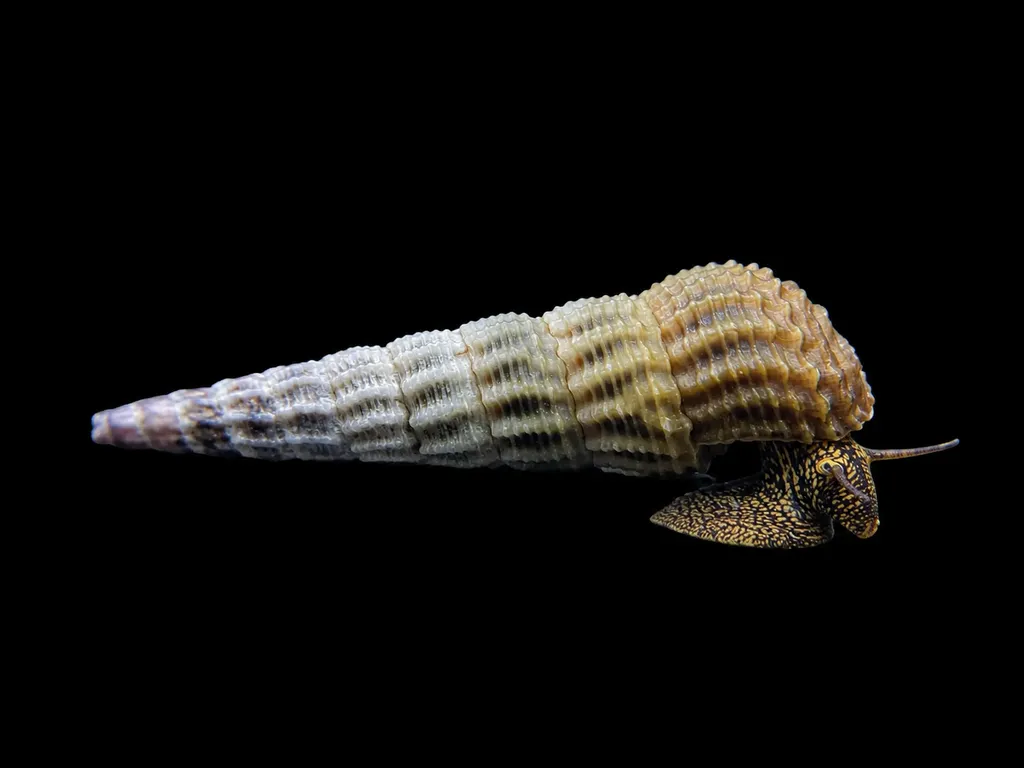
Himalayan rabbit snail
Tylomelania marwotoae
2 in (5 cm) · 11 gal (40 L)
 2 in (5 cm)8 gal (30 L)64–77°F (18–25°C)
Japanese trapdoor snail
Cipangopaludina malleata
2 in (5 cm) · 8 gal (30 L)