Japanese trapdoor snail
Cipangopaludina malleata
FreshwaterSnail
Care at a glance
- Temperature
- 64–77°F
- 18–25°C
- pH
- 6.5–8.0
- Adult size
- 2 in
- 5 cm
- Minimum tank
- 8 gal
- 30 L
- Temperament
- Peaceful
- Social behavior
- Solitary
- Swim level
- Bottom
- Difficulty
- Easy
- Breeding
- Medium
- Rarity
- Very rare
- Family
- Viviparidae
- Origin
- Japan
Overview
Japanese trapdoor snails are hardy, peaceful grazers that work over the glass, plants, and substrate for algae, biofilm, and waste without touching healthy plants. They are calm and get along with fish, shrimp, and other snails, and a single snail needs no company. They tolerate a wide range and even cool water, which makes them a common pick for unheated tanks and ponds. Keep the water on the harder side to support the shell, and keep copper out, since it harms snails. They give birth to live young slowly, so they will not swamp a tank. A tank of 30 liters or more is plenty.
In the wild
This snail comes from Japan and nearby East Asia, where it lives in ponds, rice paddies, ditches, and slow rivers with muddy bottoms. Those waters swing with the seasons, so the snail is used to cool as well as mild temperatures and adapts to a tank held anywhere from about 18 to 25 c. A pH from 6.5 to 8 suits it, and it does best with enough minerals to keep the shell solid. A soft substrate, some plants, and gentle filtration recreate the calm, food-rich habitat it prefers.
Good to know
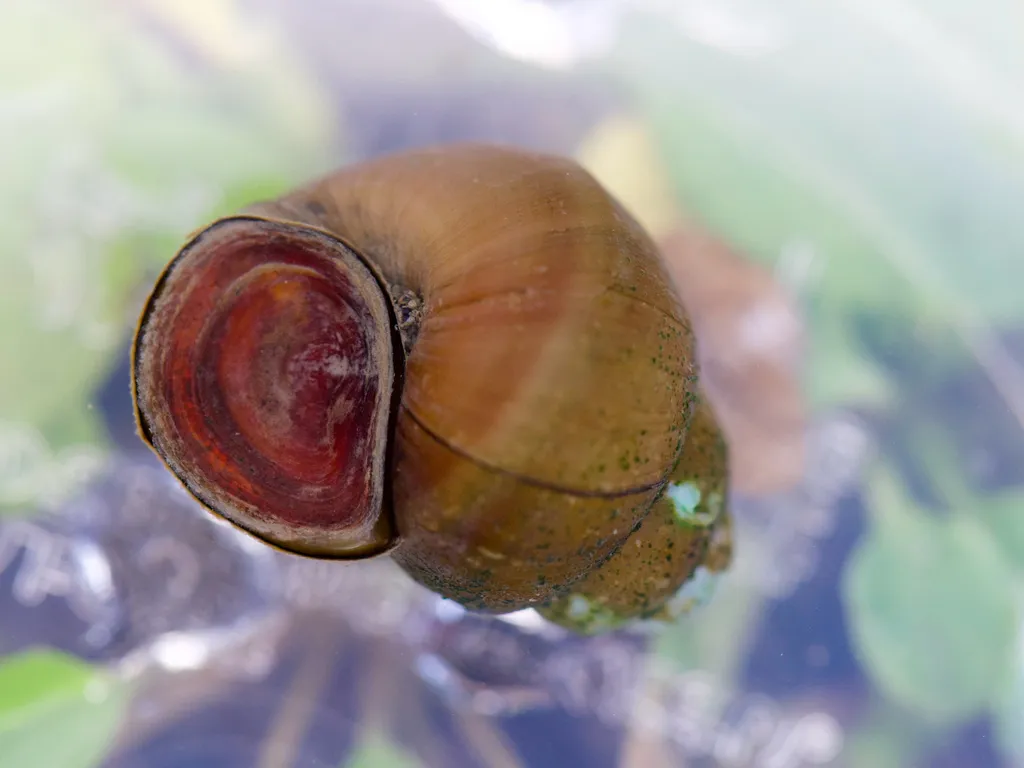
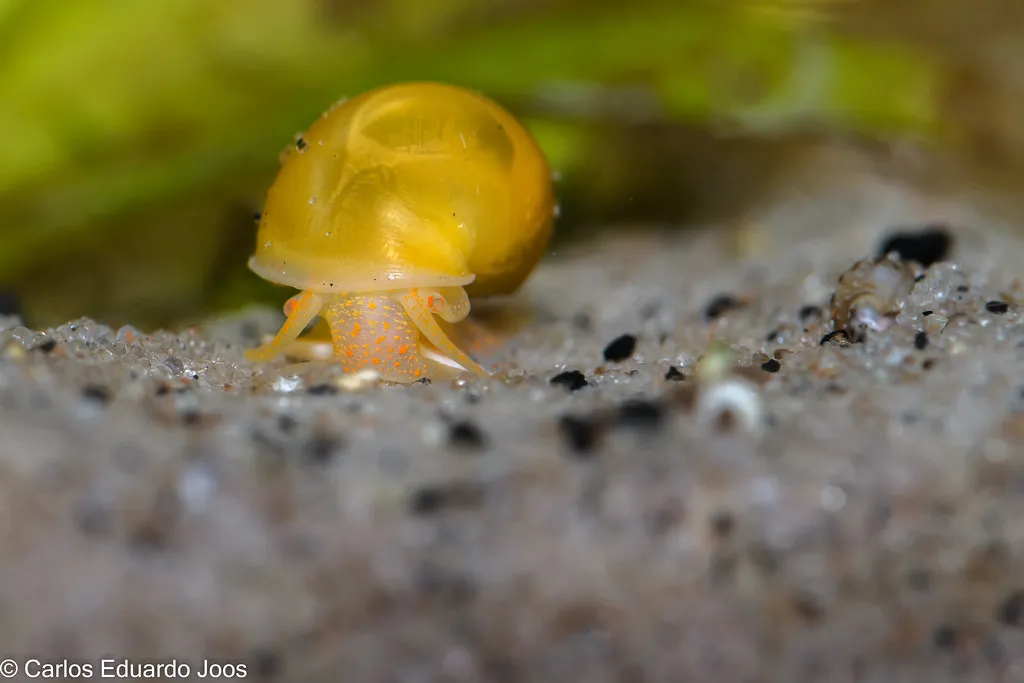
Cipangopaludina malleata is a member of the Viviparidae, the family of livebearing river snails that gives the trapdoor snails their name. It grows to around 5 cm with a rounded, olive to brown shell sealed by a horny operculum. True to the family, it does not lay eggs: the female broods her young inside and delivers small, fully formed snails a few at a time. That steady but modest rate makes home breeding straightforward without ever becoming a nuisance.
Did you know
The trapdoor name comes from the operculum, a tough plate on the snail's foot that seals the shell mouth like a door when it withdraws. It guards against drying out and against predators, and it also lets the snail ride out cold spells that would stop most tropical snails.
Weekly picks
Tank mates
Japanese trapdoor snail is a peaceful, solitary species that keeps to the bottom. These picks share a community profile with it, are safe together in both directions, and overlap on water type, temperature and pH.
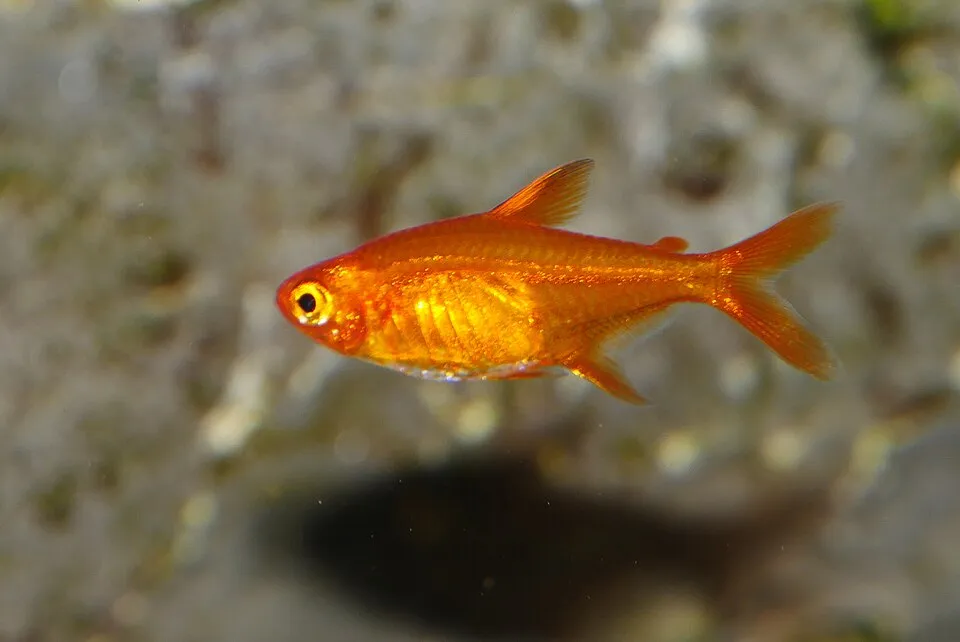
Ember tetra
Hyphessobrycon amandae
Freshwater0.8 in (2 cm) · 9 gal (35 L)72–82°F (22–28°C)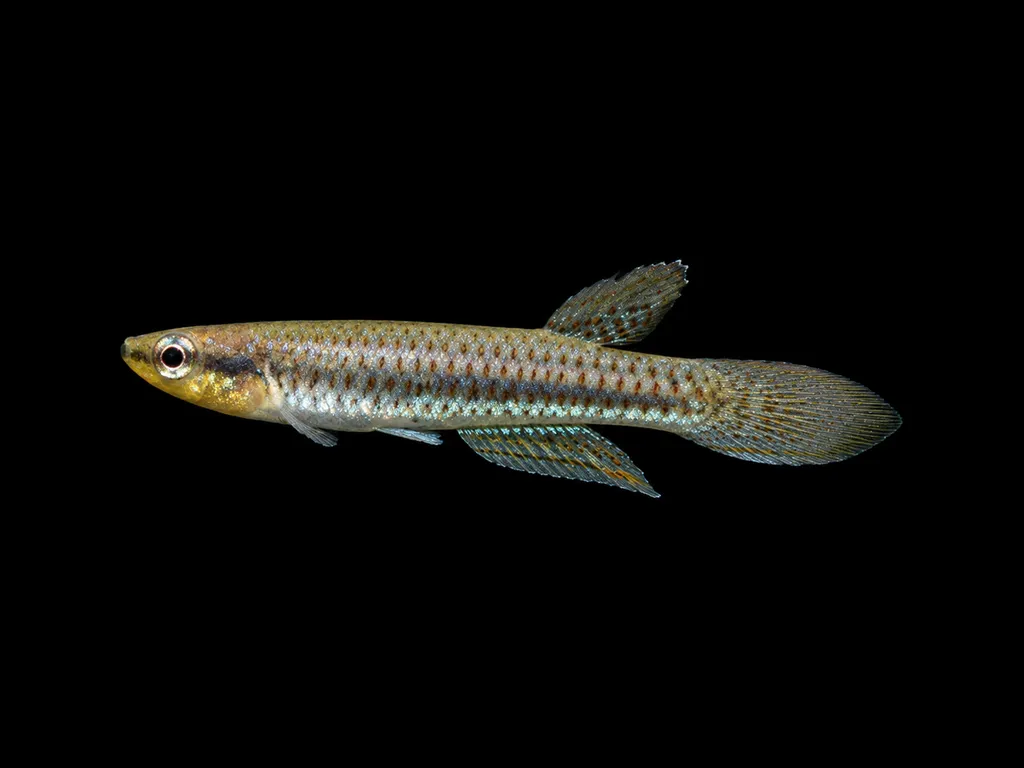
Dubois' panchax
Epiplatys duboisi
Freshwater1.4 in (3.5 cm) · 11 gal (40 L)68–77°F (20–25°C)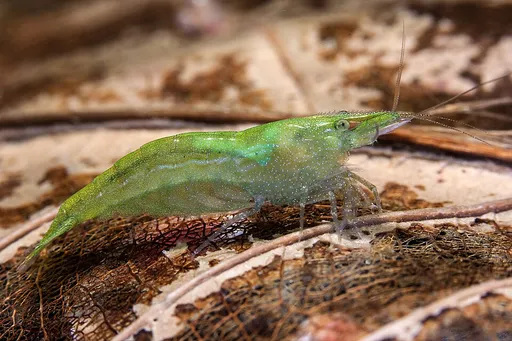
Green babaulti shrimp
Caridina babaulti
Freshwater1.2 in (3 cm) · 10 gal (38 L)72–82°F (22–28°C)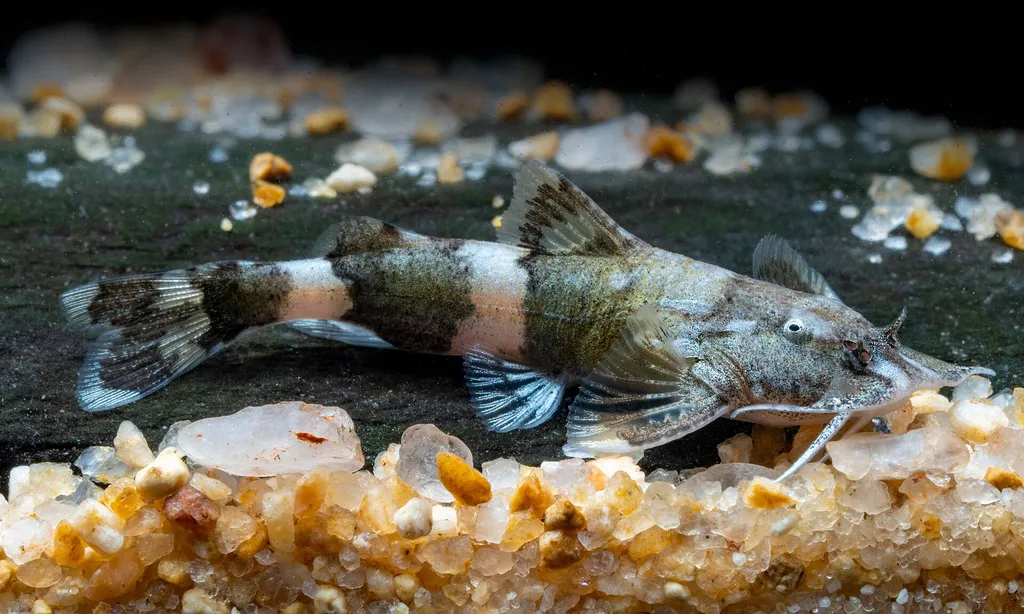
Cheetah moth catfish
Pseudolaguvia shawi
Freshwater1.5 in (3.8 cm) · 11 gal (40 L)68–79°F (20–26°C)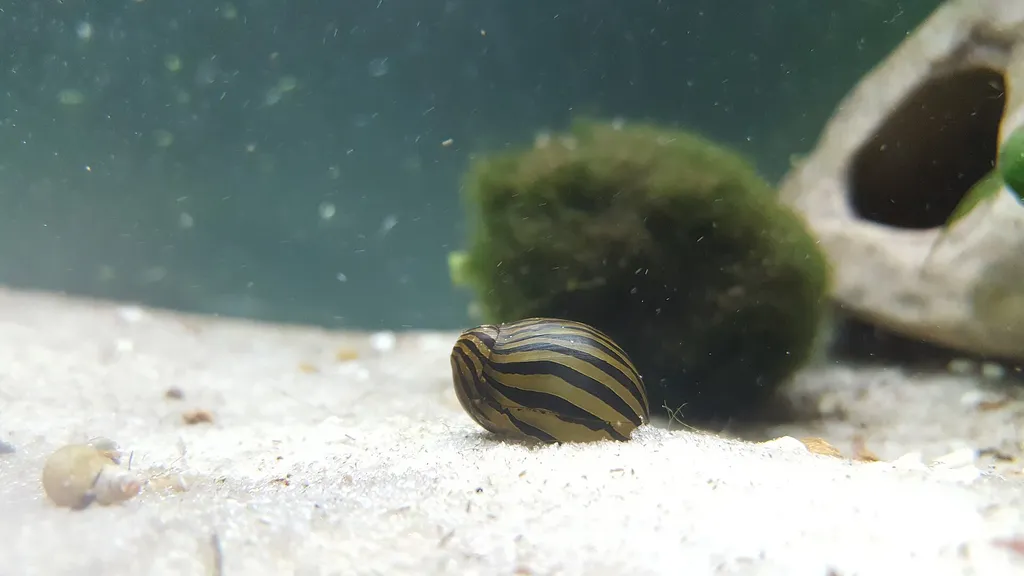
Zebra nerite
Vittina natalensis
FreshwaterBrackish1 in (2.5 cm) · 5 gal (20 L)66–84°F (19–29°C)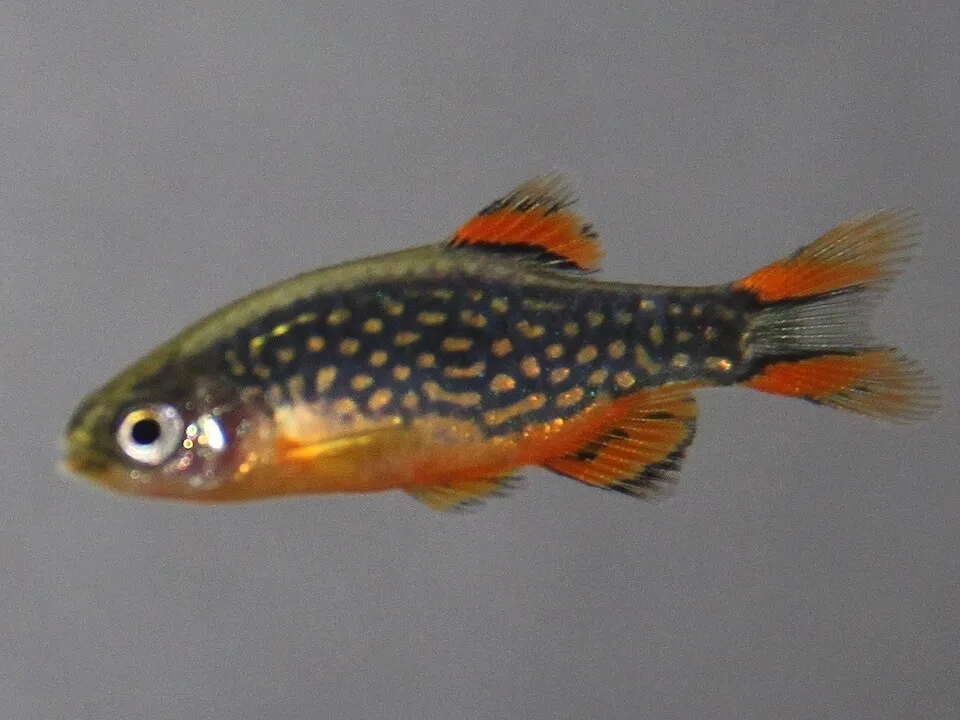
Celestial Pearl danio
Danio margaritatus
Freshwater0.8 in (2 cm) · 9 gal (35 L)72–79°F (22–26°C)
Common questions
What size tank does a Japanese trapdoor snail need?
A Japanese trapdoor snail needs at least 8 gal (30 L). It spends most of its time in the bottom.
What temperature and pH does a Japanese trapdoor snail need?
A Japanese trapdoor snail is comfortable at 64–77°F (18–25°C) with a pH of 6.5–8.0.
How big does a Japanese trapdoor snail get?
An adult Japanese trapdoor snail reaches about 2 in (5 cm).
Related species
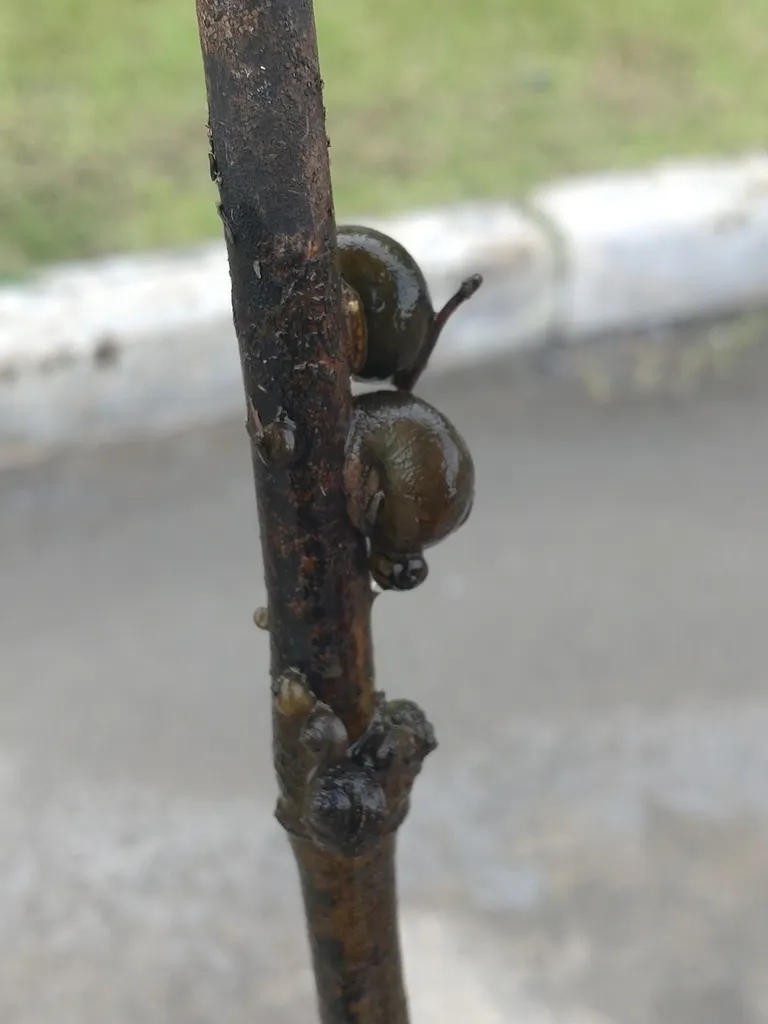 2 in (5 cm)11 gal (40 L)72–79°F (22–26°C)
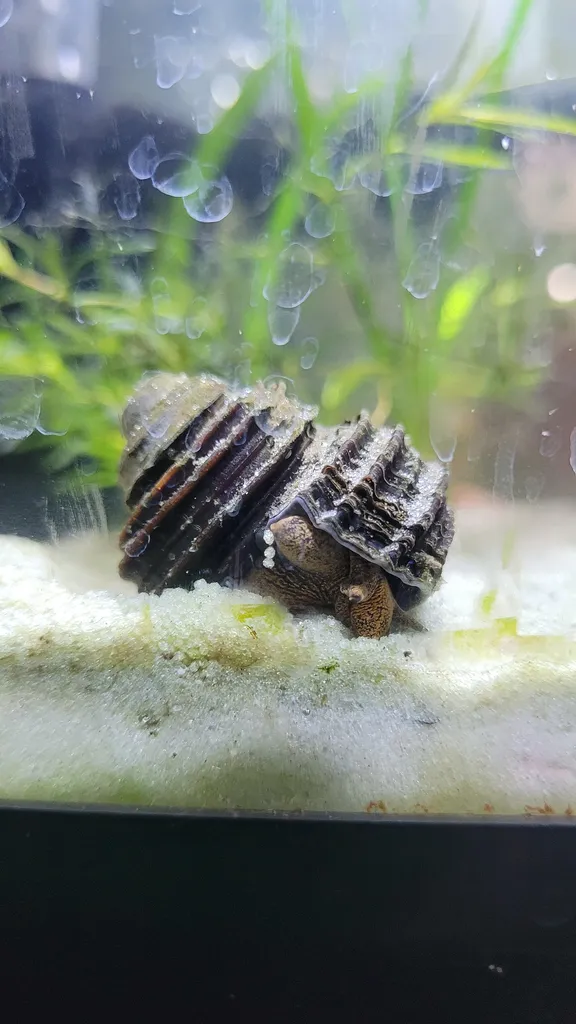
White wizard snail
Filopaludina martensi
2 in (5 cm) · 11 gal (40 L)
 2.8 in (7 cm)11 gal (40 L)79–86°F (26–30°C)
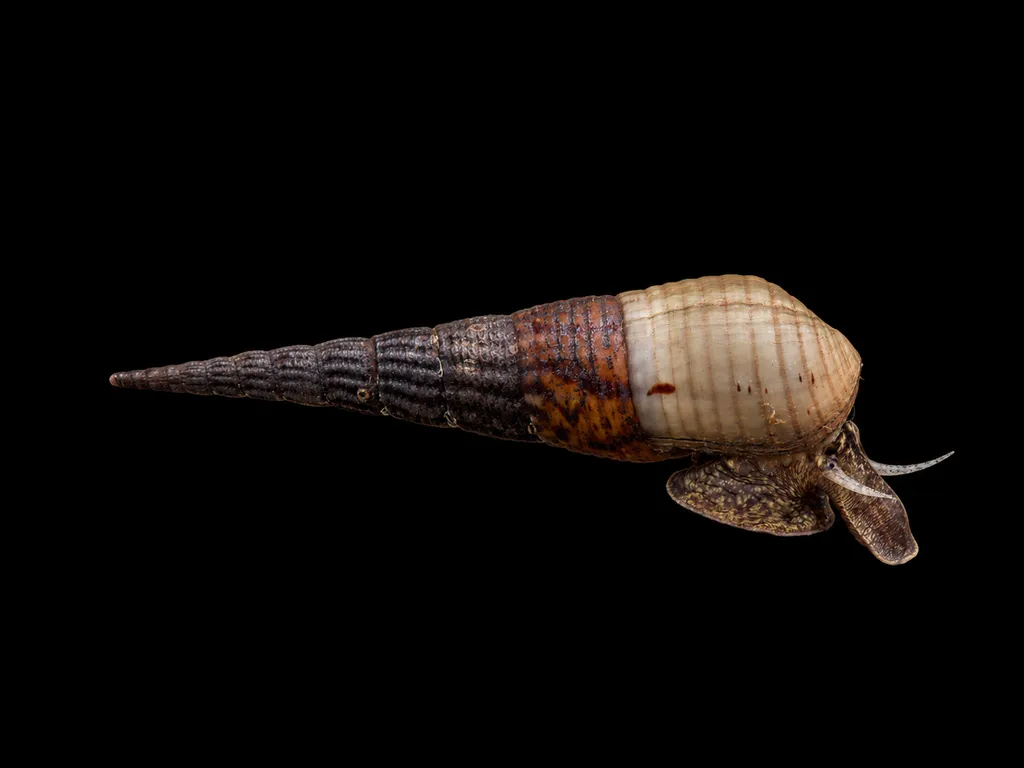
Blue turbo snail
Celetaia persculpta
2.8 in (7 cm) · 11 gal (40 L)
 2 in (5 cm)11 gal (40 L)73–82°F (23–28°C)
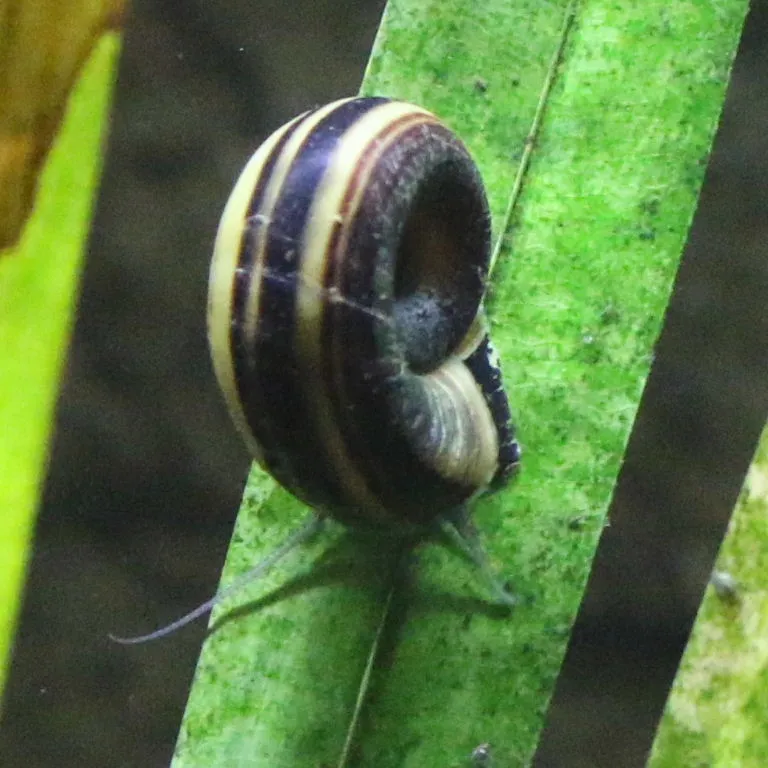
Chopstick snail
Stenomelania torulosa
2 in (5 cm) · 11 gal (40 L)
 2 in (5 cm)5 gal (20 L)73–81°F (23–27°C)
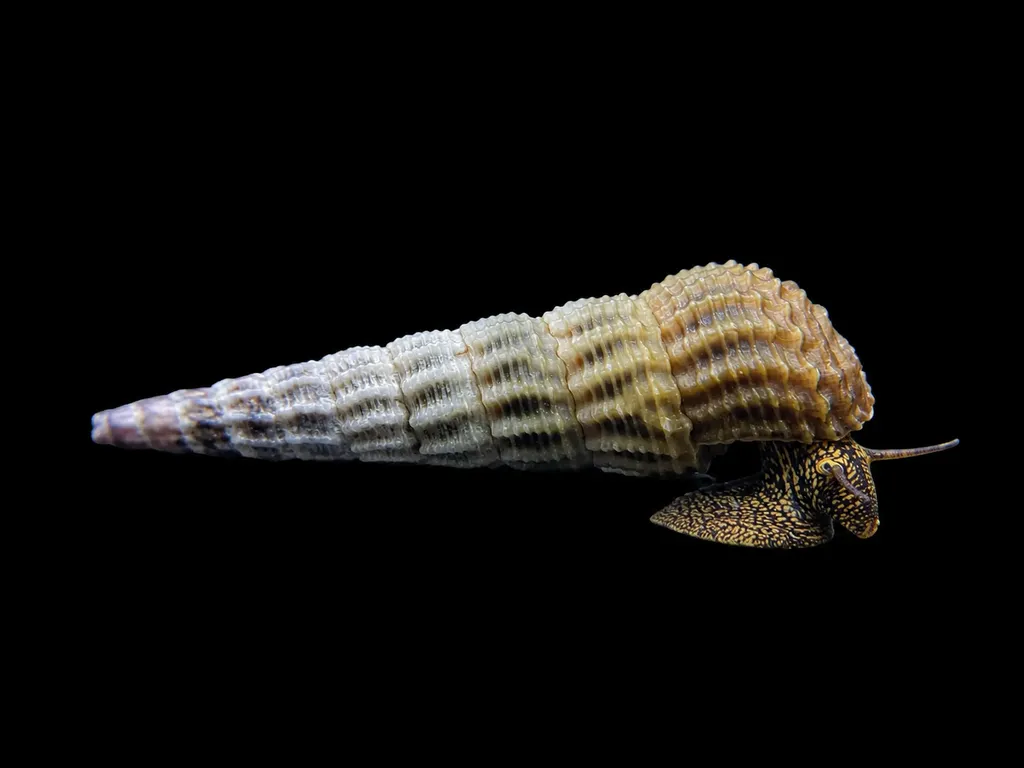
Giant Colombian ramshorn
Marisa cornuarietis
2 in (5 cm) · 5 gal (20 L)
 2 in (5 cm)11 gal (40 L)77–86°F (25–30°C)
Himalayan rabbit snail
Tylomelania marwotoae
2 in (5 cm) · 11 gal (40 L)
 2 in (5 cm)5 gal (20 L)70–79°F (21–26°C)
Mystery snail
Pomacea diffusa
2 in (5 cm) · 5 gal (20 L)