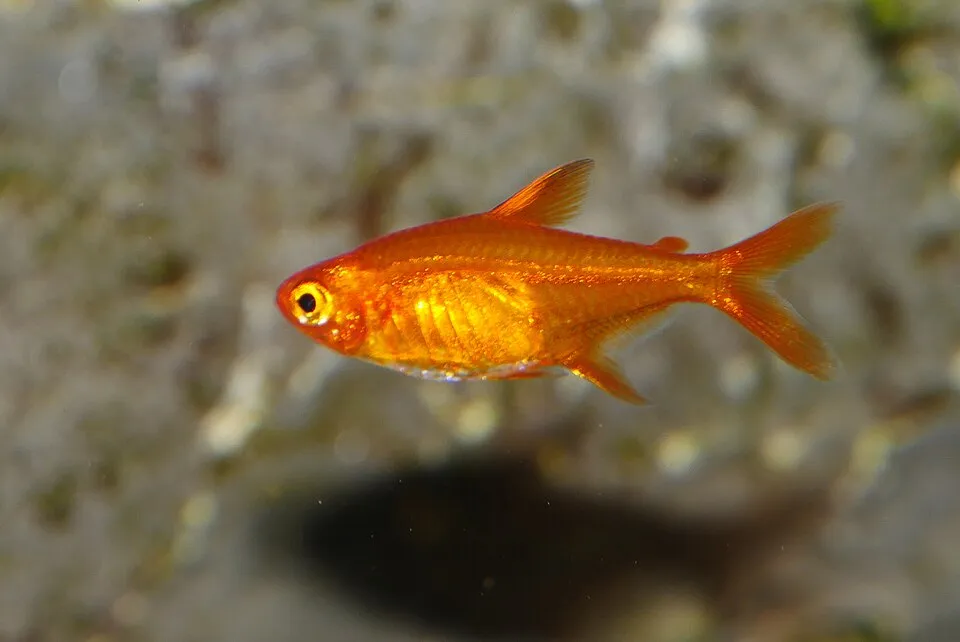
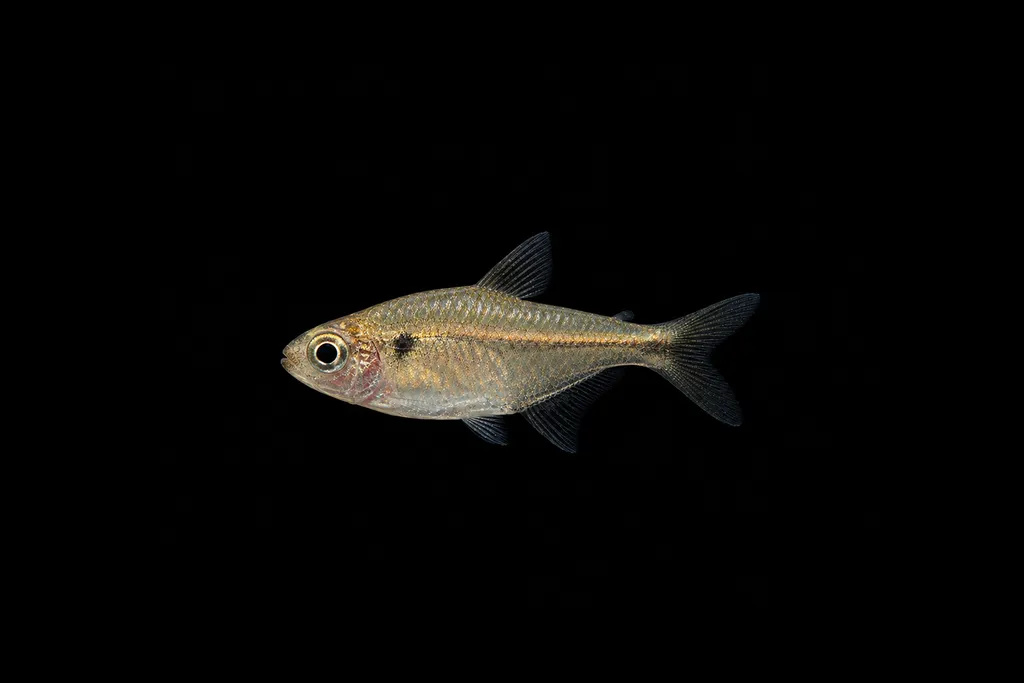
Ember tetra
Hyphessobrycon amandae
FreshwaterFish
Care at a glance
- Temperature
- 72–82°F
- 22–28°C
- pH
- 5.5–7.0
- Adult size
- 0.8 in
- 2 cm
- Minimum tank
- 9 gal
- 35 L
- Temperament
- Peaceful
- Social behavior
- Schooling
- Swim level
- Middle
- Difficulty
- Easy
- Breeding
- Medium
- Rarity
- Common
- Family
- Characidae
- Origin
- Brazil
Overview
Keep embers in a group of at least eight to ten, more if you have room. They are peaceful and spend most of their time in the middle of the tank. A small group looks scattered and nervous, so numbers matter. Feed crushed flake, micro pellets, and small frozen foods like daphnia or cyclops. Water in the low to high 20s C suits them, and a tank of about 35 liters or more works for a school.
In the wild
Ember tetras come from the slow, warm waters of the Araguaia basin in Brazil. The water there is soft, slightly acidic, and tinted brown from leaf litter and decaying plants. To match that, give them a planted tank with some shade, a darker substrate, and gentle flow. Soft water in the pH 5.5 to 7 range keeps them comfortable.
Good to know
This is a characin in the family Characidae, and one of the smallest tetras you can keep at around 2 cm full grown. The species name honors Amanda Bleher, mother of aquarist Heiko Bleher. They are egg scatterers with no parental care, and eggs usually hatch in a day or two. They are not listed as threatened, though their habitat faces pressure from deforestation.
Did you know
Their color shifts with mood and surroundings. In a bare, brightly lit tank they wash out to a pale orange, but over dark substrate with plants and tannin-stained water they deepen to a warm red. It is the same fish, just responding to its setup.
Weekly picks
Tank mates
Ember tetra is a peaceful, schooling species that keeps to the middle. These picks share a community profile with it, are safe together in both directions, and overlap on water type, temperature and pH.
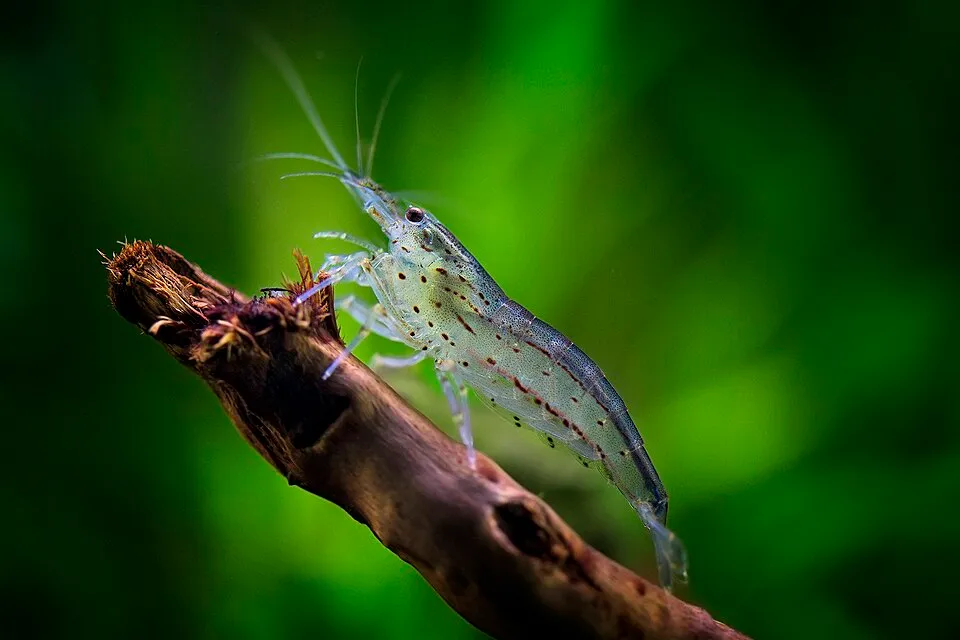
Amano shrimp
Caridina multidentata
FreshwaterBrackish2 in (5 cm) · 8 gal (30 L)59–81°F (15–27°C)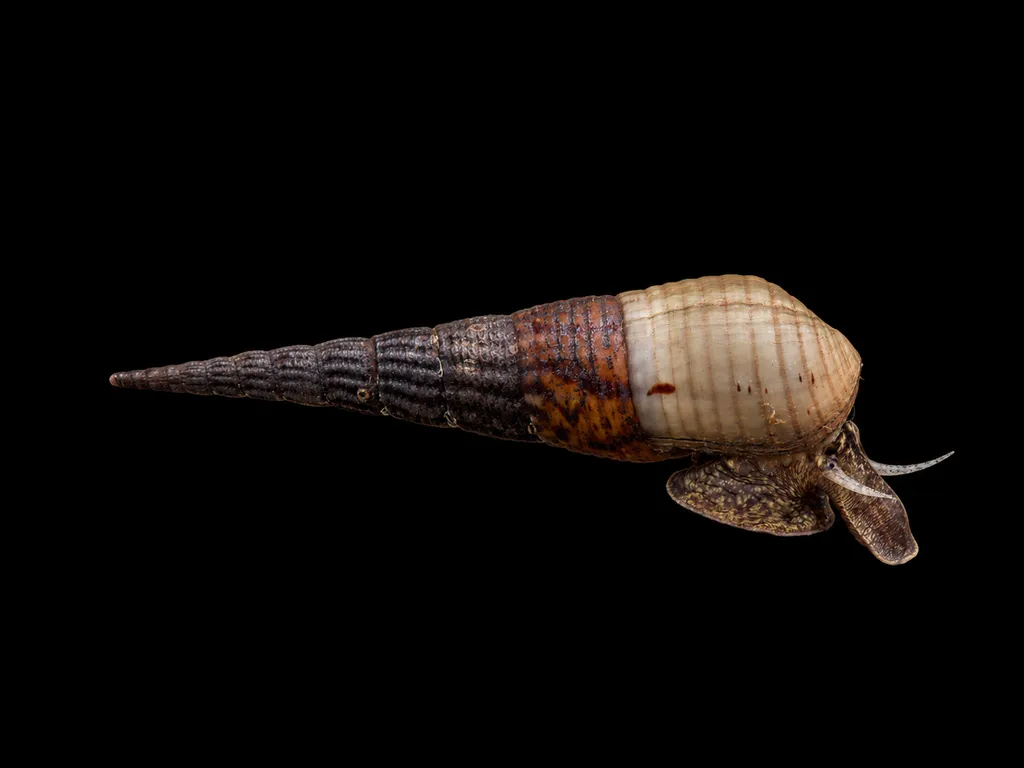
Chopstick snail
Stenomelania torulosa
Freshwater2 in (5 cm) · 11 gal (40 L)73–82°F (23–28°C)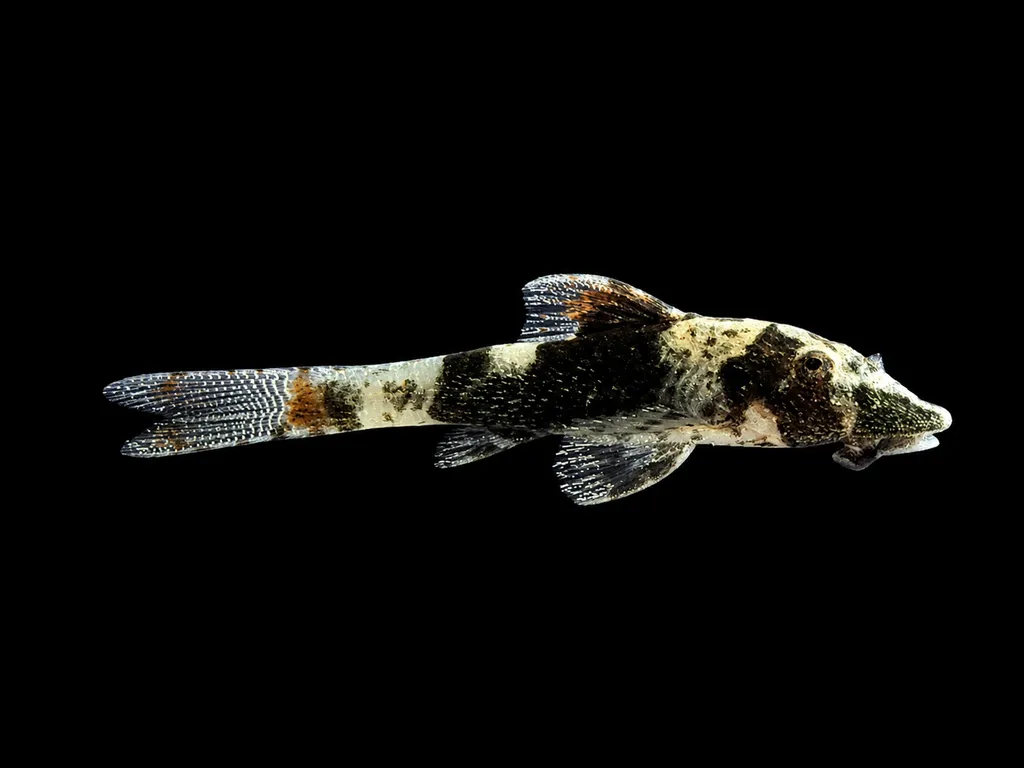
Bumblebee otocinclus
Rhinotocinclus isabelae
Freshwater0.8 in (2 cm) · 11 gal (40 L)73–82°F (23–28°C)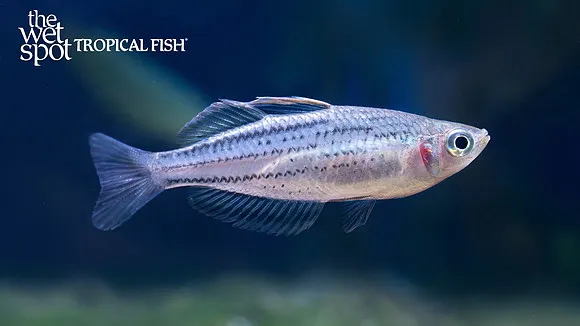
Green panchax
Aplocheilus blockii
Freshwater2 in (5 cm) · 11 gal (40 L)72–82°F (22–28°C)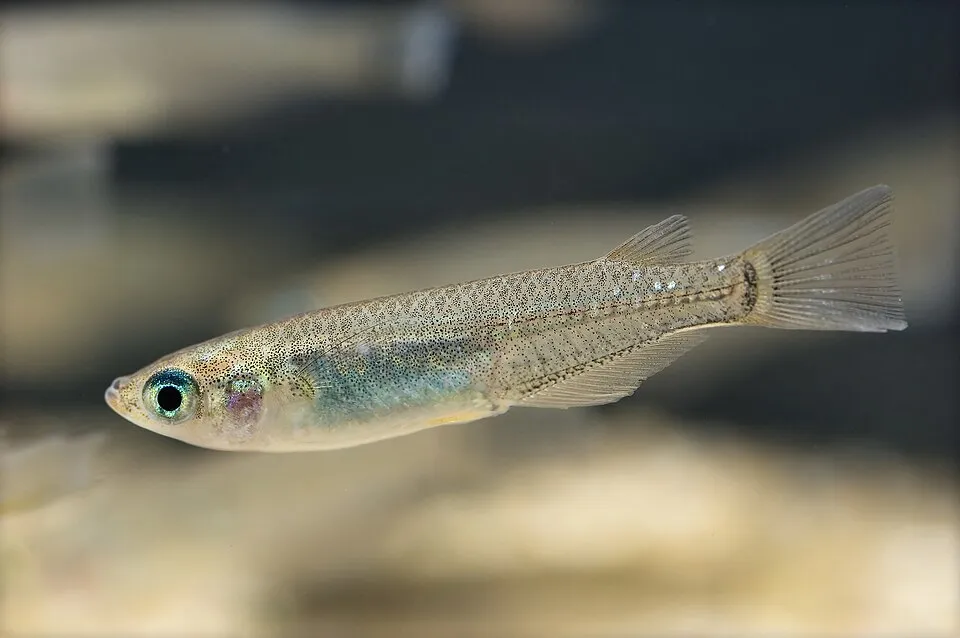
Medaka
Oryzias latipes
Freshwater1.4 in (3.5 cm) · 9 gal (35 L)61–72°F (16–22°C)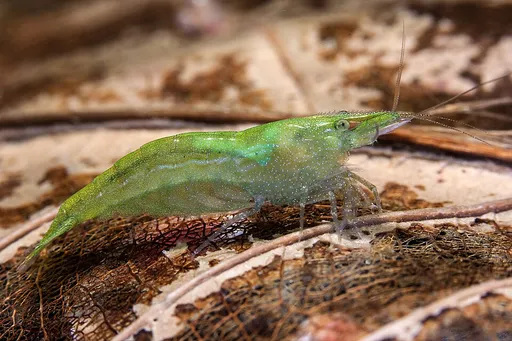
Green babaulti shrimp
Caridina babaulti
Freshwater1.2 in (3 cm) · 10 gal (38 L)72–82°F (22–28°C)
Common questions
What size tank does an Ember tetra need?
An Ember tetra needs at least 9 gal (35 L). It spends most of its time in the middle.
What temperature and pH does an Ember tetra need?
An Ember tetra is comfortable at 72–82°F (22–28°C) with a pH of 5.5–7.0.
How big does an Ember tetra get?
An adult Ember tetra reaches about 0.8 in (2 cm).
Does an Ember tetra need a group?
Yes. An Ember tetra is a schooling species and should be kept in a group, not singly.
Related species
 0.8 in (2 cm)7 gal (25 L)68–82°F (20–28°C)
Yellow phantom tetra
Hyphessobrycon roseus
0.8 in (2 cm) · 7 gal (25 L)
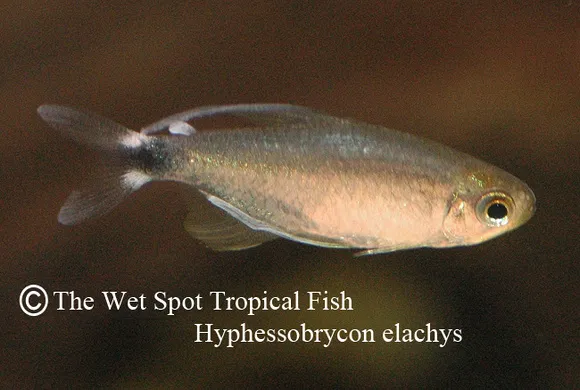 0.9 in (2.4 cm)10 gal (38 L)68–79°F (20–26°C)
Veiltail tetra
Hyphessobrycon elachys
0.9 in (2.4 cm) · 10 gal (38 L)
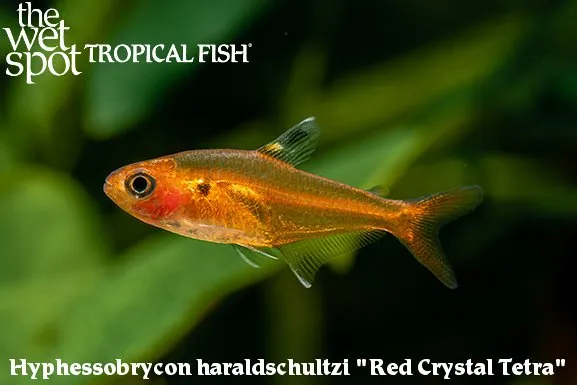 1 in (2.5 cm)10 gal (38 L)73–82°F (23–28°C)
Crystal red tetra
Hyphessobrycon haraldschultzi
1 in (2.5 cm) · 10 gal (38 L)
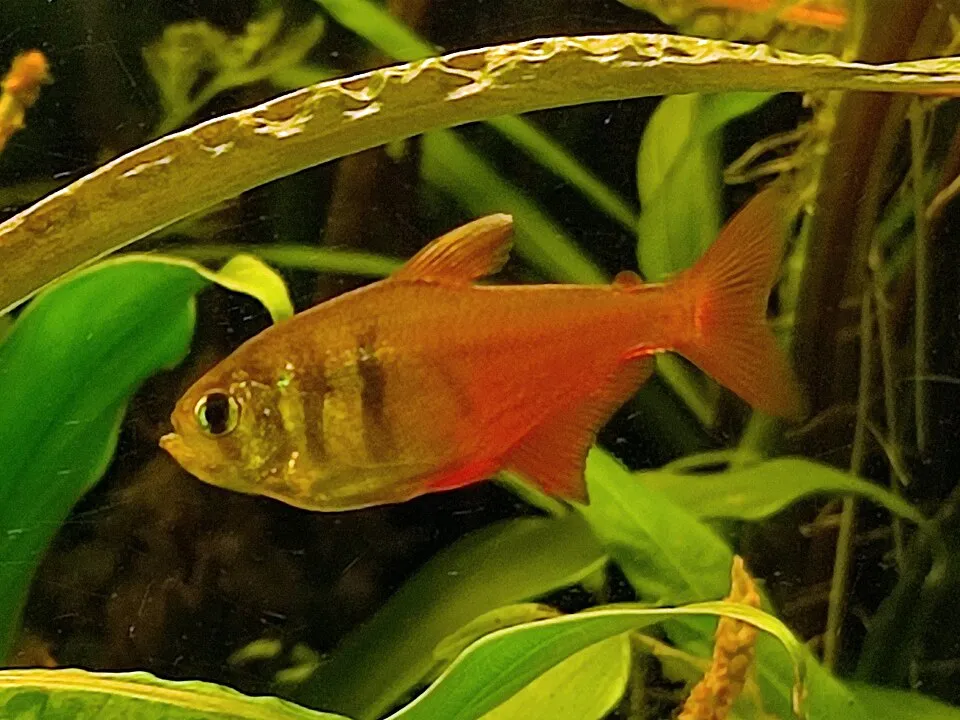 1 in (2.5 cm)10 gal (38 L)68–79°F (20–26°C)
Flame tetra
Hyphessobrycon flammeus
1 in (2.5 cm) · 10 gal (38 L)
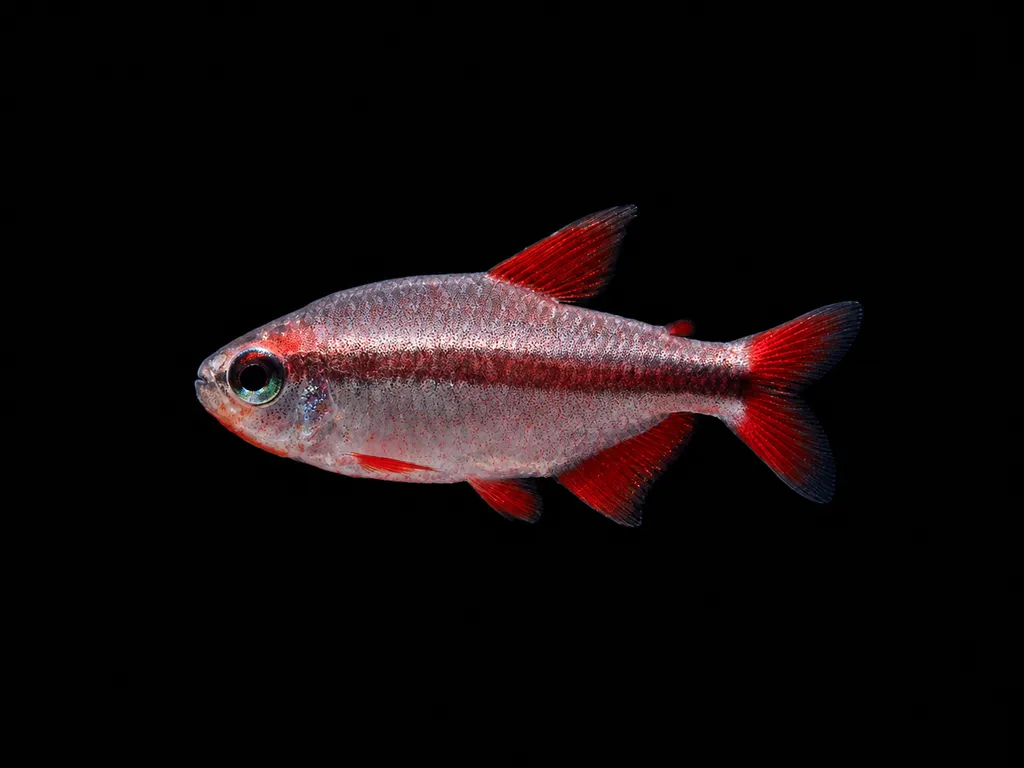 1 in (2.5 cm)10 gal (38 L)73–82°F (23–28°C)
Red devil tetra
Hyphessobrycon piranga
1 in (2.5 cm) · 10 gal (38 L)
 1 in (2.6 cm)10 gal (38 L)72–82°F (22–28°C)
Parvellus tetra
Hyphessobrycon parvellus
1 in (2.6 cm) · 10 gal (38 L)